
Dallas Efficiency Committee Floats HR Cuts, Civil Service Merger
Share News:

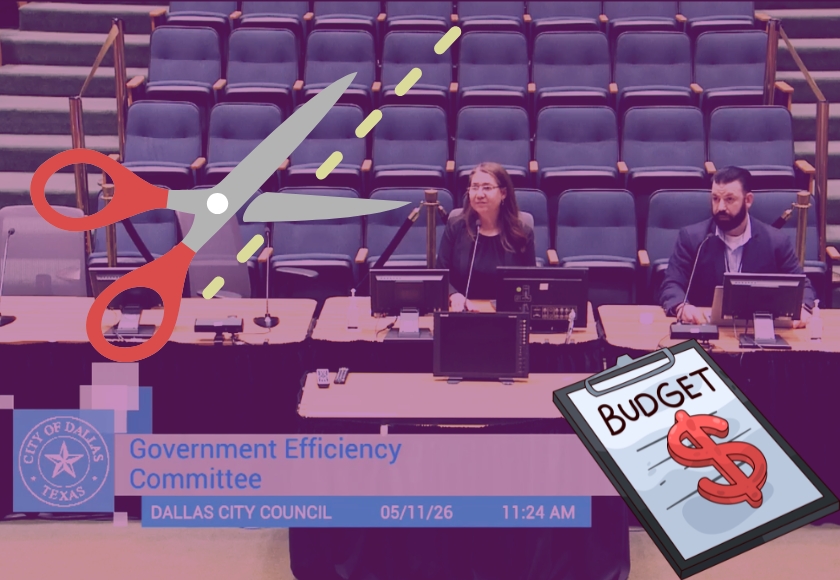
Dallas City Hall’s Human Resources Department is facing growing scrutiny, with council members on the Government Efficiency Committee signaling support for staffing reductions and even consolidation with the Civil Service Department.
On Monday, the committee received briefings from Human Resources, Civil Service, and the Information & Technology Services Department. The departments provided overviews of their scope of work and the budgeting behind it. True to its mission, the committee grilled the department heads and staff about apparent redundancies in programming and headcount.
While there was a lot to get into the weeds about on the technology front, Human Resources really took it on the chin. Both Council Members Paula Blackmon (District 9) and Cara Mendelsohn (District 12) said they support merging the department with Civil Service.
“This is again a place for enormous efficiency, where there is duplication and, frankly, a lot of extra staff in my opinion,” Mendelsohn said.
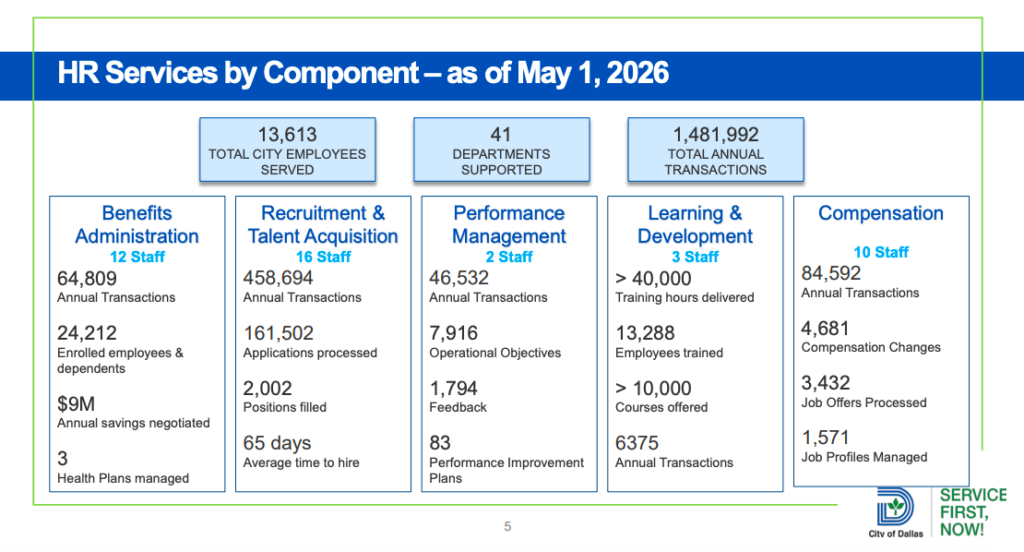
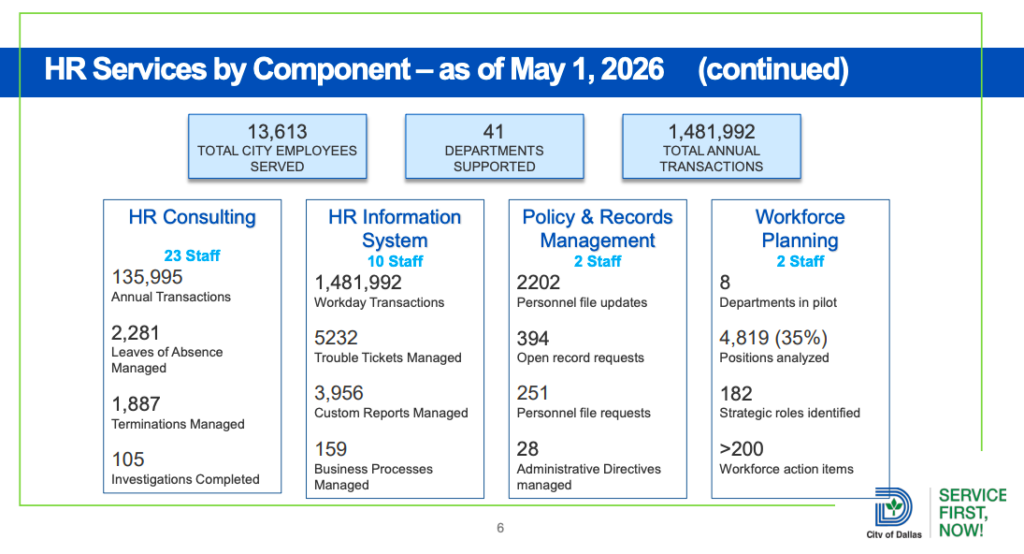
Human Resources maintains 74 staff positions plus 12 separately-funded positions dedicated to benefits administration. The department is responsible for administering to the city’s more than 13,000 employees, with strategic priorities centered around improving staffing stability, reducing turnover, and managing effectiveness.
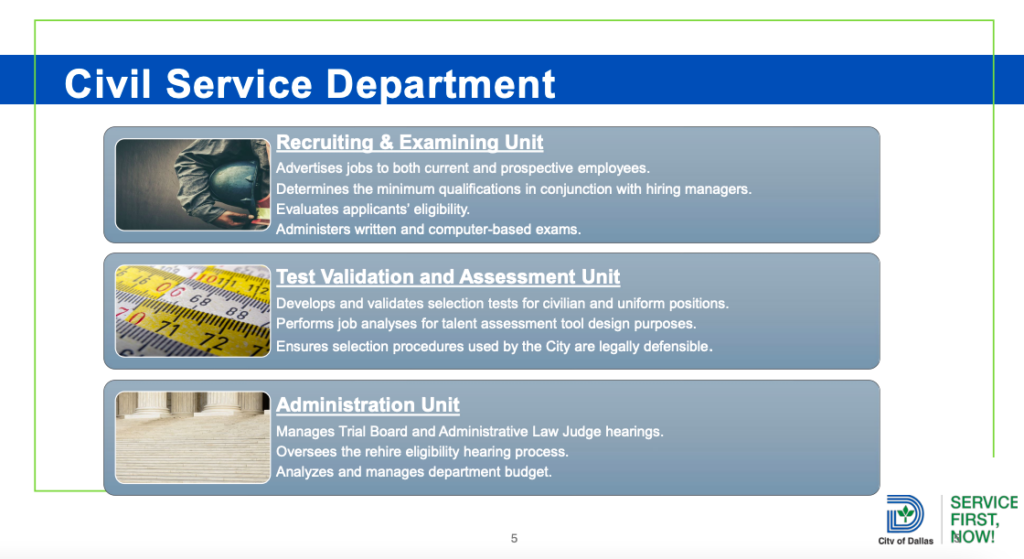
For its part, Civil Service handles facets of job advertising, employment examinations, merit-based promotions, and the appeals process for disciplinary actions. It supports around 83% of the city’s workforce recruitment and assessment needs. It’s a lot leaner than Human Resources, with just over 20 full-time employees. Civil Service’s mission, however, is outlined in the city charter and would require an election for substantive changes in operation.
“I do believe that if we want to be an efficient city, we probably should start at HR, and so that’s my two cents,” Blackmon said, calling the current system fragmented.
Stakes are high heading into the summer, with the city looking to find ways to reduce spending next fiscal year amid unreliable sales and property tax revenues and mandatory investments in public safety. A handful of council members raised the prospect of staffing cuts at a meeting of the full council last Wednesday. Dallas Park & Recreation Board got a little preview of what could be in store for the park system the following day, with staff recommending a $14 million reduction in spending from this fiscal year.
City Manager Kimberly Tolbert has overseen a couple of departmental consolidations during her tenure, merging Planning & Urban Design with Development Services to create the Planning & Development Department. More recently, she consolidated the Offices of Community Care & Empowerment, Homelessness Solutions, Equity & Inclusion, and Housing & Community Development to create the Office of Housing & Community Empowerment.
While some committee members no doubt came into the meeting looking to flag anything that looked like a redundancy, Human Resources didn’t do itself any favors when comparing its staff-to-employee ratio to peer cities, all of which factored in Civil Service — Dallas did not.
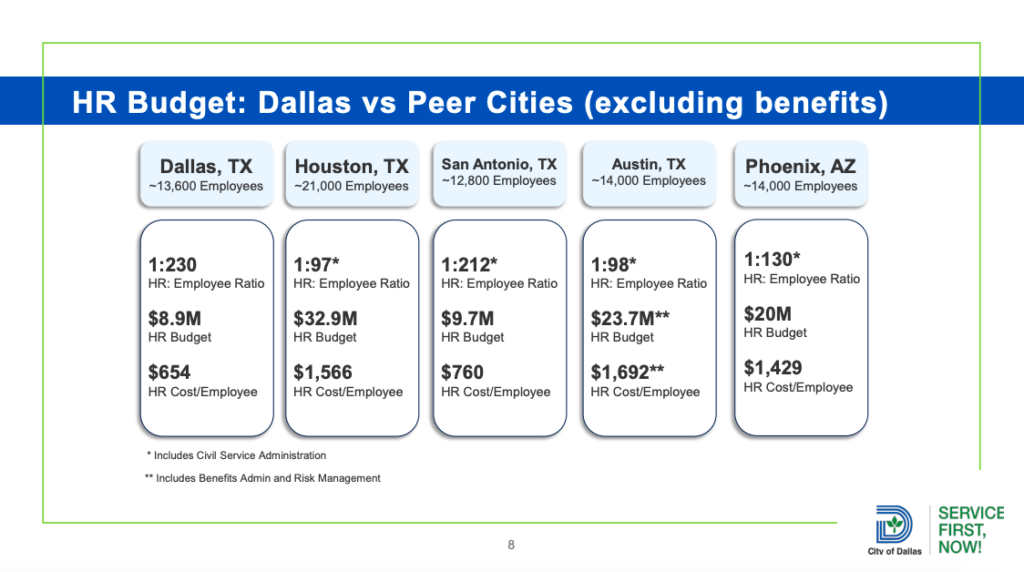
“It is very difficult to compare apples to apples, and I just wanted to acknowledge that because every department, every city is a little bit different in terms of how they deploy HR,” said Human Resources Director Nina Arias. “But we looked through the budget books of all these cities, and this is the very best comparison we were able to do based on the information available.”
However, she said even if they were to add Civil Service, risk management professionals outside of Human Resources, and the benefits staff, the city would still have a worse ratio than Austin, which operates near the 1:100 staff-to-employee ratio recommended by the Society for Human Resource Management.

Arias explained how Human Resources and Civil Service have different responsibilities, despite overlapping missions and frequent collaboration across departments. Mendelsohn argued further, though, that there are positions embedded across various departments essentially functioning as Human Resources employees in terms of work scope.
Information & Technology Services got plenty of grilling as well, however, much of the questioning had to do with council members trying to get a grasp on the rather convoluted way the department is (or isn’t) tracking efficiencies — particularly how and what human tasks get automated and whether that translates into a reduction in headcount.
It’s official, budget season has turned into headhunting season.