
Don’t Say ‘My Taxes Are Too High’: 5 Most Common Property Tax Protest Questions
Share News:

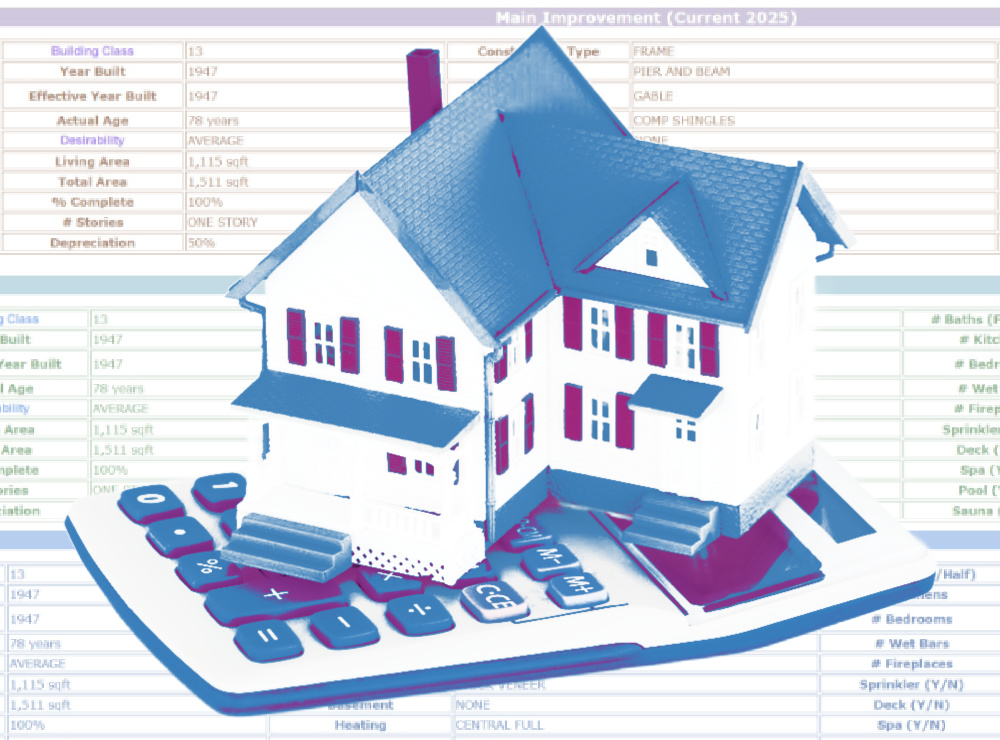
As property tax protest season gets underway, homeowners tend to ask the same questions: What exactly can I protest? Does the 10 percent homestead cap protect me? Are my neighbor’s values good evidence? What should I show the appraisal district? And what should I definitely not say?
Property tax expert Glenn Goodrich hears those questions constantly. As CandysDirt.com prepares for its upcoming Property Tax Protest Roundtable, Goodrich walked us through the five issues that trip up homeowners most often when they try to challenge their appraised value.
The short version: Don’t argue about your tax bill. Argue about value. And bring evidence.
Under Texas law, taxable property is generally appraised at its market value as of Jan. 1, meaning the protest process is about what your property was worth on that date — not how your tax bill feels, not what happened to your neighborhood after Jan. 1, and not whether local taxing entities set a rate you dislike.
Luckily, homeowners have the right to protest the appraisal district’s opinion based on “incorrect appraised (market) value” and/or if the appraised “value is unequal compared with other properties.”
1. Can I protest my land value?
This is one of the most common questions Goodrich gets, and the practical answer is frustrating: Technically yes, but not often successfully.
Your appraisal notice generally breaks into two components: the land value and the improvement value. The land value is tied heavily to location, while the improvement value reflects the house and other taxable structures or features on the land.
Land value is usually much harder to challenge than improvement value. Goodrich’s advice is not to get hung up on the land line item.
“You can’t often successfully challenge land value, but you can challenge total value,” he said. “So don’t be discouraged and skip protesting. It helps to protest your property appraisal every year.”
Reductions often come from the improvement side — condition, age, outdated finishes, needed repairs, or other property-specific issues the appraisal district may not fully see from its records.
Goodrich said he is seeing “more meat on the bone” this year than in recent years, particularly in Dallas County, where some values may still be catching up to a market that has shifted since the peak years of 2021 and 2022, he says.
One important nuance: Dallas Central Appraisal District repeats the appraisal process for each property in Dallas County at least once every three years, though it can reappraise as often as every year if the market is active in that area. Collin Central Appraisal District, by contrast, says its current policy is to conduct a general reappraisal every year, with values reviewed for equality and uniformity annually.
That helps explain why some appraisal districts may appear more current with market movement than others.
2. Doesn’t my homestead cap mean my value can only go up 10 percent?
This is where homeowners often confuse market value with appraised value.
The 10 percent cap is commonly called the homestead cap or homestead appraisal limitation. It applies to a residence homestead that qualified for the exemption in the preceding and current year. The Comptroller says the appraised value for a qualifying homestead generally may not increase by more than 10 percent per year, plus the market value of any new improvements.
But that does not mean the appraisal district’s opinion of your market value can only rise 10 percent.
Your notice may show a market value increase of more than 10 percent, while your capped appraised value — the number used before exemptions to calculate taxable value — is limited. That distinction matters because a homeowner may still want to protest the market value even if the homestead cap softens the immediate tax impact.
Why? Because today’s market value can affect future years as the capped value catches up.
Goodrich also flagged another issue for recent buyers: When a property sells, the appraisal district may have new information it did not previously have, including MLS photos, sale price, updated condition, remodel quality, or other characteristics. If a 1940s Tudor had been listed as “good” condition but MLS photos show a renovated kitchen and higher-end finishes, the district may update its records.
That can feel like the property was singled out because it sold. Goodrich said that is where an equal-and-uniform argument may come into play, especially if sold properties are being adjusted more aggressively than similar unsold properties. Texas allows property owners to protest unequal appraisal, and the Texas Constitution requires taxation to be equal and uniform.
But Goodrich cautions that equal-and-uniform cases (unequal appraisal) are more technical to argue than most homeowners expect.
3. What kind of comps do I need? Can I just compare my house to my neighbor’s house?
Not usually — or at least not that simply.
One of the biggest mistakes homeowners make, Goodrich said, is pulling the value of a next-door neighbor’s house, dividing by square footage, and assuming that makes a protest case.
That kind of price-per-square-foot comparison can miss the factors that actually drive value: lot size, building size, age, condition, quality, updates, pool, garage spaces, creek lots, backing to a greenbelt, functional layout, and other differences.
What about the old advice to ask a Realtor friend to run a CMA comps list for your address?
“A Realtor’s comparative market analysis can be useful,” Goodrich said, but homeowners should not treat a CMA as the end-all, be-all of a property tax protest. For protest purposes, the question is not just “What sold nearby?” It is “What sold nearby that is actually comparable to my property as of Jan. 1?”
For a market-value protest, Goodrich said homeowners should focus on a small set of strong comps and explain why the appraised value is higher than what the property would realistically sell for. Dallas CAD’s own FAQ says value changes may result from database corrections, equalization, or sales information indicating that the current appraised value is higher or lower than fair market value.
A better approach, Goodrich said, is to use sale photos and condition details to show the appraisal district why a higher-priced comp is not really comparable.
For example: If the comparable sale has a remodeled kitchen, updated bathrooms, new flooring, and a pool, while your property has older finishes, deferred maintenance, and no pool, those details matter. Put the evidence side by side and make the argument easy to understand.
4. What evidence actually helps?
Goodrich’s simplest advice: Tell the appraisal district something it does not already know.
The appraisal district already has basic property data. It knows your square footage, lot size, year built, and whether the property has a pool or garage. What it may not know is that your foundation has active movement, your kitchen is decades out of date, your primary bath needs major work, or a repair estimate shows a condition problem that existed as of Jan. 1.
The strongest evidence is specific, current, and tied to value.
Goodrich recommends photos that show meaningful condition issues, not minor cosmetic complaints. A small driveway crack or a chipped tile is unlikely to move the needle. Major foundation cracks, visible structural issues, significant water damage, or documented repairs are more relevant.
Repair estimates can help, but they need to be current. A foundation bid from three years ago is weaker than a recent bid showing the problem still exists. The argument should be straightforward “I have a foundation bid from June 2025. I have not made the repairs. The condition existed as of Jan. 1, and these photos show the cracking. The estimate is $15,000, so I am requesting a $15,000 adjustment.”
Goodrich also recommends keeping photos focused. Less is more. A homeowner does not need to upload 50 images.
His suggested must-have photos:
- A front exterior shot from across the street to show overall curb appeal.
- A broad kitchen photo that shows the age and condition of the space.
- A living area photo, because flooring and main living spaces affect buyer perception.
- A primary bath photo.
- Photos of secondary baths, if they help show condition.
The point is not to overwhelm the appraiser, but make a clean, credible case.
5. What should I avoid saying in a protest?
Do not walk in saying, “My taxes are too high.”
That may be true, but it is not the issue the appraisal district is deciding.
The appraisal district determines value. Taxing entities — cities, counties, school districts, and other local governments — set tax rates. The Comptroller notes that an appraisal notice must explain that the appraisal district determines property value, while each taxing unit’s governing body determines potential tax increases.
So Goodrich’s advice is blunt: Don’t say “taxes.” Say “value.”
Avoid broad neighborhood complaints, too. Crime, flight paths, traffic, drainage problems, or other area-wide concerns may be real, but if they affect many homes in the area, they should already be reflected in market sales. A stronger protest focuses on what is specific to your property.
The same goes for emotional arguments. The protest process is evidence-driven. The protester’s job is not to convince the appraisal district that taxes are painful; It is to show that the property would not sell for the appraised amount, or that its value is unequal compared with properly adjusted comparable properties.
Goodrich said the best homeowners come prepared with the right nomenclature, credible comparisons, and clear condition evidence.
In other words: Don’t argue with the system. Build the file.
For North Texas homeowners, the protest deadline is May 15 for Dallas, Tarrant, Collin, Denton, and Rockwall counties. Appraisal districts strictly enforce protest deadlines, so submit your protest paperwork and evidence by no later than Friday.
Need help with evidence or comparable properties? You can visit OpenPropertyTax.com to get a free report on your home’s comparative data and whether you likely have a good case to file a protest.







No one seems to be addressing the elephant in the room: Why does the property tax mill rate never get adjusted to a percentage that would keep total tax bills in line with inflation? Seems like the answer is, “Oh well, your market value has gone up, so you’ll just have to pay more.”