
Texas Construction Outlook Still Strong Despite Labor, Cost Pressures
Share News:

The Lone Star State’s growth narrative is still being written — or rather, it’s still being built. Texas is already positioned at the front of the pack for construction nationally, and as long as headwinds don’t pick up, it’s probably going to stay there.
Data published by Statista earlier this year projected that construction spending in Texas will total $50.3 billion by the end of 2025, more than any other state in the country. That should come as no surprise with the steady flow of new residents settling down and all the new housing and commercial development that naturally follows.
Astrak US, the American arm of a global distributor of undercarriage and wear parts for heavy construction machinery, entered the Texas market in 2023, looking to get in on the action. While there’s plenty of redevelopment in the state’s urban centers, a lot of heavy construction is going on in the suburbs and rapidly transforming formerly rural areas. Up in North Texas, for instance, you’ve got the sister cities of Anna, Celina, and Melissa.
Still, there are some constraints to that growth and costs to be borne. First of all, Texas might be growing, but apparently there aren’t enough folks in the skilled construction trades relocating to keep up with the work. Asktrak US commercial director Calum Mair told CandysDirt.com that surging demand and an aging workforce is slowing the pace of development.
“Younger workers are also entering the trades more slowly than the rate of retirements, leading to a persistent gap in skilled labor availability,” he said. “Labor shortages could create project delays or cost overruns if they’re not addressed through automation and training.”
It may be too soon to really assess the fallout, but the Trump administration’s aggressive deportation policy also stands to impact construction broadly since an estimated 10-19% of the sector’s workforce.
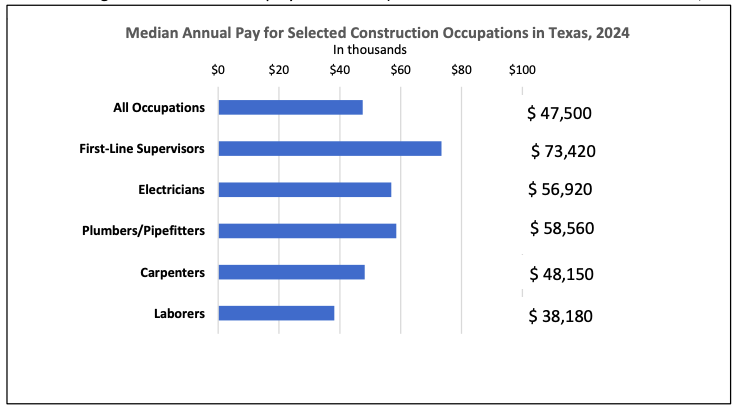
Overall construction employment in Texas has actually increased in recent years, just not enough. According to the Associated General Contractors of America, filled jobs in the sector increased by 3.2% year-over-year in July, and they’re up 12% since February 2020.
Employers are responding by improving on pay, in addition to investing in better workplace safety and career development paths to retain experienced workers, according to Mair.
Labor isn’t the only headwind, though. The inflationary hangover from the COVID-19 pandemic and tariff uncertainty earlier this year drove up some costs, while the population growth itself has increased demand for land.
“Rising material and land costs are making some large-scale developments less financially viable, pushing developers toward denser, more sustainable projects,” Mair said.
He added that population stresses are also requiring continuous public investment in existing utilities and transportation infrastructure to sustain the growth.
“Despite these factors, the overall outlook remains positive,” Mair said. “The state’s diversification into manufacturing, data centers, and clean energy construction continues to create strong, long-term demand.”