
SB 840 Goes Into Effect, Limits Municipal Zoning Authority
Share News:

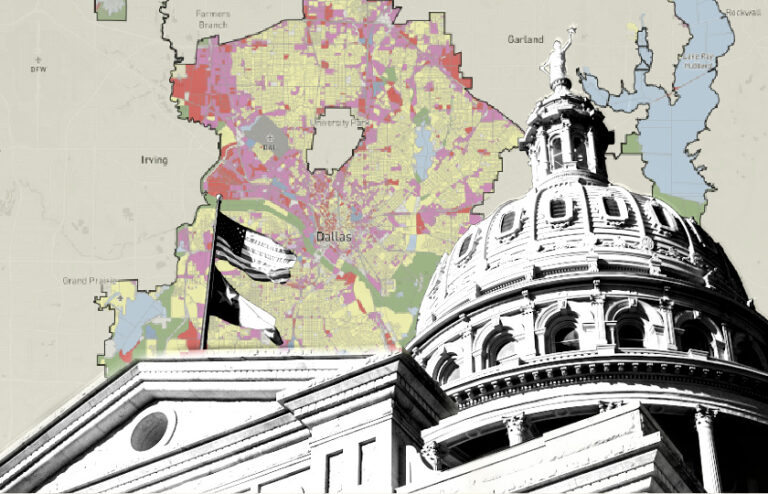
A new Texas housing law targeting big cities allows developers to build multifamily on commercially zoned land by right, and it’s now in effect. While more apartments will go up that maybe wouldn’t otherwise, municipalities like Dallas are losing zoning authority over where and how those projects will be built.
Senate Bill 840 was one of a number of bills to become law this year that aim to encourage the production of more housing units by limiting local regulatory authority. The thinking in Austin appears to be that cutting local red tape will translate into more housing at ostensibly cheaper prices.
The cost of this housing strategy, though, is local control over development. During last Wednesday’s Dallas City Council meeting, some officials made noise about exploring “legal options” to challenge the law, which officials registered their opposition to during the last legislative session.
Before today, if a developer wanted to build an apartment tower on a piece of land in Dallas that wasn’t already zoned for multifamily, they would have to petition the city to rezone the site.
While often contentious, this process invited public input so that impacted residents and businesses could weigh in on proposed development that needed rezoning. The buck stopped with elected officials who could either approve or disapprove the request or impose added requirements to a project to assuage neighborhood concerns.
Just a couple of weeks ago, in the city’s final pre-SB 840 zoning fight, the Dallas City Council approved a staff-led rezoning plan for the Hampton-Clarendon Corridor in West Oak Cliff. However, council members only did so after establishing setback, building height, window coverage, and parking requirements.
“I always kicked off my neighborhood meetings in these corridors by saying that ‘if we don’t make a plan, someone else will do it for us,’” said Council Member Chad West (District 1). “In my head that ‘someone else’ was a developer from outside of the neighborhood, but in the case of SB 840, the state took on that role.”
West has advocated for modernizing the city’s regulatory framework in a way that would encourage development to meet the growing housing demand. That has meant embracing increased density, something some vocal residents in single-family neighborhoods have been very wary of.

“The onerous zoning dockets in large cities like Dallas coupled with the lack of will by many elected officials to support density where appropriate led the state to this heavy-handed action,” West argued.
While there are certainly housing projects and planning reform efforts across Texas that failed to get off the ground because of residents’ zoning concerns, recent flashpoints in Dallas tended to go in favor of facilitating more development. Regardless, most if not all city council approvals included concessions. Whether those concessions went far enough is certainly in the eye of the beholder, but now, developers can build apartments virtually anywhere that’s zoned for commercial use, even if it doesn’t really make much sense.
“For example, multifamily housing can now be constructed in some commercial areas where no resident services are available, such as public transit, retail necessities, and amenities like parks,” West said.
Under SB 840, developers have the right to build multifamily housing or mixed-use projects where at least 65% of the square footage is residential “in a zoning classification that allows office, commercial, retail, warehouse, or mixed-use.”
The law preempts local regulations related to exterior design, overlays, planned development districts, and other special-use districts. It allows a density of up to 36 units per acre or “the highest residential density allowed in the municipality,” which is greater. Buildings can also go up as high as 45 feet or “the highest height that would apply to an office, commercial, retail, or warehouse development constructed on the site.”
West seems to hope SB 840 will motivate people to take a greater interest in actually collaborating to plot out the city’s future growth and development.
“It’s now more important than ever that our Dallas elected officials and neighborhood leaders take up the complicated and controversial task of planning if we want to have a say in the future development of our commercial corridors,” he said.
1 Comment
Leave a Comment







Great explination of new law