
Pepper Square Opponents Drop Zoning Lawsuit, but New State Law May Make Their Fight Moot
Share News:


The years-long Pepper Square saga appears to have come to an end this week after Far North Dallas neighborhood activists dropped their lawsuit to stop the controversial development. But the new Senate Bill 840 may have rendered the residents’ legal battle for less housing density irrelevant by giving developers broader rights to build more housing.
In one of Dallas’ most contentious zoning battles in recent history, developer Henry S. Miller sought to transform part of the aging, largely vacant Pepper Square shopping center at Preston and Belt Line into a mixed-use project with high-density multifamily housing and retail. The Pepper Square project was ultimately approved by the city council over the protests of angry residents who claimed the introduction of apartment towers with approximately 900 units would lead to traffic congestion and distort the character of nearby single-family neighborhoods.
Bitterness over the development may very well have led to former Council Member Jaynie Schultz’s (District 11) decision not to run for reelection this year and propelled commercial real estate broker Bill Roth — a vocal critic of Pepper Square — to victory in a June runoff to replace her.
Now, the issue appears to be moot (at least when it comes to city authority) with the looming enactment of Senate Bill 840, which allows developers to build mixed-use or multifamily projects by right on land already zoned for commercial use.
“On a citywide basis, it’s devastating,” Matt Bach told CandysDirt.com. “I mean, now the city and residents have kind of lost control of any kind of checks on what developers do [for projects falling under the purview of SB 840.”
Bach’s organization, the Save Pepper Square Neighborhood Association, was the plaintiff in the lawsuit filed against the developer and the city. The lawsuit claimed the defendants engaged in illegal “spot zoning” when securing approval for the project site.
In a later round of mediation, the group hired a Chicago architectural firm to draw up an alternative concept with less apartment units and a Dallas expert consultant to present a proposal that served both Henry S. Miller and the neighborhood’s concerns.
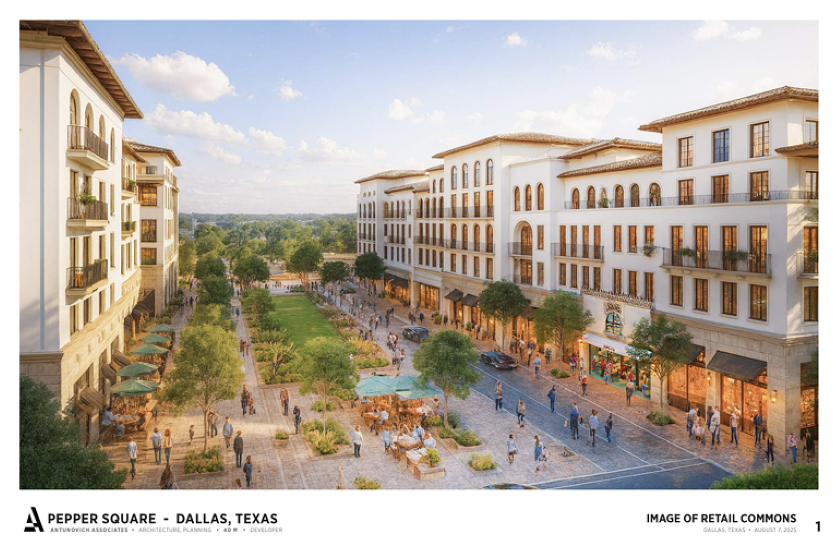
Bach said the legal fees associated with continuing litigation in light of the seeming blank check SB 840 affords developers building on commercially zoned land led to his group’s decision to drop its suit.
Under SB 840, Henry S. Miller wouldn’t have needed to rezone. At present, it isn’t even entirely clear whether the concessions the city council made to residents by imposing height and density limitations on the project will have to be honored. That would likely have to be litigated if the company wanted to pursue its initial proposal for 2,300 apartment units instead of the 868 in the approved ordinance.
CandysDirt.com reached out to the city about the matter, but the communications team responded, “We have no comment.”
Henry S. Miller’s president and CEO Greg Miller told The Dallas Morning News that the firm was going to move forward with what was approved by council members, citing the infeasibility of taller and more dense apartment towers.

“We could get almost 1,900 units, but that’s unrealistic,” he told the newspaper.
SB 840 is a game changer for housing developers. Historically, projects that needed rezoning for mixed-use or multifamily would have to secure approval from the city council. This gave elected officials the ability to impose requirements on projects to mitigate aspects that neighborhood residents or stakeholders opposed. Now, in potentially many cases, those days are done.
In fact, SB 840 was looming over last week’s city council meeting when council members were considering rezoning the Hampton-Clarendon Corridor to allow for mixed-use development. The proposal’s detractors acknowledged that getting added stipulations to council approval were a win since they wouldn’t necessarily be required come September 1, when the new law goes into effect.
“No plan is perfect, but this is a good balance plan for this corridor, especially in light of SB 840,” said Temple Anderson, according to DMN.
The law was authored and introduced by Sen. Bryan Hughes (R-Mineola). It was part of a slew of housing bills that aim to curb municipal regulatory power over land use. A number of bills passed after receiving bipartisan support in light of the Lone Star State’s housing affordability crisis. Supporters are banking on market mechanisms to kick in and check or lower rents and home prices as the housing supply increases over time.
Bills like SB 840 received a good amount of support from housing advocates and the conservative think tank the Texas Public Policy Foundation (TPPF).
“Using state authority to clear local regulation helps address and reaffirm the property rights of Texans, of property owners to be able to build so long as things aren’t dangerous or nuisances,” TPPF policy analyst John Bonura previously told CandysDirt.com.
“Our entire philosophy this session was removing local barriers to increasing density and supply to address the housing unit shortage but also address the actual demand of consumers,” he added.
That doesn’t sit right with single-family neighborhood advocates like Bach.
“I think it’s a huge loss of control for the cities in Texas,” Bach said. “I really am hoping [SB 840] challenged or maybe even invalidated. It’s going to change the landscape of development and local control in a major way.”







As someone who drives by that intersection weekly, I don’t mind the place being spruced up with mixed-use. It would certainly look nicer though I’ll miss being so close to Harry Potter Exhibition/Spirit Halloween/etc.