
Texas’ Data Center Fight Reaches Westlake as Keller Neighbors Protest 87-Acre Campus
Share News:

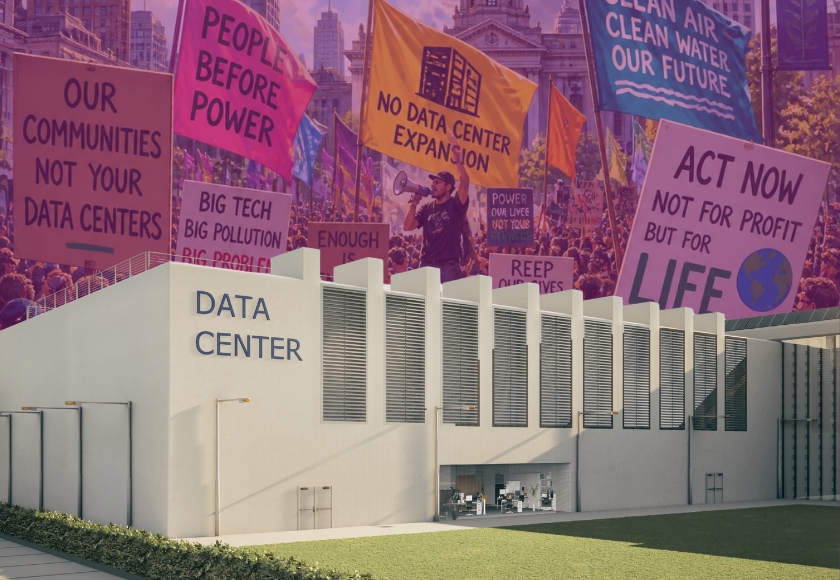
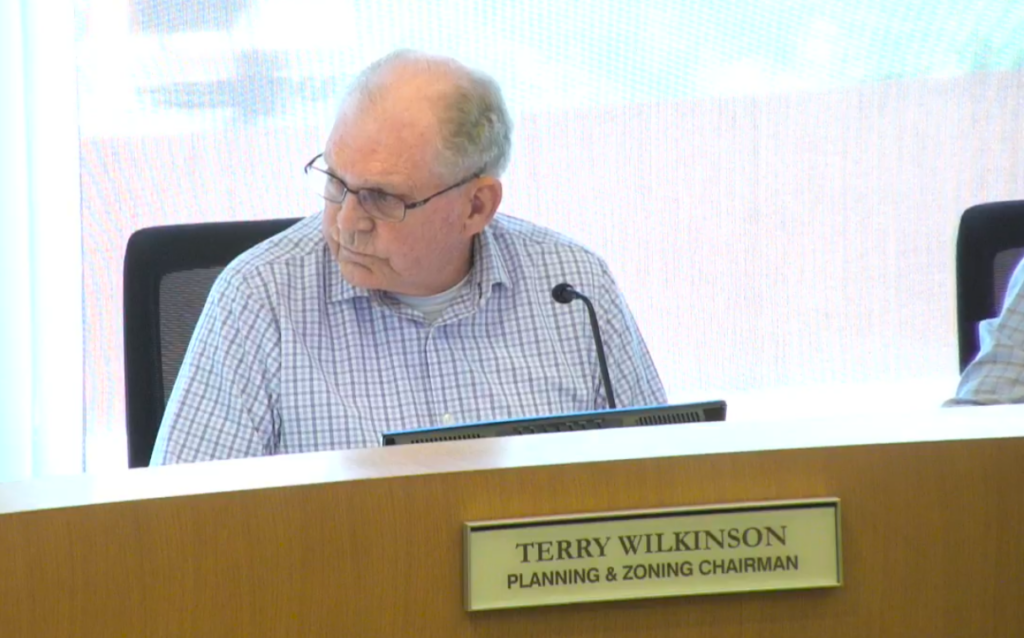
A raucous zoning meeting on Tuesday in the town of Westlake became the latest flashpoint in the growing conflict between Texas communities and data center development, with the Westlake Planning and Zoning Commission voting unanimously to recommend — with conditions — a controversial project for approval.
PowerHouse Data Centers is proposing a four-building campus on nearly 90 acres along U.S. Highway 377, just south of Alliance Gateway Freeway and bordering the city of Keller. The meeting drew more than 100 people, many of whom were residents of Keller.
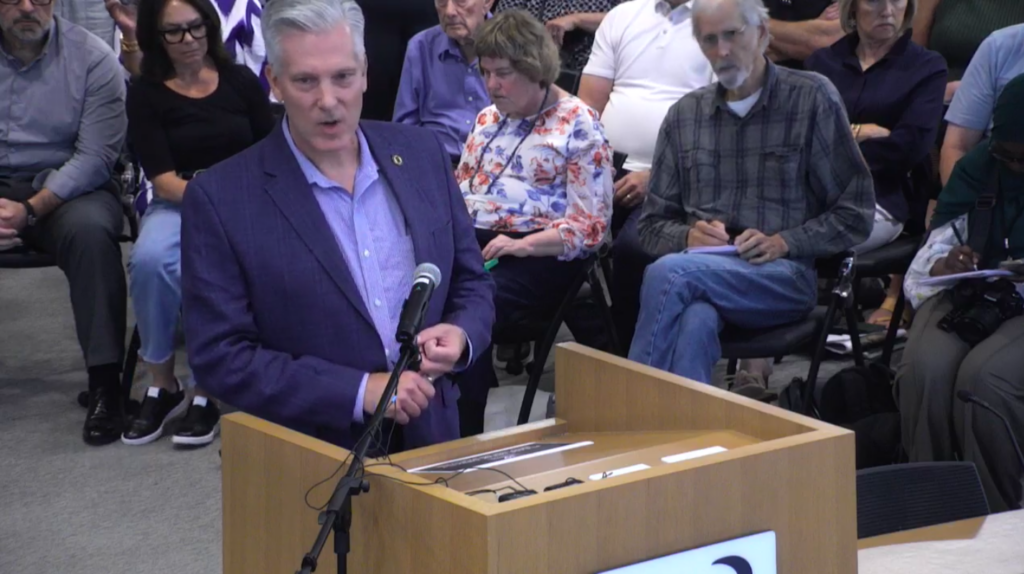
The land’s existing planned-development zoning already allows data centers. Many of the objections reportedly centered less on the data center itself than on where it would be built. Keller residents argued the project would sit only a few hundred feet from their backyards while the nearest Westlake homes are much farther away, accusing town leaders of protecting their own residents while shifting the impacts onto a neighboring community that has no authority over the development.
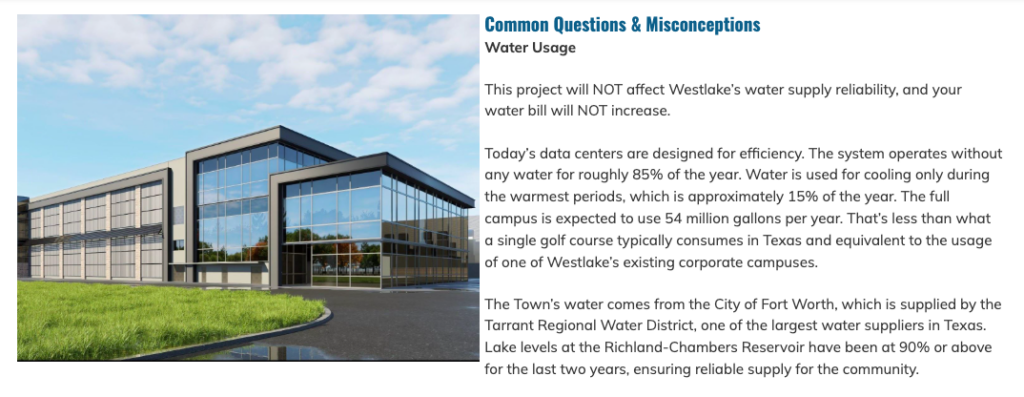
Westlake officials say the project has been carefully evaluated and would generate long-term tax revenue with minimal effects on traffic, noise, utilities, and nearby neighborhoods. It even launched a new webpage rebutting some of the common attacks on data center development.
Critics say the dispute, while especially noteworthy for pitting the richest municipality in the Lone Star State against its neighbors, reflects a broader trend emerging in Texas and across the country as communities grapple with a surge in data center construction.
What’s a Data Center?
Data centers themselves aren’t exactly new. They are specialized facilities that house servers and the other systems that keep digital services running, providing the power, cooling, and connectivity needed at mass scale.
While they’ve been critical for things like cloud computing, banking, streaming, and all things tech for years now, advancements in AI have significantly increased the need for data center services.
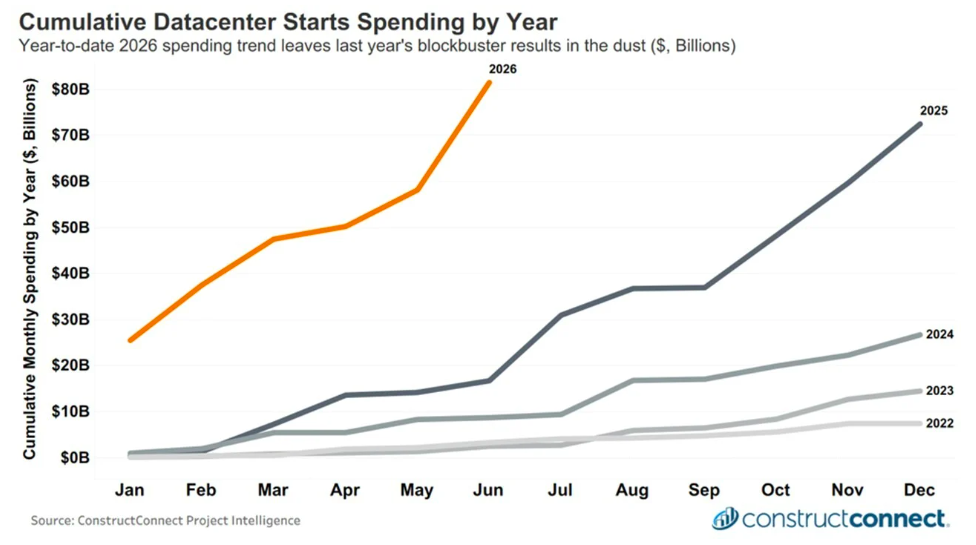
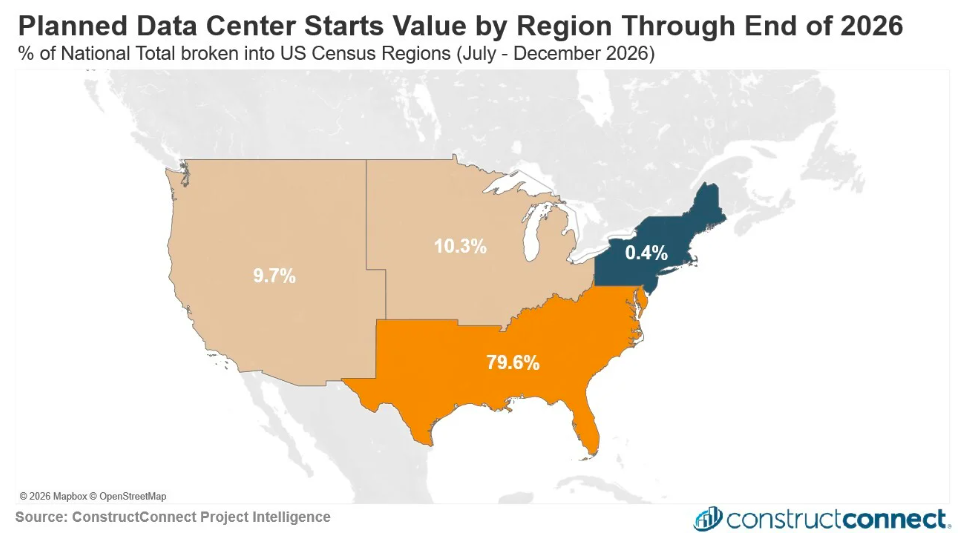
According to the construction analytics firm ConstructConnect, developers have launched $81.5 billion worth of U.S. data center projects through the first half of 2026 — already surpassing the $72.5 billion recorded during all of 2025 and clocking three times over what was logged in 2024.
Construction starts totaled $22.3 billion in June alone, the second-highest monthly figure on record. The average new data center has also more than doubled in size since 2022, reaching nearly 700,000 square feet, with Texas remaining one of the nation’s leading markets for new projects.
What’s the Big Deal?
The rapid expansion of data centers has sparked debate over who benefits from these facilities and who bears the costs. Advocates argue that they are essential infrastructure for an increasingly digital economy, powering everything from cloud computing and streaming services to AI.
Data centers also generate property tax revenue, create construction and technical jobs, and attract related technology investment. In some communities, local officials have viewed them as a way to diversify the tax base without placing heavy demands on schools or other municipal services.
Opponents counter that many of those economic benefits are overstated. While construction can employ hundreds of workers, data centers typically require relatively few permanent employees once operational. Residents also worry about the facilities’ enormous electricity demand, water consumption for cooling, noise from cooling equipment and backup generators, and the industrialization of rural or residential landscapes.
Some fear large facilities could contribute to higher utility costs, strain local infrastructure, or require taxpayer-funded incentives that outweigh the long-term public return.
Texas Turning Point?
Residents have challenged proposed facilities in Fort Worth, Red Oak, Westlake, Henderson County, Hood County, and other communities. The Dallas Morning News even has its own data center tracker tool now, which allows a user to pop in their address to find nearby operating facilities and planned projects.
While some projects have continued moving forward, others have been delayed or withdrawn. A proposed data center near Cedar Creek Reservoir became a flashpoint after residents raised concerns about water consumption, the project’s location near homes, and its potential impact on a reservoir that supplies drinking water to the Fort Worth area.
Community opposition helped fuel a grassroots campaign, and the developer, Diode Ventures, ultimately withdrew the proposal in July, The Texas Tribune reported.
Even as Texas continues to market itself as a premier destination for data center investment, state leaders are also beginning to pump the brakes. On Monday, Gov. Greg Abbott directed the Public Utility Commission and ERCOT to conduct a sweeping audit of proposed data center projects seeking to connect to the state’s electric grid, citing concerns over the unprecedented volume of electricity demand.
“Our top priority is to protect Texans’ safety and quality of life,” Abbott said. “Any project that fails to comply with the requirements set forth by the PUCT and ERCOT, and by state law, must be denied connection to the Texas grid. Simply put, Texans must come first.”
According to the governor’s office, data centers represent approximately 90% of the 474 gigawatts in new power requests currently under consideration by ERCOT. That is not generating capacity; it is proposed electricity demand, raising questions about grid reliability and whether speculative projects are tying up transmission capacity. Abbott directed ERCOT and the Public Utility Commission of Texas to scrutinize projects’ projected energy needs, financing, and readiness before any data center in the interconnection process is allowed to move forward.
The order marks a shift in tone from state leaders who have aggressively courted AI and cloud computing investment. It gives data-center opponents another layer of scrutiny, but it does not replace local land-use rules. As many likely know, property rights are strong in Texas, and if land is already zoned appropriately, it’s hard for officials to justify blocking a project.
That distinction was particularly important in Westlake, where the property was already zoned to permit a data center and commissioners said their authority was limited to reviewing the site plan.
Fort Worth is considering a temporary moratorium on new data center applications while it develops stricter zoning regulations. The proposed rules would establish standards for issues such as setbacks, buffering, landscaping, lighting, and compatibility with surrounding neighborhoods, but many residents and a majority of council members have argued the city needs more time to strengthen those protections before additional projects move forward, according to Fort Worth Report.
The City Council is scheduled to consider initiating the moratorium process on Aug. 11. If approved, new applications would be paused while the city continues developing its regulations.







It seems the hostility toward data centers could be to some extent driven by anger toward the replacement of knowledge workers by AI. Hopefully a happy medium can be reached between governments, the public, and corporations in a way that is beneficial to all.