Walnut Hill Zoning Deferral for Patio Homes Leaves Residents Waiting — And Angrier
Share News:

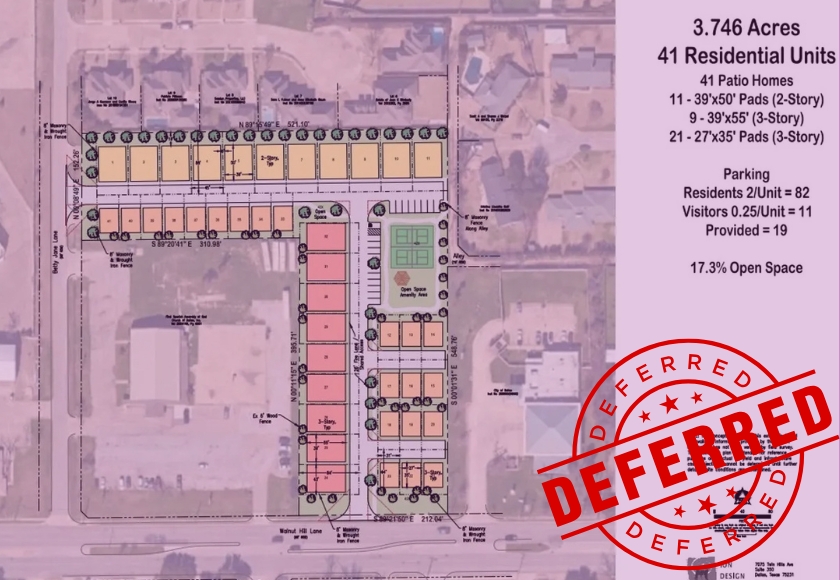
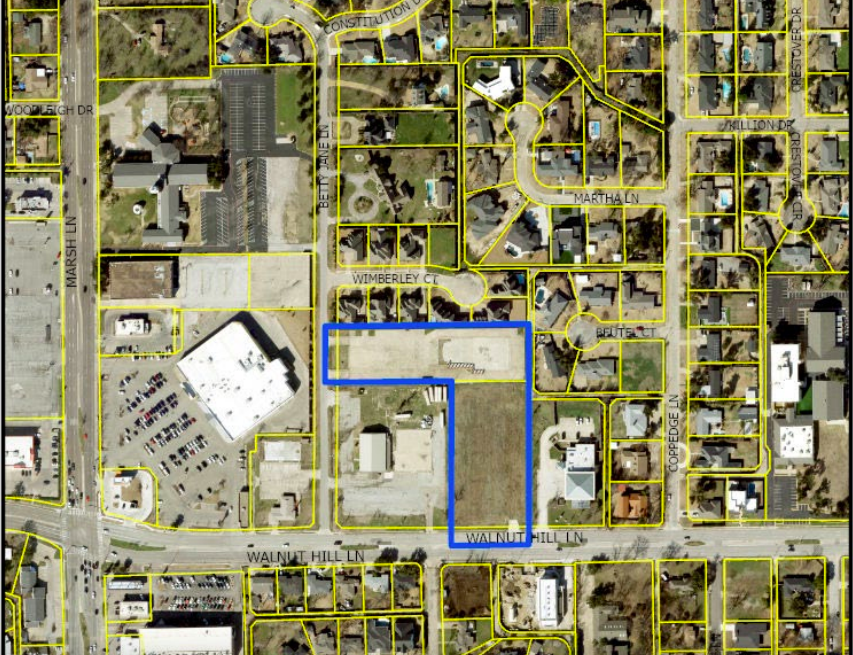
A contentious northwest Dallas zoning case was delayed Tuesday after Council Member Gay Donnell Willis moved to defer a vote on the proposed 41-home development near Walnut Hill and Betty Jane lanes.
The deferral was the outcome opponents had sought, but the way it happened angered residents who had spent hours at City Hall waiting to speak.
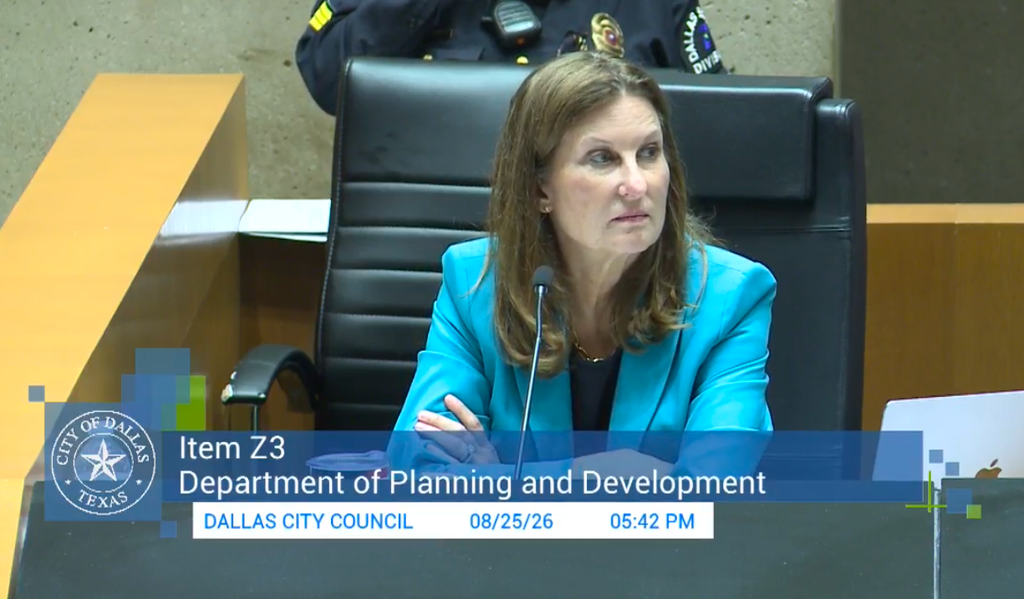
Willis (District 13) moved to defer a vote on the application until September 23, saying there were “some new possibilities” related to the case, which involves a zoning request for a planned development district allowing for 41 detached single-family patio homes.
Developer Mehrdad Moayedi’s Crescent Estates Custom Homes is seeking the PD. Crescent is the luxury homebuilding arm of Moayedi’s larger Centurion American Development Group. Many residents have been up in arms over the project over its height and density allowances, even after initial plans for 60 homes were scaled down to 41.
The deferral motion passed 10-3, with two council members absent. But the city council’s procedural rules prevented residents who had traveled to City Hall from speaking because the zoning case had not been formally opened.
Council Members Cara Mendelsohn (District 12) and Bill Roth (District 11) objected, arguing that the residents should be heard before officials deferred the case. Mendelsohn asked Willis to withdraw her motion temporarily, allow the case to be read into the record, and then renew the deferral after public testimony. Willis declined.
“She could have done this five hours earlier, and we wouldn’t have had to waste another five hours of our life on this,” said John Wimberley, who lives in and built the adjacent Wimberley Court neighborhood and has opposed the project across its iterations.
In a statement Wednesday, Willis said she was sorry residents were unable to speak, acknowledging that they waited for hours while the city council met behind closed doors to discuss legal matters and then finished its regular agenda before reaching zoning cases.
“We’ve had prior complaints about speaker wait times,” Willis said. “The council agendas can be ‘fluid,’ causing agenda items to move and public speakers are asked to wait. Those postponements are frustrating, and I’m sure those feelings were exacerbated when they were waiting in a very cold council chamber.”
She said she sought the deferral because the developer is preparing “important revisions” that she believes residents will welcome.
“I’ve been promised that they will be able to review these changes very soon,” she said. “Again, I am very sorry for the inconvenience some of the residents that came to City Hall experienced yesterday.”
Tuesday’s deferral came at a tense time in District 13. Frustrations over a number of recent zoning cases have led to the formation of the D13 Together Coalition, a neighborhood organization looking to initiate a recall election against Willis if she doesn’t delay a number of district zoning applications.
Earlier this month, one of those cases was approved by the city council involving Melshire Park, where covered patios had been permitted under an interpretation of setback rules the city later changed.
“District 13 residents waited for hours to speak on the Walnut Hill zoning case at City Hall only to be turned away by their Councilmember who repeatedly claims to welcome feedback,” the coalition said in a statement. “She had a clear opportunity to reverse course when a fellow council member pushed her to let residents be heard, yet Willis dug in her heels. For somebody who campaigned on ‘Neighborhoods first,’ she has done everything in her power to put the people who live in them last. Gay Willis is unfit for public service, and Dallas deserves better.”
The particular dispute over Moayedi’s project at Walnut Hill and Betty Lane goes back over a year. Neighborhood leaders previously worked cooperatively with Crescent Estates Custom Homes on a separate townhouse project near Marsh Lane, but that relationship changed when the company pursued redevelopment at the current site, a 3.75-acre former church property. The site was heavily damaged by the October 2019 tornado that hit North Dallas and is now largely vacant.
According to city documents, the developer’s deferred PD request would allow lots as small as 1,980 square feet — roughly 30 by 66 feet, or about one-eighth the size of some surrounding residential lots. Homes could rise as high as 36 feet, allowing for three stories. As a concession, homes on the northern property line would be no taller than 30 feet.
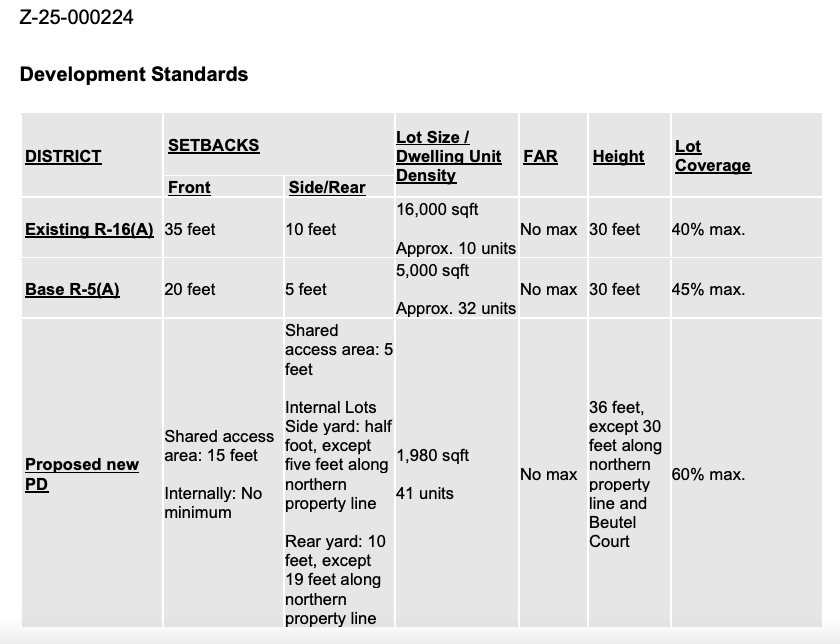
Opponents say they support redeveloping the vacant church property with more housing but want every home capped at two stories and 30 feet. They argue that allowing lots that small would be out of character with surrounding neighborhoods (currently zoned for lots as big as 16,000 square feet), create privacy concerns for adjoining properties, and establish a precedent for similarly dense development elsewhere in the area.
“If you let three stories in, the next developer who gets a lot is going to say, ‘Well, look, you allowed it here. Why can’t we do it here?’” Wimberley said. “That’s how it spreads.”
Tricia Pittman, president of the Wimberley Court Homeowners Association, agreed. She said Moayedi’s townhome project the community supported was being used to justify the new development. The former was already zoned commercial.
“They’re using that as a precedent,” Pittman said. “It’s different. It is not townhome zoning. You are not asking for townhome zoning, so therefore you should not get the density and the height that townhouse zoning has.”
The height restriction in the residentially zoned site is 30 feet. Pittman said residents’ worries go beyond this particular development. With what neighbors characterize as a new presumed precedent, existing single-family homes with big lots could be redeveloped up to three stories.
“We constantly have beautiful homes going up, tearing down older homes, building up bigger homes, but they’re all two-story,” she said. “We don’t want that next product in this neighborhood to be three-story homes going up. They would tower over these Ranch homes that we still have in our neighborhood.”
CandysDirt.com reached out to both Centurion American Development Group and Crescent Estates Custom Homes about Tuesday’s deferral through their respective contact portals but did not hear back prior to publication.
Pittman, who waited hours to speak to no avail along with Wimberley and other residents, said a meeting could be in the works next week between stakeholders. It’s unclear what revisions have been made, but opponents have dug their heels in against any height maximum that would allow for three-story homes.