Dallas Sees 8% Jump in Real Estate Values, Led by New Homes and Industrial Growth
Share News:


The City of Dallas’ real estate tax base grew more than 8% last fiscal year, according to the Dallas Office of Economic Development’s annual Year in Review report. And while rising property values are connected, the jump in value was largely driven by physical growth — new housing construction and a significant expansion of industrial space, city data shows.
Across residential and commercial real estate, the city’s tax base grew from $178.75 billion in 2023 to $193.27 billion in 2024. The rise in real property tax value comes at a critical time for Dallas, which faces a projected $6.5 million budget shortfall heading into planning season.
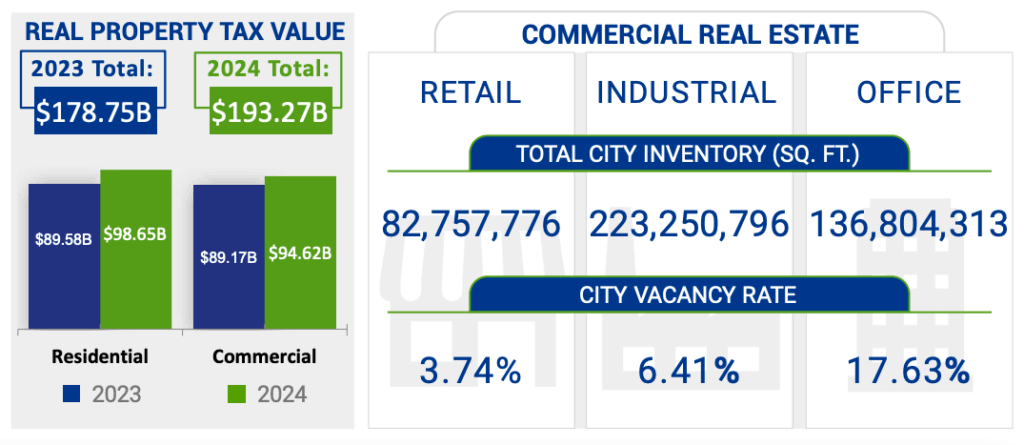
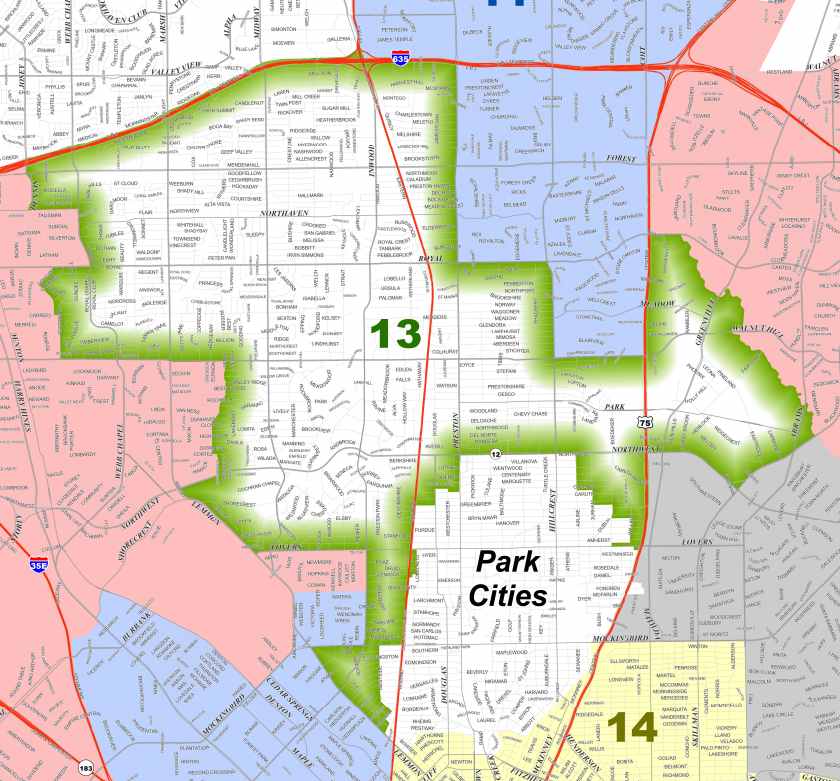
Residential property led the increase, jumping 10.13 percent year over year to $98.65 billion, the report shows. District 13, represented by Council Member Gay Donnell Willis, had the highest total residential value at $24.21 billion in FY 2023-2024. The district includes Preston Hollow, Russwood Acres, and other neighborhoods stretching north and northwest of the Park Cities to I-635.
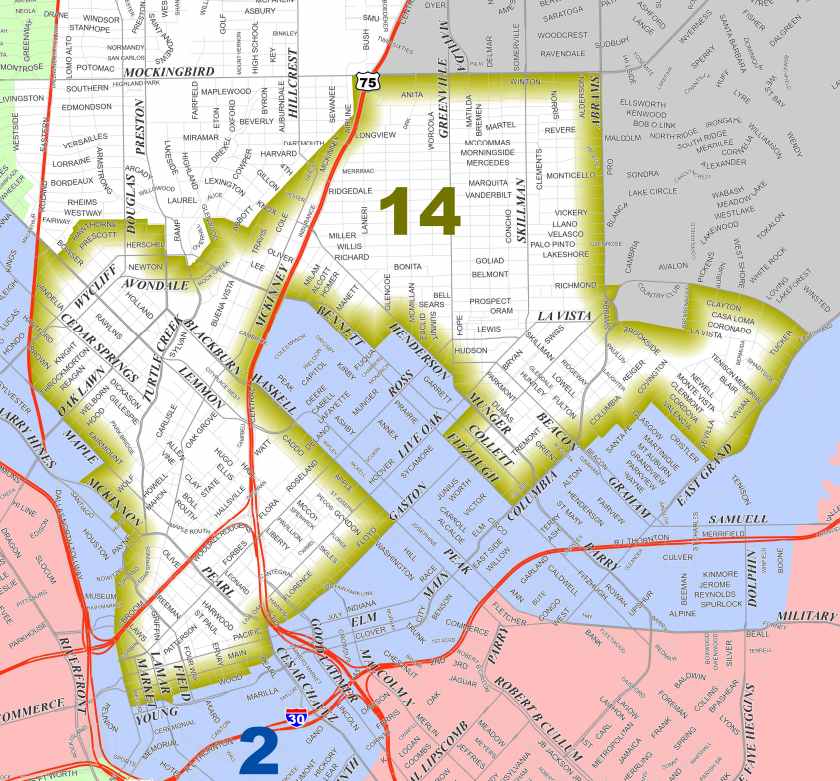
On the commercial real estate (CRE) side, tax value increased from $89.17 billion to $94.62 billion — a 6.11% jump. District 14, represented by Paul Ridley and covering Uptown, parts of East Dallas, and half of the Central Business District, logged the highest commercial value at $24.15 billion.
CandysDirt.com reached out to the city for clarification on whether its figures were irrespective of tax abatements that the city uses to encourage developers to build in Dallas.
“According to our Office of Economic Development, the taxable value is determined by total value/market value as established by the appropriate appraisal district. It does capture any abatements or exemptions on properties,” a city spokesperson said.
How Much Tax Value Is Exempt?
Some council members have raised concerns about how much property gets left off the tax rolls due to abatements and other incentives, even for housing projects that address supply shortages.
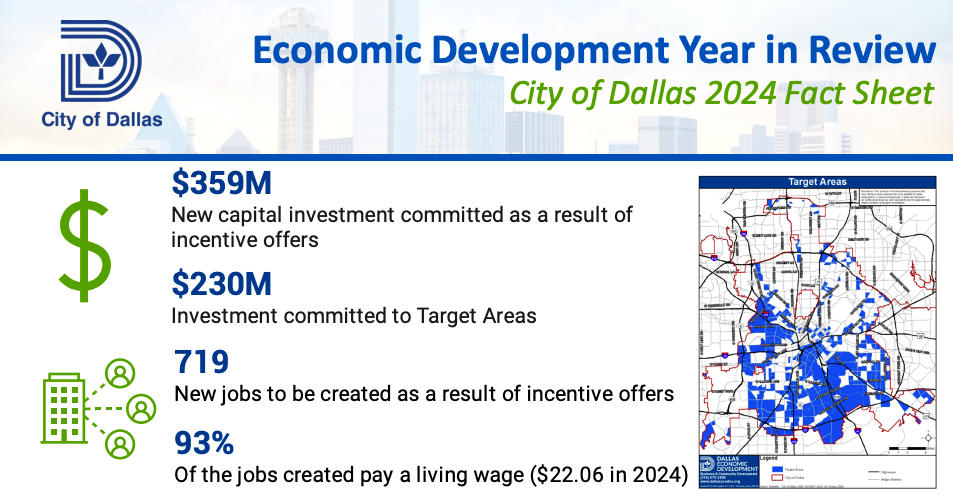
In its data, the Office of Economic Development attributed $359 million in new projects and development to incentive offers for developers.
At a meeting on March 26, Council Member Carolyn King Arnold said some of her constituents “lose their breath” when she tells them how much taxpayer money is forgone in abatements, even for projects she supports due to “location and the necessity.”

Council Member Cara Mendelsohn added that exemptions are eroding the city’s ability to maintain core services.
“We have to think about things in a much … deeper way and understand we need this revenue,” she said. “We cannot maintain our streets. We cannot pay our cops. We cannot do the things that we are tasked to do when we keep exempting every single housing deal that comes before us.”
Industrial Growth Outshines Retail and Office
The Office of Economic Development didn’t offer a breakdown of different housing types (multifamily vs. single-family), but it did publish data outlining Dallas’ CRE footprint by sector, differentiating between industrial, retail, and office.
Industrial real estate saw the biggest bump in square footage, which helps explain its growing share of the city’s tax base. The city logged 223.25 million square feet of industrial space in FY 2023-2024, a 24.6% jump from the year prior. This category includes data centers, warehouses, shipping hubs, and research facilities.
Due to redistricting in 2022, year-over-year district comparisons aren’t apples to apples — but some trends still stand out. District 6, represented by Omar Narvaez, remains a hub for industrial development. The district logged 103.1 million square feet of industrial space last year, up nearly 30% from 75.4 million square feet the previous year.
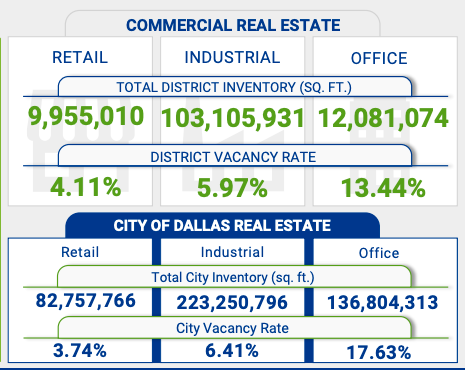
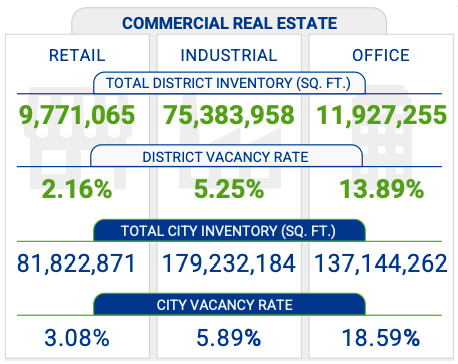
By contrast, office and retail growth lagged. Office space totaled 136.8 million square feet, staying essentially flat from FY 2022-2023, though vacancy ticked up by 1%. Retail grew just 1.1%, totaling 82.76 million square feet, with vacancy rising from 3.1% to 3.7%.
Interestingly enough, Dallas is one of the top cities in the United States for office-to-apartment — a trend that could ultimately boost residential values and occupancy downtown.
On the retail front, the city recorded 82.76 million square feet of space last fiscal year, logging only a 1.1% bump over the previous fiscal year. Vacancy increased as well from around 3.1% to 3.7%.
To read about where the Office of Economic Development got its data, click here. And if you want to dig into each city council district’s demographic and economic data over the last few fiscal years, click here.
UPDATE: This article was updated at 9:04 a.m. on May 14, 2025, to include the city’s response to our inquiry.