From Cubicles to Condos: Dallas Ranks High in Office Conversions
Share News:

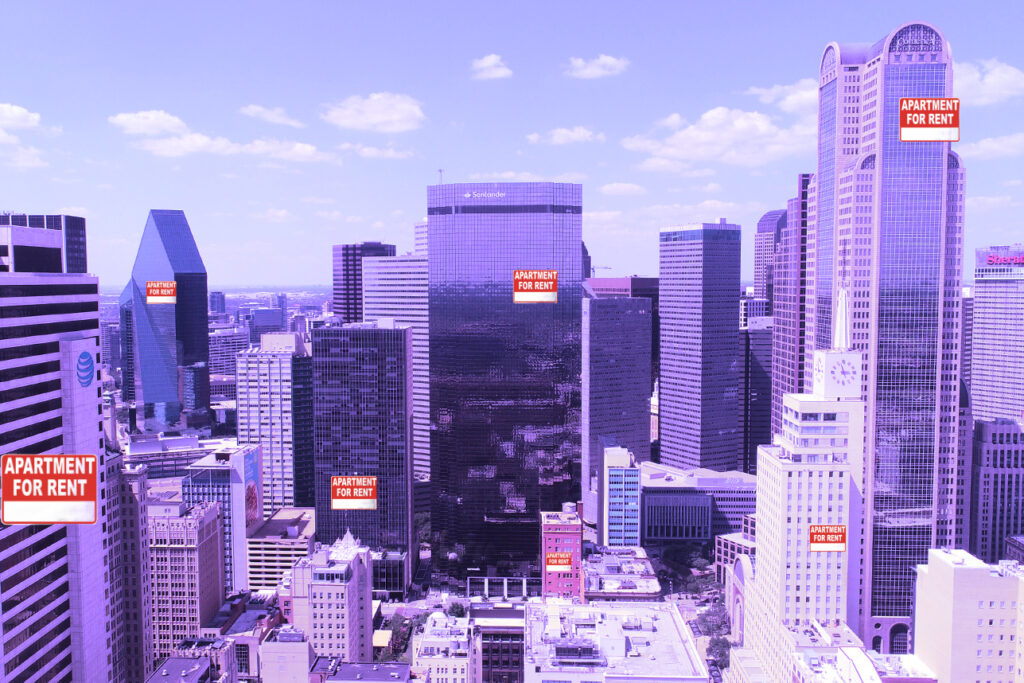
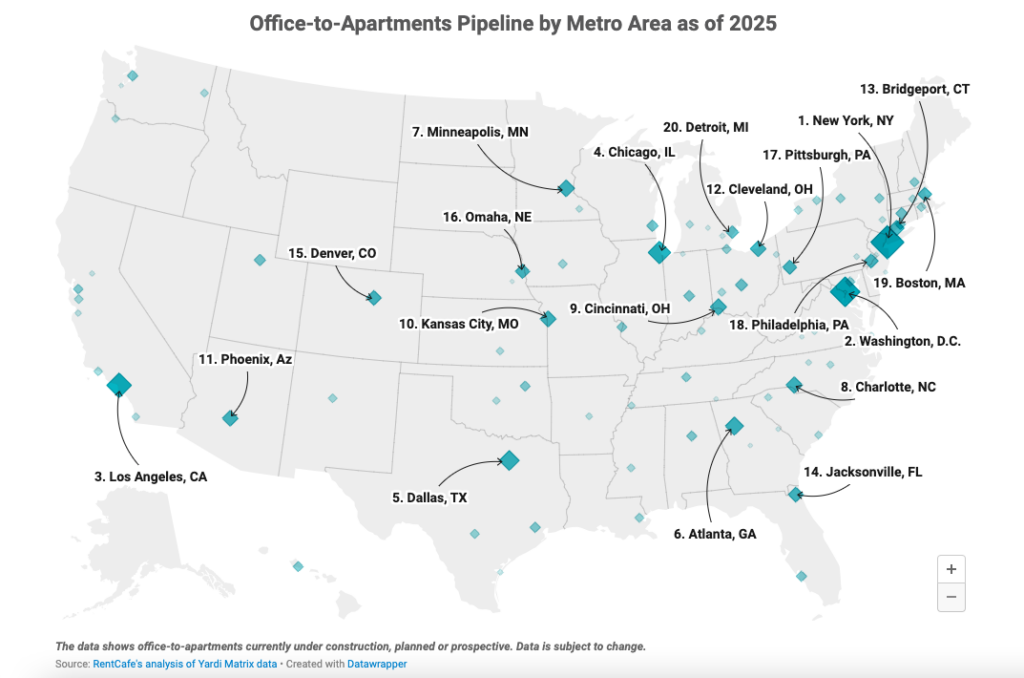
Conversion of office space into apartments has ramped up over the last few years, with Dallas placing fifth among metro areas across the United States for most units in the works this year.
According to a study published by RentCafe on Monday, D-FW has 2,752 units in the pipeline as a result of adaptive reuse, coming in behind only New York City (8,310), Washington, D.C. (6,533), Los Angeles (4,388), and Chicago (3,606). The study was based on data pertaining to buildings with 50 or more units.
Dallas Office Buildings Converted to Housing
It should come as no surprise that the Metroplex ranks so high. Several years of population growth and a slowdown in new builds in North Texas produced an affordable housing crunch that some developers are seeking to alleviate by converting office properties into multifamily residential units.
Downtown Dallas, in particular, has been making headlines for a number of high-profile projects, including the former First National Bank Tower, Bryan Tower, and Santander Tower.
In an episode of Dallas Dirt, Dallas architects and brokers sat down to discuss what’s on tap for the future. In this short clip, architect Kevin Wallace explains how a standard office floorplan can be converted into residential suites, transforming a floor of walls into studios, two-, and three-bedroom apartments.
The author of the RentCafe report, Florin Petrut, told D Magazine that in addition to population growth and limited supply, “supportive regulations (such as 2023’s House Bill 14), and an existing stock of underperforming office buildings suitable for conversion, have all played a role” in D-FW’s high ranking this year.

House Bill 14 essentially allows for qualified third parties to conduct permit reviews when regulatory authorities (namely municipal permitting departments) fail to do their reviews in a timely manner. Slow turnaround times in permitting were a hallmark of the now-reworked Development Services Department in Dallas. Permit times improved after the department was merged with the Planning and Urban Design Department to create the Planning and Development Department, an initiative spearheaded by then-interim City Manager Kimberly Bizor Tolbert.
Inventory of Office Units
While D-FW still ranked high in RentCafe’s 2025 conversion report, it’s important to note the significant drop-off in pipeline units year over year. In 2024, the Dallas metro area ranked third with 3,163 units.
“[O]ffice-to-apartment conversions are down nearly 14% from last year, likely because of the limited share of office inventory suitable for conversions (6.4%, well below the 14.8% national average), totaling over 21.7 million square feet,” the report reads.
The downturn in such adaptive reuse projects coincides with a renewed call — or demand — by employers for workers to go back to the office. Commercial real estate developers PegasusAblon and Hoque Global are so convinced the remote work trend will end this year that they’re planning on putting $350 million behind the redevelopment of Bank of America Plaza.
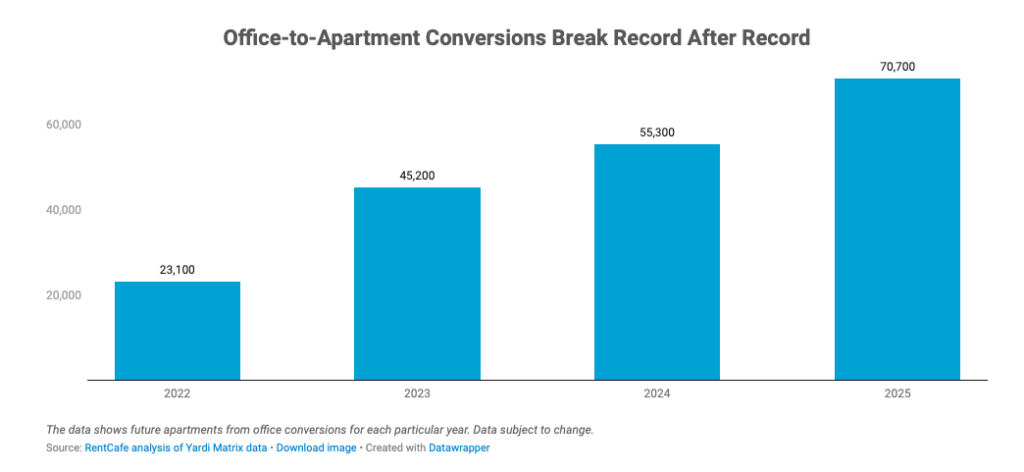
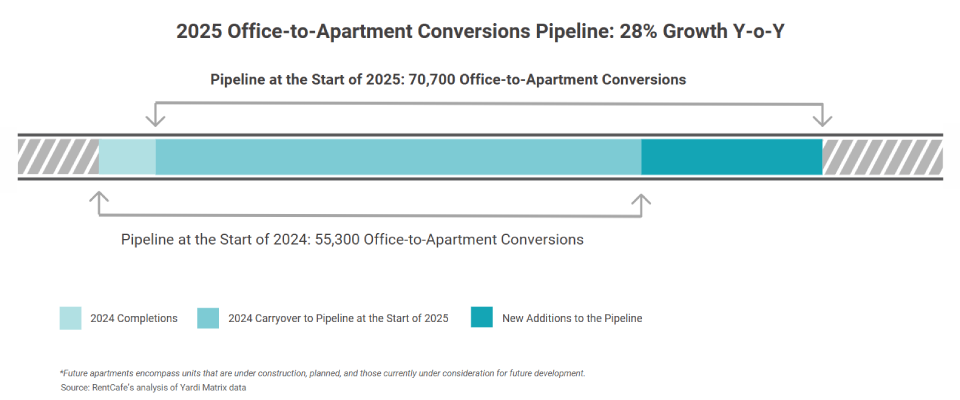
Maybe that’ll be the way things go in D-FW, but the RentCafe study suggests otherwise when it comes to the United States. Nationwide, office-to-apartment conversions will hit an all-time high with 70,700 in the pipeline this year, RentCafe projects. There were only 23,100 in 2022.
The clocked increase, however, could be somewhat deceiving. Out of the 55,300 conversions in the pipeline in 2024, fewer than 4,000 were delivered by the end of year. The data shows these are “future apartments from office conversions.” This means more than 50,000 units in 2025’s count are holdovers.
Increasing Construction Costs
“While the volume of office-to-apartment conversions is growing, indicating increased interest in this type of retrofitting, the carryover of pending projects from one year to another is quite large. This suggests that other factors like conversion feasibility, construction costs, and local incentives come into play,” the report reads.
One issue developers could face this year is an increase in the price of certain building materials. President Donald Trump has made tariffs a key feature of his international trade policy. On Tuesday, he implemented 25% across-the-board tariffs on all aluminum and steel imports. There are also pending tariffs that will impact the cost of Canadian softwood lumber.
Still, the office conversion trend seems strong for now.