
Less for More: Dallas Apartment Units Are Getting Smaller and More Expensive
Share News:


Many people living throughout North Texas have been making it clear they think the rent is too high. You have to wonder though, if they’ve noticed they’ve been paying more for less apartment, too.
Apparently, as rents climbed over the past several years, the average square footage of a one-bedroom apartment in Dallas shrunk.
Data compiled by Storage Sense shows that average rent in the city between 2018 and 2024 increased by 19.2%, jumping from $1,168.81 to $1,445.93. Meanwhile, average square footage dipped by 11.1%, tumbling down from 952 square feet to 846 square feet.

“The Dallas housing market data reveals a compelling story about the evolution of urban living in Texas. With a reduction of 106 square feet in average apartment size while simultaneously experiencing a significant rent increase, we’re seeing a fundamental shift in how housing is being approached in major metropolitan areas,” a Storage Sense spokesperson said.
“This trend suggests not just a simple downsizing movement, but rather a complex interplay between urban development, population growth, and changing consumer preferences in one of America’s fastest-growing cities,” the spokesperson added.
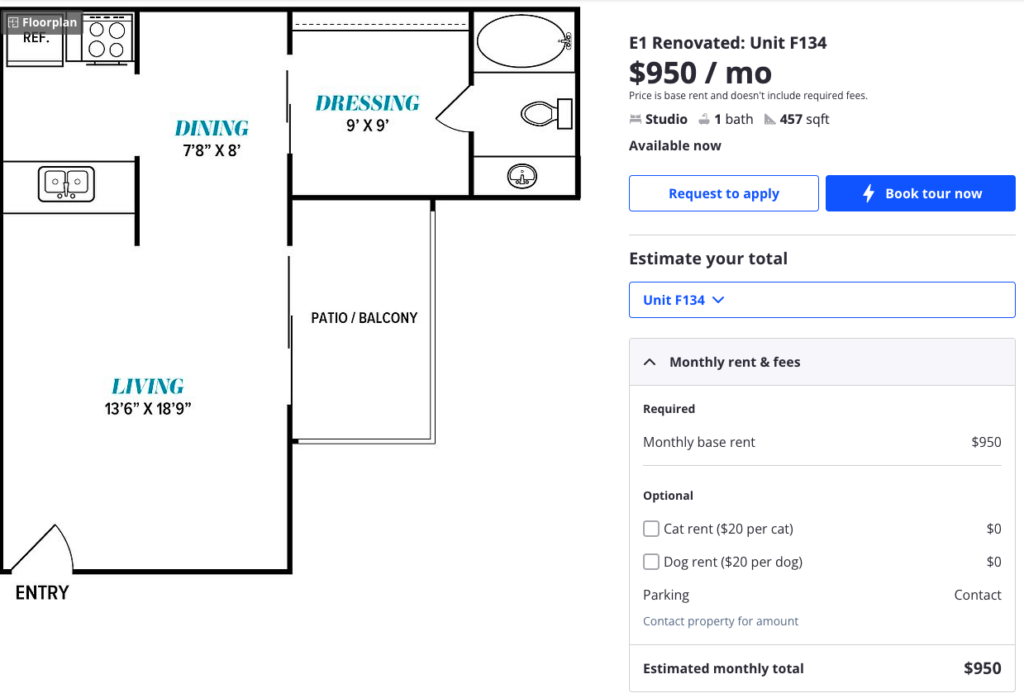
Just for kicks, CandysDirt.com looked around Zillow to see what the smallest apartment available was in Dallas proper these days. If you can squeeze into it, there’s a studio for rent that’s 457 square feet at 3136 Hudnall St. near the intersection of Inwood Road and Cedar Springs Road.
Rent is $950 a month.
The State’s Housing Crunch Is Playing Into the Dynamic
Several factors seem to be at play. Housing stock, for instance, not just in Dallas but across the Lone Star State, has not kept pace with population growth, leading to higher costs for both renters and prospective homeowners.
As previously reported by CandysDirt.com, a housing affordability report published by the Texas comptroller’s office showed that the state was short some 306,000 housing units in 2023. Rapidly rising interest rates and supply chain disruption during the COVID-19 pandemic contributed to the deficit.
State lawmakers have made tackling the housing crisis a priority this session, with a number of bills awaiting consideration.
On Tuesday, Sen. Paul Bettencourt (R-Houston) lent support to the downsizing trend. He filed a bill to encourage the building of smaller single-family homes through the reduction of minimum lot sizes municipalities can impose on new subdivisions.
“What we’re trying to do is come up with changes that get government out of the way of blocking affordable housing in the major urban cities,” said Bettencourt, per the Texas Tribune.
If enacted, the bill would only apply to cities with a population greater than 90,000 located in counties with more than 300,000 residents.
Apartment Units Are Shrinking All Over
The shift toward greater density is something that Dallas has embraced as a matter of policy guidance, much to the chagrin of some single-family residents who are wary of multifamily developments popping up in their neighborhoods.
ForwardDallas, the city’s comprehensive land use plan, was officially updated last September. It acknowledges the need for more attainable housing and leaves the door open for rezoning to allow for more housing options across the city.
Going forward, density seems to be the name of the game, not just in terms of urban planning but with builds themselves all over the United States.
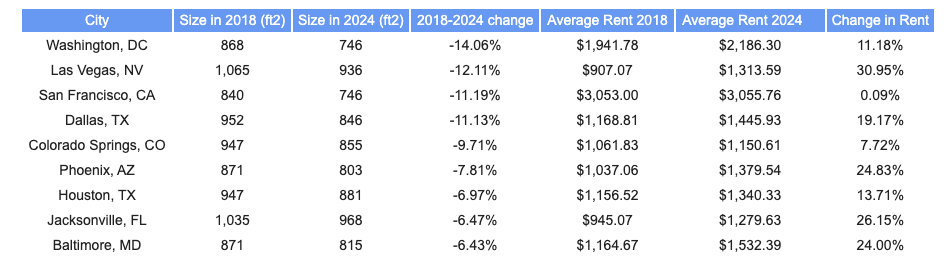
Looking at the top 10 cities where the average square footage of a one-bedroom apartment decreased between 2018 and 2024, every city saw a significant increase in average rent price. The exception is San Francisco, which saw an incredibly modest hike of 0.1 %.
“This trend reflects broader changes in urban development and housing preferences, suggesting a move toward more compact living arrangements in response to growing urban density and changing lifestyle preferences,” Storage Sense’s spokesperson said.
Dallas was ranked fourth in terms of square footage decrease, behind only Washington, D.C. (14.1%), Las Vegas (12.1%), and San Francisco (11.2%).