
ForwardDallas 2.0 Land Use Plan Adopted, Will Guide ‘How and Where’ City Should Grow
Share News:


The ForwardDallas 2.0 comprehensive land use plan has been adopted — but the implementation phase has only just begun.
In an 11-4 vote Wednesday evening, the Dallas City Council approved ForwardDallas, a plan that has been through numerous iterations, committees, and amendments over a three-year period. It was a long road and not everybody was happy with the finished product.
The adopted version includes a slate of new amendments with a provision that the plan be reviewed within five years. The adopted plan also includes changes specifically designed to protect single-family neighborhoods that were introduced earlier this month by Councilman Paul Ridley at an Economic Development Committee Meeting.
Council members debated and accusations flew about “backroom deals” and a lack of transparency. Ridley and Councilwoman Cara Mendelsohn unsuccessfully proposed amendments to change a matrix within the plan that some have said encourages density in single-family neighborhoods and therefore does not align with the newly amended narrative portion of the plan.
Ultimately a motion made by Mayor Pro Tem Tennell Atkins prevailed. Mayor Eric Johnson and council members Mendelsohn, Jesse Moreno, and Carolyn King Arnold voted against it.
City of Dallas Staff Pleased
Andrea Gilles, deputy director of Planning and Development, has shepherded the plan with Chief Planner Lawrence Agu and Senior Planner Patrick Blaydes — updating a plan that hasn’t been altered since it was drafted in 2006 — and they’ve taken a lot of heat along the way. Some of that ire may have been misdirected as it was a committee of resident volunteers who drafted the controversial housing component of ForwardDallas 2.0.
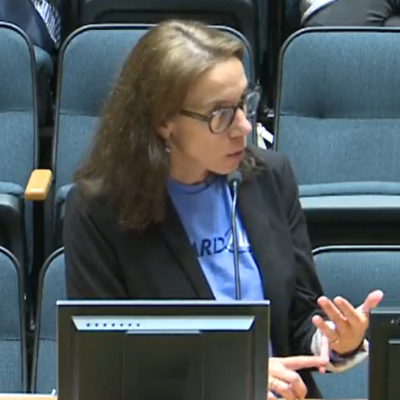
“Good and bad, challenging, tough, hard … we had a lot of really important and significant conversations and it was from across the board, a lot of people, and I think that is very important,” Gilles said Wednesday. “We obviously don’t agree on a lot of things, but I think there was a lot of passion involved in this conversation and it needed to happen. I think we need to honor that conversation and we need to move ourselves into the next steps.”
In a city-issued press release, Interim City Manager Kimberly Bizor Tolbert said the plan was built around the primary pillars of environmental justice and sustainability, transit-oriented development and connectivity, housing choice and access, economic development and revitalization, and community and urban design.
“This journey began with the goal of developing a strategic roadmap to support Dallas’ growth and social vibrancy while preserving the quality of life for all,” Tolbert said.
Watch the Sept. 25 Dallas City Council meeting here.
Residents Packed City Hall
In a final push, residents and advocates on both sides rallied their allies to “pack City Hall” and make their voices heard. That they did.
Fifty-five residents signed up to address the council, offering thoughtful analysis of the proposed land use plan.
Those residents who support the plan generally say they want to leave the door open for greater density in areas where it makes sense. More housing will address the housing supply shortage and could potentially make homes more affordable, advocates with groups like Dallas Housing Coalition have said.
Those against the plan are concerned it will make it easier for developers to build multiplexes adjacent to single-family neighborhoods.

Councilman Ridley’s “compromise amendments,” unanimously approved by the City Council’s Economic Development Committee on Sept. 3, quieted but did not silence the opposition.
Some, like Park and Recreation Board member Rudy Karimi, said they wouldn’t be happy until multiplexes were removed as a secondary use in the Community Residential placetype matrix. Ridley attempted to make that change on Wednesday and his colleagues shot him down.
Heated Council Member Discussion
Council member Chad West and Deputy Mayor Pro Tem Adam Bazaldua have been staunch supporters of the plan and appeared determined this week to get the document adopted.
West said after the meeting that ForwardDallas 2.0 is exactly what it should be: a good compromise where everyone feels a bit dissatisfied but can live with the results, knowing they move the city forward.
“This plan is not perfect but it balances the need to preserve existing single-family neighborhoods while allowing for desperately needed housing with design standards across our city,” West told CandysDirt.com. “If we have learned anything from zoning history in Dallas and across the country, we know that allowing a diversity of housing options — including duplexes and townhomes — in every neighborhood will lead to a more inclusive, equitable, and affordable city. I look forward to exploring more housing options in the coming year, such as allowing accessory dwelling units by right for lots where homeowner property tax exemptions have been filed.”
Councilwoman Mendelsohn, perhaps the most vocally opposed to the plan, said four members of the council worked behind the scenes to come up with a “backroom deal.” She appeared to criticize West, though she didn’t name him, for “calling the question,” a meeting protocol that effectively cut off discussion about Ridley’s motion to align the placetype matrix with the narrative.
“There’s a big problem with this plan, and you all know it,” Mendelsohn said. “You want to get rid of it as quickly as possible, as far away from Election Day as possible.”
What Residents Are Saying
Preservation Dallas Executive Director Sarah Crain and Board President Ron Siebler issued a letter earlier this week to address their concerns about ForwardDallas 2.0 related to historic preservation.
“We … believe there are three crucial matters that must be included for the plan to be successful,” the letter states.
- Neighborhoods with historic and culturally significant properties, yet to be formally identified as such, are under siege. ForwardDallas 2.0 must prioritize and incorporate a Historic Preservation Plan to identify those areas that are worth preserving prior to formal adoption.
- Established neighborhoods contribute to the naturally occurring affordable housing stock, and the maintenance of these existing structures is key to providing sustainable homes for our workforce. Older neighborhoods that are already affordable are worthy of protection.
- Enhanced staffing in various city offices, such as the Office of Historic Preservation, will be necessary in order for them to assist with implementation and oversight of the plan.
Additionally, a “Neighborhood Coalition of Dallas” agreed recently on its position, generally suggesting that anything varying from a single-family detached home be removed from the Community Residential placetype.
Slides from an NCD community meeting can be viewed below.

Supporters React
Members of the Dallas Housing Coalition and Dallas Neighbors for Housing spoke repeatedly about the need for accessory dwelling units or so-called “granny flats” located behind a home. It’s likely that will come up in future discussions.
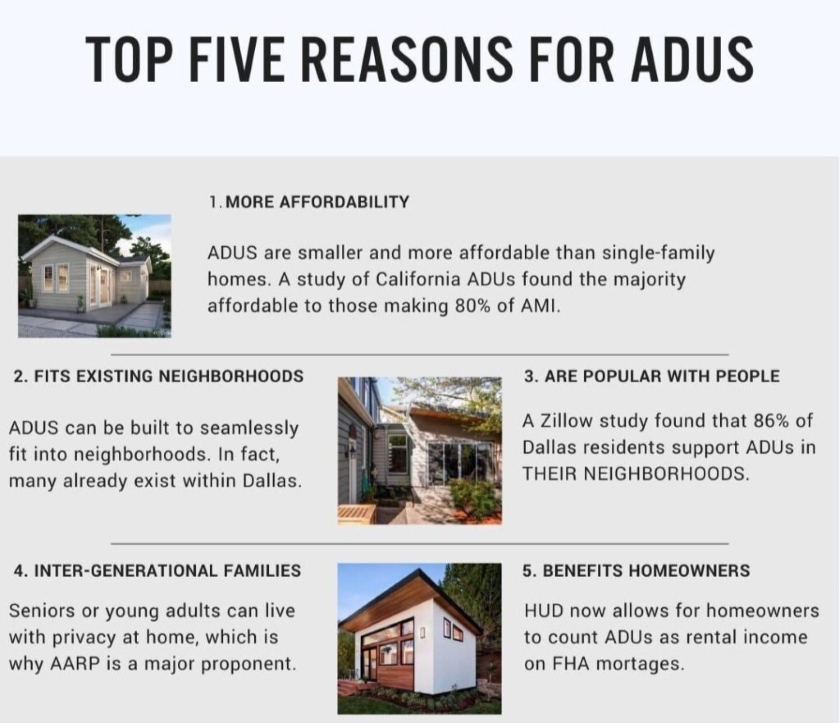
Ryan Behring, a small business owner and member of the Dallas Zoning Ordinance Advisory Committee, issued this letter to the mayor and council expressing his support of housing options.
“A recent study by the National Association of Realtors found that 53% of American households would prefer to live in an attached dwelling (apartment, condo, townhome) rather than a detached single-family home if it meant they would have an easy walk to shops and restaurants,” Behring wrote. “But only about 8% of our built environment delivers that choice, creating a tremendous gap between supply and demand. Missing Middle Housing provides choices Americans want.”
What Happens Next With ForwardDallas?
The next step, according to Gilles, is implementation. The approved ForwardDallas document will now be referenced when staff reviews zoning cases and those decisions go before the City Plan Commission and City Council.
“Is this plan perfect? Absolutely not,” Gilles said. “Will the conversations end? Absolutely not, but I think this gives us the foundation to move to the next step knowing that we have very diverse ideas and input that went into this plan and now we need to move into some of those implementation phases to see how that actually plays out.”

What was approved as Forward Dallas 2.0 was a BIG WIN for single family neighborhoods!
This is due to the citizen outcry and ACTION against the assault against neighborhoods led city staff and CMs West and Bazaldua, and through the strong and vocal support of SF neighborhoods by Ridley, Moreno, King Arnold, and Mendelsohn, and Narvaez. Forward Dallas 2.0 protects SF neighborhoods from duplexes, townhouses, and all the Secondary Uses – despite what Chad West claims or wishes.
These protections were part of the amendments made on Sept. 3rd by Councilmember Paul Ridley. Dallas needs SF neighborhoods and the BIG WIN was for their protection. Duplexes, townhouses, and all the Secondary Uses are allowed OUTSIDE SF neighborhoods where they are most appropriate.
Now, residents have CITY POLICY to FIGHT any upcoming re-zoning attempts by builders/developers or councilmembers to want to upzone any lot with greater density in our SF neighborhoods — and they should use it.
Any article and any discussion about ADUs must start with this information: ADUs are ALREADY ALLOWED in the City of Dallas. Anyone who wants an ADU only needs to go through the established process and pay a small fee of $600 (which is miniscule if they are actually building an ADU to code). There have been very few requests since ADUs were allowed by permit, and of those only TWO have been denied because they did not meet requirements – they were either too big or they were actually for a machine shop (not an ADU). The permit process ensures they meet requirements. So, anyone saying that ADUs are needed, only need to go through the already existing process. BEWARE anyone wanting to make them by-right, without the approval process, are likely trying to build them bigger, not to code, and/or without regard to neighbors.