Builders Spared Additional Tariffs on Lumber for Now
Share News:

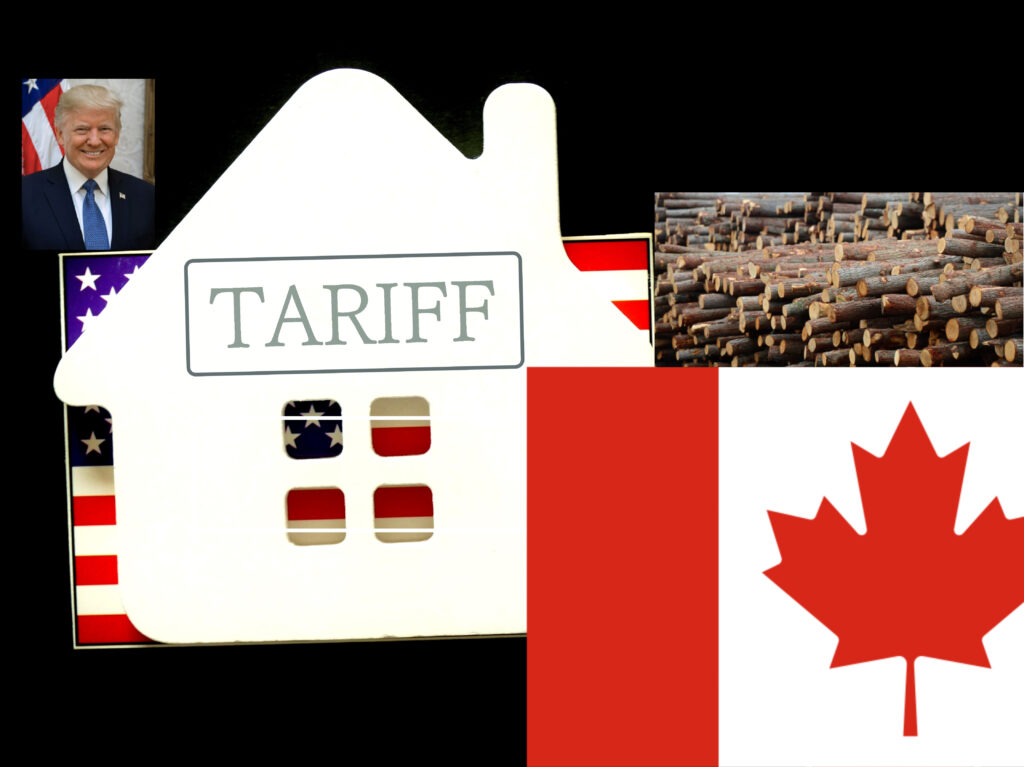
An impending wave of import tariffs poised to drive up the cost of construction was narrowly averted on Monday after President Donald Trump put a pause on their implementation.
Trump touted tariffs on the campaign trail as a tool to raise revenue and remediate the nation’s trade deficits. Rhetoric became official U.S. policy this past weekend when he ordered an additional 25% tariffs on all goods imported from Canada and Mexico (excluding Canadian energy, which got slapped with a lower rate), as well as 10% additional tariffs on all goods imported from China. The tariffs were set for Tuesday, but Trump granted Canada and Mexico a 30-day delay after talks with their leaders.
Builders following the drama have been cautioning for months that tariffs on certain products — mainly softwood lumber from Canada — would raise prices and blunt the potential economic relief that could be seen from anticipated tax cuts and deregulation. Now, Americans are learning more about trade policy than they’d probably care to know.
So What’s a Tariff, and What’s the Big Deal?
A tariff is a tax that governments place on imported or exported goods. Historically, countries have used tariffs to make foreign goods more expensive, encouraging consumers to buy locally. One of the best modern examples would be Chinese electric vehicles. An EV can be made in China and sold in the United States for much cheaper than an American-made EV because of China’s relatively cheap labor supply. All other things being equal, Chinese-made EVs would probably annihilate the U.S. auto industry, but there’s a steep tariff in place (27.5%) putting them on par with American vehicles.
Tariffs are also a feature of international diplomacy and trade negotiations, though they’ve somewhat fallen out of fashion in lieu of free trade agreements. It’s also worth noting that their unilateral imposition by one country on another typically elicits retaliatory tariffs in turn. Canada, Mexico, and China have all promised to levy tariffs on American goods in response to Trump’s trade policy, with China making good on its threat on Tuesday.
While some may feel far removed from all this geopoliticking and trade talk, many Americans will likely feel the repercussions of Trump’s policy of tariff brinksmanship. Businesses are responsible for paying the tariff on foreign goods, but economists agree that the added cost is typically passed down to the end consumer. In Texas, where the housing market has been dealing with a supply shortage, high prices may linger longer than expected.

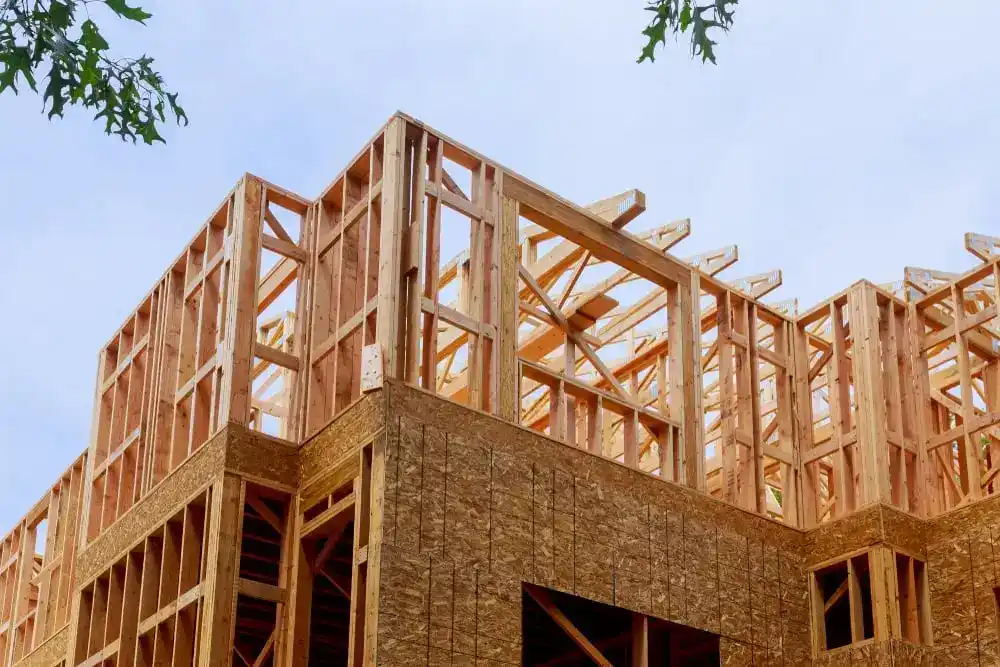
Tariffs Poised To Hike Cost of Lumber, Building
Builders have been cautioning the Trump administration against pursuing sweeping tariffs against Canada and Mexico, which happen to be the United States’ two biggest trading partners.
“Tariffs on lumber and other building materials increase the cost of construction and discourage new development, and consumers end up paying for the tariffs in the form of higher home prices,” Carl Harris, chairman of the National Association of Home Builders said on February 1. “NAHB urges the administration to reconsider this action on tariffs and we will continue to work with policymakers to eliminate barriers that make housing more costly and prevent builders from boosting housing production.”
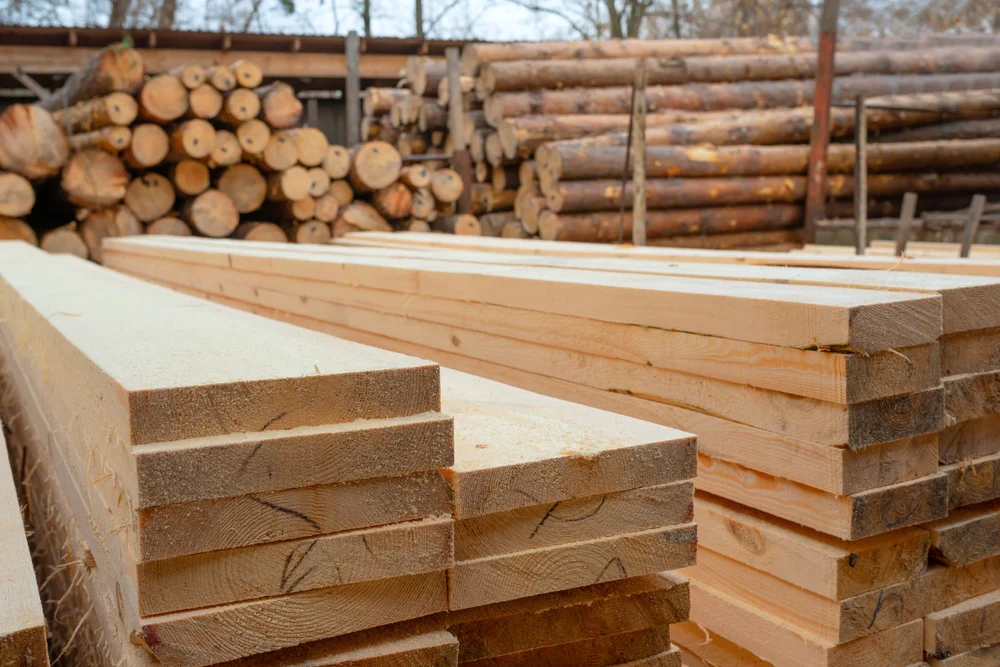
David Lehde, director of government affairs for the Dallas Builders Association, shared a similar assessment in an interview with CandysDirt.com.

“It’s important to point out that that 25% is in addition to an already effective 14.5% duty that’s already in place,” he said, noting how the price of heavily-subsidized Canadian softwood lumber has been a longstanding point of contention between the United States and its neighbor to the north.
“I think it bears repeating that any tariffs on those materials that we use raise the cost of the products that are going into that construction, and it’s the consumers who end up paying for the tariffs in the form of higher home prices. We tend to view tariffs as a tax of sorts on American builders and in the end the home buyers and consumers,” Lehde said.
Still, he stressed that it’s not entirely clear how things will ultimately shake out in terms of pricing in the event that the tariffs on Canadian goods are actually implemented.
“Builders get their supply of lumber through brokers, and that comes from multiple sources… It’s not as if the U.S. market gets all its lumber from Canada. I think the highest I’ve ever seen was like 33%,” Lehde said.
Are Trump’s Tariffs Inevitable?
In addition to economic considerations, diplomatic disputes over illegal immigration and drug trafficking have been informing the president’s negotiations with America’s biggest trading partners.
Trump has claimed the tariffs targeting Canada and Mexico are intended to motivate the two countries to take greater measures to stem the flow of undocumented migrants and illicit drugs (namely fentanyl) into the United States. He also recently previewed his willingness to use tariffs as leverage in non-trade disputes, threatening tariffs on Colombia over its refusal to accept shackled deportees on military aircraft.
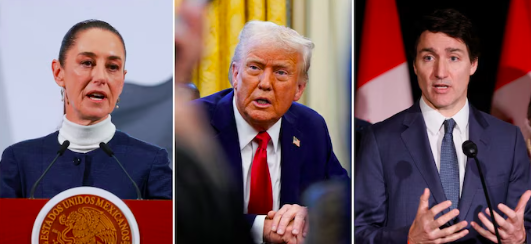
Both Canada and Mexico appeared to blink this week, bolstering their respective border security commitments to appease Trump and delay the implementation of tariffs, the Associated Press reported. Still, it’s unclear what exactly will settle the issue and take sweeping tariffs off the table.
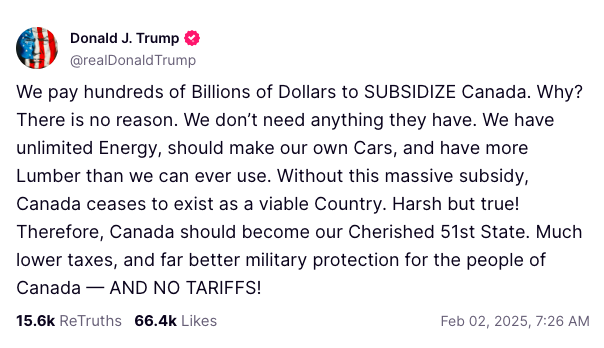
The president appeared to hint at the ultimate goal on social media over the weekend, at least when it comes to Canada, though it’s difficult to say whether the comment should be taken seriously, despite its previous articulation in Trump’s off-the-cuff remarks:
“We pay hundreds of Billions of Dollars to SUBSIDIZE Canada. Why? There is no reason. We don’t need anything they have. We have unlimited Energy, should make our own Cars, and have more Lumber than we can ever use. Without this massive subsidy, Canada ceases to exist as a viable Country. Harsh but true! Therefore, Canada should become our Cherished 51st State. Much lower taxes, and far better military protection for the people of Canada — AND NO TARIFFS!”
Most Canadians appear to view the prospect as a nonstarter, according to research by the Association for Canadian Studies, per National Post.