
Lip Service or Straight Talk? City Council Debates ForwardDallas With No Progress
Share News:


Not much was accomplished in Tuesday’s Economic Development Committee meeting, but good questions were asked and dramatic sound bites abound for the City’s controversial ForwardDallas 2.0.
Dallas City Council members on the Economic Development Committee discussed the proposed comprehensive land use plan — and if, or how it will affect existing single-family neighborhoods. The accusations went flying, as elected officials characterized each other of being condescending and insulting, using the horseshoe as a “bully pulpit” and providing lip service to placate residents.
At the crux of this week’s debate over ForwardDallas 2.0 is how to implement a guiding document for future land use while also protecting single-family neighborhoods from unwanted multiplexes.
Mayor Pro Tem Tennell Atkins, who chairs the committee, said the panel will meet again next week with an action item to determine whether to send the matter to the full council. Some suggested removing the housing component before the land use plan goes forward.
In three years, the plan has traveled from the Comprehensive Land Use Plan Committee (CLUP) to the City Plan Commission (CPC) and now Dallas City Council’s Economic Development Committee. This week’s committee meeting was the first time we got a clear picture from council members on whether they have eight votes to pass it or if they want to amend it or take it back to the drawing board.
Watch Tuesday’s Economic Development Committee meeting or view the staff presentation.
ForwardDallas 2.0
Tuesday’s two-hour discussion began with a presentation from Planning and Development Deputy Director Andrea Gilles.
Gilles provided a recap of what’s in the plan and recommended changes since it was originally crafted in 2006. Key proposed changes include housing design standards, land use locational conditions, environmental justice areas, transit-oriented development, and revitalized commercial centers.
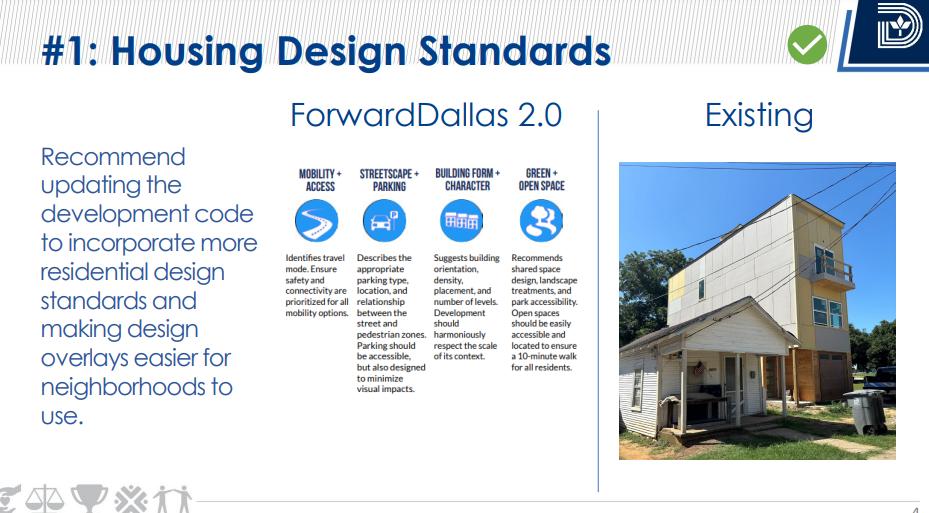
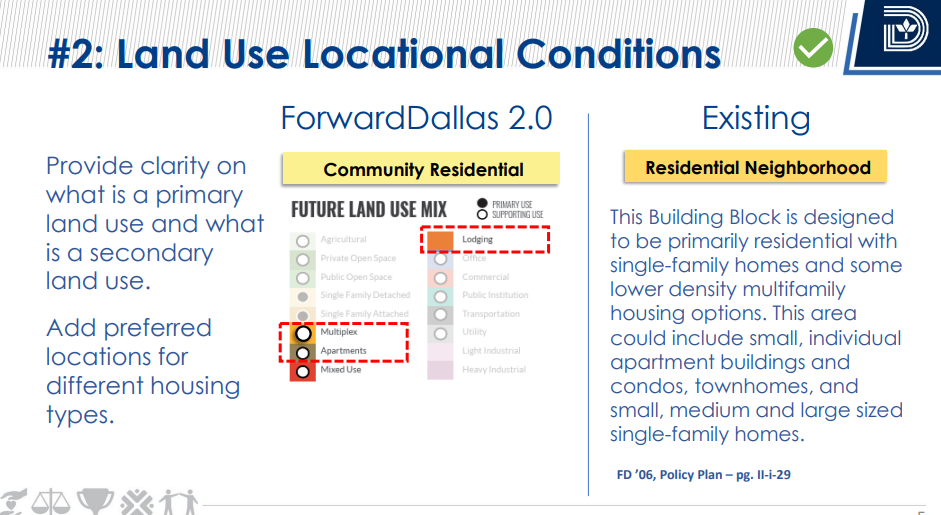
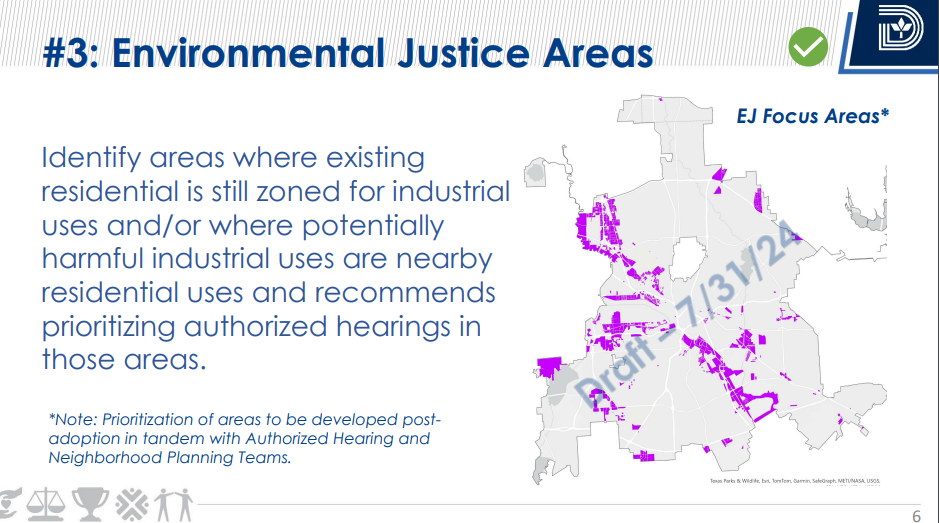
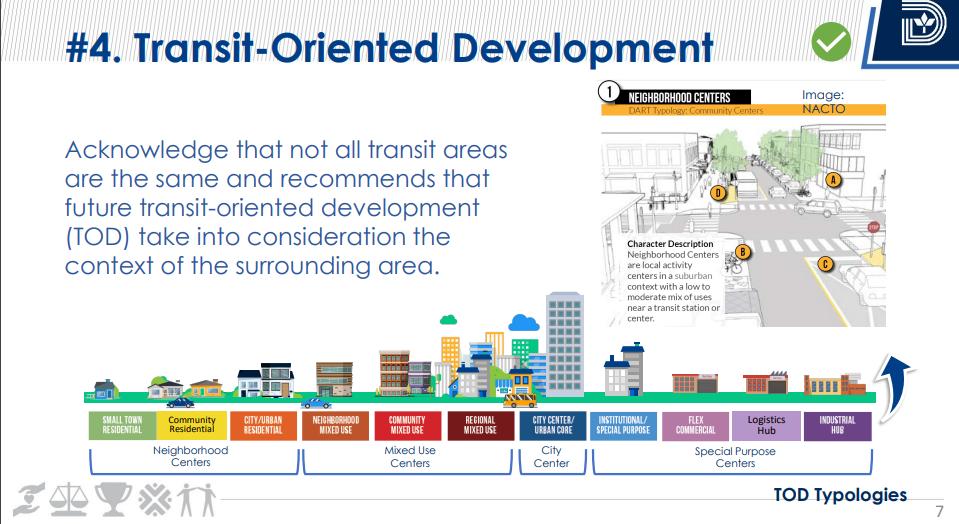
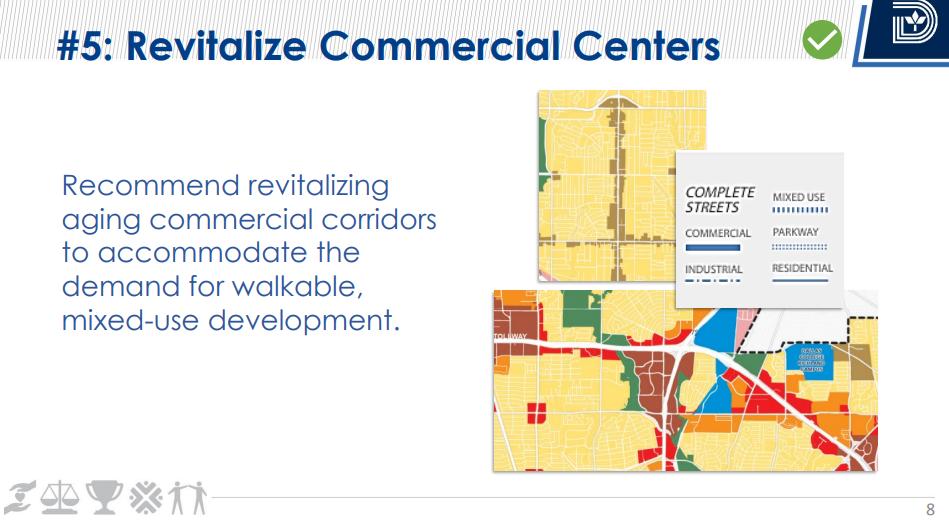
The proposed design standards create predictability so “what you’re asking for is what you’re going to get,” Gilles said.
“We also talk a lot about design overlays, not only for different housing types but … areas that are potentially experiencing a lot of infill development or teardowns and rebuilds,” she said. “The issue isn’t just about different housing types that are being built in our neighborhoods. It’s about single-family development in our neighborhoods that is out of scale with the existing context.”
ForwardDallas 2.0 is transparent and concise with a focus on graphic depictions of future land use rather than a text-heavy plan, Gilles later explained.
Pros and Cons
District 1 Councilman Chad West and District 7 Councilman Adam Bazaldua were the loudest champions for ForwardDallas 2.0 as approved by the CPC last month.
District 4 Councilwoman Carolyn King Arnold and District 14 Councilman Paul Ridley, who represents the most developmentally dense area of Dallas — Oaklawn, Downtown, and Uptown — came out swinging on Tuesday for single-family neighborhood protection.
“Single-family communities must be protected at all costs, especially those that are established,” Arnold said.
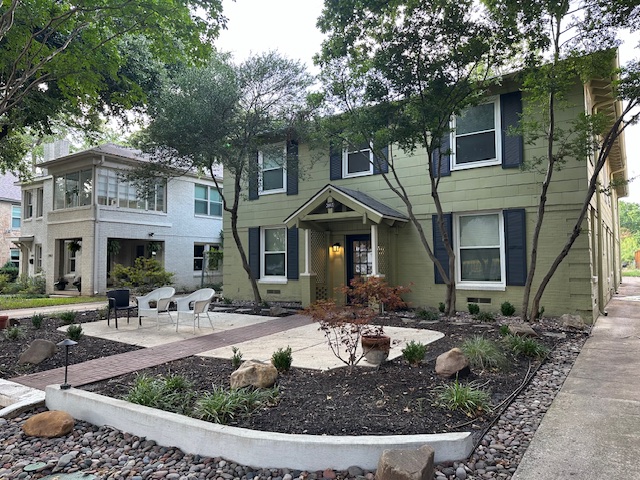
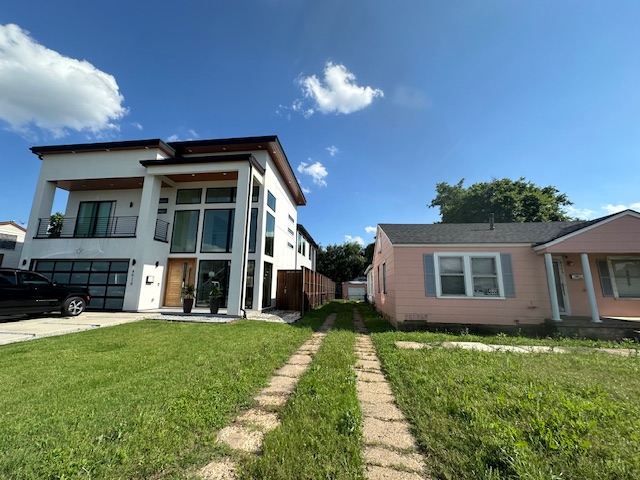
West said Tuesday he frequently hears concerns about what new buildings look like and concerns about displacement, so he was happy to see that the updated plan addresses both issues. The councilman peppered Gilles with questions to establish (again) that ForwardDallas 2.0 does not legally require the city to approve a zoning change for duplex, triplex, or townhomes.
Today, without ForwardDallas 2.0, people can buy a home in a single-family neighborhood, knock it down, and build a “McMansion,” West said.
Duplexes matching the architectural character of existing single-family neighborhoods exist throughout the city, and while the plan allows for greater housing choice and housing types at different price points, it’s not about affordable housing, he said.
“I believe we’re in a housing crisis in this city,” West said. “I believe if we don’t take any action as a council and take courageous action, it’s just going to get worse.”
Ridley said there are provisions in the original 2006 document that should have been included in the update but were not. The CPC focused on the trees rather than the forest, the councilman said.
“It is now our opportunity to focus on the forest to ensure that it is what is best for the city and best for all of our residents,” he said.
Ridley proposed several changes, saying the plan is too explicit in some areas and too broad in others.
“The 2.0 map does not reflect the generalized land use intent described in the narrative,” he said. “We need to have a mechanism for identifying which is the priority.”
The D14 councilman further said the plan should not sacrifice one type of housing for another. He suggested that staff prepare alternative solutions that do not negatively impact or incentivize the removal of naturally occurring affordable housing and displacement of families.
“ForwardDallas 2.0 should channel higher density to appropriate areas, providing an emphasis, prioritization, focused recommendations, incentives, and tracking of housing density and goals in and around suitable DART stations, in and near downtown, for housing options through adaptive reuse, community housing development options of the 3,600 untapped and undeveloped acres in Dallas, and city-held underutilized properties,” Ridley said. “And finally, housing development along major road corridors.”
Attempts to Find a Compromise
About halfway into the two-hour meeting, Bazaluda asked planning staff to explain the opposition to the plan.

“I will be frank,” Gilles said. “A large part of the opposition lies in misinformation. There have been a lot of people who have said ForwardDallas recommends putting apartments on every single property in the city. It is just not true. It makes no recommendation to do that, nor was that ever the intent. A big part of the opposition is based on a misunderstanding of what this plan actually says. It has been a very strategic, continuous campaign to continue that narrative. It’s frustrating.”
If the plan is passed without the housing component, as some have suggested, the status quo remains, Gilles said.
“If we don’t pass the housing component in this with a lot of the recommendations that are included … we’re not pursuing design standards,” she said. “We’re basically saying that everything is fine, that we have no issues in our residential neighborhoods.”
‘Lip Service’
Bazaldua said there are legitimate fears but misinformation and fear-mongering have been driving the fears. He suggested that staff should be charged with bringing in more robust tools for design standards. If single-family neighborhoods are to be protected, the plan must be passed, he said.
“My residents in Joppa, who will benefit greatly from the plan that’s being presented, I don’t believe should be compromised,” he said. “If we were to move forward and keep the housing component out of what’s being presented, we’re accomplishing nothing from those loudest voices. We’re accomplishing nothing from the controversy that happens.”
District 12 Councilwoman Cara Mendelsohn said she was tired of the condescending narrative that residents don’t understand the plan and need to be educated.
“What we know about single-family is that it’s the most stable part of our city,” she said. “Are you aware of what the highest crime-rate areas are in our city? It’s multifamily housing. It’s not just No. 1, it’s No. 1 by far. For a council that’s constantly saying public safety is our No. 1, this council keeps adding multifamily housing. People deserve to have the housing option that does include single-family only. When I say single-family only, I mean park, church, school included. By putting in these secondary uses, you’ve removed that assurance.”
Then came what may become known as the infamous lip service conversation.
Ridley said the original 2006 plan devoted seven pages to promoting “vibrant and viable neighborhoods.”
“That did not carry over,” he said to Gilles. “You’re basically giving lip service to the fears of single-family residents that their neighbors’ property will be rezoned around them. Why did we drop that goal of promoting vibrant and viable neighborhoods in the comprehensive plan?”
Gilles said it hasn’t been dropped.
“From a lip service perspective, I think not being direct is more lip service than being direct and directly stating that there is not an intent of this plan for city-initiated rezoning,” she said. “Which is more directive and clear than saying we should promote vibrant neighborhoods. I don’t know what that means from an action statement. With all due respect, it is somewhat insulting to say we’re giving lip service.”
The residential area character descriptions reference the importance of neighborhoods, she added.
Bazaldua said he was also insulted by the insinuation that staff’s work and response to the community concerns was lip service.
“In fact I think elected officials using their bully pulpit for feel-good soundbites is actual lip service,” he said. “We are here to make policies that are also going to be hard decisions often. Those hard decisions are going to have to come with a compromise … I think it is extremely disheartening to hear someone who represents our city to frame someone who happens to live in a multifamily dwelling as someone who is more prone to crime … Dallas is a great city because of its diversity, and not one population is better than the other.”
There’s more to this story. Stay tuned to CandysDirt.com for updates and a play-by-play of what each council member has said about the plan to date.





Excellent article April. Keep it up!
The planning department has lost its credibility over the last few years before the Forward Dallas planning. Look at their focus and zoning changes that continue to make “affordable housing” the main focus in every thing they do. We are #2 in The COUNTRY in numbers of apartments we are building! Look at what they do not what they say! Who is misinformed!
I simply cannot understand how anyone on the city’s staff can repeatedly claim over and freaking over that the opposition is all about misinformation. We aren’t talking about residents that just tuned in overnight. We are talking about some of our most civically astute and engaged residents that watch every single move happening inside city hall and what our elected representatives do and say about it. To continue to beat the misinformation card into our heads is disrespectful and downright abusive at this point. How about the city staff admit and openly address the root of the problem: this plan is purposely ambiguous, poorly written, and the outreach has been very ineffective? Also, when is it time we start hearing from the actual director instead of the deputy on this? I think we’ve heard enough from Gilles.
I’m so glad that I voted for Paul Ridley. It’s great to see someone in government standing up for their constituents.
Gilles is the root of misinformation. She talks in circles and throws out the broader good justification Any citizen that has engaged her in meetings to get a clearer understanding and get details are totally dismissed. Common sense and stability creating a better answer is not applied with this planning department. We have to live with these recommendations and misinformation! The CPC and City Council believe her comments that her department has done their homework.