
What Is the Dallas Economic Development Corporation — and Why Does It Exist?
Share News:


Followers of the unfolding City Hall relocation saga learned earlier this month that there’s been some tension between the City Manager’s Office and the Dallas Economic Development Corporation. As it turns out, a good deal of readers are not very familiar with the latter, so it’s as good a time as any for a refresher on this quasi-governmental entity.
Talk about eating your vegetables…
If you’re just joining us, the Dallas Economic Development Corporation has been in the news recently regarding the ongoing debate over the future of Dallas City Hall and the role the organization could play in major development projects. But what is the Dallas EDC, how does it operate, and why did the city create it in the first place?
Local Government Corporations
The first thing to understand is that the Dallas EDC is a local government corporation (LGC). Texas law allows local governments to create LGCs to carry out certain prescribed functions. They are legally separate, non-profit entities empowered to aid and act on behalf of the local governments that create them.
When there’s something a city or county wants done that it feels it can’t or wouldn’t adequately accomplish through its existing structure, it can create an LGC. Unlike a private corporation, LGCs must have a public purpose and are prohibited from operating for the benefit of private interests.
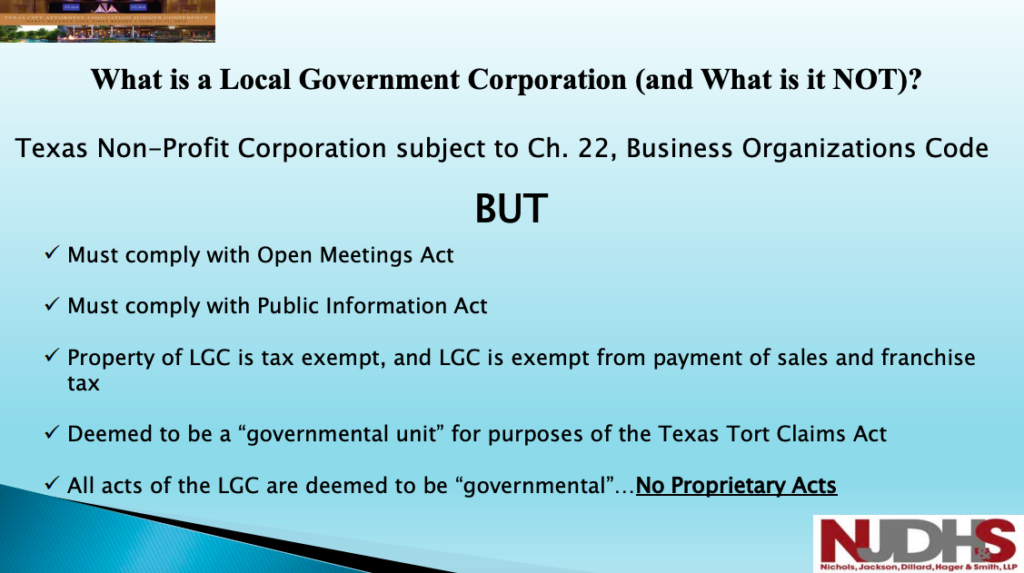
LGCs have a typical corporate structure with a board of directors responsible for hiring the necessary executives and personnel to accomplish the body’s mission. However, since an LGC is not a for-profit corporation, its board isn’t appointed by shareholders. Instead, the local government that creates it appoints the board.
The reason a local government might go the route of establishing an LGC rather than devoting staff resources to a public interest — let’s say: a major real estate development, a big infrastructure project, or an important economic initiative — is that it’s too complex or time-sensitive for existing structures to handle. Sometimes, officials feel it’s better to spin off some authority and responsibility to an LGC.
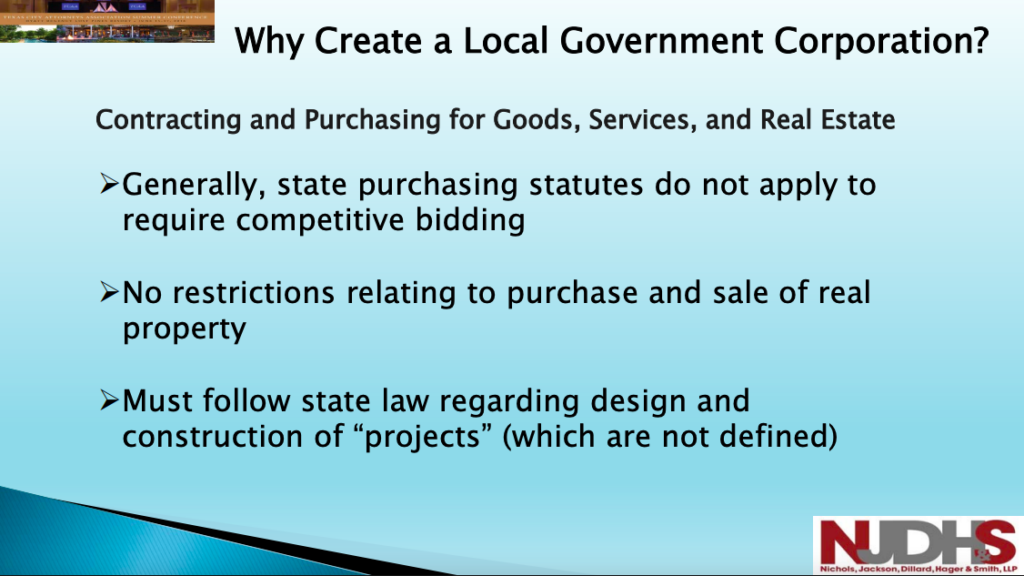
Local governments set them up to gain more flexibility, so things don’t have to go through traditional (often lengthy) processes. LGCs can make it easier to structure deals, partner with private entities, and move things along for a public purpose.
As a quasi-governmental entity, an LGC is subject to the Texas Open Meetings Act and must comply with the Public Information Act.
In plain English, a local government corporation is a city-created entity that can move faster and structure deals more flexibly than a city department, while still serving a public purpose and remaining subject to open meetings and public information laws.
Dallas Economic Development Corporation
So, why did the City of Dallas create the Dallas EDC? After all, the city already had its Office of Economic Development (OED).
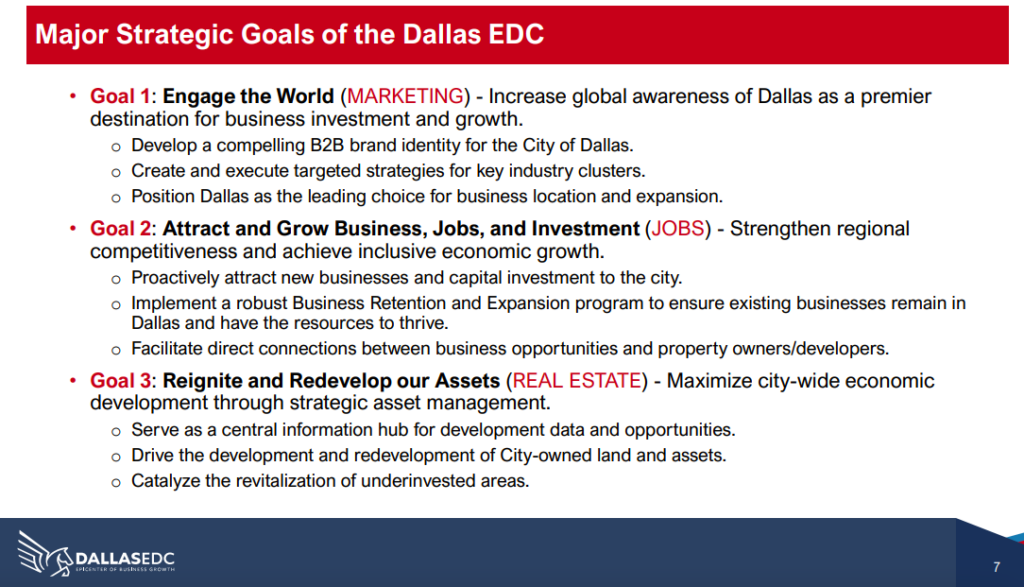
A key recommendation of the city’s 2019 Economic Development Strategic Action Plan was to create an independent organization to lead business recruitment, retention, and small business growth. Staff, consultants, officials, and stakeholders agreed that the city needed a more aggressive, dedicated entity outside of local government to drive investment and jobs — especially in underserved areas.
Case in point, analysis by the consultant TIP Strategies noted: “OED is organized around four key functional areas: area development; business development; business and workforce inclusion; and finance, compliance, and administration. Within the business development area, the OED employs two staff members focused on business recruitment and retention, prospect support, business outreach, and related research and analysis.”
TIP Strategies made some recommendations for what the Dallas EDC should be empowered to do. It advised a somewhat limited scope for the organization’s early years, arguing that it shouldn’t be overburdened with a broad mandate right out of the gate. TIP Strategies said the Dallas EDC should:
- “Lead the City’s business retention, expansion, and recruitment efforts and economic development marketing activities.”
- “Serve as a public developer of City-owned properties, as well as conduct land acquisition in support of redevelopment and job growth (especially in historically underdeveloped areas of southern Dallas) to advance real estate projects that the City could not do on its own.”
Among the advantages of the soon-to-be Dallas EDC, TIP Strategies pointed to “the ability to insulate economic development activities from day-to-day politics, including the competing — and sometimes divergent — priorities of the City’s 14 individual Council Districts. Forming a separate entity would also help mitigate the impact of leadership changes and create an environment that allows a nimbler, market-paced response to investment opportunities. The entity would coordinate closely with the City while remaining outside of the constraints of governmental bureaucracy.”
That structure also makes the EDC a useful vehicle for complicated real estate transactions, public-private partnerships, and large-scale redevelopment projects — the kind of projects that are now part of the conversation surrounding the future of the City Hall site.
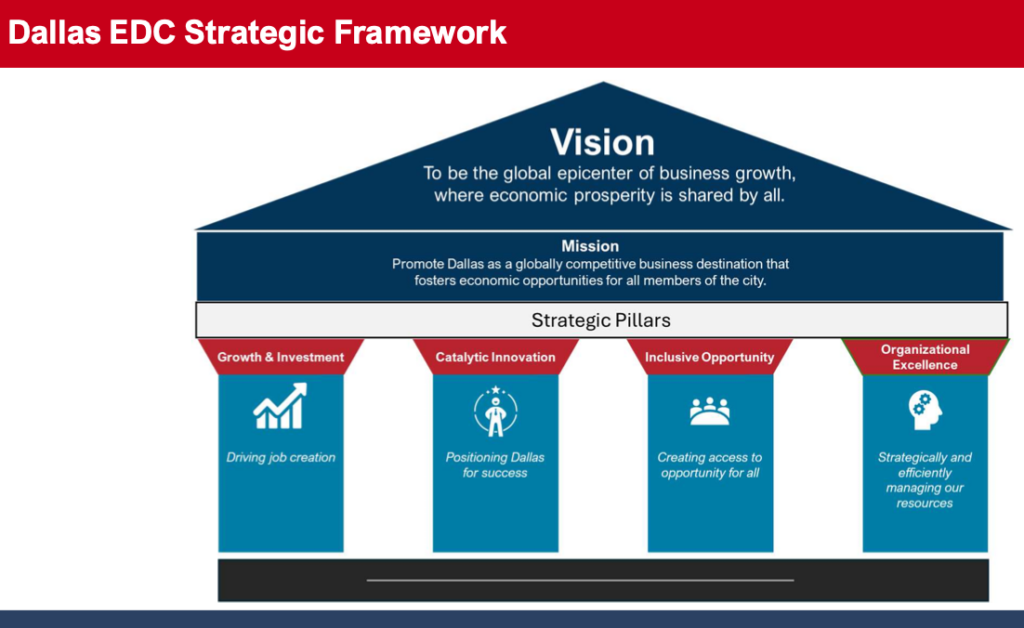
In 2022, the city created the Dallas EDC and entered into an interlocal agreement with it, outlining the scope of its authority and organizational mission in accordance with the guidance offered by TIP Strategies.
The initial board was comprised of:
- Alan Dorantes, senior corporate counsel at T-Mobile USA Inc
- Ardo Fuentes, senior vice president of investments at Stifel
- Chris Bradshaw, business services support director at Goldman Sachs 10,000 Small Businesses
- Cynthia Figueroa, managing attorney at the Figueroa Law Group PLLC
- Dania Duncan Moreno, partner at Bell Nunnally and Martin LLP
- Debra Hunter Johnson, founder, president, and principal consultant at Reciprocity Consulting Group LLC
- Gilbert Gerst, senior vice president and corporate manager of community development banking at BOK Financial Corporation
- Holly Reed, current principal and advocacy practice leader at Ryan LLC
- Jimmy Tran, owner and area developer at Code Ninjas
- John Stephens, general partner at MJ Lupton Partners LP
- Johnnie King, president of KG Concessions DFW LP
- Kim Noltemy, president and CEO of the Dallas Symphony Association.
- Linda McMahon, president and CEO of the Real Estate Council
- Michon Fulgham, CRA director, community development lending principal advisor, and community development director
- Walter “Alan” Walne, chairman of the board and CEO of Bottom Lien Consultants, Inc
Directors are unpaid but can be reimbursed for expenses related to their role.
When the city created the Dallas EDC, it established it in perpetuity. However, the interlocal agreement it entered is only for 10 years, with a 15-year renewal option. Either body, however, can terminate the agreement by giving 60 days’ advance notice. And a three-fourths majority of the city council can vote to dissolve the Dallas EDC whenever it chooses, “subject to any limitation on the impairment of contracts or other obligations entered into by the Corporation.”
Council members authorized $7 million in operational funds for the Dallas EDC, which can also fundraise for itself since it’s a non-profit entity. The organization manages its own budget and hiring.
In other words, the Dallas EDC isn’t just another city department with a different name on the door. It was created to operate differently — and as the debate over City Hall, redevelopment, and major economic initiatives continues, Dallas residents may start hearing a lot more about it.
2 Comments
Leave a Comment







Best description of these entities I have ever read! Share!
Maybe the folks at the EDC are good at returning calls – a habit, one surmises, essential to “…lead[ing] the City’s business retention, expansion, and recruitment efforts and economic development marketing activities.”