
Will the Latest Jobs Report Finally Force the Federal Reserve to Slash Rates?
Share News:

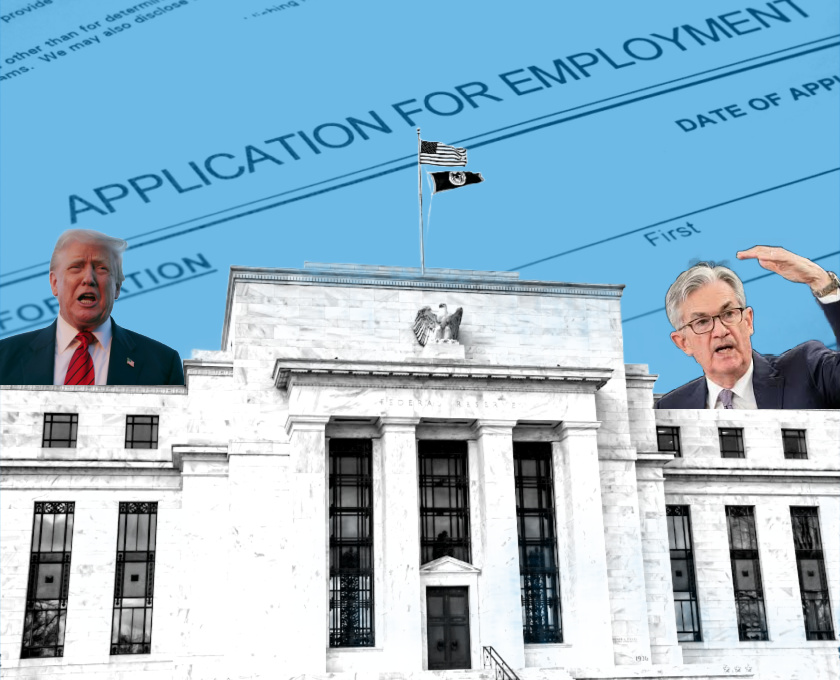
Last week’s disconcerting jobs report by the Bureau of Labor Statistics may have bolstered the case for a September rate cut. However, President Donald Trump is calling the report politically motivated and “rigged,” despite his own demands that the Federal Reserve slash rates.
As everyone likely knows by now, Trump prompted fresh outrage on Friday by firing the head of BLS after the federal agency issued its revised jobs data for May and June. Revisions are routine because the monthly reports are based on voluntary employer payroll surveys, some of which are submitted late. Initial data is basically always incomplete, making updates necessary. Even annual revisions are conducted to refine the data further.
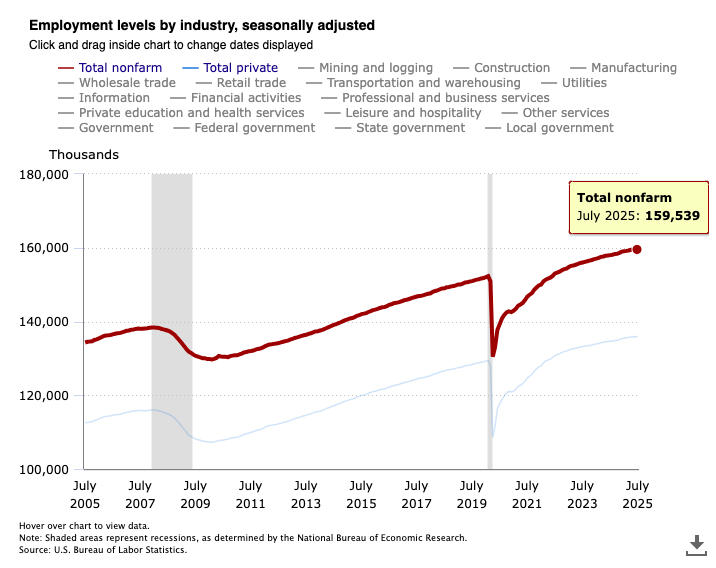
Setting aside the president’s accusations, the figures published last week showed that there were 258,000 fewer jobs in the United States across May and June than previously reported.
“The change in total nonfarm payroll employment for May was revised down by 125,000 from +144,000 to +19,000, and the change for June was revised down by 133,000 from +147,000 to +14,000,” the report’s summary reads, pointing to newly found weakness in the nation’s job market.
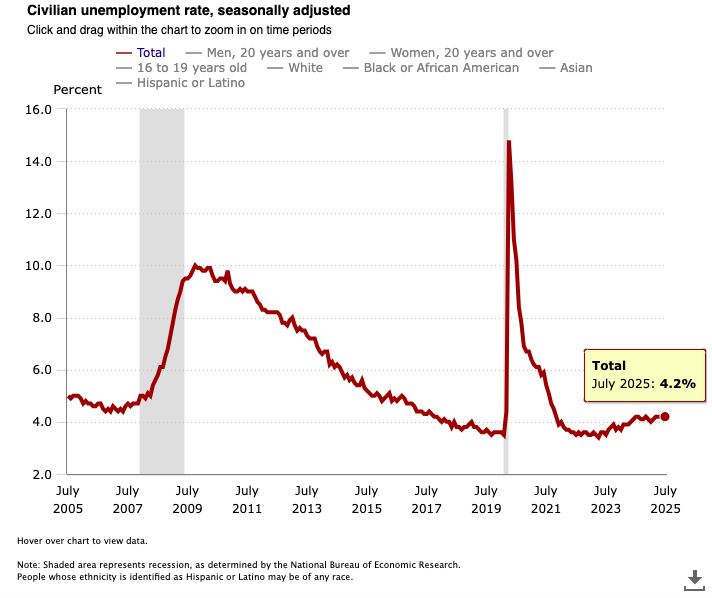
Initial figures from July show an increase of 73,000 jobs and an unemployment rate of 4.2%. Mind you that the numbers for July are preliminary and will be revised in the coming months. Even still, the early data suggests a substantial slowdown in hiring compared to the unrevised estimates of 125,000 and 133,000 in May and June, respectively.
Now, the strength of the job market has been one of the factors cited by Federal Reserve officials for maintaining benchmark interest rates for five meetings straight. When there’s low unemployment and a high number of job openings, employers tend to increase wages to attract workers. They also tend to increase the price of goods and services to offset the pay hikes, exacerbating inflationary pressures.
Combine that with Trump’s tariff-heavy trade policy — which economists believe will have an overall inflationary impact on the economy since the cost of tariffs is typically passed along to the consumer in many cases — and you have inflation moving in the wrong direction.
Jerome Powell, chair of the Federal Reserve, has been wary of lowering interest rates, fearing that making it cheaper to borrow money will result in an overheated economy in which demand significantly outstrips supply, leading to sustained inflation. Meanwhile, the president has been clamoring for lower rates to stimulate the economy. His sentiments seem to be shared by professionals in the capital-intensive housing and commercial real estate sector who say they’re necessary to spur more investment and transactions.
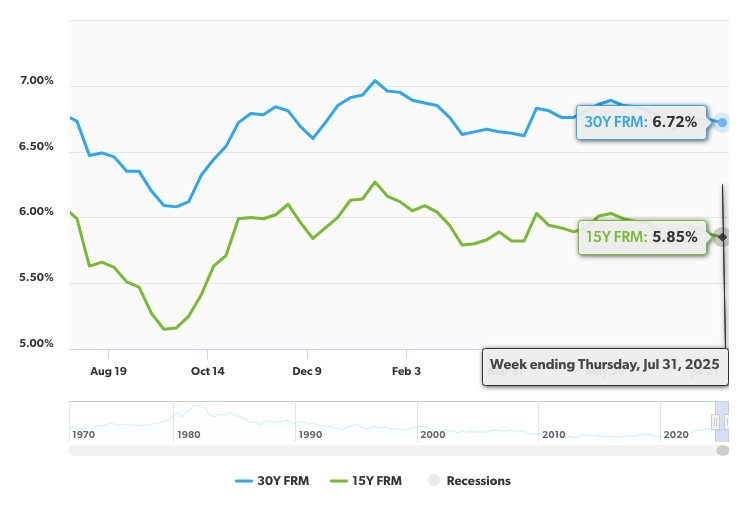
Prospective homebuyers are also eyeing rate cuts, with many currently sidelined due to existing mortgage rates, which are roughly three times what they were just a few years ago. While mortgage rates aren’t directly tied to the Federal Reserve’s benchmark, they tend to follow the trajectory. Lawrence Yun, the chief economist for the National Association of Realtors, said that several million more Americans would be able to afford a median-priced home if the benchmark rate hit 6%.
Still, a cooling job market alone might not be enough to prompt the Fed to implement a rate cut at its next meeting in September. Part of the reason for the slowdown in job growth is likely the long awaited impact from Trump’s tariff policy. There has been a lot of reporting on business owners implementing hiring freezes over the uncertainty caused by the policy, but apparently the numbers are only now catching up to the anecdotes.

Byron McCoy, principal at the local CRE firm Younger Partners, suggested that a majority of the Fed’s board of governors might be more open to a cut given the numbers, though he acknowledged that the uncertainty from the onset of tariffs is still very concerning.
“Unemployment is low because the labor force has shrunk, and there is lower labor force participation. I believe a rate cut is warranted,” he told CandysDirt.com.
Alex Thomas of John Burns Research & Consulting, however, said he could easily see the board standing pat.

“Core goods inflation is rising (likely connected to tariff impacts), the economy is still adding jobs each month, and the unemployment rate remains low,” he said in a statement to CandysDirt.com. “I think we can also expect at least a few FOMC members to dissent from what collective decision they make next month.”
At its meeting last month, two members of the board voted against the majority’s decision to maintain rates. It was the first time in decades that more than one member dissented against the majority’s course of action.
Steve Triolet, senior vice president of research and forecasting at Partners Real Estate, pointed out that Texas logged job losses totaling 16,000 positions in July, numbers not seen in the Lone Star State for a single month since the COVID-19 pandemic.

Zooming out to the national picture, Triolet said:
This significant correction suggests the labor market was cooling faster than initially reported, which could push the FOMC to weigh rate adjustments more seriously.”
“With unemployment creeping up to 4.2% and labor force participation dipping to 62.2% in July, the FOMC will likely see these softening job numbers as a cautionary signal. Coupled with tariff-related uncertainties impacting business confidence, as seen in weak private-sector hiring outside healthcare, the Fed may face pressure to balance inflation risks with supporting employment growth.”
UPDATE: This article was updated at 9:05 a.m. on August 5, 2025, to include comment from Steve Triolet at Partners Real Estate.