
Deepfake Deception: How AI Is Fueling Sophisticated Real Estate Scams
Share News:

Anyone keeping up with the news in recent years knows the AI revolution is plowing forward full steam ahead, but unfortunately, some bad actors have been leveraging the rapidly evolving technology to pull off sophisticated real estate scams. The latest? Using “deepfake” face swap technology to pull off their heists.
In recognition of Identity Theft Protection Week (yes, it’s a thing), CandysDirt.com took some time to look into how some in the tech industry are developing solutions to curb AI-powered identity theft in real estate.
As previously reported by CandysDirt.com, criminals have been impersonating property owners to fraudulently sell homes and vacant land. Using AI to comb through publicly available data, scam artists post phony property listings, sometimes using the technology to generate images of non-existent houses. In a day and age where a lot of transactions are handled with electronic signatures and wire transfers, prospective investors and homebuyers are at risk.
It’s been getting worse, though. More enterprising and tech-savvy scammers — and apparently even rogue state actors — are now using deepfake AI technology to impersonate buyers, sellers, Realtors, and any other participant in a real estate deal you can think of.
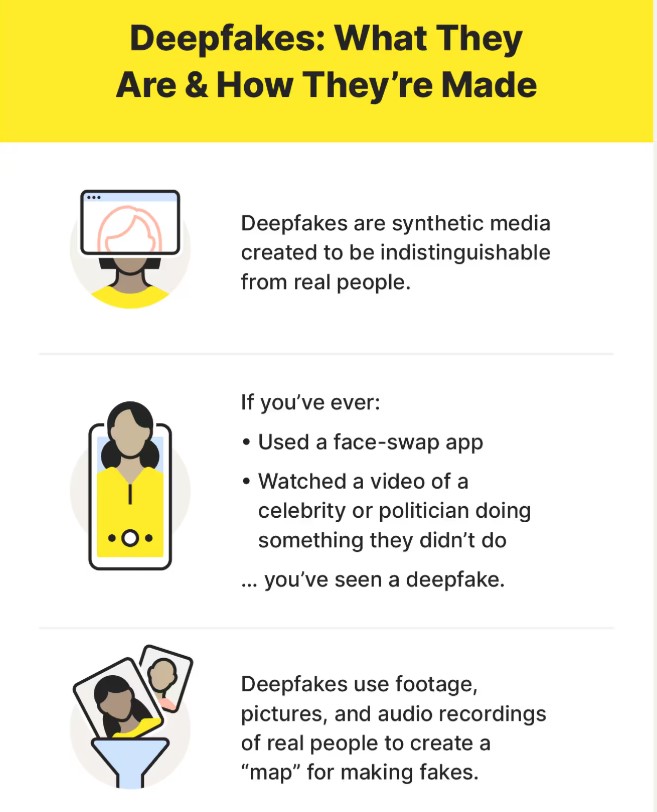
Cybercriminals Are Upping Their Game
The COVID-19 pandemic sped the widespread embrace of video teleconferencing in business and social life. Exploiting this relatively new facet of communication, cybercriminals can piggyback off more typical forms of identity theft to deepfake their way into considerable scores.

“[Before COVID] the title insurance companies could count the number of title and mortgage frauds they would have in a year on one hand,” said Jay Krushell, co-founder of the legal tech firm Treefort, speaking with CandysDirt.com about the rise in real estate scams in Canada. “It just wasn’t a problem. Then … starting in 2021, the amount of losses skyrocketed.”
While it’s unclear whether deepfake AI drove the spike in such crimes, the deployment of the technology by scammers has exposed a new point of attack. A similar dynamic may have played out in the United States.
In March 2024, the National Association of Realtors ran an article in its publication warning about the deepfake threat, imploring agents to remain vigilant and educated. A smattering of news reports show the deployment of deepfake AI in scams, including a Broward County case where a would-be scammer used a missing woman’s photo to create an AI-generated video with a Florida title company. Even Elvis isn’t safe. Last year, the “King of Rock and Roll’s” Graceland home was fraudulently foreclosed and scheduled for auction after owner Lisa Marie Presley’s signature was forged.
It basically works like this. Whereas previous forms of identity theft and real estate fraud involved superimposing a scammer’s face on stolen identification documents, deepfake AI has empowered criminals to masquerade as their victims in video conferences by “wearing” their faces.
“If you don’t know someone and you have a video call with them, the technology is now so good that the majority of people cannot recognize the fact that they are talking to a real-time manipulated image,” Joe Palmer, chief innovation officer of the UK-based biometrics tech company iProov, told CandysDirt.com.

Sometimes aided by voice-altering technology, criminals can pull off a convincing face swap to dupe victims in transactions that require video verification.
“So if they’re holding up a photo of an ID card, or someone has their passport on record and they look at the person they’re supposed to be speaking to, and they look at the screen, it looks like the right person because ultimately it’s the same,” he said.
“They’re Like Fortune 500 Companies”
Monetary losses from real estate scams can be devastating for your average consumer, with Business Wire putting the median theft in the United States at over $70,000, often in the form of a stolen down payment secured by criminals impersonating sellers.
Financial institutions can also be impacted.
“Take the example of title transfer frauds,” Krushell said. “This is where somebody pretends to own the house and they actually sell it, and there’s many documented cases of that happening.
“In those situations, if there is a title insurance policy, ultimately, the title insurer would be the one who would write checks to cover losses,” said Krushell, noting that lenders are also affected and often do not recover the full mortgage.

Real estate scams of this magnitude require a great deal of sophistication, leading law enforcement officials to believe that they are more often than not the work of organized crime rings or hostile nation-state actors.
“These are people who are selling drugs, human trafficking, selling arms, and funding terrorism,” Krushell said, explaining how after the real estate scam money gets laundered, it gets reinvested in other criminal activity.
“They’re like Fortune 500 companies. They’ve got hundreds and hundreds of millions of dollars at their disposal. They’ve got the best tech. They’ve got staff. They’ve got payroll. These people have quotas they have to meet every quarter. And because they have almost unlimited resources, they’re not restrained in any way by the law or any ethical standards,” he added.
Industry Professionals, Regulators Are Ramping Up ID Verification
Luckily, at least in Canada, professionals involved in the real estate sector and government officials are embracing tech solutions to curb instances of AI-driven fraud.
“What happened in Canada was the title insurance companies took dramatic steps to reduce their fraud risk, and governments and law societies started to act because the crimes are truly horrific,” Krushell said. “We saw legislative and regulatory change, and that resulted in dramatic changes in the Canadian ecosystem where regulated entities are now required to do [more] robust identity verifications.”
Treefort and iProov partnered to market a layer of identification verification as a defense against deepfake real estate scams. Krushell and Palmer say their advanced verification tool can ensure the person you’re dealing with via video is actually who they say they are, mitigating the risk of fraud.
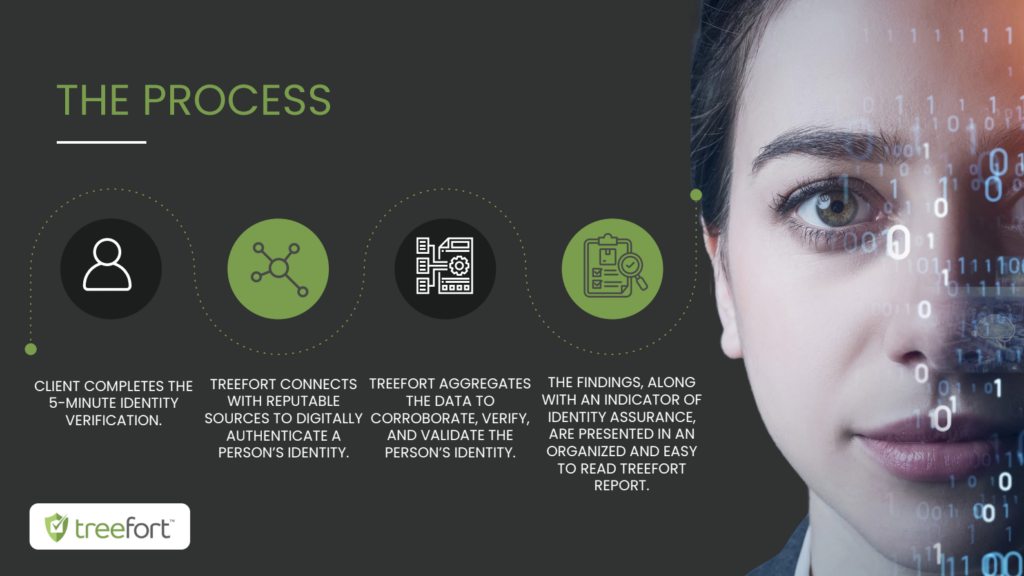
“Basically what happens is if you are a person who claims to be the owner of a condo in Toronto, you approach the Royal Bank of Canada saying that you want to mortgage the property. Then you go through an identity verification process. … You’re asked to produce a foundational identity document like your driver’s license, like your passport. Then what we do in our platform is we run assessments on that ID,” Krushell said.
Part of their service is “liveness detection,” a critical aspect of the verification process handled by iProov.
“We’re doing that biometric live check or liveness detection. That’s our specialty. It’s our job to say yes or no to a person who scans their face with our technology. So If someone is using a deepfake tool and they drape someone else’s face over theirs, when they do the face scan, it is our job to fail that person,” Palmer said.
Krushell told CandysDirt.com that Canada often serves as a test market for certain products before they get launched in the United States.
“The title insurance companies [in Canada] have all reported that since they started using technologies like ours in the real estate sector, they’ve seen an 80-90% reduction in their fraud claims,” he said, noting that Treefort’s parent company, Stewart Title, is exploring market opportunities in the United States.
Correction: This article was updated at 8:40 a.m. on January 31, 2025 to note that Joe Palmer is iProov’s chief innovation officer.







Great article. Last year, someone called me out of the blue to list vacant land in North Dallas. They wanted a quick sale and to list it lower than market value. Other concerns led me to step away.
Another red flag that could be added to the listing in your article is when someone insists on using WhatsApp for any face to face communication, since you can’t do a screen grab and get a photo of them. They refuse to do FaceTime or Zoom or Teams. Just my experience.