
The Other Brutalist Building in Dallas We Love: J. Erik Jonsson Central Library
Share News:

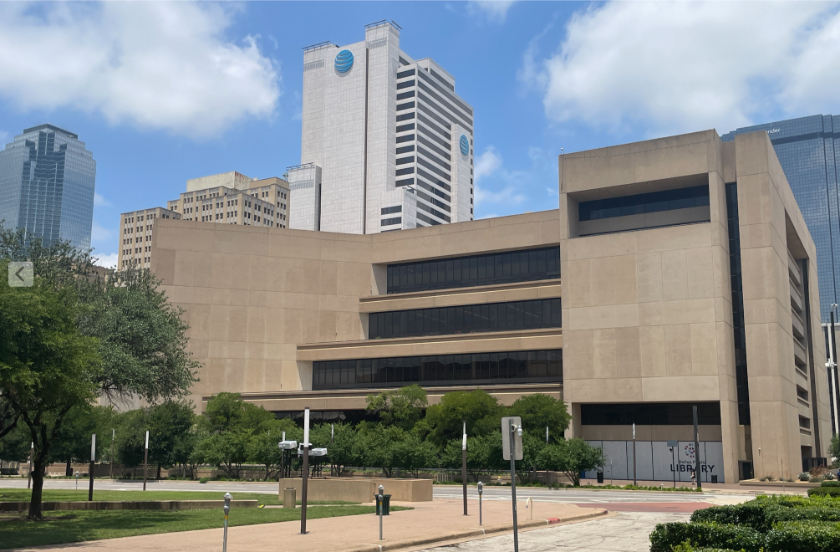
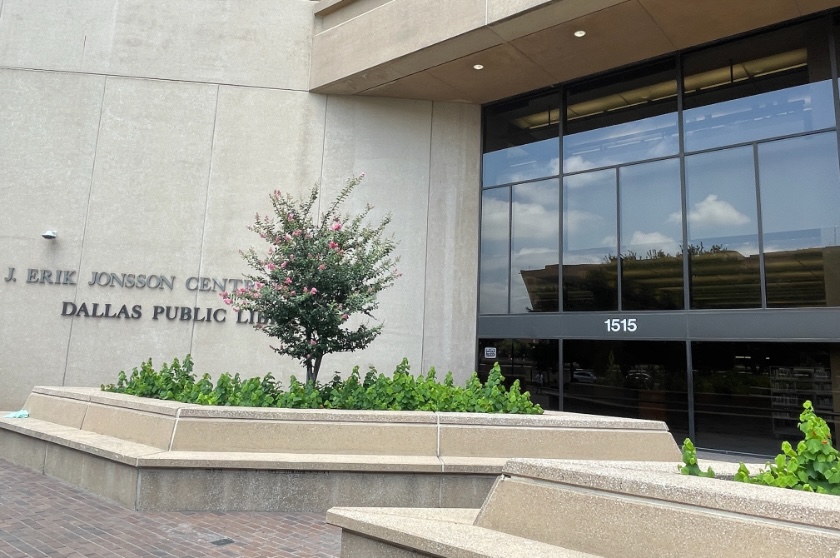
While the public has been caught up in the fight to save Dallas City Hall, there is another downtown brutalist building that deserves recognition, attention, and, quite possibly, saving. It’s the J. Erik Jonsson Central Library that faces City Hall.
Part of Mayor Jonsson’s 1965 citizen-led initiative, Goals for Dallas, was a massive effort to erect new civic and cultural facilities. They included our I.M. Pei-designed City Hall, formally dedicated and opened on March 12, 1978; the construction of the Edward Larrabee Barnes-designed Dallas Museum of Art, completed in 1984; and the J. Erik Jonsson Central Library, which opened in 1982.

It’s not our first library. There was the original 1901 neoclassical Carnegie Library, which was also a public art gallery that became the foundation for the collection in the Dallas Museum of Art. Located at Commerce and Harwood, Carnegie Library was demolished in 1954 for a six-story George Dahl-designed modernist with an 880-pound, 20-foot high sculpture by Marshall Fredericks that either inspired awe or fear in local kids. The sculpture was of a boy being lifted by giant hands. “Youth in the Hands of God” symbolized the reach for learning through literature, but you can imagine a six-year-old might find it a bit intimidating. It is now in the sculptor’s namesake museum in Michigan. The Dahl building is now where the Dallas Morning News is located.
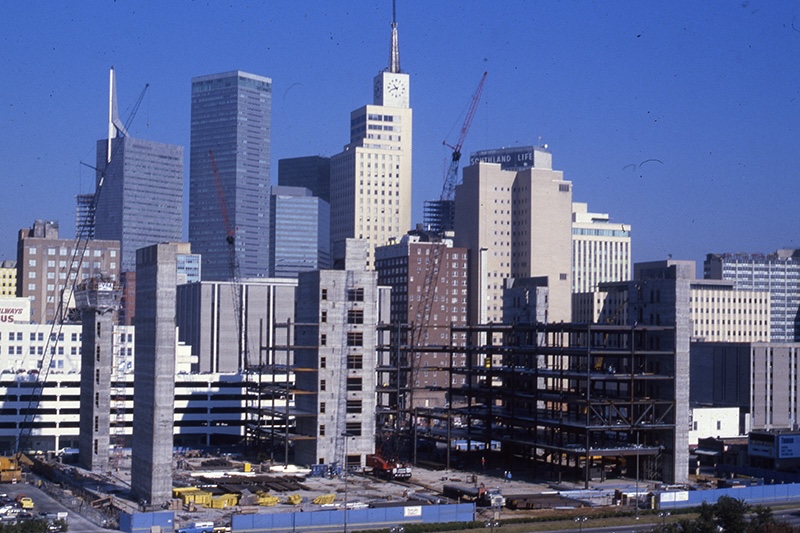
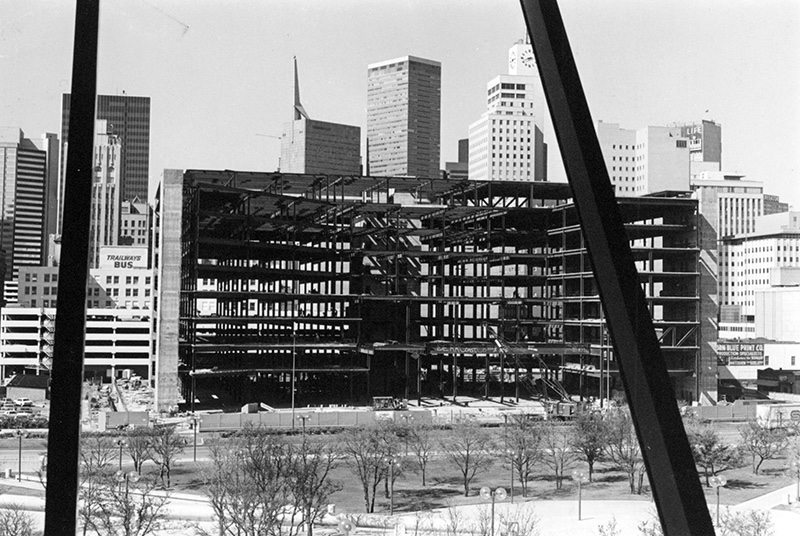
The massive 646,000-square-foot, 10-story J. Erik Jonsson Central Library is the 10th largest in the United States. There are eight floors above ground, an office level, and a parking garage below ground. It was designed by Fisher and Spillman (F&S), a prominent architectural firm founded by J. Herschel Fisher and Pat Y. Spillman in 1962. The firm also designed the campus for UT Southwestern Medical School.
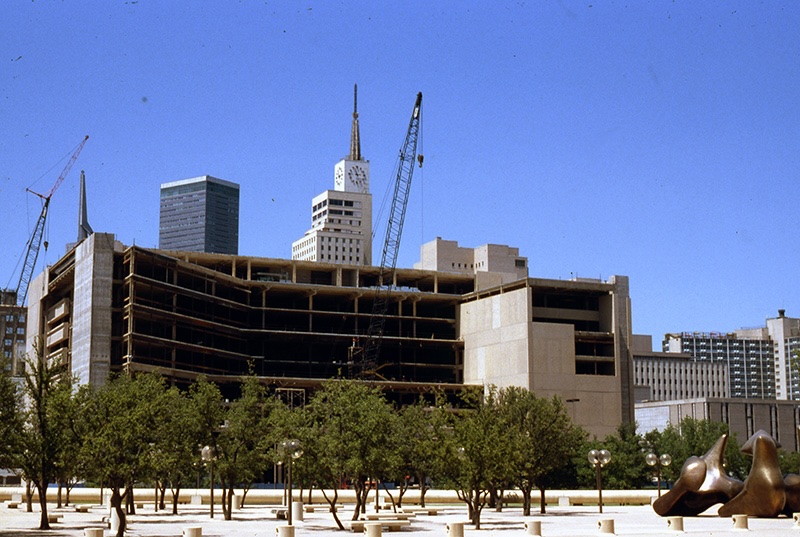
It was not an easy assignment because the building would face what would become our current Dallas City Hall. I.M. Pei was already an internationally renowned architect when he received the commission for 1500 Marilla St. in 1966. So a very high bar had been set for F&S. Fortunately, we have insight into the process. Award-winning architect Willis Winters, who was the former director of the Dallas Park & Recreation Department, came to the project as a student intern and continued to work at the firm upon his graduation in 1980.
“When I started work there, the library was under construction,” Winters said. “I saw it from inception through completion. The entire area was designed as a civic center. Lawrence Wood was the other architect involved, and Pat Spillman was the project manager who made it all happen. The design was intentional. It was to be a monument that balances the city hall, but to be complementary and subservient, to let the Dallas City Hall have prominence between the two buildings. As the city hall jutted and cantilevered out, the upper floors of the library stepped back in that same pattern. It was as if the library was receiving the energy of the jutting edge of the city hall building and complementing it by stepping back at the same angle, basically.”
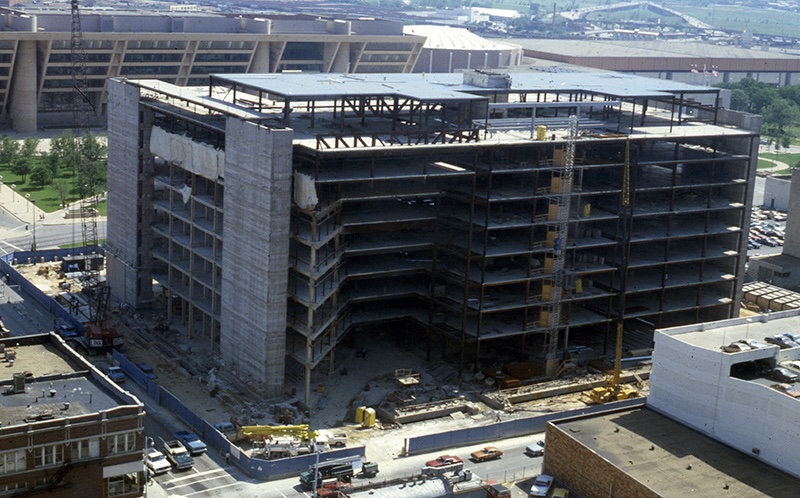
The J. Erik Jonsson Central Library construction differed from City Hall, although both were built to last for over a hundred years. Dallas City Hall was created from cast-in-place concrete, which is poured as a continuous, monolithic structure reinforced with steel rebar. The library was built from precast concrete panels, which are also highly difficult to demolish. The panels were designed to match the color of the concrete at City Hall, and light was integral to the design. The lower-level offices have a row of windows, and the shadow of the building protects them from the sun. These are gated off presently, but you can peek over the edge and see the design.
“It’s a very functional and flexible building,” Winters said.
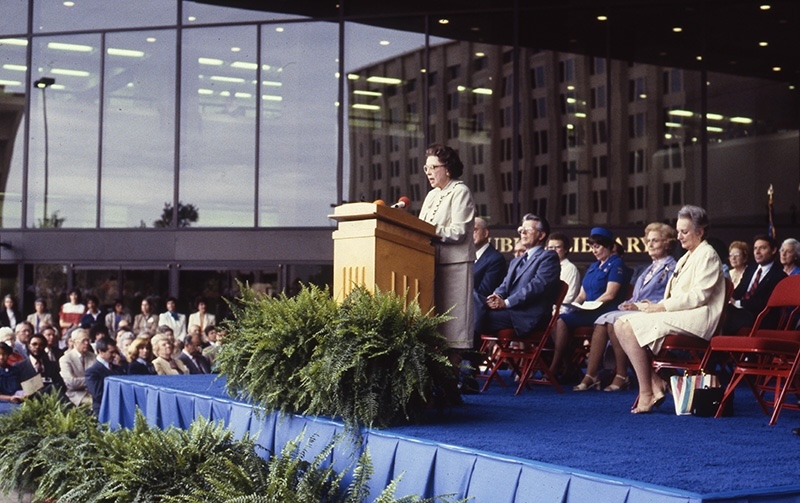
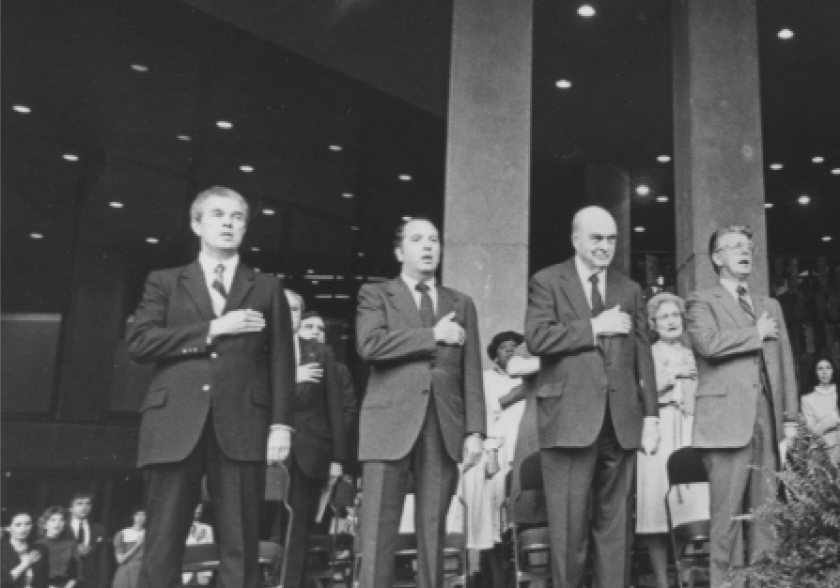
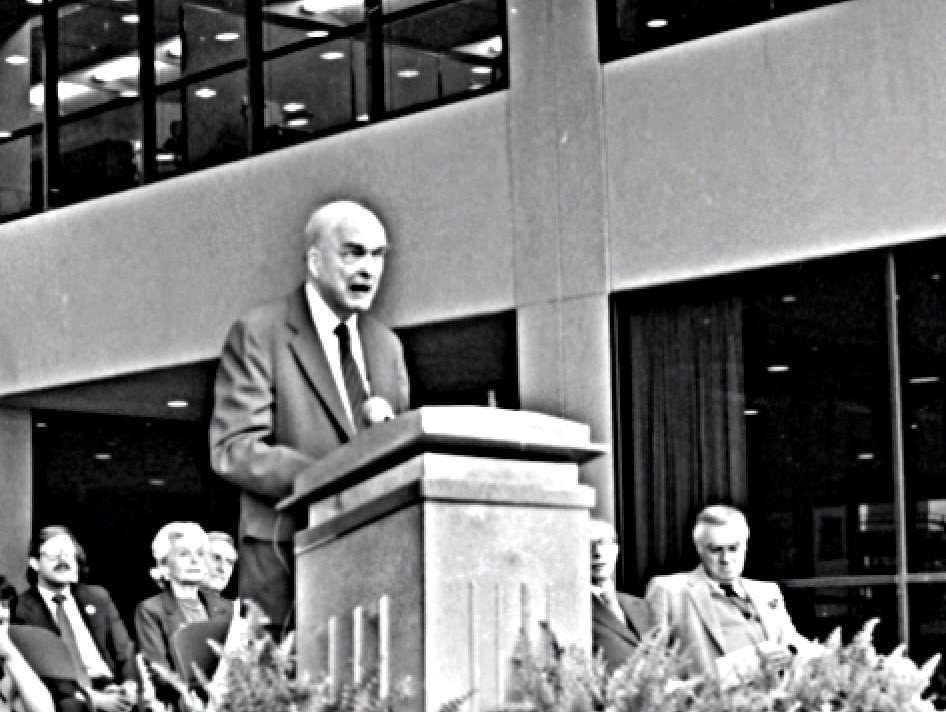
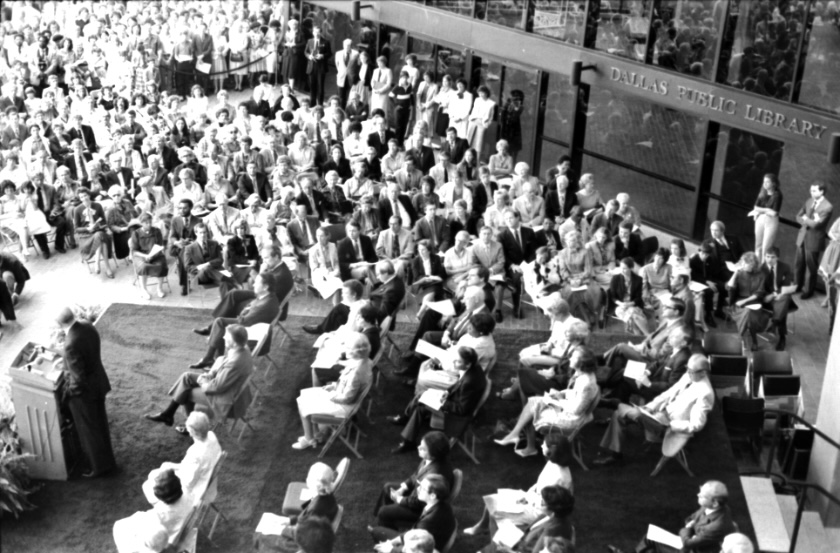
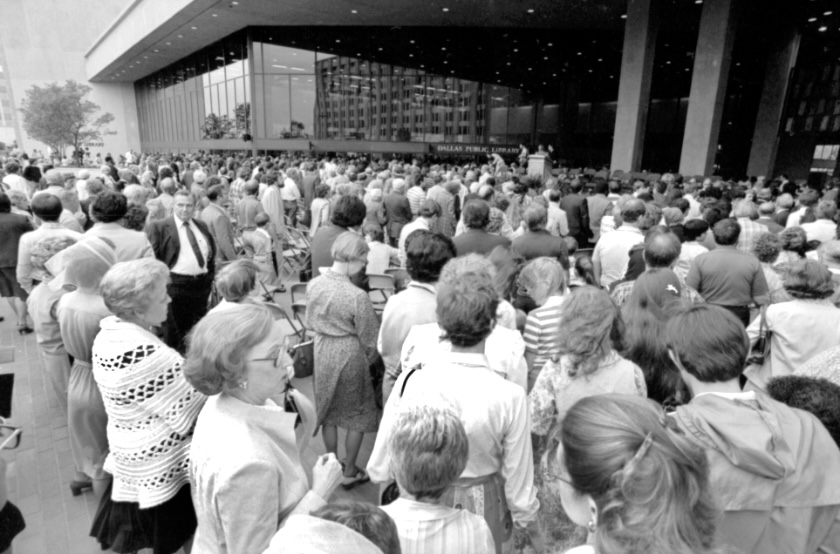
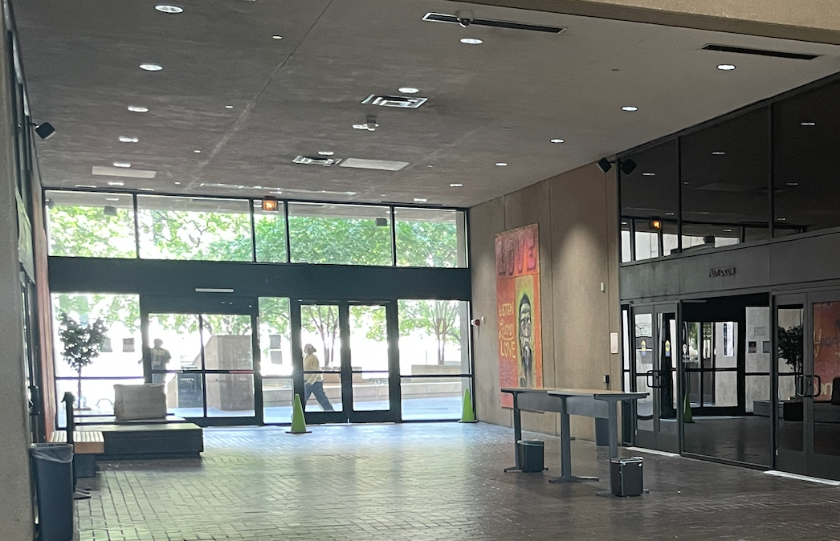
The library was originally designed with a series of outdoor passages so people could easily walk through it to get to City Hall. The bricks on the floor signify the passageway for pedestrians through the building. These passageways changed in the 1990s, when glass walls and doors were installed. Winters contributed to two projects at the library during his career.
“One focused on the side facing Dallas City Hall. Originally, the lobby had a single sheet of glass with doors leading outside — there was no vestibule,” he said. “I designed the current vestibule. In the 1980s, I also designed the children’s floor, a fun project that won an AIA award.”
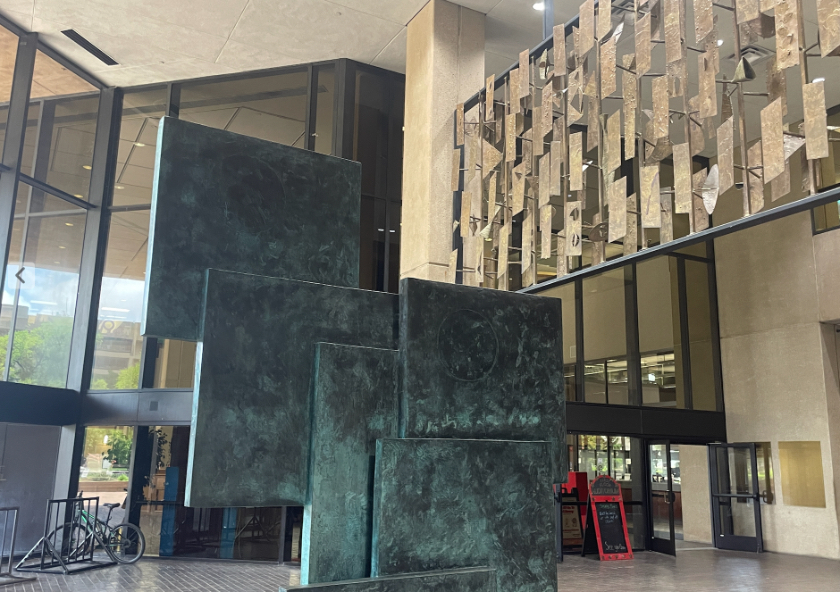
The interiors were influenced by philanthropist Margaret McDermott. Her husband, visionary businessman Eugene McDermott, was J. Erik Jonsson’s business partner, and the two were co-founders of Texas Instruments. McDermott donated major pieces from the couple’s Native American collection. As the new hire, Winters was tasked with going to her home to photograph the rugs that are now framed and hung in the library.
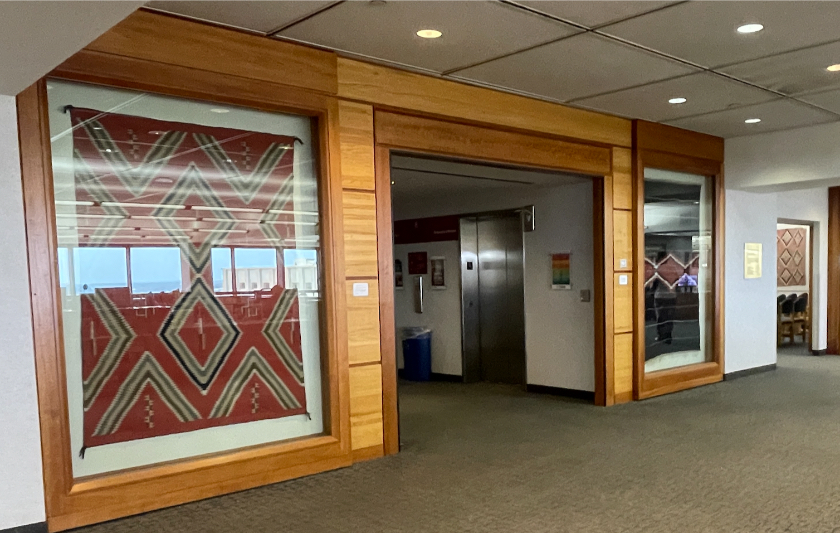
Winters recalled, “The firm wanted photos to put into models of the interiors for Margaret McDermott’s approval of rug placement. I remember laying out a $10,000 Navajo rug on her grass in the backyard and climbing a 12-foot step ladder to photograph it!”
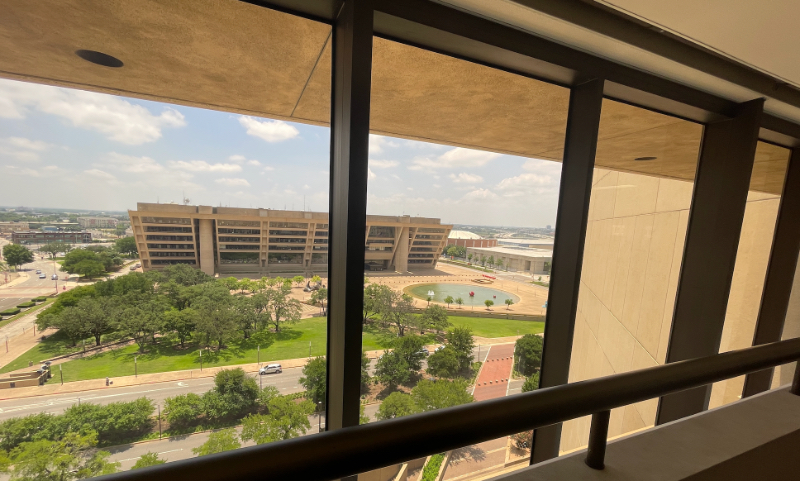
Over time, the building has received floor-specific updates. Notably, Booziotis & Company Architects renovated the 7th floor in 2016, and GMA Construction updated the 6th floor in 2021.
Like Dallas City Hall, J. Erik Jonsson Central Library was built to serve the community for at least another 50 years. These buildings were planned and designed by civic visionaries who understood the public deserves a civic district that was planned with one thing in mind: to serve the public.







I LOVE our downtown Library! They have been an immeasurable asset in researching my Historic Home.
If the developers manage to get this building, as well as City Hall, stick a fork in downtown….it’s DONE.
I’ve never been so disgusted with my home town.
“One focused on the side facing Dallas City Hall. Originally, the lobby had a single sheet of glass with doors leading outside — there was no vestibule,”
the lack of a vestibule proved problematic during the winter storm that hit dallas in about 1983 as it let in the cold cold cold wind. couldn’t keep the first floor warm at all
another problem was the homeless. The 1954 Commerce building had a reading room in the lower levels where street people congregated. The powers that be did not take that population into account with designing the current building. Periodicals and newspapers were shifted to different departments in the new building. The street people scattered throughout the new building.
Wonderful lounge/club chairs were set up all over the building. Perfect for sitting in and reading. The street people took to them eagerly. about 6 months after moving in these club chairs were removed for cleaning and having a Scotch guard type material added. You can just imagine why they needed cleaning
44 yrs later this building is still plagued by the street people
Isn’t it sad that our city leaders, for decades, still cannot seem to find an appropirate solution to help unhoused citizens? It’s not an issue relegated to downtown.They can take away the bus station, the Bridge, even the Stewpot and it won’t matter. Pepole will still need help and until we find a way to provide that, tearing down buildings will never be the answer.
I completely agree. We can pay one to two billion (that price keeps rising) on this needless Convention Center affair yet not save city hall and the library? Absurd!