Dallas City Council Changes Melshire Park Zoning After Permit Dispute Reopens 2021 Fight
Share News:

A North Dallas zoning case that was seemingly settled five years ago found itself back in front of the city council on Wednesday, with the developer looking to amend a planned development district that Melshire Estates neighborhood residents fought bitterly from the start.
CandysDirt.com publisher Candy Evans covered the contentious series of meetings that led to the project’s 2021 approval, when nearby Melshire Estates residents pushed back over density, height, traffic, and the development standards ultimately written into the zoning.
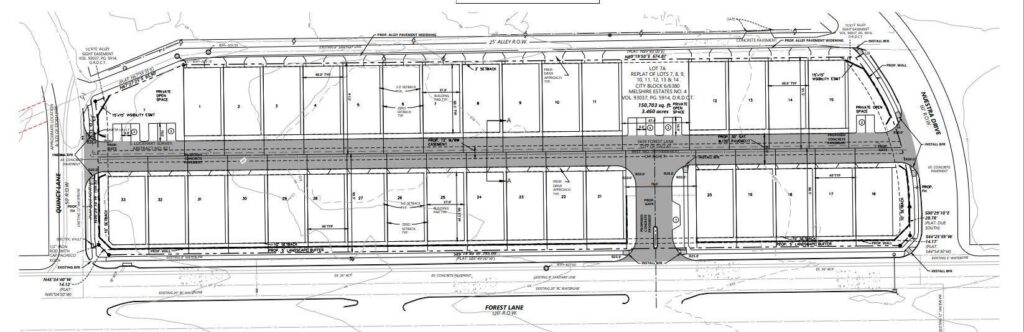
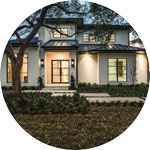
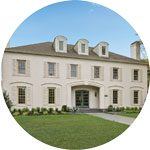
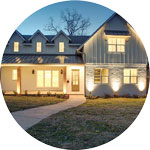
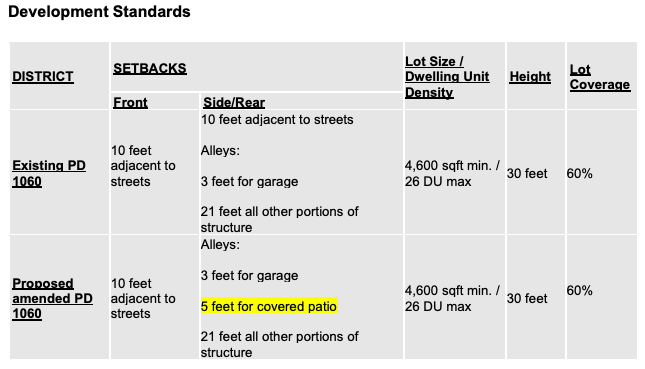
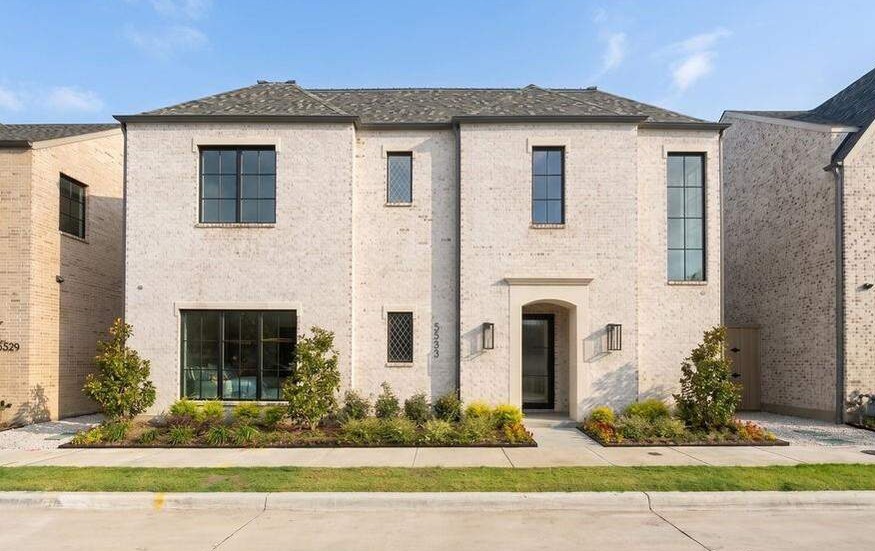
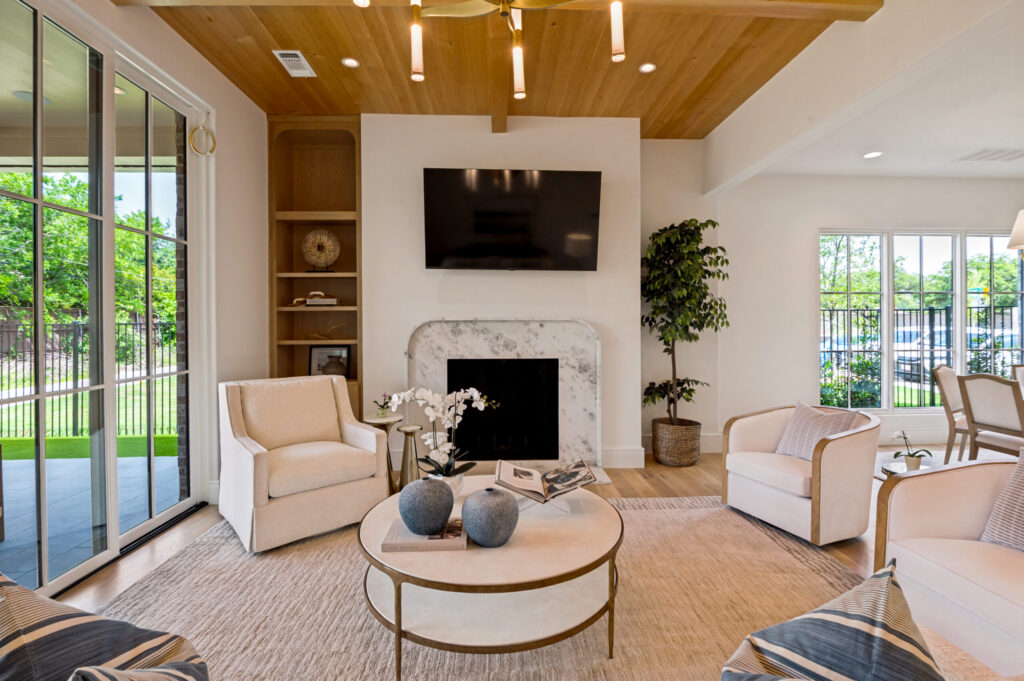
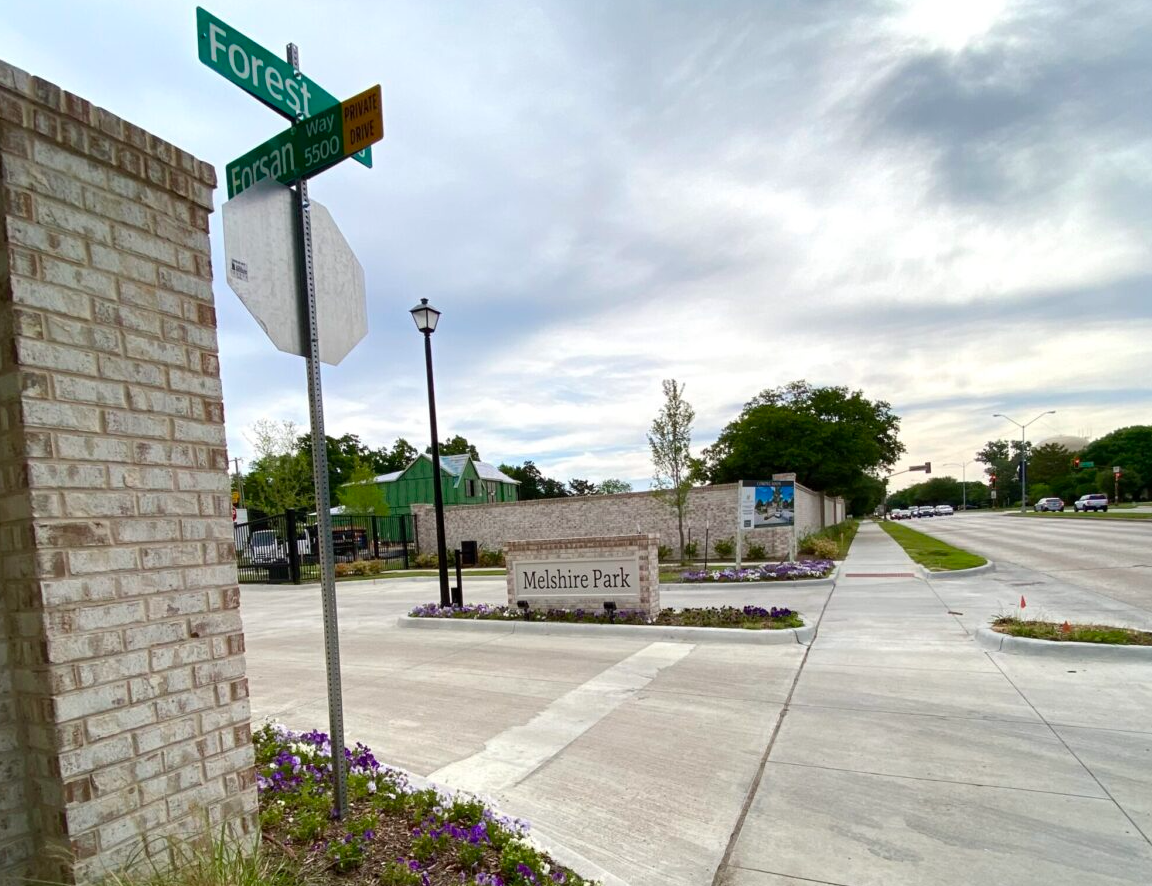
Council members voted 8-4, with three absent, to modify the standards governing Melshire Park, a 26-home gated community under construction along Forest Lane near the Dallas North Tollway. The change allows covered patios to extend within five feet of the development’s northern property line.
How Four Patio Permits Reopened a Five-Year Zoning Fight
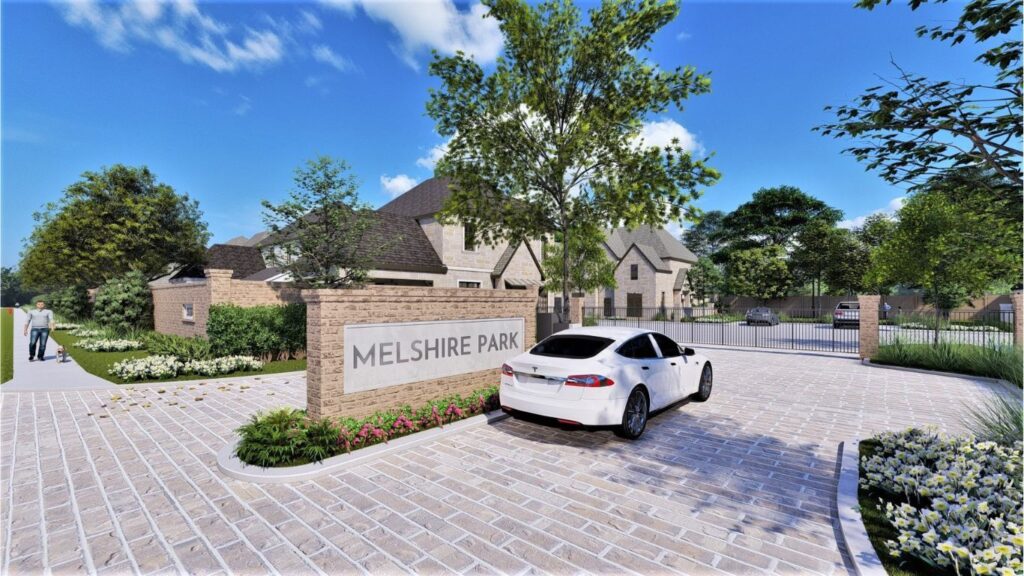
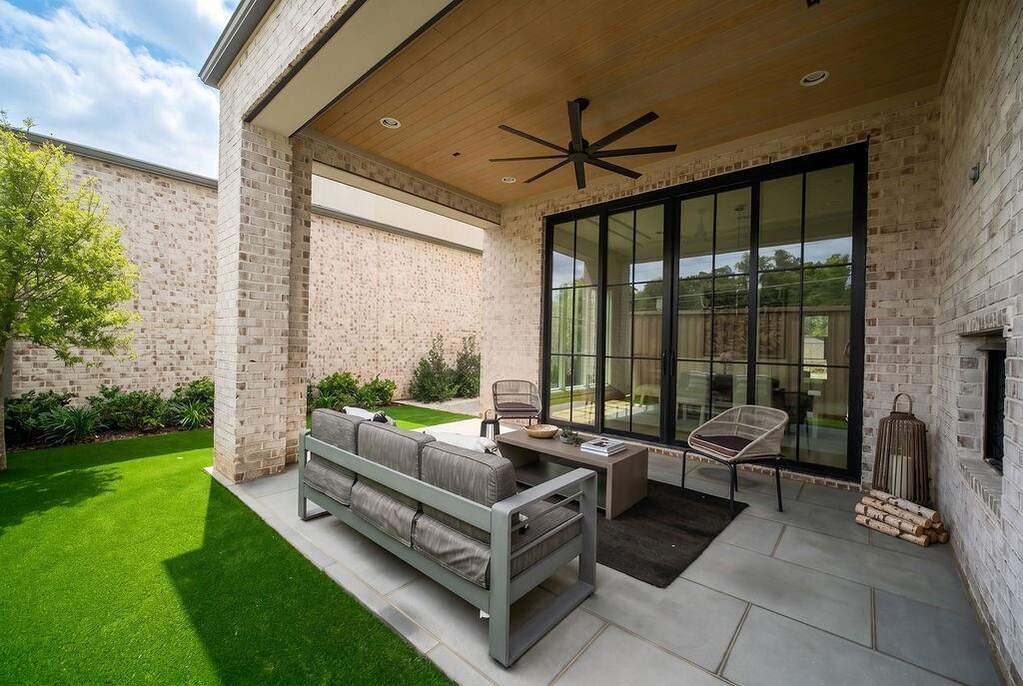
Olerio Homes, which is building Melshire Park, secured four permits for covered patios extending beyond a specific alley-facing 21-foot setback established in the PD approved in 2021. After the issue was discovered during construction, Bill Davis, an officer of zoning applicant Eglington Development Ltd., opted against seeking individual variances from the Board of Adjustment and instead requested an amendment to the PD.
Olerio Homes was also active in Elm Thicket/Northpark during that neighborhood’s contentious zoning fight. There, Dallas later acknowledged issuing some building permits under outdated zoning rules, and builders with projects already underway had to either come into compliance or seek relief from the Board of Adjustment.
The 21-foot setback was one of the development standards negotiated when Melshire Park won approval in 2021. Nearby residents had strongly opposed the project over its height, density, and potential traffic impacts, with concessions ultimately made through setback and design requirements.
Council Changes the Rules Over Residents’ Objections
“Let me ask you, what value do these planned development district agreements have if they can simply be changed after construction begins?” said longtime Melshire Estates resident and former neighborhood association president Richard Brown, addressing council members on Wednesday. “This should be an easy decision. Do we really want to reward a builder for breaking the rules? What kind of message is that going to send?”
Staff said the problem arose over how the city classified covered patios extending beyond a setback. Four permits were approved after city reviewers treated the patios as separate from the structure. Another review flagged the patio roofs and determined they made the patios part of the structure for purposes of the setback.
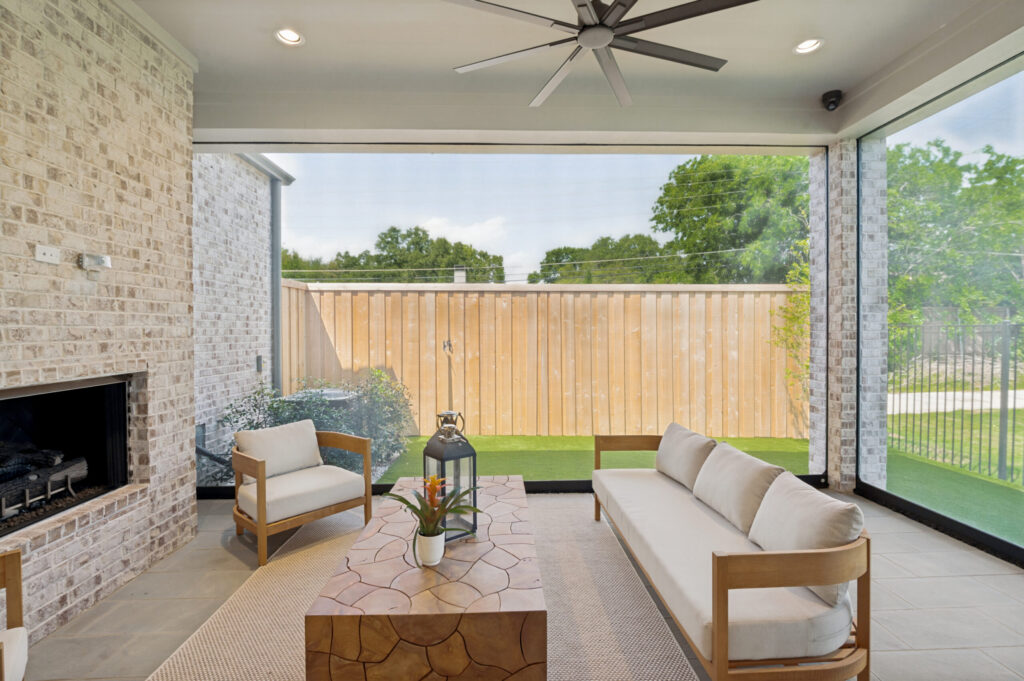
Land use attorney Tommy Mann, representing the developer, characterized the issue as a disagreement over interpretation rather than intentional noncompliance. He argued an amendment to the PD would resolve the setback issue more efficiently than pursuing individual board of adjustment rulings.
Mann said there was essentially no neighborhood opposition to the amendment when it was recommended by the City Plan Commission.
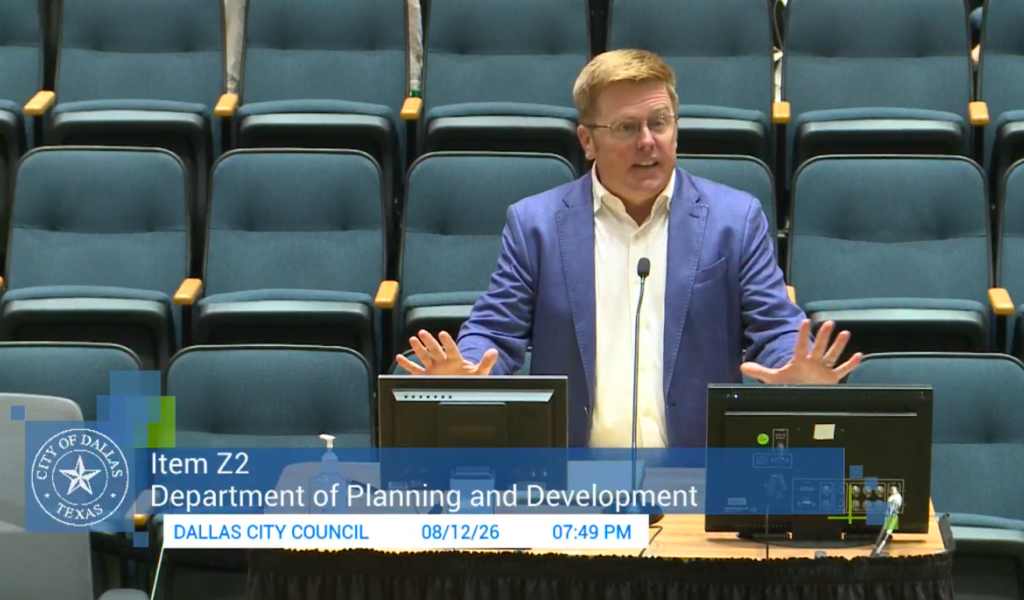
“Within the last week, concerns have been raised, and we are a little bit confused by them, but hopefully the clarity I’ve provided here will let you know and let them know we’re not trying to build anything new,” Mann said. “We had approval for 26 homes on 4,600-square-foot lots five years ago. If you vote to approve this, we still have 26 homes on 4,600-square-foot lots. These patios don’t add any density. They don’t add any [travel] trips.”
Council Member Gay Donnell Willis (District 13) said she initially had concerns about whether the amendment undermined commitments made during the original zoning case.
She called the situation “unfortunate” but said planning staff ultimately determined the impact of the covered patios was “minimal to non-existent.” Willis also noted that the project will eventually place an estimated $55 million in property value on the tax rolls.
Other officials were less understanding.
Council Member Cara Mendelsohn (District 12), who voted against the PD in 2021, recalled the original zoning fight as one of the most contentious the city had faced at the time. While concessions were made, she said residents never embraced the project.
“What looks like is happening to me is that the developer is just doing whatever the heck they want, and then we’re going to codify it,” she said.
Council Member Paul Ridley (District 14) rejected the notion that the setback language was ambiguous in any way.
“If they want to try to get a variance from the board of adjustment, they’re free to do that, but we should not be changing the rules in the middle of the game,” he said.
A Patio Dispute Becomes Part of a Bigger District 13 Battle
The vote came at a contentious time in District 13, where a recently formed coalition of neighborhood residents has threatened to pursue a recall of Willis over several zoning disputes — including this one — and her support for exploring a relocation of City Hall.
D13 Together Coalition demanded Willis delay the requested Melshire Park amendment, rezoning for an $800 million mixed-use project at Preston and Royal, and another case affecting the Walnut Hill/Marsh area. Prior to Wednesday’s meeting, Willis seemed to reject the call for a blanket pause, telling CandysDirt.com that the Melshire Park and Preston-Royal projects had already been “changed substantially” as a result of significant community engagement and feedback.
Willis ended up voting in favor of approving the Melshire Park amendment along with Council Members Chad West (District 1), Jesse Moreno (District 2), Zarin Gracey (District 3), Maxie Johnson (District 4), Jaime Resendez (District 5), Lorie Blair (District 8), and Kathy Stewart (District 10).
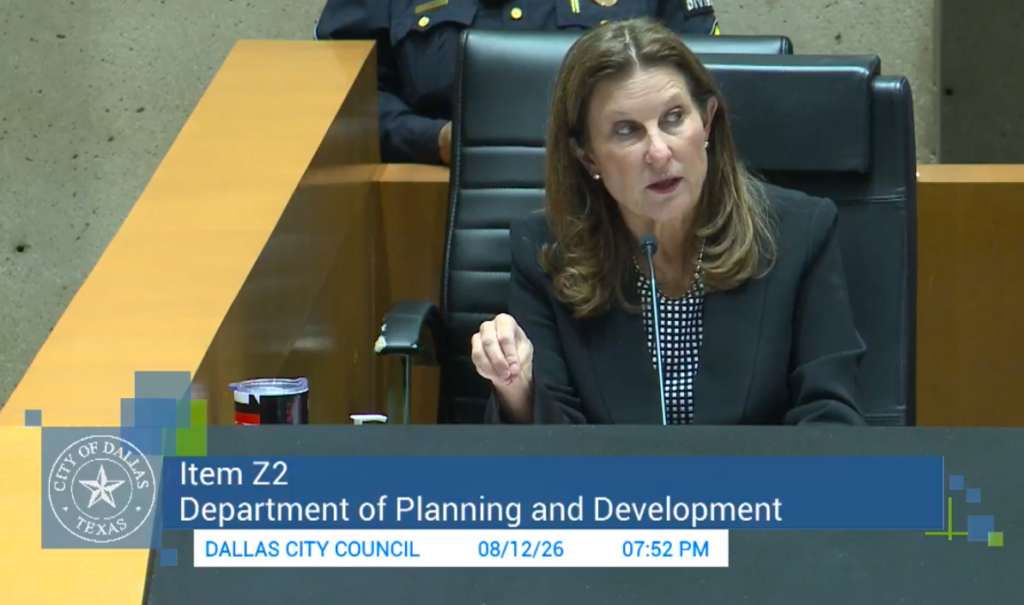
The only no votes were from Council Members Mendelsohn, Ridley, Laura Cadena (District 6), and Bill Roth (District 11). The rest of the city council was absent when the vote was taken.
Asked about whether the vote crossed one of D13 Together Coalition’s presumed red lines, the group said, “We are evaluating every option available to D13 voters, and we will have more to say when the time is right.”
Under the city charter, a recall effort begins when five registered voters notify the city secretary of plans to circulate a petition for an election. Organizers then have 60 days to collect signatures equal to at least 15% of eligible voters in the district from the last general municipal election. If the petition is certified, the council must call a recall election for the next available date under state law.
It wouldn’t be the first time a North Dallas zoning fight led to a recall effort, with higher-density projects near single-family home communities leading to considerable friction.
Dallas has seen this playbook before: in 2024, a District 11 homeowner launched a recall effort against then-Council Member Jaynie Schultz after disputes over higher-density redevelopment near single-family neighborhoods.
“D13 Together has significant resources and represents residents across one of Dallas’ most active voting districts,” the D13 Together Coalition said. “We are serious about holding Council Member Willis accountable for broken campaign promises and failures to represent D13 residents.”
Brown echoed that sentiment. A member of the coalition himself, he told CandysDirt.com he doesn’t necessarily consider the dispute over, noting that residents are exploring whether there are other avenues to force the developer to address what he and others view as a violation of the original agreement.
He also said the episode underscores the purpose of D13 Together.
“One voter or one neighborhood, they can be ignored,” Brown said. “But when you start putting together a large coalition of people, that’s a much larger voice.”
CORRECTION: This article was updated on August 14, 2026, at 10:35 a.m. to correct a naming error.
Olerio Homes is a former advertiser on CandysDirt.com