
Controversial Preston-Royal Project Zoning Hearing Pushed to August
Share News:

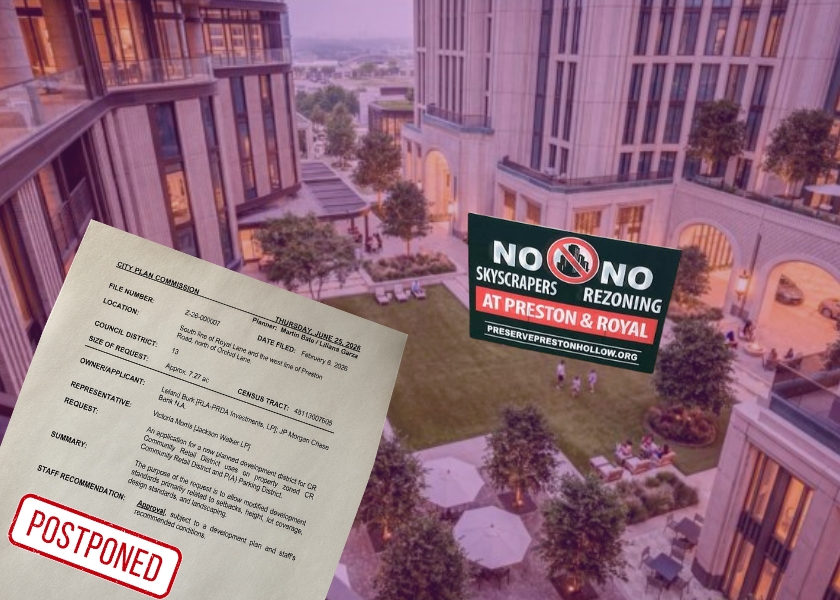
The Dallas City Plan Commission won’t consider the controversial Preston-Royal mixed-use proposal until August after opponents successfully argued that nearby property owners weren’t properly notified of significant revisions to the project.
“We are pleased that the City recognized the importance of a fair, transparent, and legally sound process by pulling this case from Thursday’s agenda,” said Austin Smith, an attorney representing the nonprofit Preserve Preston Hollow.
The group’s website states the zoning request will now be heard by the CPC on August 6.
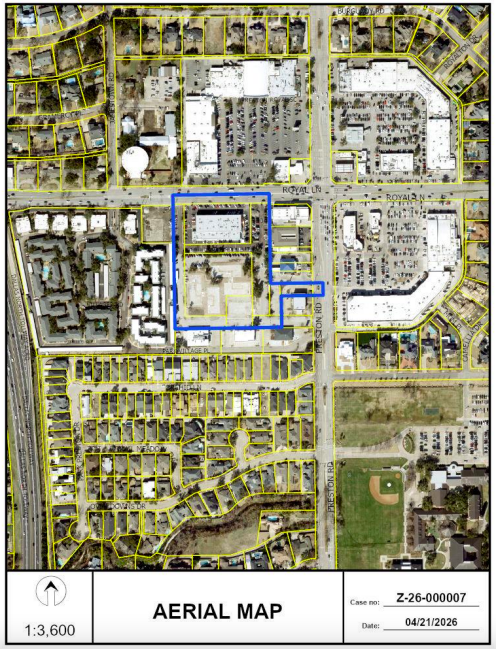
Preserve Preston Hollow has been organizing against the project by Leland Burk and Greenway Investment Company, which would transform roughly seven acres at the North Dallas intersection into a mixed-use destination featuring residential, hotel, office, restaurant, and retail space.
The proposed $800 million development now includes a 19-story hotel with condos (240 feet), an 18-story multifamily tower (210 feet), and a 12-story office building (190 feet) on land with a current height limit of 54 feet. City staff recommends approval of the zoning application.
An early iteration of the project called for a 28-story hotel and 24-story multifamily tower, with the tallest building (325 feet) set closer to nearby single-family homes. The hotel has since been moved toward the center of the site. The changes were made to accommodate neighbors who oppose the project, who did not seem impressed by concessions presented at a community meeting last month.
Preserve Preston Hollow members argue the project would be wildly out of character for the neighborhood and invite more traffic congestion at an already busy intersection.
“The Burk team had changed its plan multiple times after the City sent notification forms to neighboring property owners,” Smith said. “The community has a right to review and respond to the actual, updated proposal before a vote takes place.”
Burk told The Dallas Morning News that he did not object to the zoning hearing being pulled from Thursday’s agenda, referring to a “spirit of collaboration” with stakeholders.
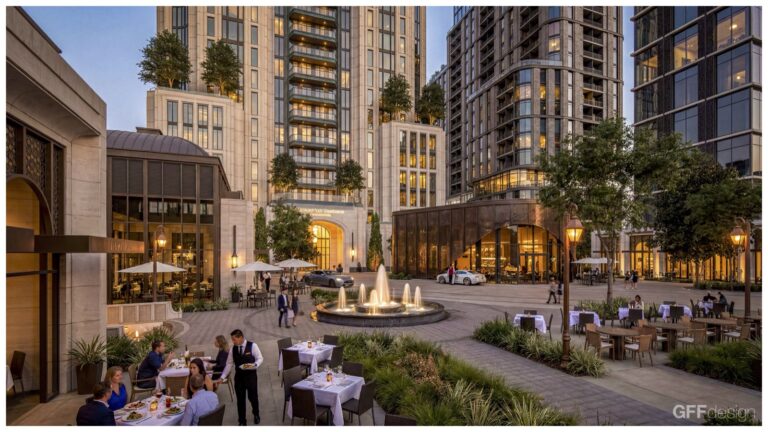
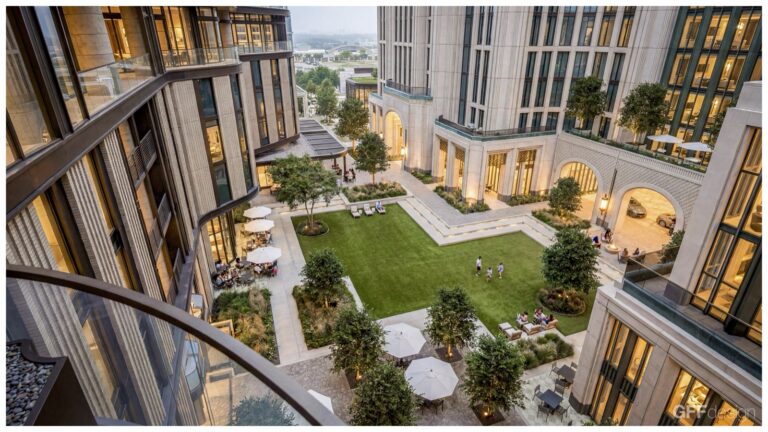
The latest revised plan scales back the number of residential units and hotel rooms while maintaining investment in public amenities. Plans include a half-acre public green space, improved pedestrian connectivity throughout the site, and the planting of more than 200 trees on property that was heavily damaged during the 2019 tornado that tore through the neighborhood.
“We want to see the corner developed with a mix of uses in a way that is complementary to the neighboring residential community and existing commercial properties,” said Doug Hazelbaker, a real estate professional, nearby resident, and volunteer with Preserve Preston Hollow.
He noted that a petition against the project has gathered around 4,000 signatures, more than double what it had just a couple of months ago.
Blue card responses by nearby property owners show overwhelming opposition to the development, though it’s unclear which iteration of the project each is responding to. These official protest cards are mailed to property owners within 500 feet of a project seeking a zoning change. They allow those owners to indicate whether they support or oppose the request before it reaches the CPC and ultimately the Dallas City Council.
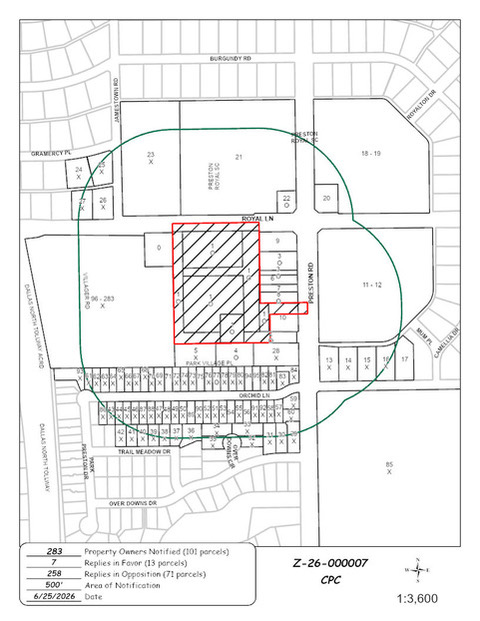
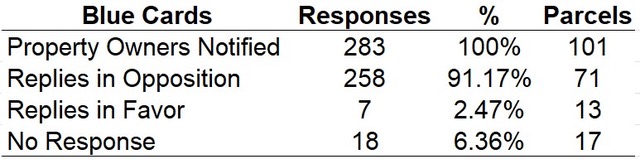
Some 283 property owners were notified, and 258 blue cards came back in opposition. Only 17 property owners registered their support for the project, a handful of whom are associated with the development.
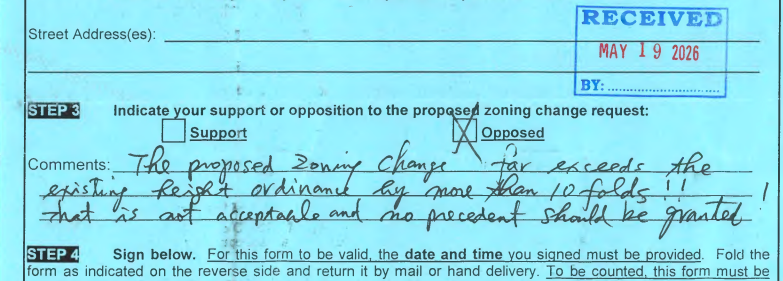
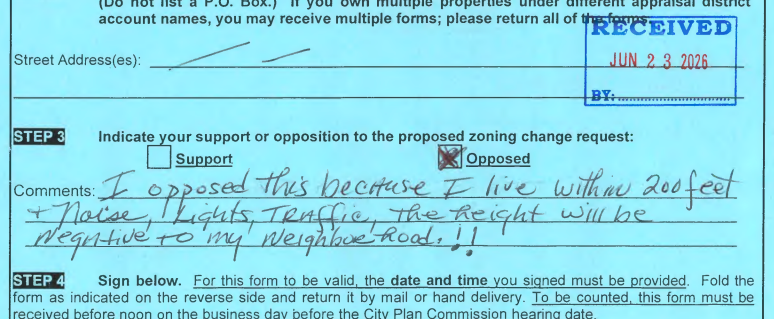
Property owners who oppose the rezoning described the proposed towers as incompatible with the surrounding Preston Hollow neighborhood, arguing the increased height and density would worsen traffic congestion, strain local infrastructure, reduce privacy for nearby homes, and negatively affect property values.
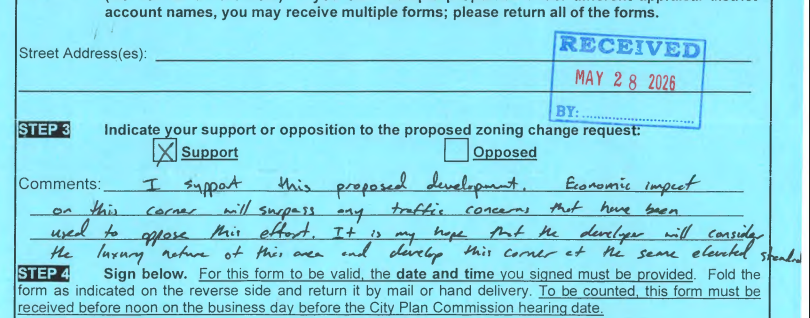
One supporter wrote that the project’s economic impact on the corner should outweigh traffic concerns. Another suggested it was an opportunity to jumpstart an aging commercial corner that was “under-developed.”




The owners (developers) Leland Burk, Mitchell Rasansky, Mitchell Fronbreg are widely known as commercially owner slum lords. Their properties constantly remain in need of repairs and renovations. Their properties have always been questionable. Always under city citation and need of repair.
Seems like blue cards should’ve been sent out to a wider area given the zoning change requested is for 5 times the present height limit. They should’ve sent blue cards out 5 times the required area. Those of us outside this area will be severely impacted too.
Why did they drop the trees from 200 to 150? And the Zoning Commission did not even ask why.
This whole experience raises the question of why even have zoning and moreso, what is the point of a Plan Commission? Who looks out for preservation of zoning?