
Updated Renderings of Preston-Royal Project Do Little To Quell Opposition
Share News:

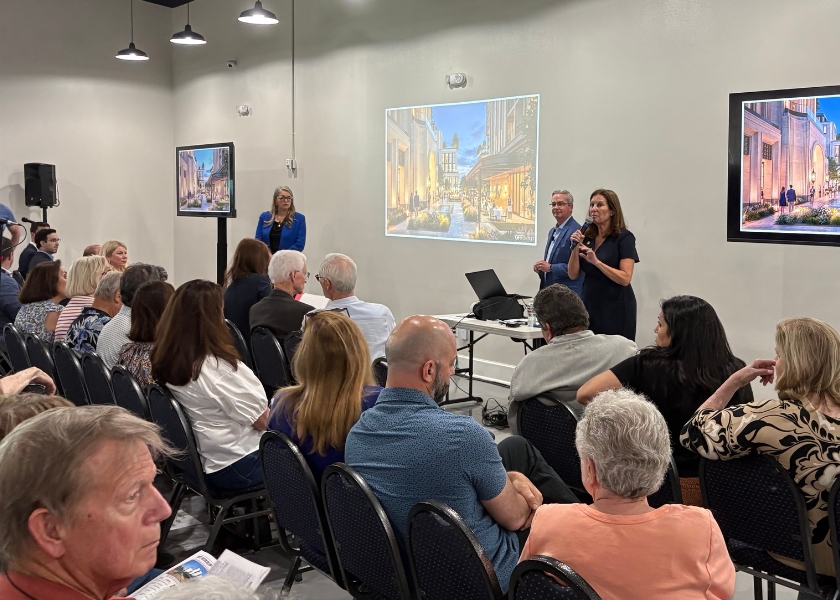
Representatives for the controversial mixed-use project proposed at Preston Road and Royal Lane unveiled updated renderings Friday evening to a packed crowd of neighborhood residents, many of whom remained skeptical despite revisions to the plan.
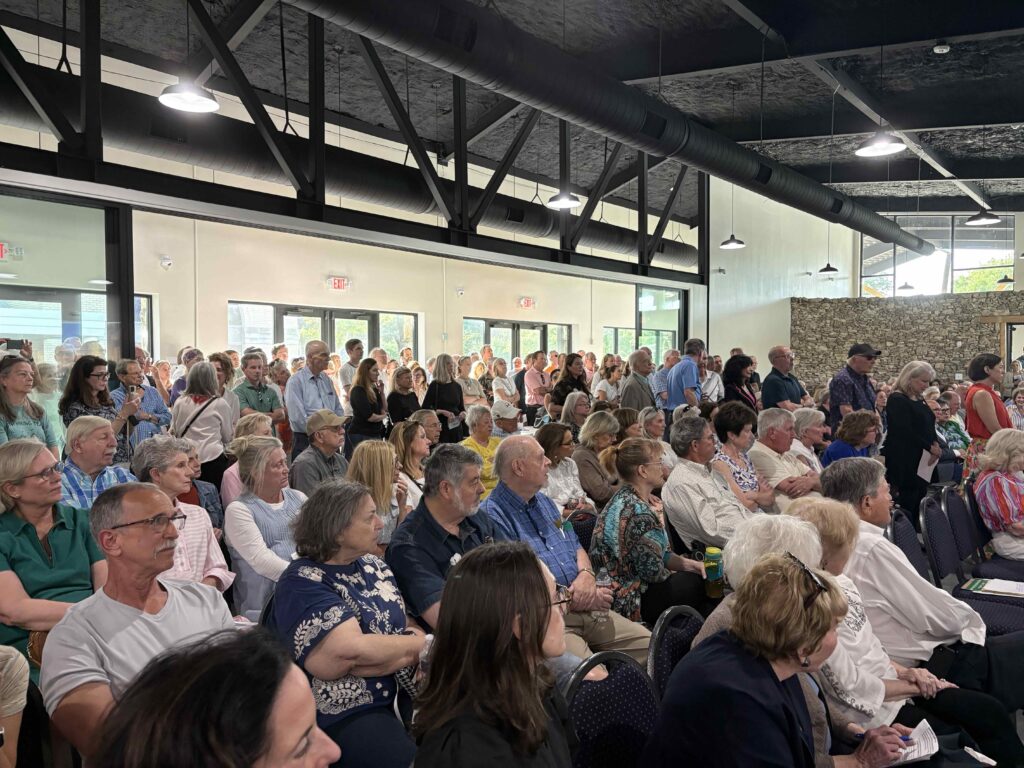
The community engagement meeting, hosted by Council Member Gay Donnell Willis (District 13) at St. Luke’s Episcopal Church on Royal Lane, saw more than 200 people show up to hear out the developer’s updates and offer their two cents. While there were attendees who expressed their support for the project, the opposition seemed to dominate the room. Willis intervened on multiple occasions when some attendees loudly jeered speakers they disagreed with.
“I hear a lot of different perspectives on this, so please be respectful of the presenters,” Willis said early on. “But really these are your neighbors, so please be respectful of your neighbors.”
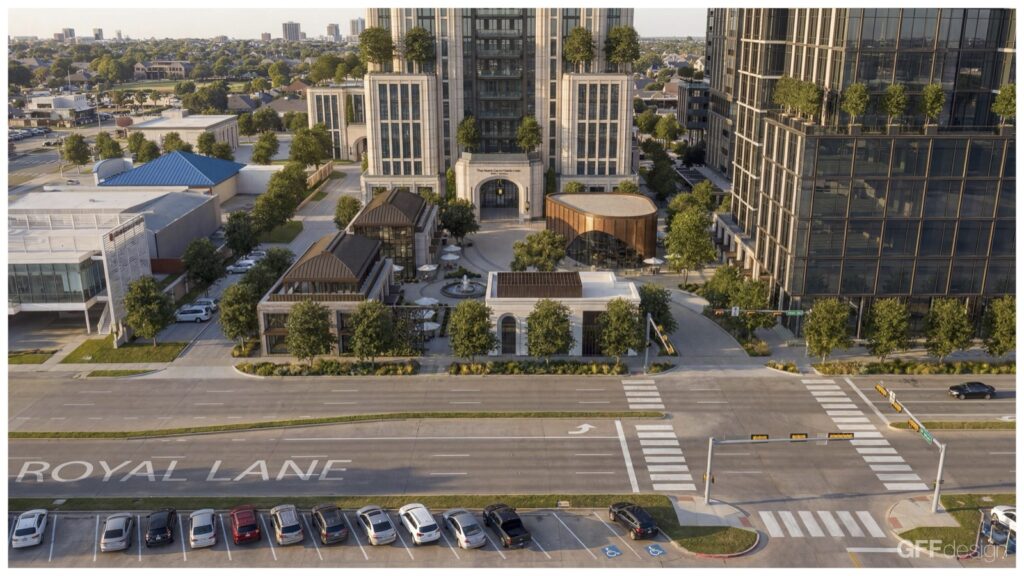
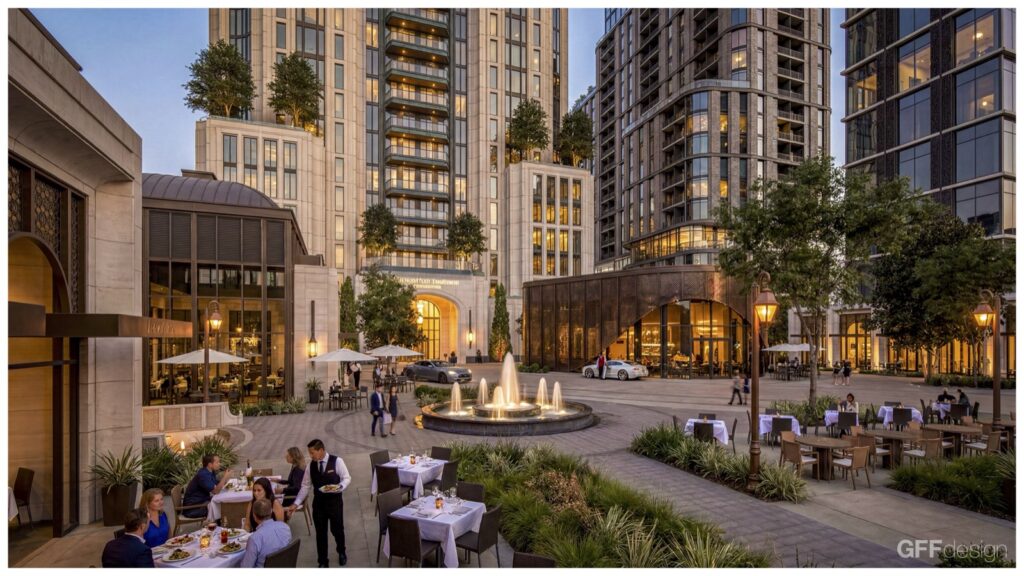
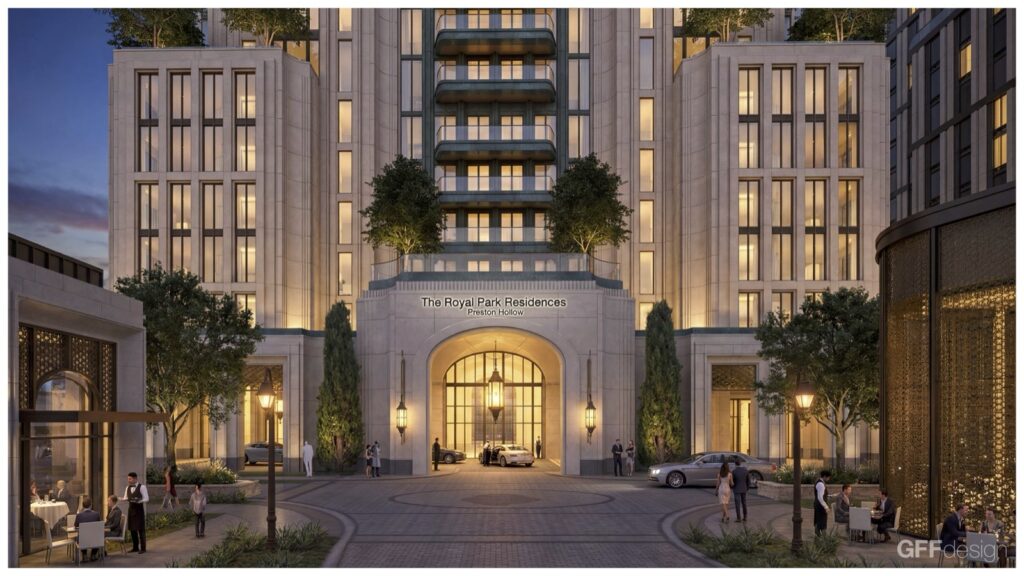
Burk Interests and Greenway Investment Company want zoning approval for a 25-story hotel with condos, a 21-story multifamily tower, and a 11-story office building set on seven acres off the intersection that currently has a height limit of 54 feet. Retail and a dining village, among other amenities, are also part of the development. Earlier versions of the proposal included even taller buildings, but the plans were scaled back a few stories last month amid ongoing concerns over the size of the towers and the potential traffic impact.
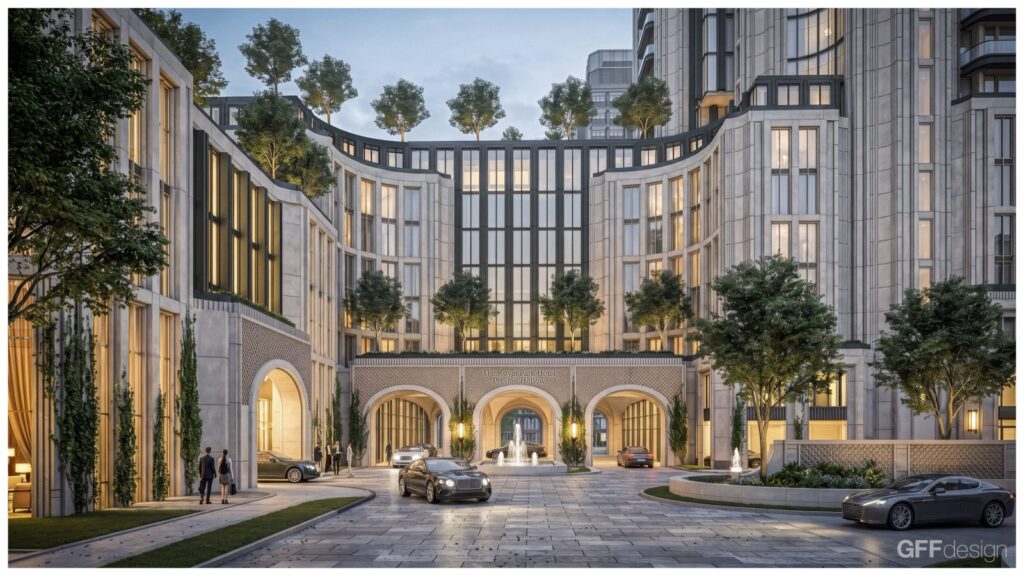
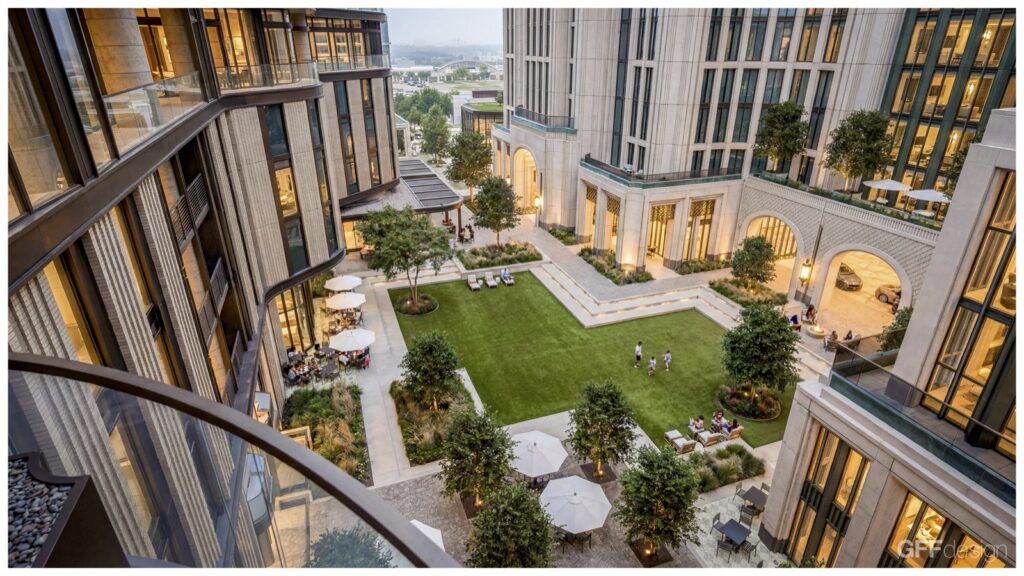
Suzan Kedron, partner at the law firm Jackson Walker, and Evan Beattie, CEO of GFF Design, presented the new renderings and answered some questions from the crowd over the course of more than two hours. They noted the reduced building heights and how the tallest structure (299 feet) was pushed toward the center of the site, emphasizing proposed new green space and trees (over 200), the below-grade parking, and developer-funded pedestrian signals and crosswalks aimed at improving walkability and safety.
They also argued the luxury residential and hotel components would generate less traffic than a by-right retail or grocery-anchored development like exists on the other three corners of the intersection.
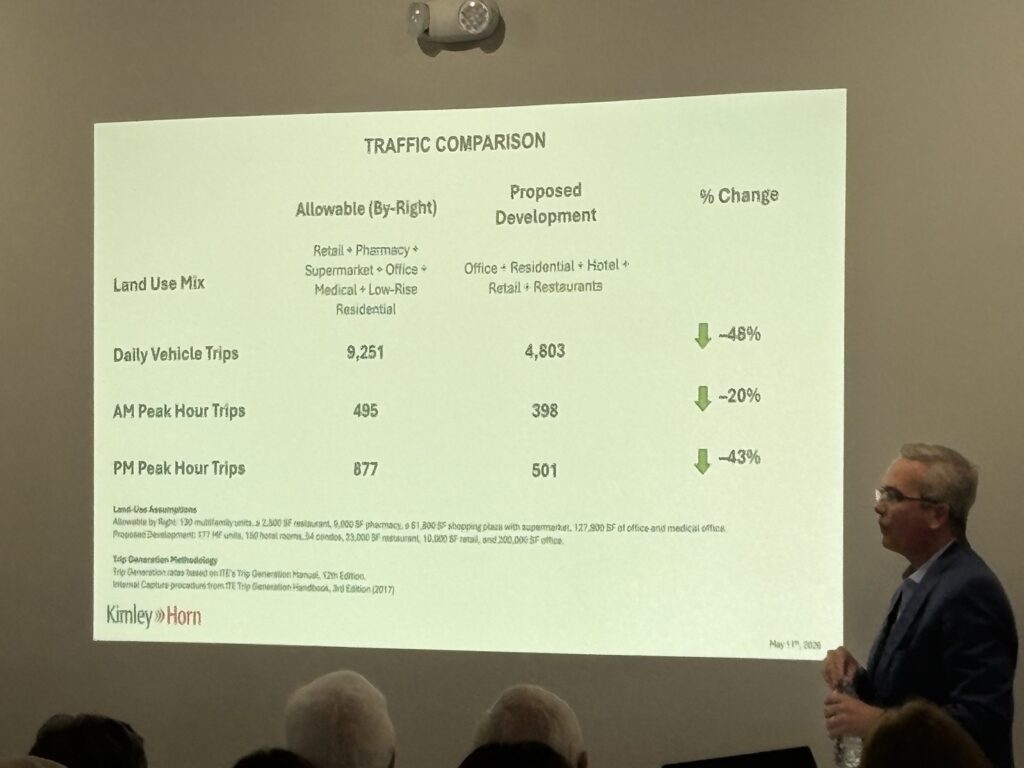
Preserve Preston Hollow, a nonprofit neighborhood group opposing the project, is challenging the reliability of the project’s traffic impact analysis, which was conducted in January and doesn’t reflect the updated plan. In a letter to officials and Leland Burk, president of Burk Interests, the group raised a number of questions about what the study did and didn’t consider.
Beattie said the analysis was done in accordance with accepted industry practices and that their consultant was working to respond to the nonprofit’s questions. Even still, another traffic impact analysis commissioned by the developer is in the works.
“We expect that those counts are going to further validate the traffic study that was previously shared,” he said.
That explanation did little to reassure some residents. Mark Schoellkopf, who lives just a couple blocks from the planned site, argued the analysis seemed to rely on a single traffic-count day that he argued was not properly adjusted.
“I’m asking Council Member Willis and the city staff to require a new independent traffic analysis for the site,” he said, countering Kedron’s defense of its consultant (Kimley-Horn) by noting that the proposed H-E-B at LBJ and Hillcrest was delayed for an independent traffic analysis.
Others also expressed skepticism about the traffic implications, as well as the overall change of character the development would purportedly bring.
“I don’t know who decided that a project of this magnitude was something that we wanted as a neighborhood,” said Tara Weilbacher. “I have worked downtown my entire career. If I wanted this, I would live in Uptown or downtown. That being said, I am not opposed to some development, okay? I am not opposed to doing something beautiful with this corner to make it thriving, make it look good, but this is not what I want. And I don’t think that any reasonable person in this room … would believe that traffic is going to be better or the same.”
Not everyone was opposed to the project, though. While a minority of the public speakers, supporters praised the quality of the design and amenities, and some argued that increased density was important to generate more revenues with the city facing fiscal uncertainty.
Adrian Zeni said he researched the project and would prefer to see the comparatively lower traffic impact of the residential component with beautiful architecture than the churn of strictly commercial uses. He did, though, also express excitement about the amenities.
“I mean, honestly, if you are interested in the future of Dallas, you want to see young people here, you want to see economic growth,” he said, later telling CandysDirt.com he loved the walkability facet. “Being able to leave your apartment and you have restaurants nearby, you have shops nearby.”
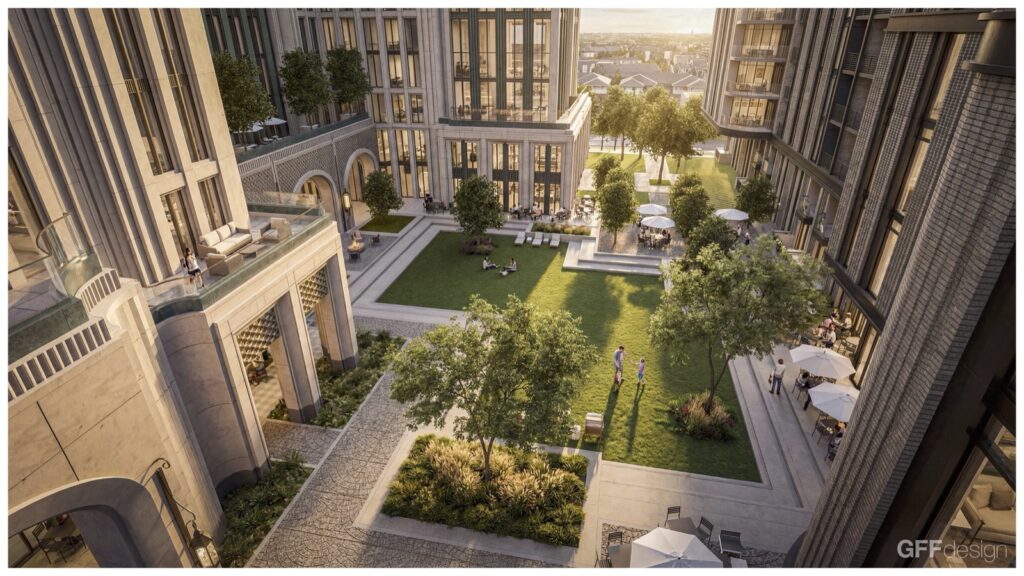
The height of the towers, however, has loomed large over a lot of the debate over the past several months. Multiple attendees called the height request “arbitrary,” and some critics have framed the project’s scale as just a way for the developers to enrich themselves further.
Beattie explained that the below-grade parking is a $50 million investment that allows for more quality open space and avoids needing to build a parking garage. He said that level of investment requires added density to offset it. He also pointed to the large 3,375-square-foot condos they have planned. The project’s value is estimated to be around $800 million upon completion.
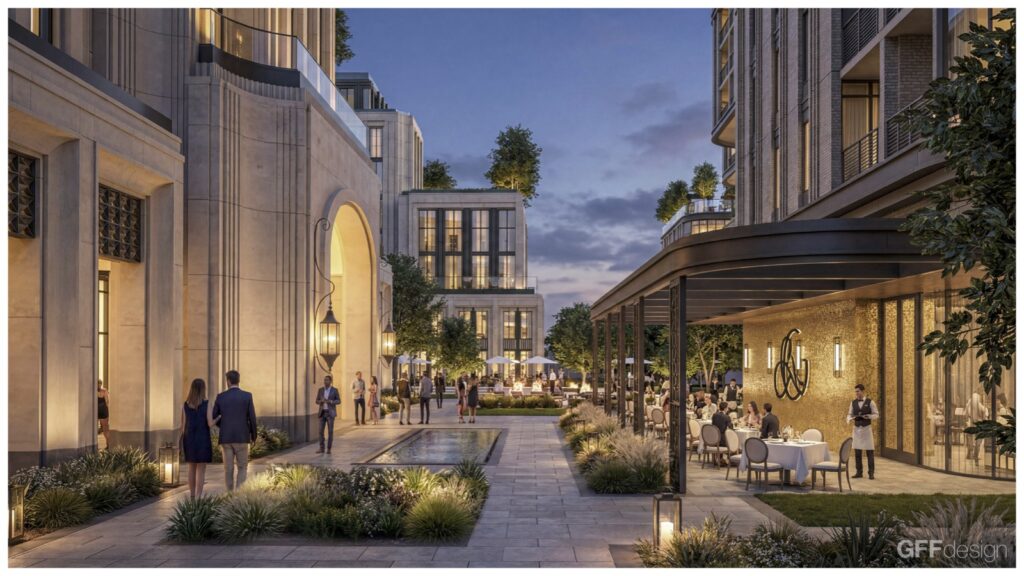
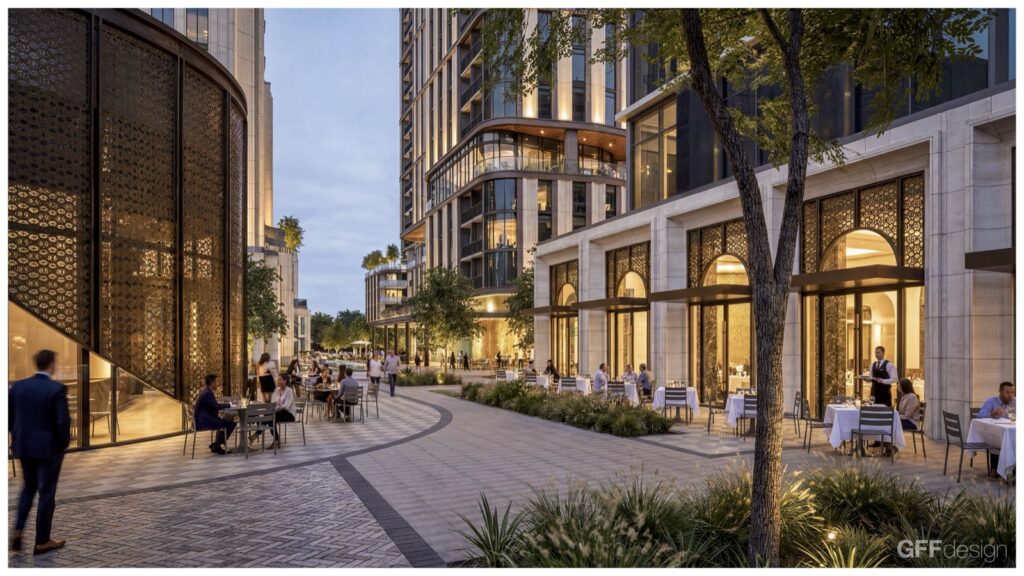
“There’s a lot of people that are drawn to living in that kind of building. They want to live up a bit, and so height is important to this kind of development,” he said, adding that they were doing their best to transition the height away from edges of the site.
At one point, someone asked Council Member Willis where she currently stood on the project.
“I’m here to listen to you and to see these new plans, and so that’s where I am,” Willis replied.
Willis told CandysDirt.com that this iteration of the project will go through the official process like anything else, which puts the ball in the City Plan Commission’s court for now. A hearing date before the body is scheduled for June 25.
It’s not the council member’s first rodeo when it comes to controversial zoning requests. Early in her tenure at the horseshoe, a proposal for higher-density residential development in Melshire Estates caused outrage in the immediate surrounding area, with the overwhelming majority of neighbors opposing the rezoning.
“People were livid,” she said, adding that many have since come around. “I seriously had two people who are in this room tonight come up to me and say, ‘I was wrong.’ But you can’t necessarily compare. It’s a different set of circumstances. It was straight residential.”
Indeed, mobilization against the Preston-Royal project has been energetic, with neighborhood organizers distributing “No Skyscrapers, No Rezoning at Preston & Royal” signage and gathering more than 2,500 petition signatures against the project.
CORRECTION: This article was updated on May 19, 2026, at 2:28 p.m. to note the latest heights for the project’s hotel/condo and multifamily towers. A previous version of this article incorrectly listed the number of stories from the original plan before concessions.



I appreciate Candy’s Dirt reporter getting so many details accurate – even the quotes. And for announcing the JUNE 25th City Plan Commission Hearing (sign up to speak). I was standing right there when representative Willis said to the reporter, “…But you can’t necessarily compare. It’s a different set of circumstances. It was straight residential.” I was encouraged that some straight talk was included in the presentation about the infamous SB 840 amendment to the Texas Local Gov’t Code. The public REALLY needs to understand that the amendment is NOT a blank check to developers on height. In the circumstance at Preston & Royal, SB 840 merely adds a “Use” of Residential (mixed-use or multi-family) to the commercially-zoned site. The amendment *allows* the city to restrict height to “the greater of” the currently allowed height (54 feet) OR 45 feet. It also says that density should be 54 units per acre. The site is seven acres. That’s 378 residential units that can be built – if they DON’T change the zoning. If memory serves, the developr’s desired high rises would not be that many units of residential. So if these young Urbanists, like the one you quote, want to afford to live in this real estate market, they’d be far more likely to find affordable urbanism here with NO ZONING CHANGE and a mixed-use or multi-family development at a livable 54 feet. As for “walkable,” what would be TRULY walkable would be connecting pedestrian access to the southern edge and western edge of this site. As proposed – there is NONE that I can see.