
Replacing Aging Gas Lines Sounds Like Common Sense. A New Report Questions the Safety Payoff
Share News:

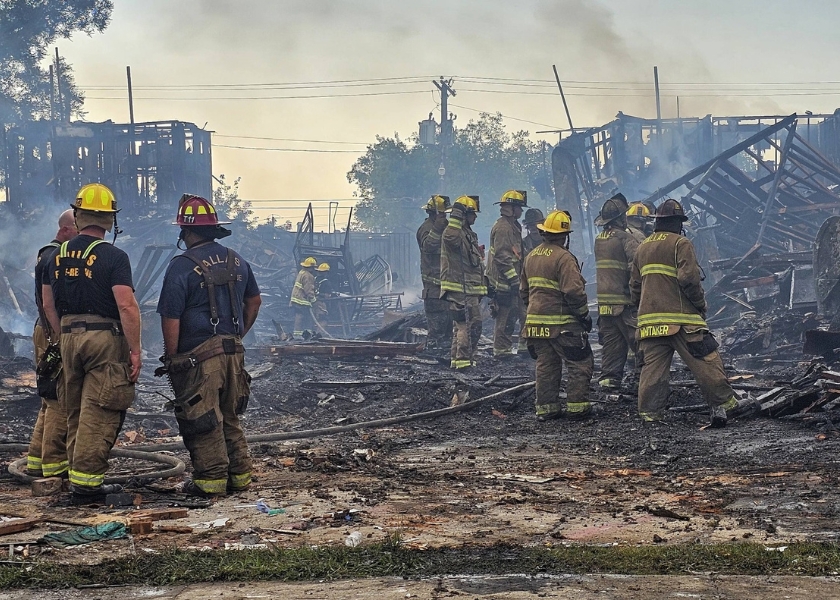
Atmos Energy faces multiple lawsuits over May’s deadly Oak Cliff explosion, which killed three people and destroyed The Clyde apartment building. The utility denies wrongdoing and says a third-party drilling company struck the service line. As the blast focuses attention on excavation safety, a national report — which did not examine Atmos — argues that gas utilities devote too much money to replacing pipelines and too little to preventing excavation damage.
The owners of The Clyde apartment complex at 409 E 9th St. filed suit against Atmos last week, alleging the Dallas-based utility failed to properly mark the underground gas line before it was struck on May 28, resulting in an explosion and subsequent fire. They also alleged that Atmos knew the line “was susceptible to brittle cracking and catastrophic failure” since at least 2004 and failed to shut off the gas quickly enough after the leak was reported.
Family members of the three people killed in the incident and at least one surviving resident have also sued Atmos, lodging similar accusations.
In statements to local media, Atmos has said a third-party drilling company unaffiliated with the utility struck the service line because it was not properly marked. According to a preliminary National Transportation Safety Board report, the excavator submitted a Texas 811 ticket before beginning work. Although some underground utilities were identified with paint and flags, the gas line that was struck had not been marked. The NTSB has not determined why it was unmarked or assigned responsibility for the explosion.
The latest litigation coincides with a national report released by the Future of Heat Initiative, a nonprofit utility-policy research organization. The 144-page study released this month suggests natural gas providers are more focused on replacing aging infrastructure while neglecting cheaper and possibly more effective risk-mitigation measures.
Since 2011, U.S. gas utilities have invested more than $250 billion in their distribution systems. The report estimates that up to 70% of current capital spending goes toward pipeline replacement — largely in response to federal safety initiatives meant to reduce dangerous infrastructure failures from old cast iron, bare steel, and other materials traditionally considered high risk.
According to the Future of Heat Initiative, researchers found no statistically significant improvement in serious gas-distribution incidents after the federal policies took effect in 2011. They argue that utilities and regulators have not demonstrated that wholesale pipeline replacement delivers the greatest safety improvement for each dollar spent.
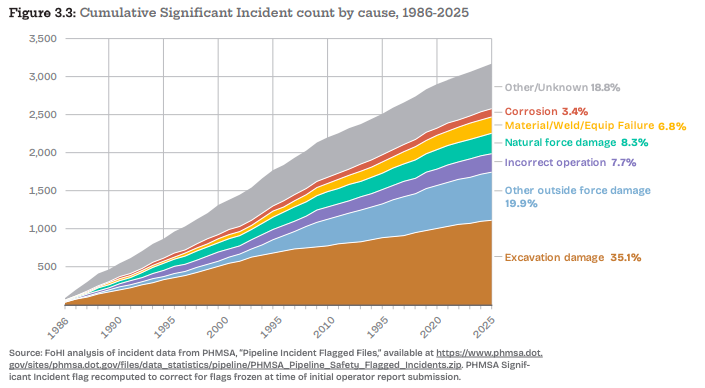
Rather than continuing to prioritize wholesale replacement, the Future of Heat Initiative recommended that utilities place greater emphasis on preventing excavation damage, improving leak detection, repairing defects, and using rehabilitation technologies that can extend pipeline life at lower cost. Excavation damage is by far the leading cause of gas line safety incidents.
“[W]hile reducing the number and severity of excavation damages has been a key safety goal of the [Distribution Integrity Management Program] rule, it has been addressed with less urgency than is warranted given its predominance among threats to the integrity of the gas distribution system and given the high degree of consensus in the damage prevention industry with regard to best practices,” the report reads.
The consumer advocacy organization TexPIRG, which highlighted the report this week, urged state lawmakers to eliminate programs that encourage expensive replacement projects.
“This report clearly shows that instead of delivering safety improvements, pipe replacement programs are driving rate hikes and locking customers into polluting fossil fuel infrastructure for decades to come,” said Abe Scarr, a program director with TexPIRG. “Policymakers should take note of the report’s findings and change utility incentives to prioritize cost-effective safety strategies that we know work.”
As previously reported by CandysDirt.com, the Dallas City Council reluctantly approved a negotiated Atmos rate increase in May that allows the utility to recover part of its infrastructure investments. During those discussions, Atmos said it had invested roughly $321 million in Dallas over the previous year, including replacing 36 miles of pipeline and approximately 3,500 service lines.
Several council members expressed concern about increasing customer bills but ultimately accepted the settlement after city staff warned the Texas Railroad Commission could authorize an even larger increase if Atmos appealed a denial.