
Sol Villasana: The Price of Everything and the Value of Nothing
Share News:

By Sol Villasana
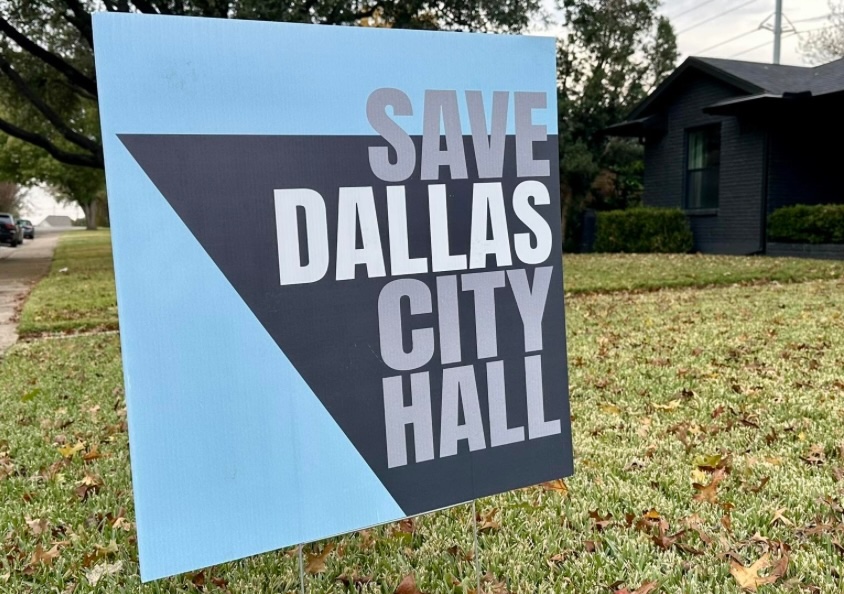
The current debate about the fate of Dallas’ iconic 1978 City Hall reminds me of the famous Oscar Wilde quip about some people knowing the price of everything and the value of nothing. Given this tension, it’s not surprising the citizens of Dallas are struggling with City Hall’s future.
For me, there’s no struggle: we should save City Hall. I don’t arrive at this position without some personal insights. Many years ago, as a young assistant city attorney, I worked in this impressive building. Since leaving the city attorney’s office, I’ve worked for years on behalf of many of my clients at City Hall. I find its looming interior and massive exterior, designed by I.M. Pei, the perfect home for Dallas’ municipal business.
While City Hall’s utilitarian value is obvious, it has cultural value, too. The cultural value of a building was made clear to me almost 30 years ago while representing people trying to save another valued yet misunderstood structure: St. Ann’s School in Dallas’ old Little Mexico neighborhood. Built in 1927, the simple, two-storied red brick schoolhouse was Dallas’ first school for Hispanic children. It was part of a large complex that included the Our Lady of Guadalupe Church, the most significant religious and cultural site in Dallas’ oldest and largest Mexican barrio. Over the next 50 years, before it was finally shuttered by the Catholic Diocese, the church was the site of thousands of masses, baptisms, weddings, funerals, holy communions, and celebrations. During that same period, the St. Ann’s School educated thousands of Mexican American children.
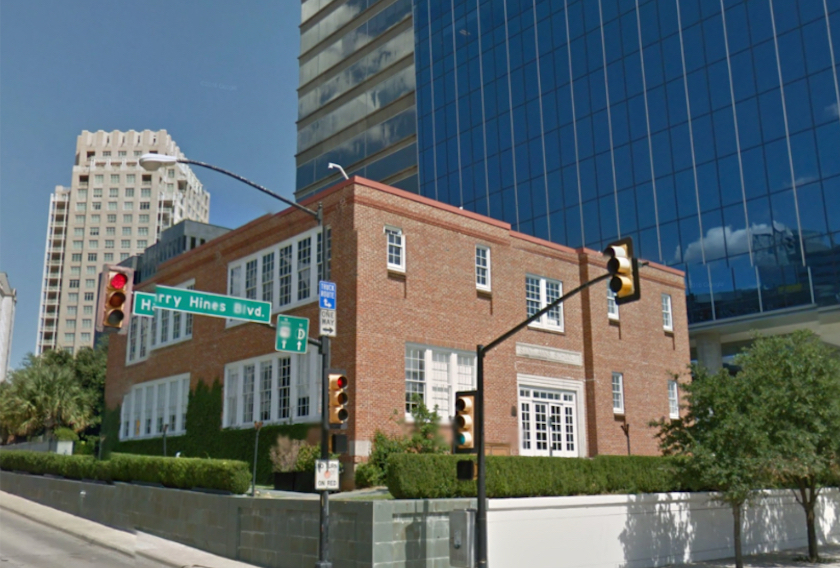
In 1987, the abandoned church burned to the ground, leaving only the St. Ann’s School on the site. By 1998, when land values in this Uptown neighborhood had skyrocketed, and developers were salivating for the site, the Bishop announced the Diocese was going to sell the St. Ann’s property. Dallas’ Hispanic community rallied to oppose the Bishop’s plan and save St. Ann’s because of its historical and cultural significance to the Mexican American community and to the city as a whole.
As the group’s lawyer, I was initially not optimistic about our chances of success. Several legal issues stood in our way. I was also concerned about an intangible: why would the city’s citizens care about saving an old Hispanic schoolhouse? Unlike City Hall, St. Ann’s was not designed by a world-famous architect. Unlike City Hall, it was not an architecturally wondrous building. I thought, who would care?
One legal option was to try the untested city landmark ordinance, which then allowed for the designation of a property as worthy of protection over the landowner’s objection. My clients held weekly prayer vigils at St. Ann’s and sought guidance from friends, faith leaders, and family. Finding the strength necessary for a long struggle with the Bishop, my clients decided to fight to save the school. We applied for city landmark protection.
The Diocese quickly hired silk-stocking law firms and lobbyists to oppose our landmarking efforts. To my surprise, not only did the Hispanic community strongly support our efforts, but we found important allies in all parts of our great city. Historic preservationists came forward, as did nonprofits that could imagine adaptive reuses of the St. Ann’s building. Architects and engineers offered their help. It seemed as if all of Dallas understood the cultural value the little building represented. St. Ann’s told an important story, a story worth saving.
The Diocese deployed arguments for tearing down St. Ann’s that sound familiar in today’s discussions about City Hall. St. Ann’s was dilapidated. Repairs would cost too much. It was ugly. The money could be used for better projects. It wasn’t even historic. After nine months of battling the Bishop’s hirelings at City Hall, St. Ann’s received landmark protection and was saved. The Diocese got to sell the property and pocket a lot of cash. Harwood International, which bought the property, saw the structure’s promise. It undertook an impressive adaptive reuse of the building, incorporating it as the Saint Ann Restaurant & Bar into its Saint Ann Court office complex.
In St. Ann’s case, the struggle between price and value was successfully resolved. There’s no good reason why we can’t save our City Hall. The only thing standing in our way is the sad limitation of knowing the value of nothing.
Sol Villasana is a Dallas-based lawyer and writer.







That is a very good point of view and well said as we need to think about why’ These other people won’t think that’s right meditate for 6 minutes what is Dallas Image Icon.and future … it ain’t bingo but bingo we figured out a worthwhile solution….. thank you Mr Villasana
Tearing down a cultural and architectural icon to build a stadium that will be used for a MAX of 20 years is the definition of stupidity.