
Council Approves Former Plan Commissioner’s Controversial North Oak Cliff Rezoning Request
Share News:

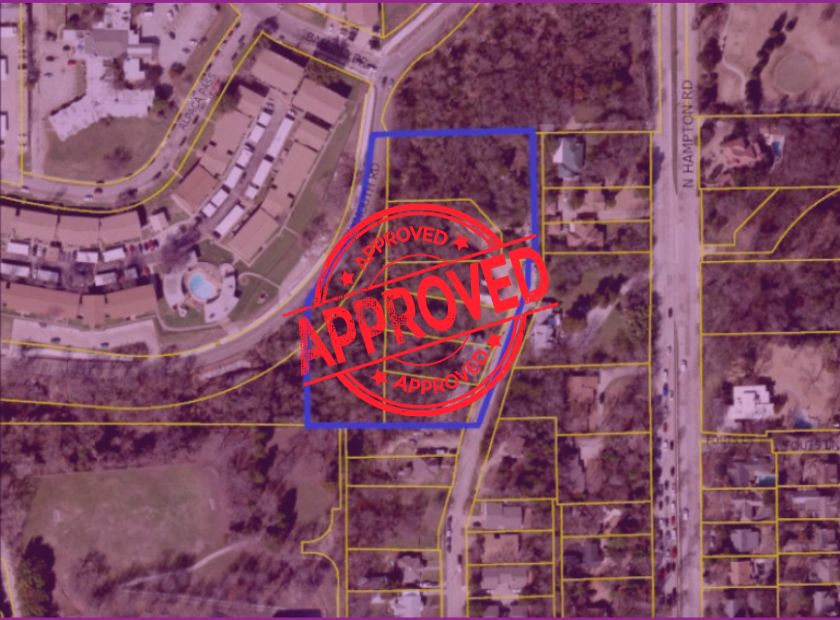
A majority of the Dallas City Council voted late Wednesday to approve a controversial application to rezone undeveloped land in North Oak Cliff from single-family to multifamily, with developer and former city plan commissioner Christian Chernock securing authorization to build apartments on the site.
The land in question, some 3.5 acres between Plymouth Road and the north terminus of North Boulevard Terrace, runs along Coombs Creek and has proximity — really adjacency — to more permissive land use and zoning. Still, many single-family residents in the neighborhood have been opposing Chernock’s attempts to rezone his property, the first of which dates back to 2014.
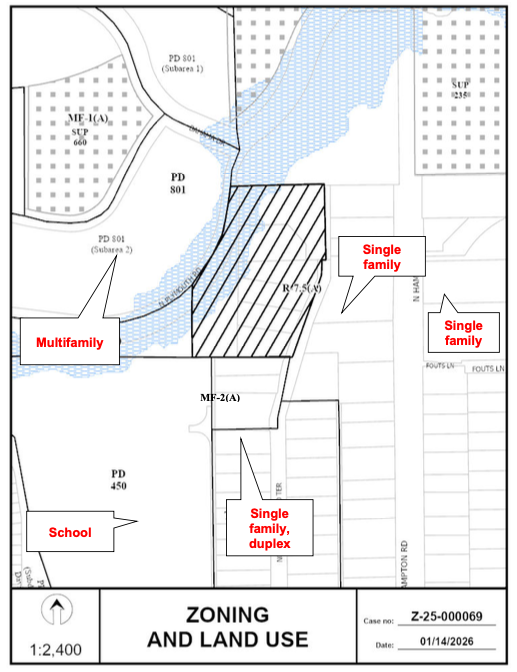
More than two dozen speakers signed up to weigh in during public comment on the application, with most expressing opposition. Many of the concerns expressed had to do with neighborhood compatibility. The potential environmental impact was also raised, with fears of erosion and runoff issues contributing to the wariness.
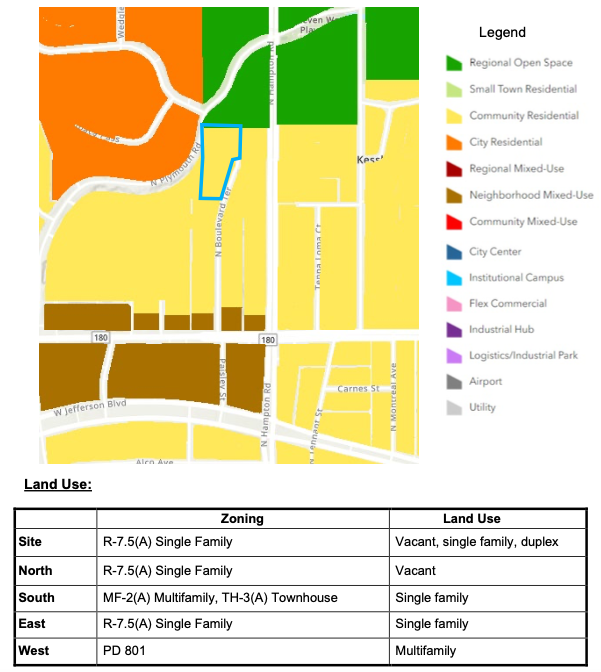
Neighborhood resident Rebecca Moore argued multifamily zoning would fly in the face of ForwardDallas 2.0’s recommendations for the community residential placetype where the site is located.
“ForwardDallas 2.0 says multifamily developments in this placetype should only be supported if there’s a compelling public benefit,” she said. “I do not see that here. What I see are real burdens on existing residents: increased traffic, more on-street parking, and possibly a cut through to Hampton Road, which would totally change the character of the neighborhood.”
West Kessler Neighborhood Association president Joseph Beckham argued that multifamily zoning combined with SB 840, could allow for hundreds of apartments to be built on the site. He noted that a poll of the HOA’s residents only yielded three in favor of the rezoning.
Others shared similar concerns, calling instead for gentler density such as townhomes and duplexes in North Oak Cliff, despite the presence of some multifamily properties nearby.
“If you approve maximum multifamily zoning, especially MF-2 coupled with SB 840, you are now telling the market that this stable single-family neighborhood is now fair game for apartment speculation, land assembly, and further encroachment,” said Tom Davies.
For his part, Chernock committed to multiple public deed restrictions, including 30% lot coverage, a prohibition on short-term rentals, one parking space per unit, and a 20-foot environmental setback along the creek’s floodplain. He also agreed to additional measures aimed at mitigating environmental impact.
He also offered a private deed restriction limiting the number of apartment units to 80. While unenforceable by the city, the restriction would need to be honored to finance his development and to avoid a lawsuit from neighboring property owners.
“I’ve lived and worked in this community 26 years now,” Chernock said. “I’ll be responsible for this project for decades after it’s built. My goal is to create something that fits in this land, that respects the land, and that the neighborhood can ultimately be proud of. This proposal reflects compromise, community input, and a real effort to do this project the right way.”
Chernock plans to build a two-building multifamily community with 80 units, a figure some argue is high-density. Supporters of the rezoning described the scale as small.
“We have all seen how frustrating it is when development feels disconnected from the people, culture, and the history of Dallas, but to me this is not the case,” said Jesus Pena. “This feels like a meaningful development by someone who has lived in the area for decades and understands the level of care and consideration that is needed to build in a community like this, and I think that matters, especially at a time when Dallas is seeing more and more outside money come in with more projects being viewed as transactions instead of a long-term contribution to neighborhoods around them.”
A running theme over the last year has been the implications of SB 15, which allows for smaller lot sizes in new subdivisions. Under the law, the site (combined with adjacent property owned by Chernock) may very well be entitled to platting out 3,000-square-foot parcels with 70% lot coverage — a scenario that could conceivably have more negative environmental impact in terms of runoff and tree canopy destruction than Chernock’s apartment plan.
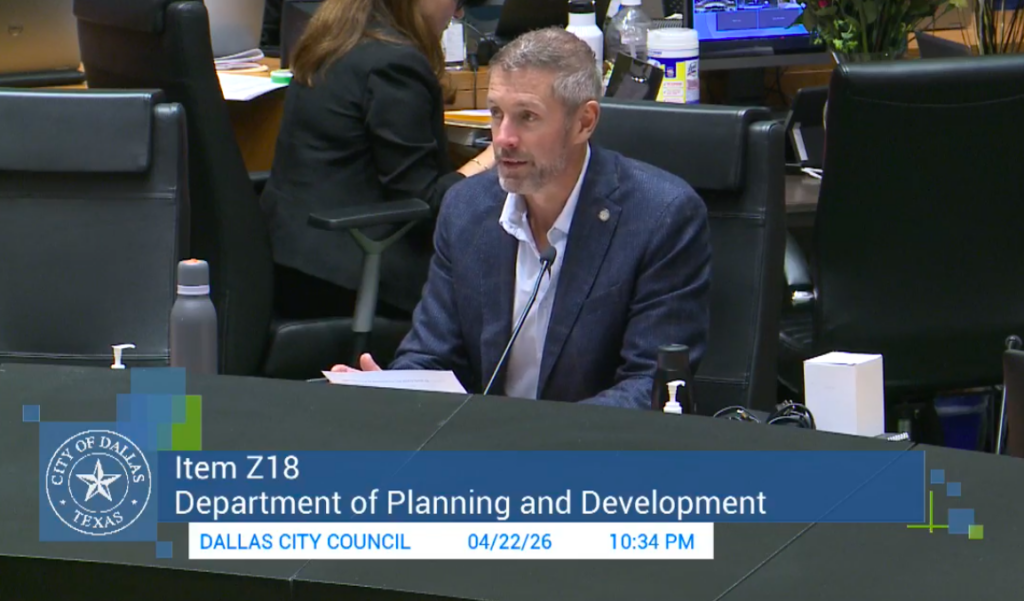
“I believe that approving this case with deed restrictions and agreements will prove to be the right call in the long term and respond to neighbors’ concerns,” said Council Member Chad West (District 1), who represents North Oak Cliff, arguing that denying the application would result in “fewer protections for neighborhood character and no protections against short-term rentals.”
Council Members Bill Roth (District 11) and Cara Mendelsohn (District 12), on the other hand, said they believed there was not enough community support to justify their supporting the rezoning.
“We heard from a lot of people about this case. We got a flood of emails. I think almost all of them, with a couple of exceptions maybe, have been opposing this,” Mendelsohn said. “And the real situation is, when are we going to start listening to our residents? And I’m talking about zoning cases, but I’m also talking about other issues.”
The rezoning application was approved in a 9-5 vote, with Roth, Mendelsohn, Mayor Eric Johnson, and Council Members Jesse Moreno (District 2) and Laura Cadena (District 6) voting against. Council Member Paul Ridley (District 14) was not present.


Damn, this is truly a blow to the existing neighborhood. Someone with deep pockets need to file a lawsuit to delay this for as long as possible.