
Long-Simmering Oak Cliff Rezoning Dispute Heads to Council Amid Density Debate
Share News:

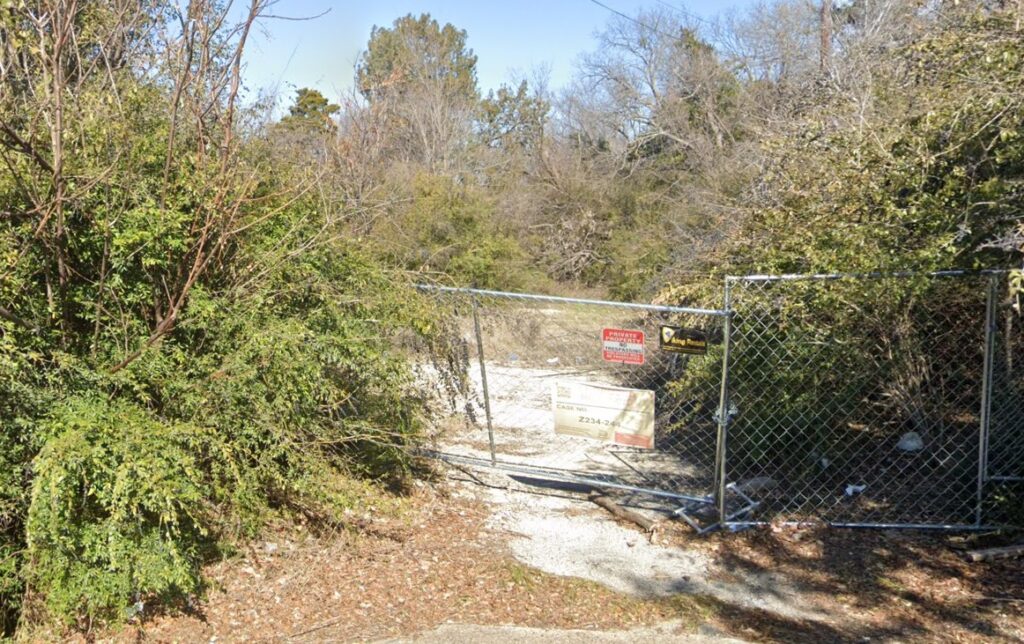
A years-in-the-making rezoning case filed by former city plan commissioner Christian Chernock is coming before the Dallas City Council on Wednesday. Unsurprisingly, single-family residents who are opposed to the application plan on having their say.
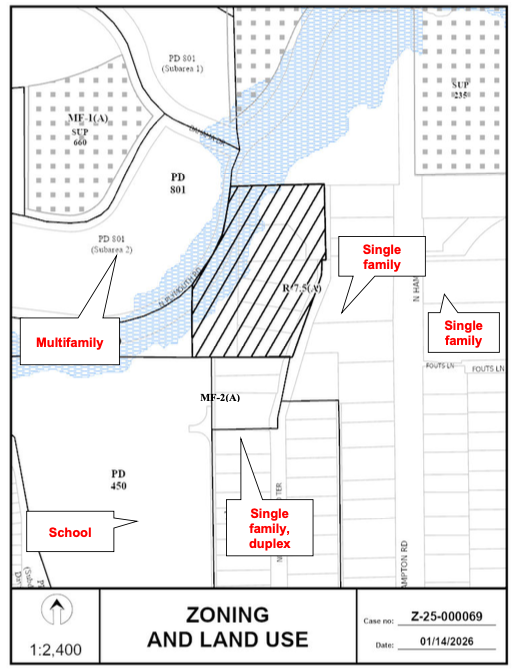
Chernock wants to rezone around 3.5 acres between Plymouth Road and the north terminus of North Boulevard Terrace in North Oak Cliff from single-family to multifamily. An Oak Cliff resident himself, he has been trying to develop his land holdings there into something other than detached homes for more than a decade now, but neighborhood opposition to rezoning always seemed to turn the tide.
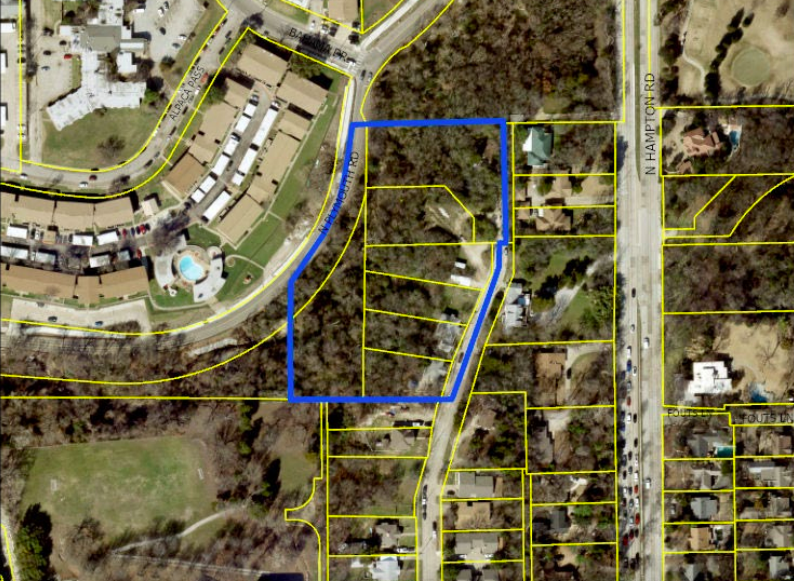
The latest iteration of his plans call for a two-building apartment complex comprising some 80 units right by Coombs Creek.
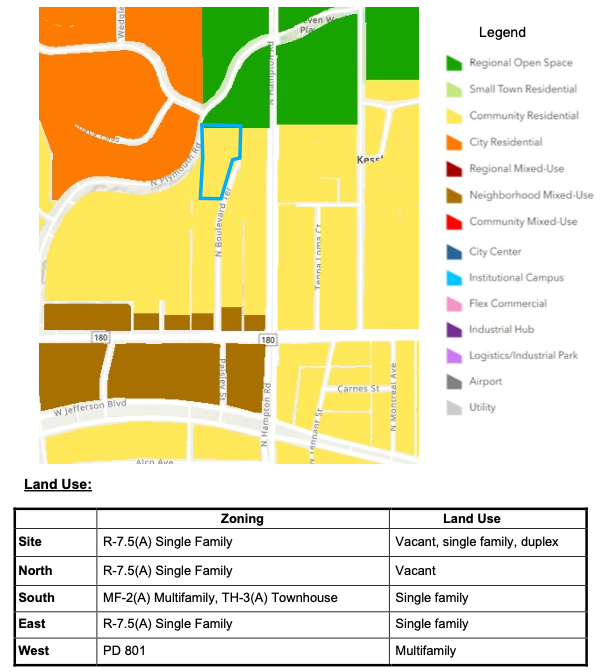
Critics have cited environmental impact, potential traffic implications, and gentrification, among other concerns. But at the end of the day, some claim the real issue just comes down to multifamily being incompatible with the area and out of step with the “gentle density” promises of ForwardDallas 2.0.
“This is not about what we want to let developer Christian Chernock build. This is about what entitlements are we going to allow that land to have in perpetuity,” said Joseph Beckham, president of the West Kessler Neighborhood Association. “The entitlements by going to [zoning classification MF-2] with the added entitlements of SB 840 are really, truly not gentle, incremental, or compatible with the existing neighborhood.”
Public deed restrictions have been added to the application to assuage environmental and parking spillover concerns, but none of that addresses what Beckham and some other neighborhood residents are dug in on: the allowable density of multifamily zoning.
Beckham said Chernock has been resistant to missing middle housing types, and since the application isn’t for a planned development district, there’s no site plan the developer would have to stick to. Under SB 840, a multifamily development could build up to 45 feet high with no limit on density.
“It’s about the entitlements,” Beckham said. “James Carville once said during an election, ‘It’s the economy stupid.’ In this case, it’s the entitlements stupid.”
For his part, Chernock said his current proposal reflects two years of community feedback and overwhelming support from his former colleagues on the City Plan Commission, with the deed restrictions meeting some of the specific concerns raised at community meetings and official hearings.
He said single-family detached homes and townhomes on the site would inevitably push development to the edge of the creek and have a gentrifying effect on the properties on North Boulevard Terrace. He further argued that multifamily zoning was a reasonable request.
“This is a location that sits directly across from ‘city residential,’ which is a higher density place type in the ForwardDallas land use plan,” Chernock said. “So it’s an edge location. And the zoning across the street is multifamily that allows heights that go up to 180 feet. It’s reasonable to have a buffer against higher place-type densities like that.”
Another possibility has been floating around, though. SB 15 allows for lot sizes as small as 3,000 square feet in new subdivisions with at least five acres. The law was enacted last September to help address housing affordability. Beckham claimed Chernock, who owns more acres contiguous to the site, has suggested he could build out the land with dozens of small homes.
“[SB 15] was certainly not intended to be used as extortion to get people to acquiesce to MF-2,” Beckham said.
The potential invocation of SB 15 was raised by Council Member Chad West (District 1) at a previous hearing when he pressed staff on whether the new law could apply to the site. After some discussion on whether the hypothetical fell outside the scope of discussion for the application, Planning & Development Deputy Director Andreea Udrea said staff believed SB 15 would apply.
“For me, that gives the city and the neighborhood benchmarks on how to negotiate,” West said. “I don’t like operating in uncertainty, and making a decision on this case with uncertainty would be irresponsible in my opinion.”
The council member said he’d been following the current case since Chernock filed it and even some years before. Chernock was West’s nominee for CPC before the former resigned his seat following last year’s May election.
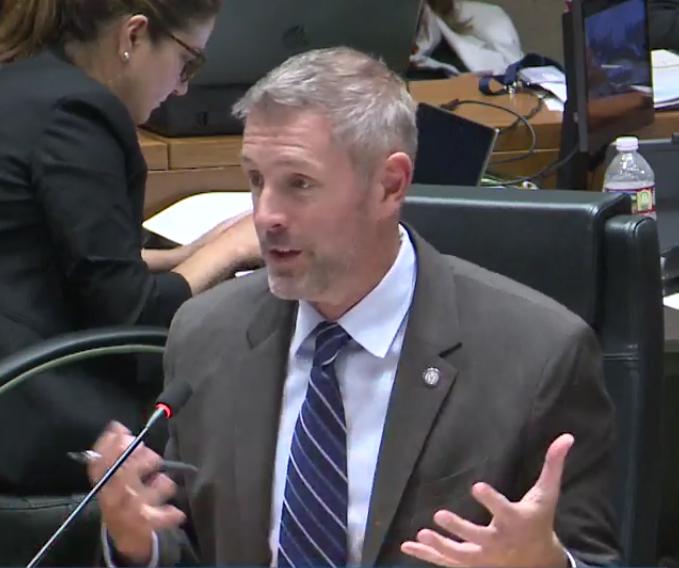
“I choose to believe staff. I choose to believe the city attorney that SB 15 does apply in this situation, and therefore I believe we need to analyze Chernock’s proposal and the deed restrictions he’s offered and compare that analysis to what could be built by Chernock or someone else under SB 15,” West said. “That’s where I’m at, and that’s how I am communicating with the neighbors, especially those who live on the street directly adjacent to the property.”
Beckham said he believes West’s SB 15 questioning was meant to run cover for his eventual vote in support of the rezoning. Also causing some friction is the 300-foot notification area for the zoning application. Beckham claimed Chernock adjusted the eastern boundary on his request to exclude single-family opposition directly across Hampton Road. The current zoning application has 20 notifications with only nine responses: eight in favor and one opposed. Chernock owns or is associated with the ownership of six of the properties in favor.
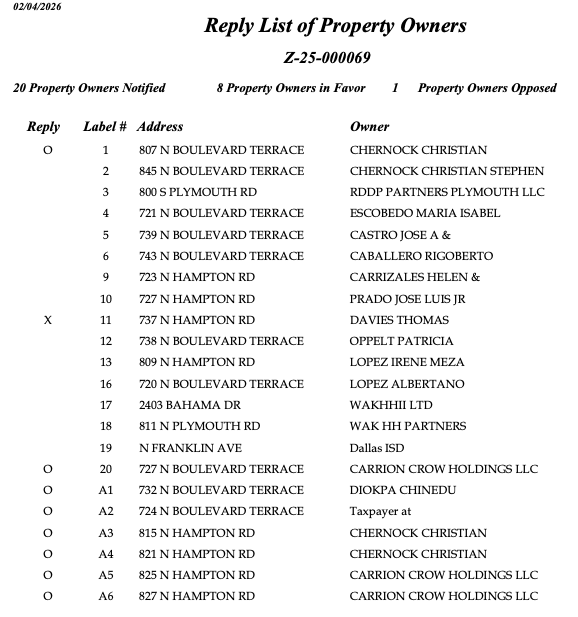
Chernock disputed the allegation that he manipulated the zoning notification boundary, describing the shift as a minor correction tied to city mapping and survey work that had no meaningful effect on the case.
He maintained that the location is well-suited for the apartments he wants to build, citing its proximity to transit, trails, and existing multifamily zoning. He also emphasized the broader need to add updated rental housing in an area where much of the existing stock dates back decades.
“Some neighbors don’t want apartments, but 60% of our city’s residents are renters, and they deserve to have building stock and investments in their communities,” Chernock said. “We can’t just say we’re never going to build and replace the existing apartments that are there. They serve a huge need in our community and all over the city.”
As previously reported by CandysDirt.com, staff and housing advocates have been sounding the alarm over significant gaps in the city’s multifamily stock, particularly workforce housing. While Chernock’s prospective units aren’t priced just yet, studies have shown that even building higher-cost apartments tends to free up cheaper units in what’s been described as an “affordability escalator.”
Regardless, Wednesday’s discussion of the zoning case may end up being more about what gentle density really means. Beckham said he hopes to see plenty of like-minded neighbors turn out for public comment.


This case is yet another example of how influence can be bought at Dallas City Hall. Mr. Chernock was a large contributor to Councilmember West’s campaign and the former District 1 CPC Commissioner. His former colleagues on CPC not only agreed to overrule the planning staff’s recommendation for TH-3 which would have been a suitable compromise to nearby residents, they approved MF-2.
The development is controversial because it places high‑intensity multifamily zoning directly next to one of Dallas’ most erosion‑prone creek segments, without binding environmental protections, while granting broad, permanent entitlements that could reshape the area. These environmental risks, traffic and safety concerns, combined with trust and governance concerns, make the proposal especially contentious.
Your District 1 constituents are watching Councilmember West. Do the right thing and support residents and its neighborhoods.