
Multifamily Housing Construction and the Affordability Escalator
Share News:


A recurring critique of Dallas City Council’s alleged propensity for approving multifamily rezoning applications is that officials are cynically using the housing affordability crisis to justify the construction of upscale projects in the face of neighborhood opposition.
If there’s a shortage of affordable housing, the criticism goes, how is greenlighting a high-end development in Preston Hollow going to help? Well, apparently, there’s data that shows how and why signing off on luxury apartments figures into the simple “more housing stock makes prices go down” truism, whether officials are aware of it or not.

During his keynote address at the Dallas Housing Coalition’s second annual Housing Summit last month, The Pew Charitable Trusts project director for housing policy Alex Horowitz explained why more upscale multifamily can have a positive impact on affordability up and down the rent ladder.
Mobility between classes of rental housing is key to the affordability dynamic. When there’s a shortage of stock, rents go up since there’s more competition for units. According to Horowitz, that means higher-income renters who can’t snag a luxury unit move to middle-income neighborhoods. Middle-income renters, in turn, trade down as well. Low-income renters, however, have to suffer their rent hikes — or end up homeless, if they can’t find someone to move in with.
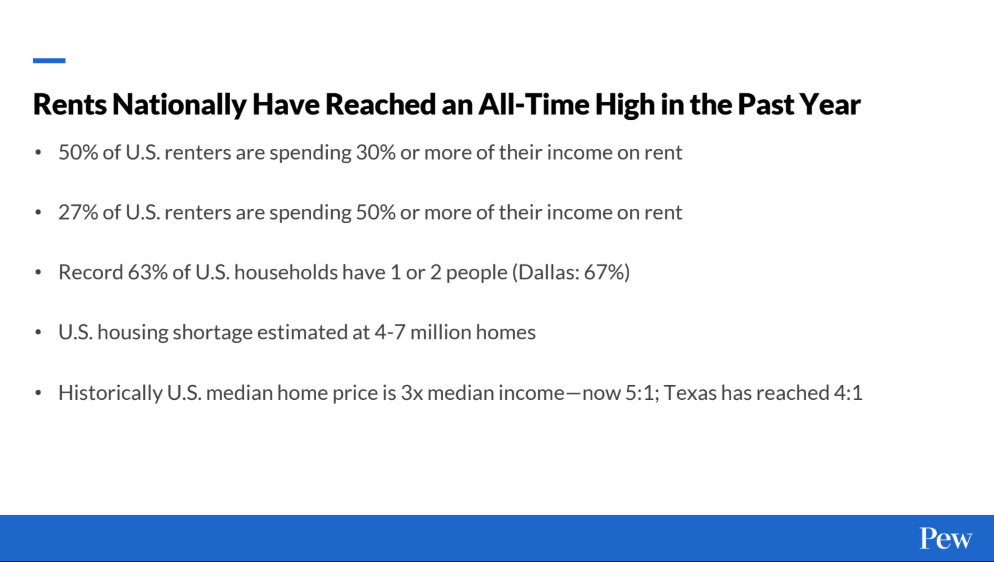
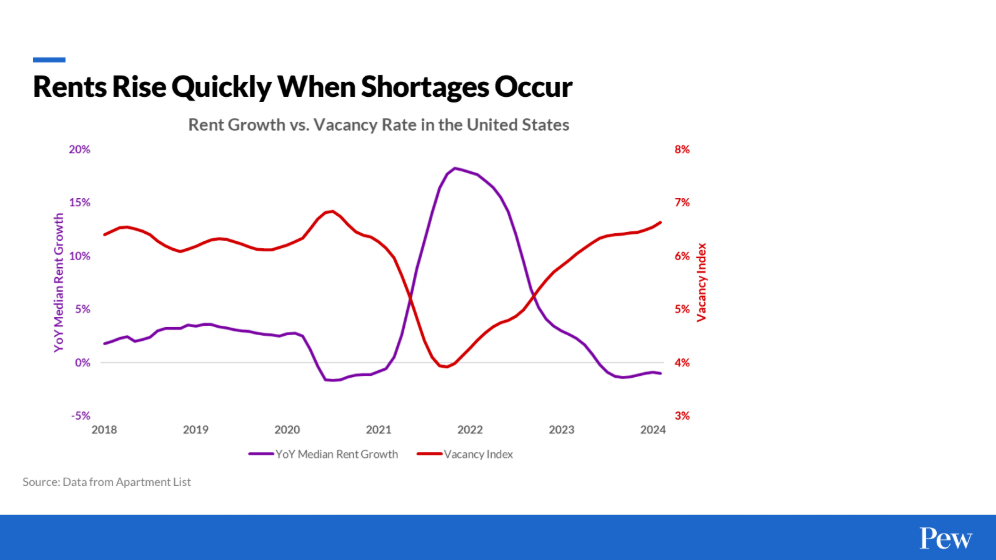
“Housing works like an escalator, and when that escalator is moving up, people trade up into better options,” he said. “When the escalator is moving down, everybody bunches at the bottom.”
Increases in housing stock, even at the high end, have the effect of blunting rent hikes across the board, Horowitz claimed, pointing to research conducted by The Pew Charitable Trusts and academics like University of Notre Dame economist Evan Mast.
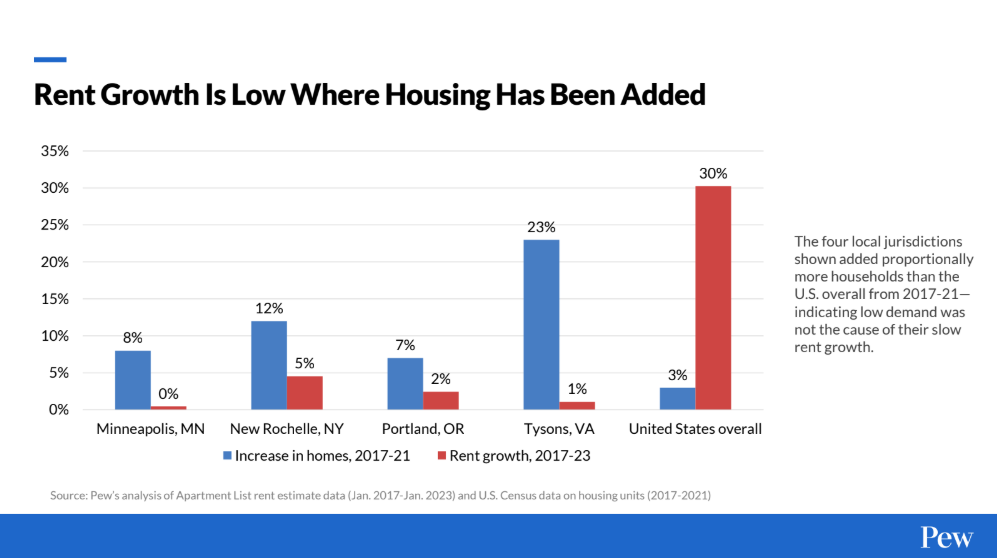
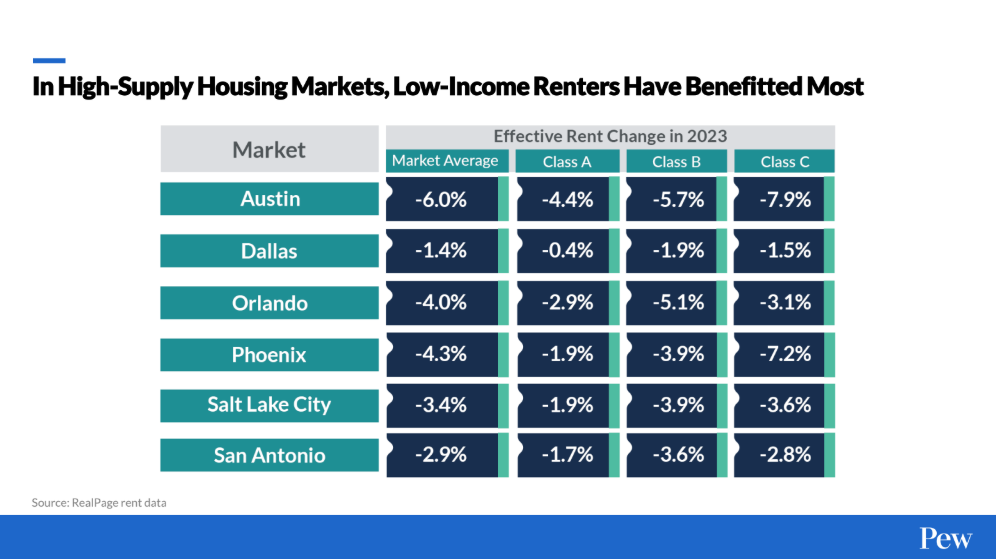
“[Mast] looked at apartments built in high-income neighborhoods,” Horowitz explained, noting that the economist observed a moving chain across several levels of income. “Each 100 apartments built in a high-income neighborhood ended up freeing up about 40-70 in areas with below average incomes.”
The moving chain (or affordability escalator, whatever you’d like to call it) was just a part of Horowitz’s presentation at the Housing Summit, which, on the whole, was a case for deregulation on the land-use front.
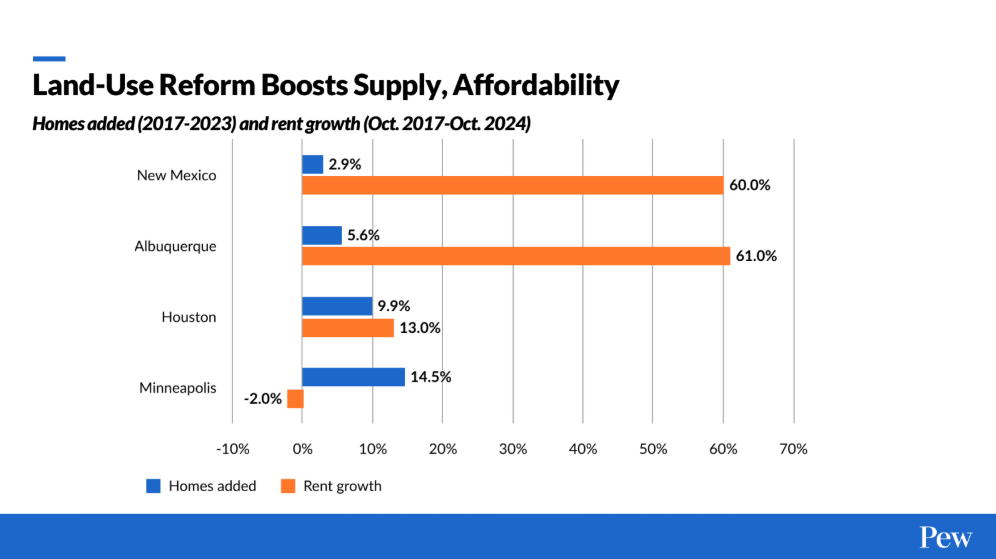
“When cities have treated [housing] like it’s a zero-sum game by not allowing enough new housing, displacement has resulted,” he said. “Cities that are avoiding displacement most effectively are those that are allowing enough homes for everybody, especially lower-cost homes like apartments and townhouses.”
He pointed to Raleigh, North Carolina, as a case in point. The city had been struggling with affordability issues under the pressure of a swelling population, which caused rents to rise fast.
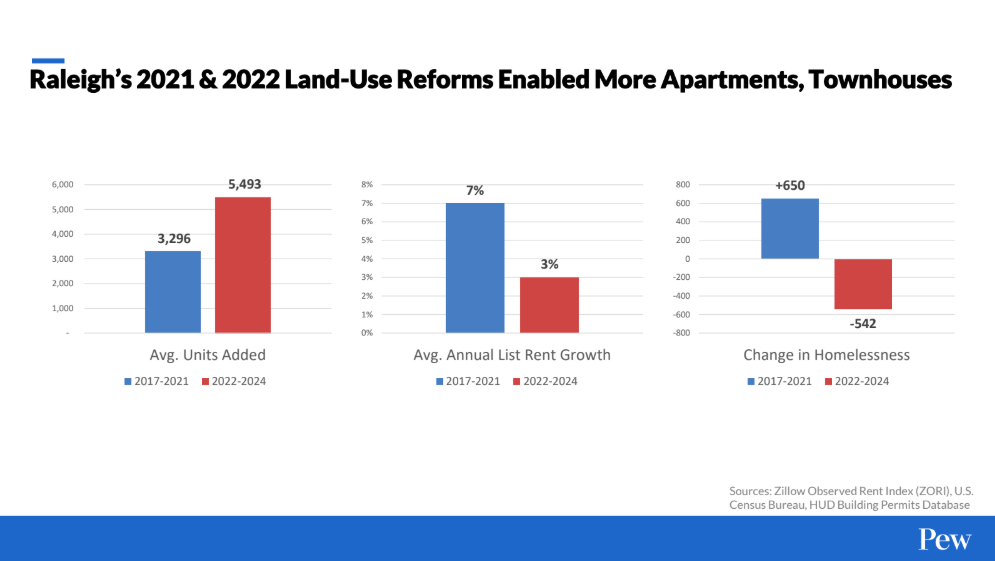
“They addressed it head on and enacted strong local land use reforms in 2021 and followed it up with another set in 2022. As soon as they did, housing production shot up there, and a lot of the new housing that came online was housing that previously wasn’t allowed by right: apartments near transit, accessory dwelling units, duplexes, townhouses. Once they did, we saw rent growth slow down,” he said.
Such reforms have proven controversial in Dallas, with some residents in single-family neighborhoods speaking out against individual rezoning applications as well as parking reform and the city’s update to its comprehensive land use plan.
Now, it’s not that critics have been against making multifamily more affordable. Rather, the “build baby, build” sentiment seemingly embraced by officials has single-family residents worried. Increases in crime, traffic congestion, and parking spillover have all been cited as concerns, along with a lack of privacy due to nearby high-rises and non-compatible building design.
Want to get an idea of how critics feel? Read Olive Talley’s op-ed about a previous zoning proposal from a few years ago and how making it easier to build in and near single-family neighborhoods could undermine their character.







Love the explanation here. Housing at all income levels is behind, and you have to address the entire market for the full effect to be seen.
A very similar thing happened in fast food after the pandemic, when people who could usually afford fast casual were priced out and had to go to McD’s, for example. McD realized their new customer had more money to spend so prices rose accordingly.
Lastly, people who want to guarantee their SFH neighborhoods and ‘character’ have options. Either pay the exhorbitant taxes to do it, or move out of the city.