
What Does the Federal Shutdown Mean for Real Estate?
Share News:

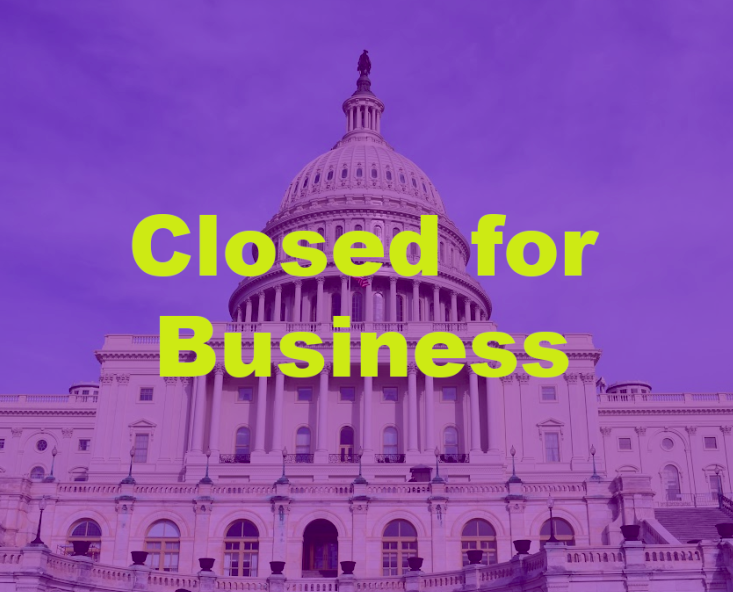
The latest federal shutdown started at midnight on October 1, setting up an open-ended game of chicken between Republicans and Democrats on Capitol Hill.
Reports currently suggest this shutdown won’t be super brief (some previous shutdowns stretched only hours to a few days). The last one dragged on for more than a month. Political calculations will ultimately determine the duration, but we’re not really concerned with that.
Here’s a decent primer to catch up on the politics behind what’s going on.
We’re about real estate here, and there could be some serious effects from the shutdown the longer it goes on. If you need some Shutdown 101 first, go ahead and scroll down to the second half of this piece, otherwise, read on.
Shutdown Fallout Could Be Big or Small, It Depends
Steve Triolet, senior vice president of research and market forecasting at Partners Real Estate, told CandysDirt.com that the overall impact on real estate, particularly the commercial arena, could be minimal unless the shutdown becomes a “prolonged event.”
“These shutdowns tend to create temporary disruptions more than long-term consequences. That said, certain sectors could see short-term effects,” Triolet said. “For example, in lending, timing is everything — especially in sensitive situations like refinancing a property to avoid default or foreclosure. In those cases, delays in government processing or interruptions in data access (such as IRS transcripts or flood insurance approvals) could have real implications.”
While an effective suspension of the National Flood Insurance Program won’t necessarily impact individuals who have policies in place (though they won’t be able to renew), new applicants could see their deals dashed. The National Association of Realtors said closings could be delayed, and countless homeowners might be exposed during hurricane season.
Everyone’s also going to be flying blind, so to speak, for the duration. Federal agencies will not be publishing new economic data, limiting the ability of businesses and policymakers to read the market from a bird’s-eye view. The Federal Reserve, for instance, meets at the end of October, and it needs the jobs figures that were supposed to come out Friday to make an informed decision.
“This could lessen the chance that we see an interest rate cut in October, with the central bank preferring to wait until the shutdown passes and key data reports are released,” opined Edward Jones senior economist James McCann, per Investopedia.
Borrowing costs are influenced by the Fed’s benchmark interest rate, so those banking on cheaper rates this fall could have to wait a little longer.
Another area that might see considerable impact if the shutdown drags into November or December is federally-subsidized housing. Tenants with Section 8 housing vouchers won’t be on the hook for rent hikes, however, landlords might take a temporary hit if and when housing authorities run out of federal funds for distribution. Unrealized affordable housing projects will also be affected.
“Unfortunately, there will be real-world impacts to development deals in the pipeline very quickly,” said Nixon Peabody law firm partner Rebecca Simon, according to Affordable Housing Finance. “All processing will be halted from the HUD perspective. A very small number of deals that are significantly close to closing may be able to proceed, but the vast majority of development and preservation deals will be put on hold until the government opens back up.”
Federal Shutdown Crash Course
For those unfamiliar with how all this works, it’s the responsibility of Congress to authorize federal discretionary spending for specific periods of time by passing budgets or continuing resolutions, the latter of which are stopgap funding measures to keep dollars flowing while legislative disagreements get hashed out. If one isn’t enacted by the time the prior one runs out, then the federal government “shuts down.”
So what does a federal shutdown look like? In a nutshell, services deemed essential continue. This includes national security programs, federal law enforcement, air traffic control, border protection, Social Security and Medicare payments, and military operations. A lot of this is mandatory spending with funding baked into existing law.
That being said, sometimes personnel go without compensation if a department runs out of runway. Social Security checks will go out, for instance, but the federal worker mailing the check will have to wait until the shutdown ends to get paid.
Unessential services are typically what scale down or go dark during a shutdown through a combination of furloughs and program suspensions. Education, housing, and most other agency operations fall under this umbrella. They don’t all necessarily come to a hard stop or wind down at the same time. Some departments might have more runway than others, and most have a handful of essential employees keeping critical programs going.
During a federal shutdown, the president typically plays a key role in managing the winding down of services. The White House, through the Office of Management and Budget, instructs departments on how to carry out their shutdown plans and determines which operations are deemed essential. The president also negotiates with Congress to end the funding lapse — and often bears much of the public blame for how the shutdown unfolds.
Now, the longer a shutdown drags on, the worse the fallout becomes: national parks and museums close, loan and grant programs stall, tax refunds can be delayed, and hundreds of thousands of federal workers miss paychecks. Shutdowns end once Congress and the president agree on a budget or continuing resolution, at which point furloughed employees receive back pay — though federal contractors usually do not.