
Discover This Hidden Japandi Midcentury Modern Time Capsule in Lake Highlands
Share News:

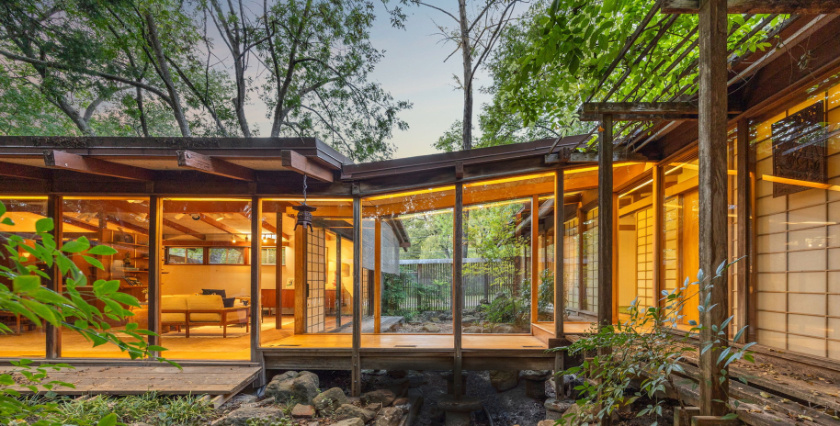
I almost fell out of my chair when Dave Perry-Miller’s Realtor Amy Timmerman sent me photos of this Japanese-inspired Midcentury Modern home in the Highland Meadows neighborhood of Lake Highlands. I also learned a new design word, Japandi.
Japandi, a fusion of Japanese and Scandinavian styles, marries the elements of two influential philosophies: wabi-sabi and hygge. The Japanese wabi-sabi design concept emphasizes simplicity, minimalism, and the use of natural materials. The Scandinavian philosophy of hygge in interior design emphasizes comfort, neutral palettes, and the incorporation of natural elements like wood and textiles. Simplicity is key in both concepts, just as it is in the overarching midcentury modern style of this home.
Finding an untouched home of this size in a neighborhood renowned for its extensive collection of midcentury modern homes is an absolute delight.
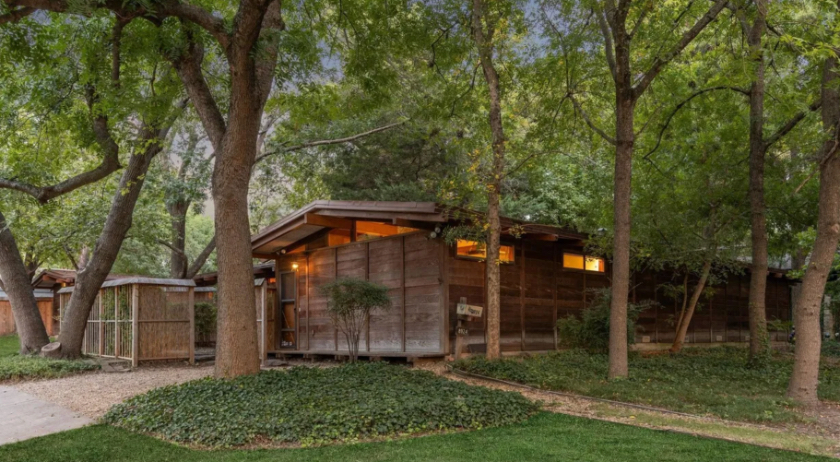
You’ll need Timmerman to find this Japandi wonder because if you drive by, you’re likely to miss it. That’s by design, of course. The home is set into a heavily treed lot with an exterior covered in old-growth redwood. In a million years, you would never imagine what awaits inside.
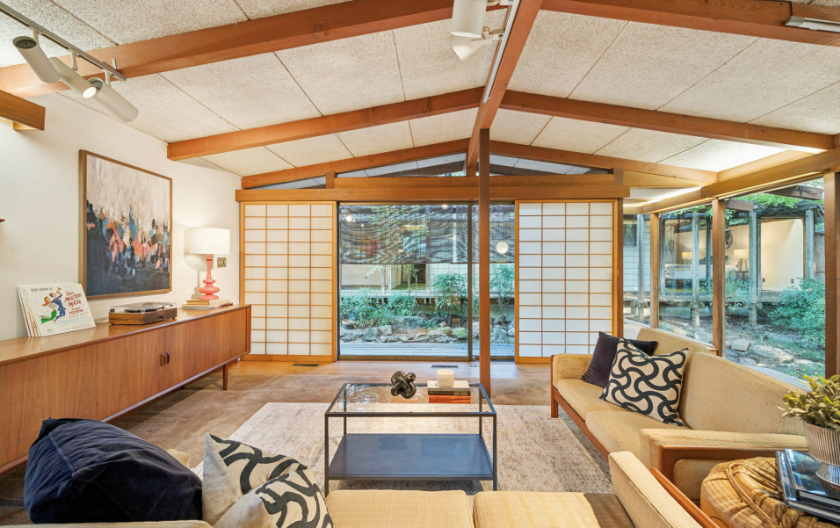
The home was built in 1960 by architect Harry Matthies for his family. In 1968, Charles Briner purchased the home. Timmerman was told that Briner found the house while his wife was in labor with their first child. Talk about a dedicated house hunter. The Briners created an addition that expanded the home to 3,117 square feet, with four bedrooms and three bathrooms, preserving the same Japanese Midcentury Modern style that included a bridge over the koi pond.
“The home is a time capsule,” Timmerman said.
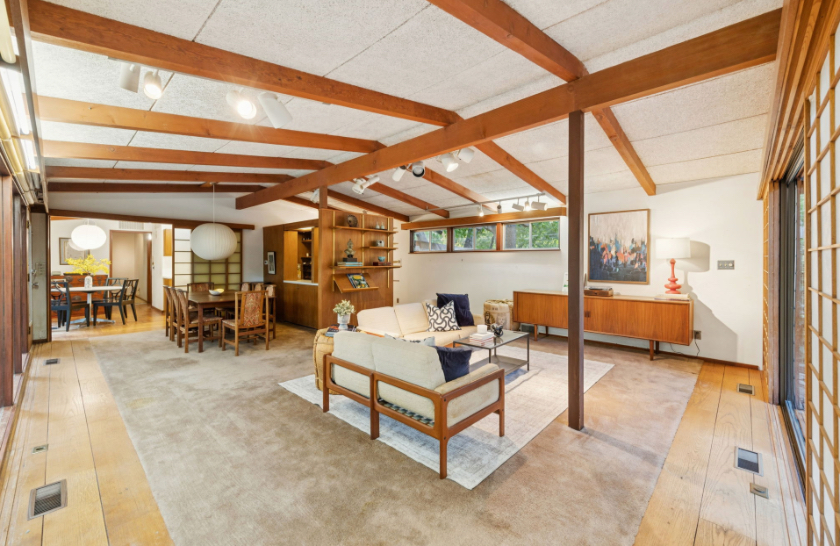
The Briners were world travelers and especially taken with the art and architecture of Japan. That interest is clearly reflected in their home’s Japandi design, and it struck a chord with local design publications. In 1985, the home was featured in Dallas-Fort Worth Home and Garden magazine.
Everywhere you look, floor-to-ceiling walls of glass wrap around a massive patio that winds through the trees and greenery. The interior spaces feature vaulted ceilings and are divided by sliding Japanese shoji screens. The concept of dividing space with screens has been a part of Japanese architecture for centuries, and it’s a great idea. It provides open-plan spaces when needed, and privacy when not.
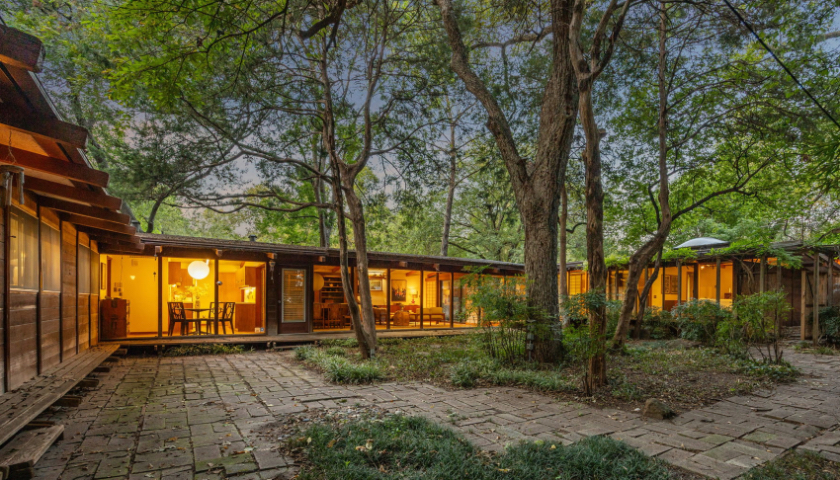
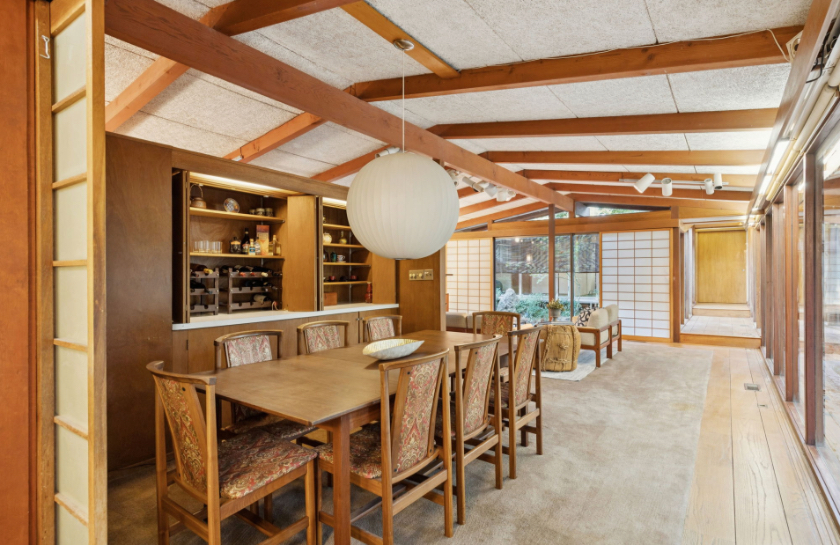
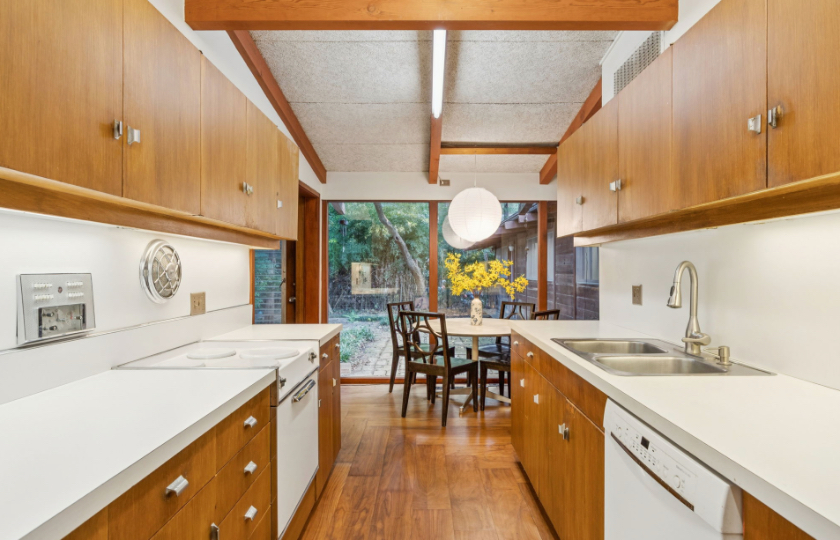
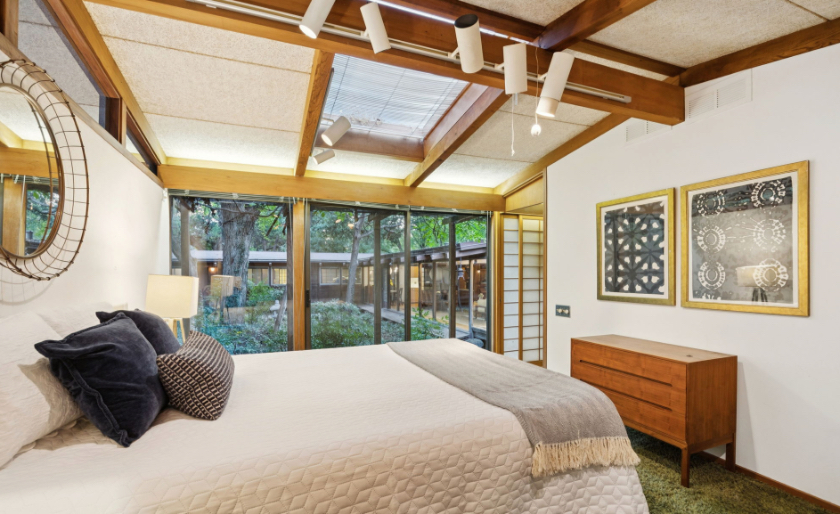
The primary suite, study, and workout room are all located in a private wing, across the bridge that spans the koi pond. The bathroom even features an authentic Japanese soaking tub. And that green shag carpet? It’s a statement, and it’s on point. The primary wing also overlooks the pool. Timmerman has provided a photo of what the area would look like after the renovation. With a little imagination, this could be your personal paradise.
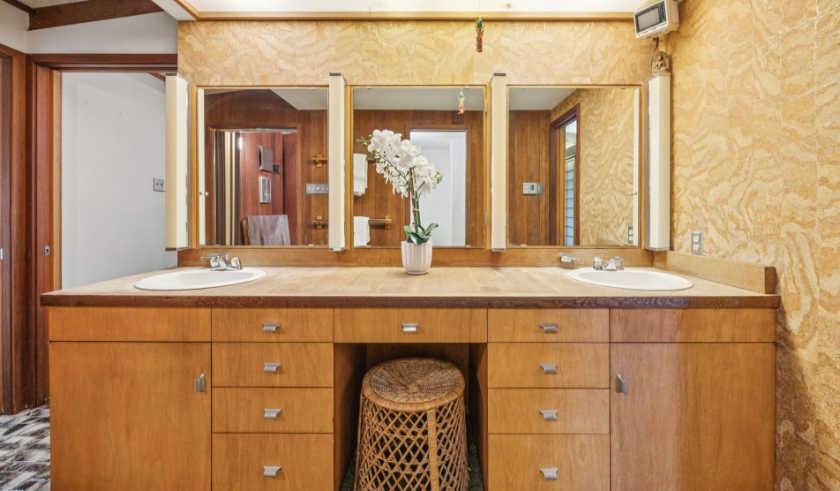
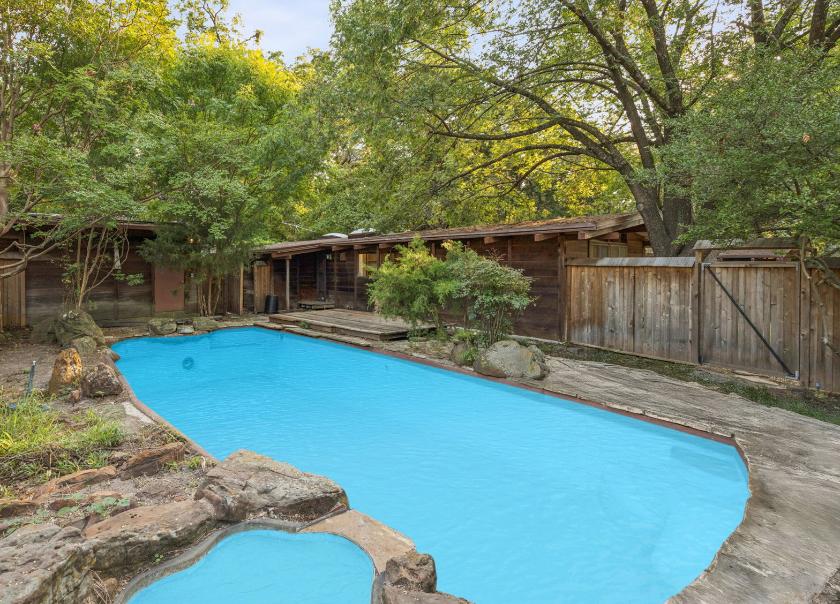
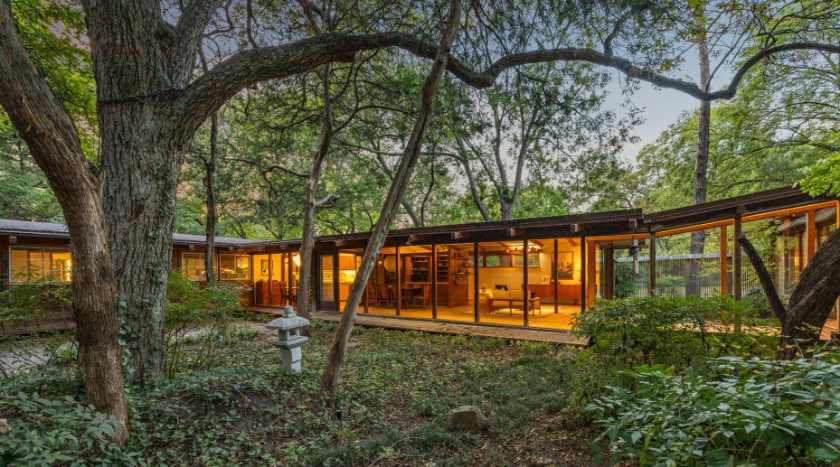
This is an extraordinary opportunity to own a piece of Japandi Midcentury Modern history.
Timmerman just listed it at 8924 Capri Dr. yesterday for $725,000. If I were looking, I’d submit my offer right away!

Awesome house and you turned me onto a new word! How did I miss Japandi in all of my research? It just has a lovely sound! Do you happen to know who did the addition? Thanks for the great info!
We have the architectural plans for the entire house including the addition.
If you’ve ever dreamed of living at Ten Thousand Waves, this is a showstopper.
Japandi has been a thing in the last couple of years I think
Yes, the term was was coined around 2016-2017 but the look has been around for ever.The Japanese influence began post war and the Danish Modern movement was in full swing in the 1950s. It just took some clever person to create a new term that befits both movements, probably a journalist lol.
I’ve walked my dogs by here for years and have always wondered what it was like inside. Wow!
Unbelievable