
Older Home or New Construction, You Still Need a Sewer Scope Inspection
Share News:


Every homeowner has experienced a slow drain at one point or another. Whether standing in a couple of inches of water in the shower, watching that sink take forever to empty, or dealing with a toilet that’s always clogging, we’ve all been there. But did you know these could indicate a clogged or damaged pipe under your house?
Depending on the severity, the issue can warrant a lengthy and expensive repair. But to find out, you have to get to the sewer underground. How do you do that? A sewer scope inspection. When should you do that? Well, it’s actually a good idea to do it when you’re purchasing a home so that you know whether the pipes are in good condition. Otherwise, you might find yourself doing it after experiencing repeat issues.
“But what if I’m buying a brand new home?” you might say to yourself. You’d be surprised at the number of things that can go wrong during the construction process. From trees getting planted in the wrong place to construction workers flushing things they shouldn’t (seriously), there’s a lot at play here. And with homes that are more than 25 years old, you could be facing cast iron pipes that may have corroded. That’s something you want to know about before you buy.
Here are some factors that could warrant a sewer scope inspection:
- Your toilets, sinks, showers, or tubs are backing up
- Rodent infestation
- Large trees (their root systems can interfere with the lines)
- Your house was built more than 25 years ago (you may have deteriorating pipes)
- Foundation movement (the same movement that shifts your foundation can crack pipes)
- Newly constructed homes (accidental blockages often occur during the construction process)
This House Needs a Sewer Scope Inspection
Here is a great example of a house that needs a sewer scope inspection. A new home was built over a teardown, but it’s likely the old sewer lines were left in place, and the placement of the plumbing clean-outs in the new house is a little … strange.
There is evidence of slow drainage in several locations in the house. It could be that there is just some blockage in the pipes, or there could be roots growing into the lines. There could also be corroded or broken pipes needing complete replacement.
Tree Roots Damage Sewer Pipes
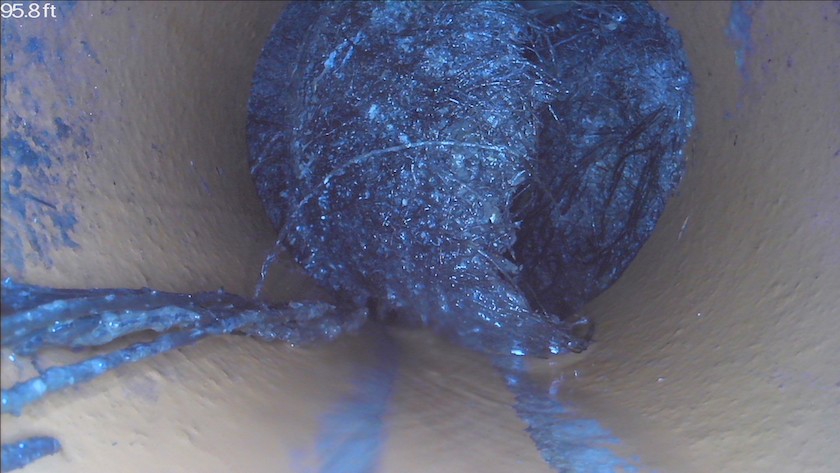
What you’re seeing here are grass and tree roots completely blocking the sewer pipe running to the house. That’s the camera view from inside the pipe. I assume it’s blue because of those blue toilet cleaner thingys. This is going to cause everything that tries to flow through there to back up to the house (or leak into the yard, depending on how severe the break is), so it will need to be cleared by a plumber, and the pipe will need to be repaired where the roots have broken through.
Damage to your sewer line can cause flooding or sinkholes in your yard and foundation damage, not to mention clogged or slow-running water in your house. You can be exposed to bacteria, mold, and/or harmful gases if the sewer is damaged as well.
If you are purchasing an older home, new construction, or are seeing signs of slow drainage, you should consider a sewer scope inspection from either your home inspector or a plumber. This test will let you know exactly what’s happening in the pipes under your house so you can figure out what you need to do.