
Dallas STR Ban Remains Stalled as World Cup Looms
Share News:


With FIFA World Cup 2026 less than one year away, Dallas officials will soon have to decide whether to continue litigating their proposed ban on short-term rentals.
Earlier this month, a Texas appellate court considered the City of Dallas’ latest appeal to reverse its previous opinion affirming a lower court’s injunction against two ordinances officials deployed to ban short-term rentals (STRs) in single-family neighborhoods and regulate those operating elsewhere. The appellate court essentially reaffirmed its previous stance, allowing the injunction to remain in place for now.
While this is hardly a major development in and of itself, there’s a ticking clock with the World Cup rapidly approaching. The economic impact expected for the Metroplex as a whole ranges from $1.1 to $2.5 billion, according to a study conducted by Deloitte. Millions of visitors will also be descending on D-FW. The pertinent questions here seem to be: how much spending is Dallas going to be able to capture, and where are all these out-of-towners going to stay?
Tickets for the matches taking place in D-FW are slated to go on sale on Septe. 10, and visitors will likely start making their travel and lodging arrangements not long after. The Dallas Morning News recently reported that the local hospitality industry is expecting to reach a capacity of roughly 75%. Prices are expected to surge as well.
CandysDirt.com reached out to the city and asked if the World Cup is informing officials’ thinking on how to proceed following the appellate court’s latest opinion supporting the injunction on its anti-STR ordinances.
“The city is considering its options regarding this opinion,” said a member of the city’s communication team. “In the meantime, the city will continue enforcement of its existing ordinances governing minimum property standards, disturbing noises, and private nuisances, etc.”
As far as next steps, the city could choose to withdraw from the suit or appeal the appellate court’s opinion on the injunction at the Texas Supreme Court. If the high court declined to lift the injunction and the city wanted to continue to defend its ordinances, a trial date would be set some months later.
Assuming the injunction stays in place through next summer’s month of World Cup games (or the Dallas City Council decides to reverse course), STRs will be picking up a lot of the slack in terms of lodging — they may also serve to spread the wealth, so to speak.
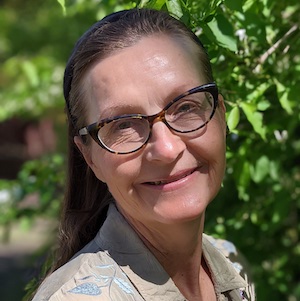
“Booking a short-term rental actually spreads out the tourist dollars all over the city, and it also spreads out the traffic,” said Lisa Sievers of the Dallas Short-Term Rental Alliance, speaking with CandysDirt.com. She also noted how STRs are typically much less expensive than hotel lodging.
Prior to leaving office, former Council Member Carolyn King Arnold (District 4) said she hoped that historically neglected communities in her district and elsewhere in southern Dallas would be able to reap some of the World Cup windfall in some kind of fashion.
Sievers’ organization has been a party to the ongoing litigation over the city’s anti-STR ordinances, defending what she and other STR operators see as an undue attack on their livelihoods and an unconstitutional curtailing of their private property rights.
Dallas officials began exploring how to go about regulating them after some single-family neighborhood residents began voicing concerns about problematic rentals being used as party houses. High-profile incidents linked to such STRs typically make headlines, but Sievers said the overwhelming majority of STRs do not cause issues for the communities in which they’re located.
She cited three different studies conducted by the city, all of which she said concluded that roughly 80% of STRs never had a 311 or 911 call associated with them. Meanwhile, only about 150 had more than three calls.

“Keep in mind here, just for the big picture, in September 2023, the city said there were 3,495 STRs,” she said. “That’s less than 1% of all housing in the city. On top of that, the 311 and 911 calls were well under 1% of all calls.”
The analytics tool Inside Airbnb shows that there were 2,438 active STR listings on the platform in June, excluding properties that didn’t have a review in 60 days or had fewer than 60 bookings in the last year. Add in the non-duplicate listings on Vrbo and lesser-known companies advertising STRs, and it’s not hard to imagine the real number of active properties sitting over 3,000.
According to ConsumerAffairs, the industry in the United States has been seeing considerable growth for years and is projected to reach more than $86 billion in valuation by 2033.
Sievers said that prior to the litigation, her organization had been advocating for targeted regulations that focus on the relatively few problem listings, primarily through dedicated code enforcement financed by local STRs. Instead, the city council opted to go the route of banning them in single-family neighborhoods.
Now, two years later, there’s a new city manager in charge and a city council with some freshmen at the horseshoe. Sievers seemed hopeful about the new situation.
“This is a giant opportunity for the city council to actually do something that’s reasonable,” she said.
UPDATE: This article was updated at 2:15 p.m. on July 29, 2025, to provide more information regarding the legal process the City of Dallas is facing in its litigation over banning STRs in single-family neighborhoods.