
Complete Removal of Dallas Parking Minimums ‘Appears to be Off the Table;’ Here’s What Plan Commission is Now Proposing
Share News:

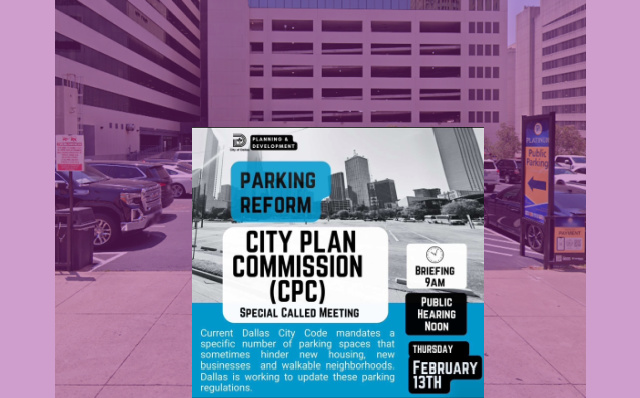
Dallas plan commissioners continued review Thursday of a proposal to reduce or eliminate minimum parking requirements for new development. Following several hours of discussion and a public hearing that drew 19 speakers, commissioners made more amendments to the proposal on the floor and scheduled another special-called meeting for 9 a.m. March 4.
Chief Planners Michael Wade and Sarah May and Deputy Director Andreea Udrea made a case for why the current “outdated and dysfunctional” parking code isn’t working.
“We think that a no-minimum is the right size because it’s flexible,” Udrea said.
Wade added that when a city gets to the “right size,” they’re influencing people to drive and creating more demand, so it’s no longer the right size.
“That creates a lot of ambiguity … about how many spaces are the correct [number of] spaces,” he said. “I think no one is trying to get around the question, ‘Should a land use be conscientious about the parking demand that they’re creating? That was the thrust behind creating a Transportation Demand Plan and program … Landing on the right number, how do you know it’s the right number especially when it’s causing us to drive more and need more parking? That’s tough for us to answer.”
The majority of residents who addressed the CPC on Thursday supported eliminating parking minimums to make it easier for developers to open small businesses and construct new affordable housing.
The Real Estate Council CEO Jamee Jolly pointed out that parking is expensive to construct and “conventional parking minimums can increase the rent or the mortgage required for an apartment by $200 to $500 a month.”
CPC members, particularly Melissa Kingston, pushed back on the complete elimination suggestion, questioning why strategic parking ratios weren’t recommended for specific areas of the city. Kingston said Dallas has not done a good job enforcing the parking code.
“It’s a false promise to these communities to say if businesses don’t park their uses that the city is going to make them do it,” she said. “That’s a false promise to these neighborhoods that the city is going to do something about it in a meaningful way because we never have.”
In January 2024, the Zoning Ordinance Advisory Committee, a subcommittee of the CPC, recommended the elimination of parking minimums, adopting a Transportation Demand Management Plan, and adding design elements. Plan Commissioner Tipton Housewright introduced a list of modifications at a Jan. 13 meeting that are summarized below.
Here’s the latest staff report and a link to the video of Thursday’s meeting.
The January Proposal
At a January CPC meeting, Housewright proposed some amendments to the “complete elimination” proposal. They’re extensive and we’ve requested Housewright’s memorandum, but didn’t have it by press time.
Dallas Neighbors for Housing summarized the proposal in a Jan. 30 email, with a specific focus on how new housing construction would be impacted.
“The proposed parking reform took a big step backward at the City Plan Commission Jan 16 hearing in the form of compromises to assuage the fears of single-family neighborhoods,” the email states. “Complete removal of parking minimums now appears to be off the table.”
The latest proposal would remove parking minimums from most zoning classifications in the city with a few exceptions, according to the DNH email:
- All single-family residential and townhome-zone parking minimums remain intact.
- Duplex-zone parking minimums would be reduced to one space per unit to match residential.
- Eliminate all parking minimums for all uses within a half-mile radius of rail/transit-oriented-development.
- Multifamily — anything bigger than a duplex — parking minimums would remain intact within 300 feet of single-family zoning. Multifamily parking minimums would be eliminated elsewhere.
“We were expecting some compromise but not this much of a setback,” the DNH email states. “While the proposed exceptions are still an improvement on Dallas’s current parking requirements, we think they arbitrarily restrict too much.”
A counter-proposal from DNH suggests removing or reducing the 300-foot single-family buffer, increasing the transit radius, and including high-frequency bus routes.
Dallas Housing Coalition, another advocacy group, supports eliminating parking minimums and added its own set of proposed compromises.
“The Dallas Housing Coalition is in support of eliminating these mandates because study after study shows that parking minimums add tens of thousands of dollars onto the cost of new housing units while suppressing low-rise, multifamily, and affordable housing,” DHC organizer Bryan Tony said in a Jan. 23 email. “When given the option to maximize housing projects for actual housing instead of parking, buildings ultimately get more homes, become more financially feasible, and have a better chance of actually getting built. According to a 2024 study by ECOnorthwest for the Colorado Energy Office, parking reform could result in 40 to 70 percent more homes than are feasible to build today.”
Tony, speaking remotely from Washington, D.C., on Thursday, said by preserving the status quo, Dallas is creating a more economically bifurcated city of “haves and have-nots.”
“Parking reductions are not a bargaining chip for affordable housing,” he said. “They are how we make housing more affordable for everyone. We simply must prioritize housing and move away from the notion of protecting neighborhoods. From who? From what?”
Nathaniel Barrett, a member of the Zoning Ordinance Advisory Committee that recommended the complete elimination of parking minimums last year, urged the CPC to advance “the strongest parking reform you can.”
“The best approach is a blanket change,” he said. “We can have a better city at a fraction of the cost of our current wasteful and destructive policies.”
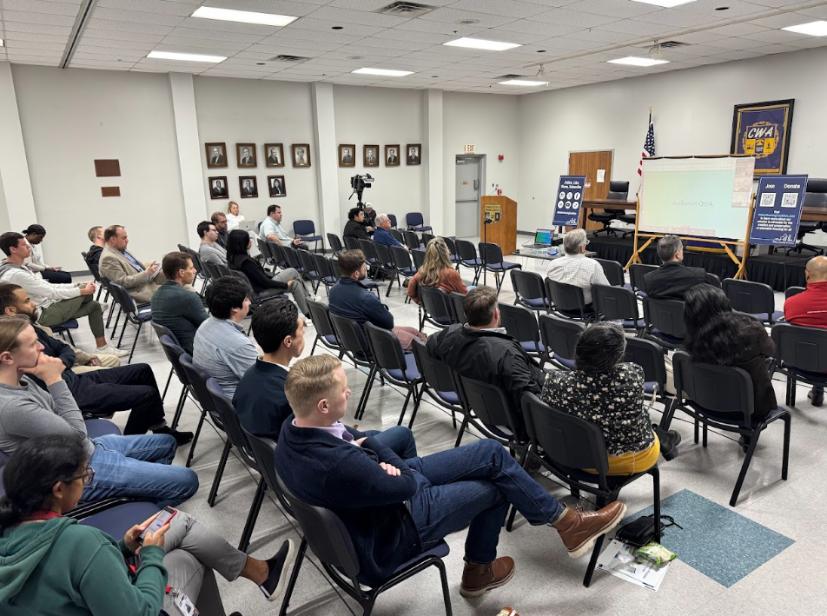
Landscape architect Melanie Vanlandingham said blanket reductions are not a good solution for cities as large as Dallas.
“To actually reduce car use and meet logistical solutions it must allow reductions only for projects within half a mile of light rail stations,” she said. “To address our housing crisis for affordable housing, it must allow parking reductions only to affordable units that are actually built, not all multifamily. Any parking reduction beyond these two objectives is based on unfounded assumptions, unnecessary and questionable motives, and absolutely negates housing policy incentives.”
What’s Next?
CPC members sliced and diced the Housewright proposal during Thursday’s eight-hour meeting, adding more amendments. Commissioners agreed they wanted to see a “clean copy” of the proposal before they vote next month.
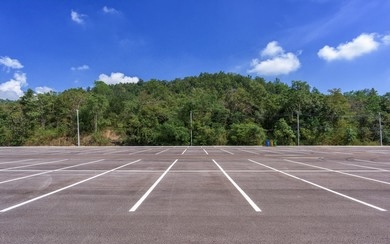
Housewright said it’s been estimated that if all the parking lots in America were “gathered up,” they would cover the entire states of Connecticut and Vermont. The Dallas 360 Plan states that 27% of the city is already covered with parking.
“It’s time to take a look at this,” he said.
The commissioner, an architect who has spoken out on parking minimum elimination, said his proposal contains personal preferences but is an attempt to compromise based on feedback from commissioners, staff, industry leaders, and neighborhoods.
Significant discussion occurred around Housewright’s suggestion to reduce minimum parking requirements from two spaces to one in residential and townhome districts. The proposal ultimately received enough support to be included in the recommendation up for a vote in March.
CPC Vice Chair Brent Rubin and Commissioner Christian Chernock did not support that change.
“Generally people who are building properties that go in those districts provide adequate parking on site,” Rubin said. “I don’t think we need to hamper flexibility if someone wants to do something creative in those districts … I think most single-family homes and duplexes will provide at least one space per unit. I don’t think we need to mandate one space per unit because there may be some compelling cases where one space is not required.”
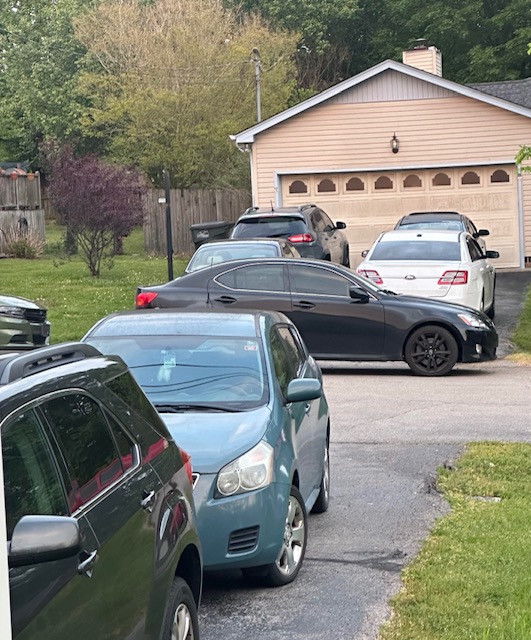
Kingston supported the change, citing potential state legislation that could reduce minimum lot sizes.
“I think having a minimum parking spot for each use may be important,” she said. “If we think they’re going to do it anyway, then what difference does it make if we require it?”
Commissioners Gregory Franklin and Tom Forsyth supported leaving the requirement at two spaces.
“Keeping the parking minimums in these districts the way they are today is very important to protect our neighborhoods,” Forsyth said.
If the CPC votes on March 4, it won’t be binding. The decision of how to adjust minimum parking requirements is ultimately up to the Dallas City Council.