
Senate Bill 929 Could Have Costly Impacts, Limits City’s Authority to Terminate Nonconforming Uses
Share News:

A Texas Senate Bill approved in 2023 is changing the way Dallas handles zoning cases related to nonconforming uses.
In simple terms, SB 929 requires municipalities to provide compensation and notice to property owners before revoking their use of a property. This law applies to properties that were previously allowed to be used in a certain way but would become nonconforming if zoning regulations or boundaries were changed.

“This subject is not just for planning and zoning,” Planning and Development Director Emily Liu said during a City Council briefing on Wednesday. “It is also a legal issue.”
Following the 15-minute presentation from Deputy Director for Zoning Andreea Udrea, council members went into closed session to further discuss SB 929 with their attorneys.
There’s at least one pending zoning case that could be affected by the new legislation.
Floral Farms
Last month the Dallas City Council delayed a decision on rezoning land in Southeast Oak Cliff that would modify an industrial site to allow for a park and retail uses. At the time, elected officials said they first wanted to learn more about the potential impacts of SB 929. The case will be heard on Feb. 12.
Marsha Jackson, co-chair of Floral Farms Neighbors United, said at the Dec. 11 City Council meeting that the homes in her neighborhood near Interstate 45 and Simpson Stuart Road were built before the area was annexed into Dallas.
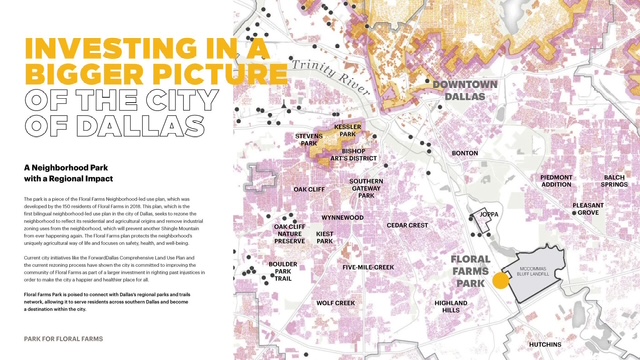
“The homes in Floral Farms were in this area first and it was an agricultural area,” Jackson said last month. “The city then decided in the era of segregation to place industrial zoning next to these homes.”
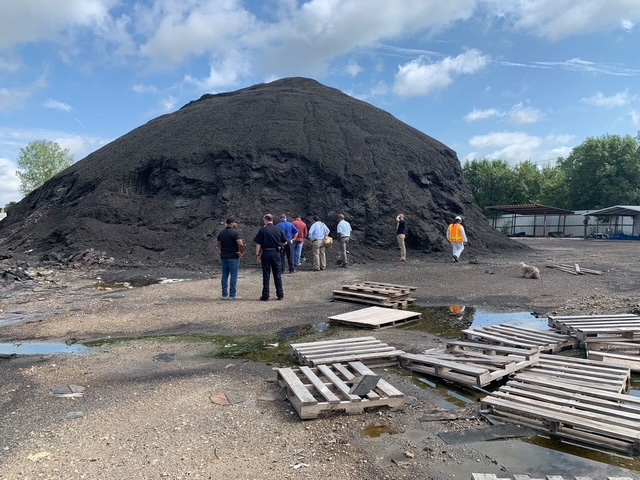
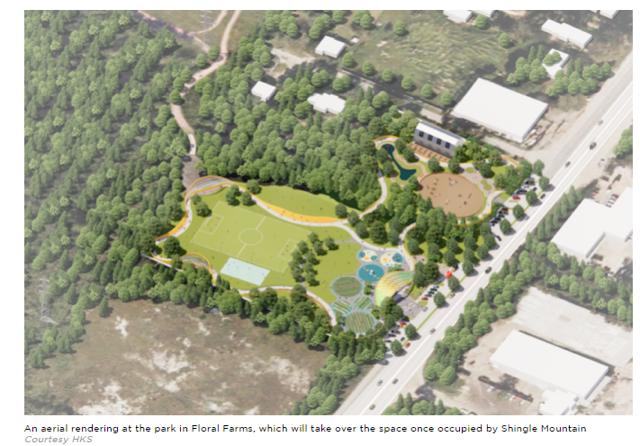
City leaders could have changed the industrial-adjacent zoning after Civil Rights laws passed but chose not to do so, Jackson said. Residents want to create a park where the infamous toxic dump Shingle Mountain used to be, and HKS Architects has already designed it.
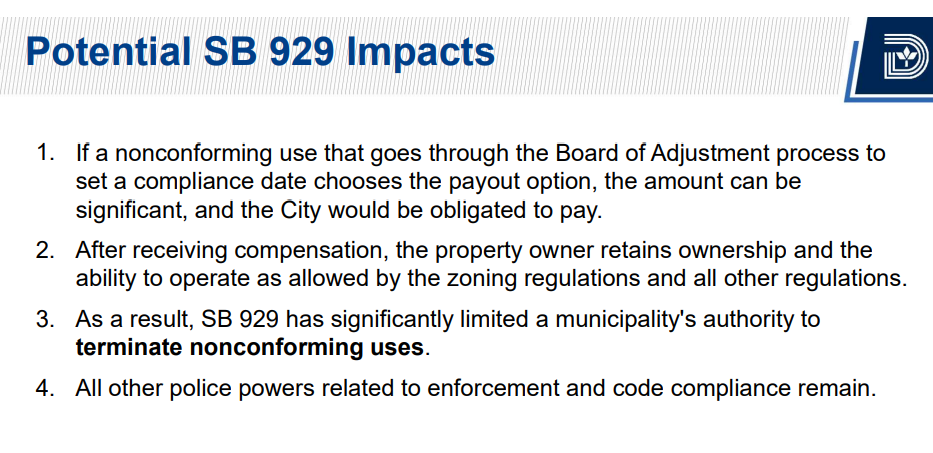
So while council members appear to be sympathetic toward the plight of Floral Farms residents, there’s a concern that this zoning case involves nonconforming properties. According to Wednesday’s presentation, “If a nonconforming use that goes through the Board of Adjustment process to set a compliance date chooses the payout option, the amount can be significant, and the City would be obligated to pay.”
Council Must Adopt a New Ordinance
The City Plan Commission voted in May to recommend the Floral Farms rezoning be approved.
At the December Council meeting, Planning and Development Deputy Director Andrea Gilles said an attempt is being made to strike a balance between what is already on the ground and what city leaders and residents want their communities to look like in the future. About 60% of the acreage in question is undeveloped.
“Staff was looking a lot into how … we handle those areas that are undeveloped, as opposed to the areas that have already been developed from a residential standpoint or an industrial standpoint,” she said.
City Attorney Tammy Palomino clarified that SB 929 passed in the last legislative session, meaning the state law is already on the books.
“Dallas has a unique process by which we used to amortize nonconforming uses,” she said. “Based on 929, the City had to begin looking at its ordinance on amortization. So that went to [Zoning Ordinance Advisory Committee], then it went to City Plan Commission. It went to committee, and the committee asked that the full council be briefed on the proposals before the ordinance came to council.”
Now that the council has been briefed, it’s expected that an ordinance will be adopted before the Floral Farms case comes up again, “and then everyone in the city would be very clear on what our process going forward for nonconformities will be,” Palomino said.
Udrea said Wednesday a proposed ordinance is tentatively planned for council adoption on Feb. 12, the same day the Floral Farms rezoning will be considered.