Dallas Housing Opportunity Fund Deemed ‘Wildly Successful’ in Affordable Housing Deals with Private Investors
Share News:

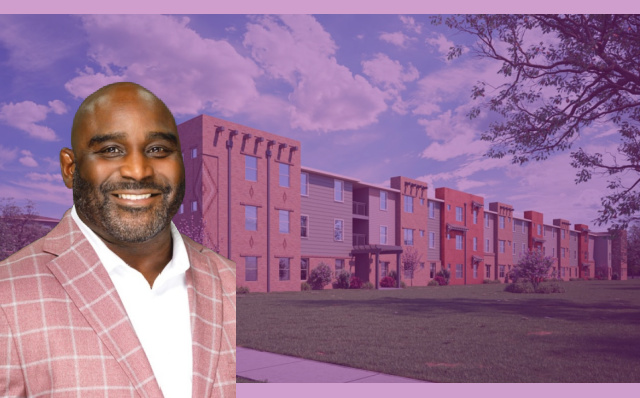
The Dallas Housing Opportunity Fund, a public-private partnership to provide affordable housing units, is exceeding expectations, officials reported at a Jan. 6 meeting of the City Council’s Economic Development Committee.
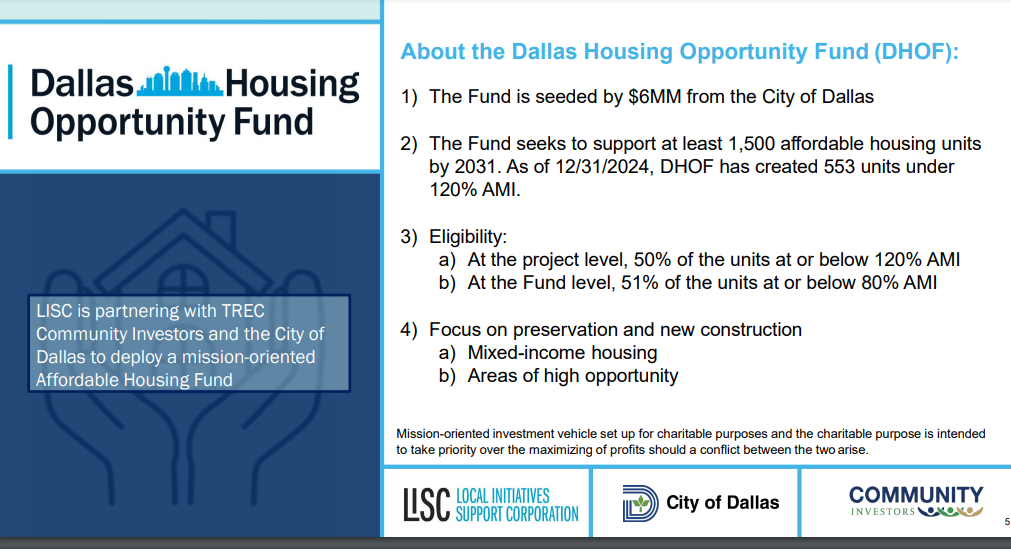
The DHOF is a targeted $46 million investment fund primarily supported by private philanthropic donors. The City of Dallas offered an initial $6 million through an economic development grant. Under an agreement referenced in this Jan. 3 memorandum from Interim Assistant City Manager Robin Bentley, DHOF is expected to create or retain a minimum of 1,500 housing units by the end of 2031 for households earning at or below 120% of the area median income, with the first 100 units to be created on or before Dec. 31, 2025.
Ben Glispie, senior director of fund investments for LISC Fund Management, told the Economic Development Committee last week that DHOF has leveraged the City’s investment with $35.5 million in private investments from six banks to achieve 90% of its $46 million goal by the end of 2026. DHOF has closed on 576 units for a total of $30 million and 553 have been completed.
“We’re well on our way to meeting the 1,500-unit goal,” Glispie said.
A year ago when DHOF provided its annual report, the fund had $23 million and five deals closed. Now the fund has $41.5 million with eight deals closed.
Linda McMahon, who at this time last year was president and CEO of The Real Estate Council, said at the January 2024 presentation, “We’ve got the pipeline; we just need the money.”
Glispie reiterated that point last week.
“We’re in need of more money,” he said. “We have plenty of deals. The money is the problem to get more deals done. This could be a $75 million fund if we had more support from foundations, the city, and larger banks.”
The Real Estate Council’s Involvement
Jamee Jolly, president and CEO of The Real Estate Council, explained that TREC is an active partner in the Dallas Housing Opportunity Fund. Under McMahon’s leadership, TREC recruited Glispie’s LISC (Local Initiatives Support Corp.) so the fund could be created. At its inception, the proposal was risky but has proven to be an effective tool in providing affordable housing, Bentley explained last week.
“What we’re talking about today is the first phase of the plan and when it started, to TREC and LISC’s credit, none of us knew if it was going to work,” she said. “LISC has run this type of fund in other cities but we didn’t know if it was going to work in Dallas. It’s been wildly successful. I’m confident we’ll be bringing a second phase back to council in the near future.”
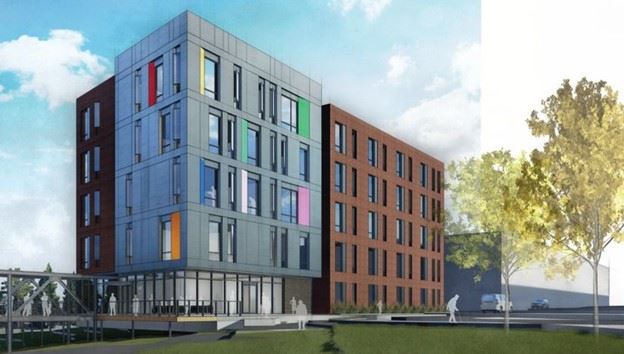
Oak Lawn Place and Kiva East were created through the DHOF and both have opened to tenants and offer on-site resources.
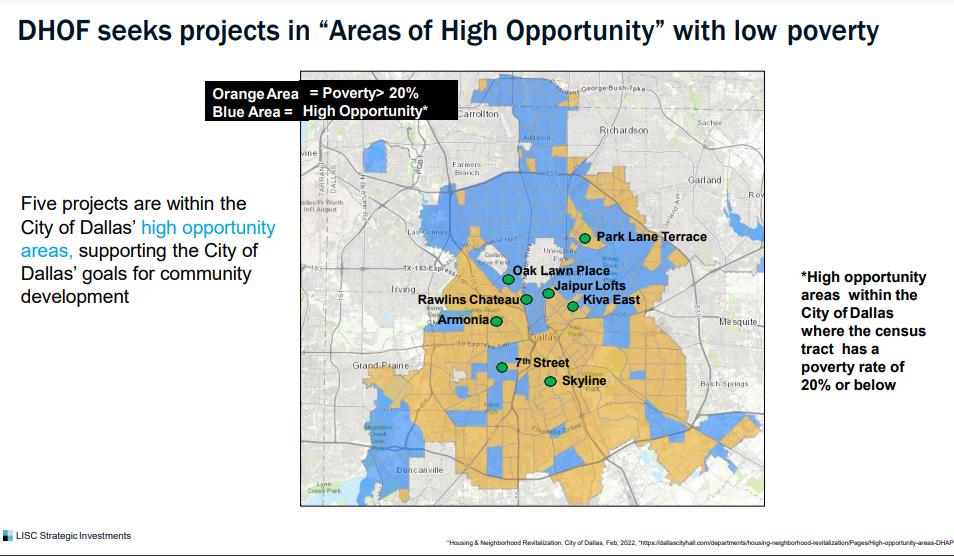
Five of the eight deals closed have been in “high-opportunity areas,” which signify low poverty rates.
Affordable Housing
At least half of the DHOF units have to be affordable at 120% AMI or below, and some investors require 80% AMI or below, Glispie said. DHOF is focused on the preservation and new construction of mixed-income housing in high-opportunity areas, according to the presentation delivered last week.
Glispie said his team is working with the Dallas Housing and Community Development Department toward possibly leveraging Public Facility Corp. reserves to target home ownership or deeper affordability in the 30 to 50% AMI category.
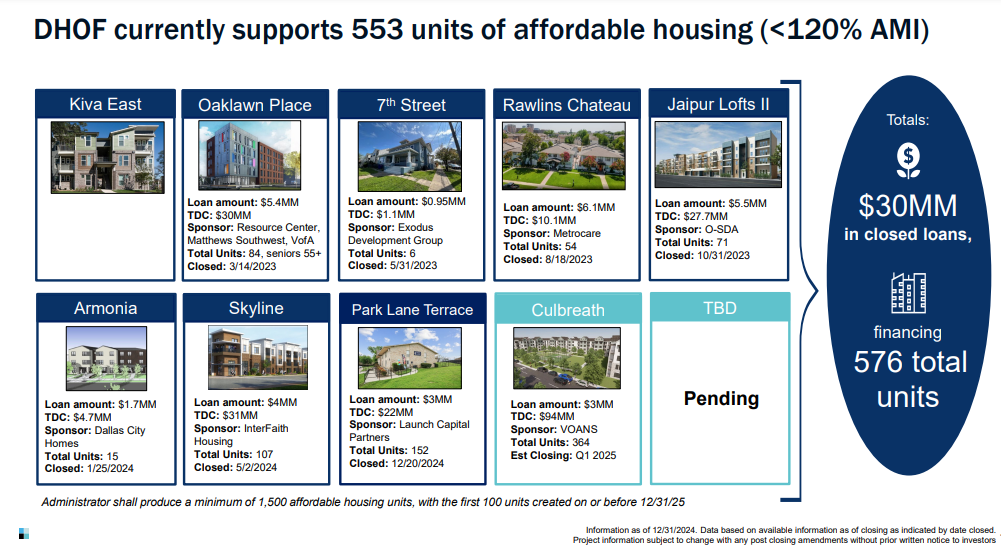
“Of the 553 units we’ve done so far, 200 units are in that 30 to 50% AMI income band,” he said. “I do feel confident that if we were to get additional dollars we could continue to hit that income band. Homeownership I know is a challenge for the city. We do have a pipeline of homeownership deals. The fund does require a 15-year affordability for all of our projects, which is absolutely appropriate for rental developments. One thing I’ve heard from some of our homeownership developers is that the time frame could be a deterrent to homebuyers.”
But the time frame could potentially be shortened to five to 10 years for homeownership opportunities, he explained.
Councilmember Chad West commended Glispie and his team for leveraging the City’s $6 million and developing projects in high-opportunity areas.
“I don’t think I’ve seen a better spread of affordability in the city from any of our other programs and I really think, from an investment standpoint, this is showing us that the public-private partnership is really the way to go if we want to find the high-opportunity areas for affordable housing,” he said.
Community Land Trust is Still an Option
In response to a question from Councilmember Paul Ridley, Jolly confirmed that TREC is working with city staff to launch a Community Land Trust, whereby an individual owns a home, and the CLT owns the land. A ground lease ties the improvements and the land together, and a low price is locked in initially and at resale, so residents can stay in their communities long-term.

“That tool will help make this more affordable and address the single-family home issue that we’re trying to define in the market,” Jolly said.
Councilmember Carolyn King Arnold said she did not want people to “be so afraid that they’re putting their only source of wealth in a trust.”
“If you don’t communicate, you’re going to regret it,” she said. “If someone puts their home into a trust, their heirs will not be able to control that … They cannot inherit that property.”
Jolly said different land trusts have different criteria.
“There are places where, for instance, you would go into the community and work with a family who is at risk of losing their home because they can’t afford the taxes that have gone up. The land trust invests in the land and allows them to keep the home on the land in the family over time, and it also keeps it affordable over time.”
The Community Land Trust is a separate tool from the DHOF and will be discussed before the City Council’s housing committee, probably in February, Jolly added.