
Summit: Dallas Builders Face Inflation, Lack of Inventory, and High Interest Rates
Share News:

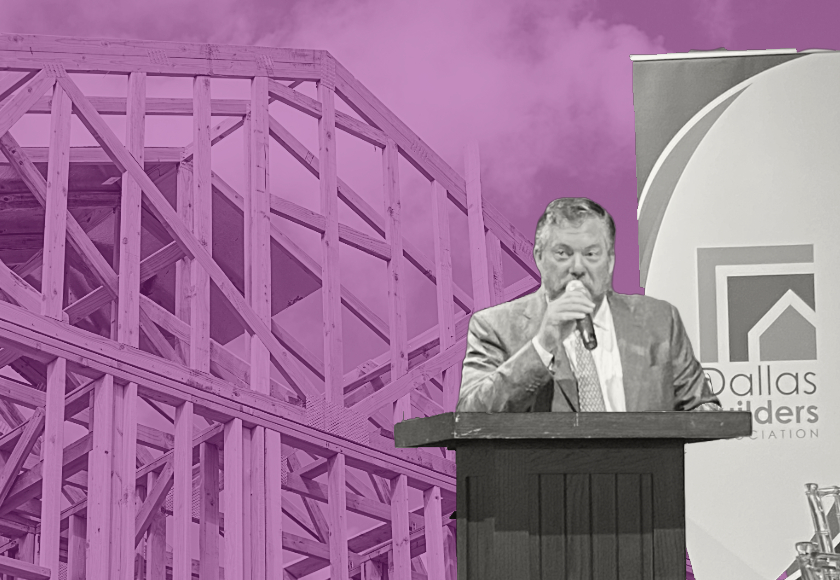
With Texas’ housing market in a tight chokehold — squeezed by rising costs, dwindling inventory, and surging interest rates — builders are scrambling for solutions. This month, they gathered over breakfast at the Dallas Builders Association‘s (DBA) annual State of the Industry Summit to talk about the future of homebuilding in the state.
Scott Norman, CEO of the Texas Association of Builders (TAB), headlined the event, highlighting the “three I’s” that loom large over the homebuilding landscape: inflation, inventory, and interest rates. He explained how these factors are driving the surging cost of housing across Texas.

“Housing has become so unaffordable,” Norman said, adding that the industry has been using the term “housing attainability” rather than affordability. It’s a shift that underscores how tough it’s become for the average Texan to find a home in the “missing middle,” as an Aug. 2024 report by Zillow found.
We’re Still Feeling the Stress on Supply
Since the pandemic, existing, move-in-ready homes have come at a premium — firsthand, we saw open houses with lines out the door, homes under contract within a few days, and bidding wars that sent homes as much as 20% over the asking price. Buyers faced those hurdles in 2020 through 2022. But builders had just as many challenges and the situation hasn’t drastically improved.

During the pandemic, builders and developers saw supply chain and building permit challenges in Dallas grind residential construction to a near halt. When permits that once took hours now took upwards of 11 weeks, the former DBA executive officer Phil Crone characterized the 2021 setup within the city’s Sustainable Development and Construction Department as “organizational ineptitude.”
Since 2017, approximately 26,000 net new homes have been built. Seems like it should be more? Census figures show 32,880 new homes were built within Dallas city limits, however, 6,600 homes were lost or torn down, the recent Dallas Housing Needs Inventory found.
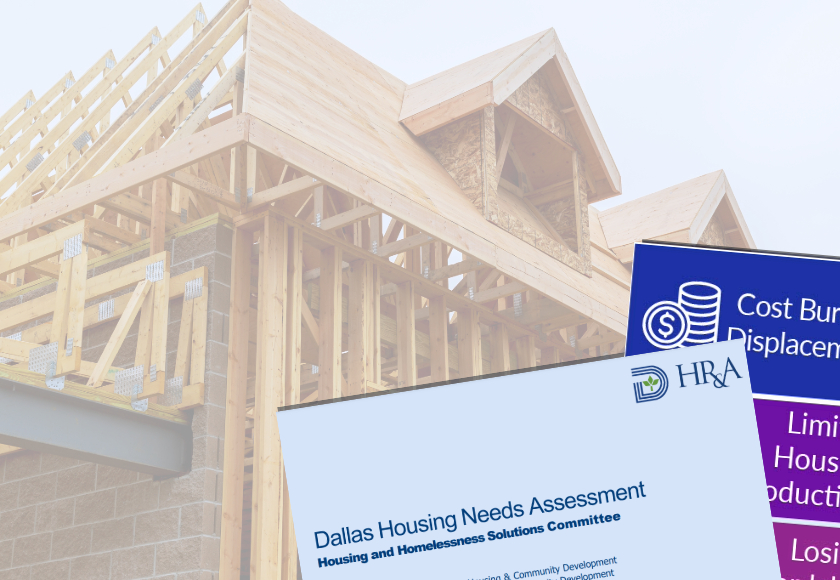
Now, years later and many new homes short — the already-slim supply can’t keep up with demand as big companies continue to relocate and expand in the Dallas metro, Norman explained. According to a Texas Realtors Texas Relocation Report, 668,000 people have moved to Texas from other states since 2021.
This steady influx of jobs and corporate relocations to the state has only intensified the shortage of lots available for new construction.
“These workers have to sleep somewhere at night,” Norman said.
But Some Cities Are Fighting the Growth
Many suburban Texas cities are struggling to balance home construction with demands on infrastructure. Taylor, located just outside Austin, is booming with a huge new Samsung chip plant in the works, but according to Norman, the city will only allow a certain number of new homes to be built in a specific time frame — a decision he called “unrealistic.”
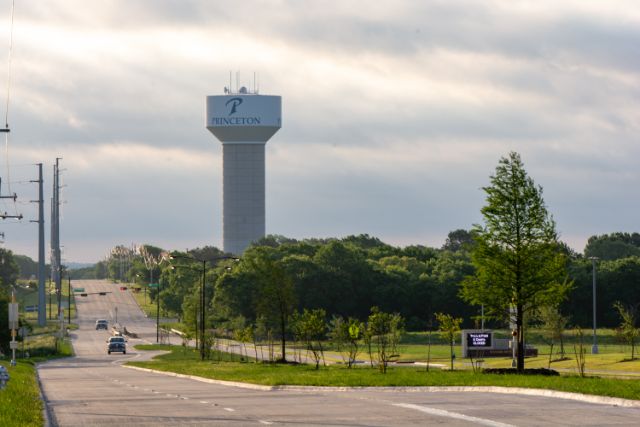
Along the same vein, in late September, the city of Princeton issued a 120-day moratorium on new residential development. At the time, Mayor Brianna Chacon explained, “By pausing new development, we are ensuring that our infrastructure and public services can keep pace with the needs of our residents and businesses.”
On the flip side, Austin, once notorious for its anti-development stance, has done a 180. “Austin used to be the poster child for bad behavior,” Norman said, but its residents have grown fed up with skyrocketing prices. San Antonio, he noted, is now following Austin’s lead.
Politics Always a Factor
Norman also touched on how Texas political dynamics are shifting. While urban areas tend to lean Democratic and rural ones more Republican, the divide is less rigid than before.
“We’re not ‘R’ or ‘D,’ we’re ‘H’ for housing,” he said.
As such, TAB hosts a Rally Day at the Texas Capitol every session year to connect association members with local legislators — The next is slated Feb. 11, 2025. They provide briefing materials on legislative issues and pending legislation that are important to the Texas residential construction industry.

But political theater for issues seemingly unrelated to housing is at play. While Texas Governor Greg Abbott was not successful last session in bringing state-funded private school vouchers for Texas parents last session, the debate is back again this year.
By withdrawing funds from public schools and channeling them to private schools, Norman explained this could affect the desirability of certain school districts and, in turn, where builders decide to develop. While the housing industry isn’t directly involved in the voucher debate, Norman acknowledged it could shape future development plans. He also noted the internal political strife, calling it “a lot of Republican-on-Republican crime.”
Big Picture Issues: Electric Grid, Water, and Property Taxes
Norman shifted gears to broader concerns affecting not just housing but the entire state. First up was the power grid, a hot topic after the 2021 winter storm. With major chip plants and data centers headed to Sherman and Austin — both huge energy consumers — there’s growing pressure on the grid. The rise of bitcoin mining and electric vehicles adds another layer to the challenge.
Access to water is also a looming concern. “No issue affects the future of our building industry more than water,” Norman said. “Texas has been discussing water shortages for decades with little progress.”
Not just water shortages, but permitted access to the state’s water supply. Back in 2022, Lake Coulson of the National Association of Home Builders told builders at the 2022 State of the Industry Summit that so-called navigable waters “are a concern for every one of us in the room.”
While solutions like desalination plants are in the works, solutions are still far off.
“The old saying goes, ‘Houses don’t sell when toilets don’t flush,’” he said.
Dallas’ Role in the Housing Debate
House Bill 14 was another hot topic at the summit. The bill allows for the expansion of third-party inspections, meaning if a city can’t inspect in a timely manner, builders can bring in private inspectors. “We shouldn’t have to wait on the city’s timeline,” Norman said, likening the new system to a form of self-certification for builders.
After the event, CandysDirt.com asked Norman how Dallas stacks up against cities like Austin and San Antonio. He pointed to the influence of vocal housing groups in Dallas, which are pushing to limit density.
“These housing groups are very influential,” Norman said, adding that outer-ring suburbs around Dallas are actively trying to block new development — a move that hasn’t gone unnoticed by the state legislature. “The Legislature has not been sympathetic to anti-building cities,” Norman concluded.
As Texas continues to grow, the homebuilding industry faces an increasingly complex set of challenges. Yet, as Norman stressed, the focus must stay on one thing above all: housing.







The Texas Hill County is being destroyed by unsustainable population growth. All new developments in the hill country PGMA MUST include common sense building codes for low impact development. We should have done this 20 yrs ago. Scott Norman blocks all bills for LID even bracketed bills for only the worst drought impacted areas. He also has his wife acting as the lawyer for water conservation groups to spy on any low impact plans they might have the Gaul to implement. Greed is destroying the gem of Texas and Norman has no shame