
Resident Volunteers Wrote the ForwardDallas Housing Component, and No One Gives a CLUP
Share News:


Occasionally when someone brings up the “socialist city planners” who secretly crafted Dallas’ comprehensive land use plan update over witch’s brew, I’m reminded of something Nathaniel Barrett told me in August 2023.
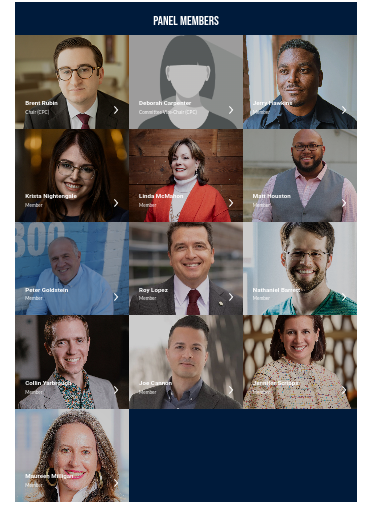
A 15-member panel of volunteers, the Comprehensive Land Use Plan Committee (CLUP), actually had significant input in drafting the ForwardDallas 2.0 plan as we know it today. The words “multiplex” and “design standards” were the subjects of well over a year’s worth of CLUP meetings before the document got to the City Plan Commission.
Those volunteers — attorneys, small business owners, architects, and nonprofit leaders — suggested greater density and more housing choices.
There’s a working theory, certainly not supported by everyone, that Dallas staff members who have guided the document for almost three years were just doing their jobs, collecting feedback and putting it into a document for the City Plan Commission and ultimately City Council to review. Your neighbors actually compiled the meat and potatoes of the plan.
“The structure and content of the document were provided by staff and CLUP provided feedback and specific changes,” Barrett told me. “The initial draft had a much weaker housing element and in general, CLUP exhorted staff to strengthen this part of the comp plan, since it was certain that compromises would weaken the housing element as it made its way through council.”
Barrett, a real estate developer who lives in Old East Dallas, served on the CLUP alongside chairman Brent Rubin and vice-chair Deborah Carpenter, who both serve on the City Plan Commission. Carpenter, by the way, has been the fiercest defender of single-family neighborhoods on the CPC and voted against the plan in late July because she wanted the public to have more time to provide input on the latest draft.
Other CLUP members include Jerry Hawkins, Linda McMahon, Matt Houston, Peter Goldstein, Roy Lopez, Krista Nightengale, Collin Yarbrough, Joe Cannon, Jennifer Scripps, and Maureen Milligan. Jasmond Anderson was an original CLUP member but rolled off when he left the CPC.
Due to the significant time commitment, panel members were hard to find. They had to be people who could afford to take time off work to meet for several hours on a weekday twice a month for over a year.
City Plan Commission Chair Tony Shidid, who oversees CPC subcommittees, selected the appointees.
“Everyone in the room thought we had an issue with not enough housing,” Barrett said. “How do we get to more housing in the best way possible, harming the fewest people, and benefiting the most by being the most equitable and fair? I think that was really consistent. There was no dyed-in-the-wool urbanist who said we should have skyscrapers everywhere. We had some people who were just advocating for their neighborhoods and are tired of housing being so expensive.”
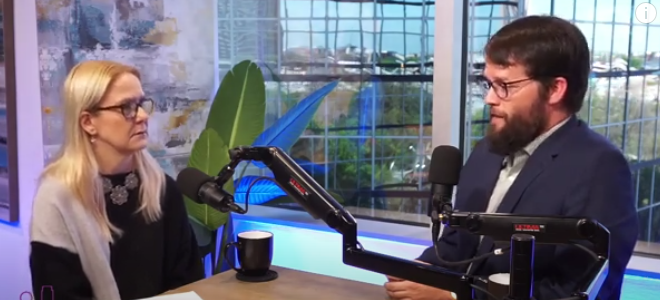
In a mid-July conversation on former City Councilman Philip Kingston’s “Loserville” podcast, Kingston said the CLUP version of the plan was “tissue thin” and he could have written it over a weekend. He threw some shade at the “years of work” that staff and “a $1 million consultant” did to prepare the original draft. Consulting fees were actually about $650,000, approved by the Dallas City Council in April 2021 for Houseal Lavigne Associates LLC.
Kingston’s guest on the July 18 podcast, Plan Commissioner Melissa Kingston, said the version presented to CPC had blank pages, numerous inaccuracies, and typographical errors.
CPC approved the plan 10-4-1 (Melissa Kingston was a nay vote) in late July and it will go before the City Council in a public hearing on Sept. 25. I wondered what lessons the CLUP members learned from the process. Are they happy with the plan as it stands today?
I also found it interesting that a lot of fingers are pointed at city staff, but no one seems to recall the origin of the grueling revision process for ForwardDallas, which hasn’t been updated in almost 20 years, All the CLUP meetings are archived, but they don’t have a lot of views. There weren’t scores of residents storming City Hall to complain about the work the committee was doing. That’s not because it wasn’t on the radar, Rubin said. It may be because they weren’t doing anything that made people angry.
“There were community meetings and there were two or three people who did show up and voice their concerns from the start,” Rubin said.
Residential Placetypes
I talked to Barrett and Rubin last week. Separately and unaware of my discussion with the other, both CLUP members said they were proud of the work the committee did and thought the panel represented a good cross-section of Dallas residents. They also both mentioned the work CLUP did on the housing component of the plan, particularly by reviewing two original proposed “placetypes” — “Traditional Residential” and “Blended Residential.”
Barrett recalls that CLUP Vice Chair Deborah Carpenter was the first to suggest consolidating the two placetypes, which eventually became the “Community Residential” designation that exists in the draft today. That was the most significant change CLUP made to the plan, both committee members said.
Rubin explained that “Traditional Residential” described post-war development with curvilinear streets, not on a grid, and with cul-de-sacs, typically found in the northern sector. “Blended Residential” included gridded streets and pre-war development in the southern sector.
“Some folks, I think they were from Kidd Springs, came to us and we took a look at what was going on there,” Rubin said. “It did seem like there was a geographic disparity north and south of I-30 where the traditional and blended residential were. That’s how we came up with the Community Residential placetype. It was really out of an equity concern. We said we needed one placetype. That was really important because if we were going to talk about how neighborhoods could accommodate gentle density, we need this to be a citywide conversation. We don’t want this ‘traditional’ label to be used as an excuse to say, ‘No, this density only belongs in the southern sector.'”
Another placetype, “Small Town Residential,” was eventually developed and mostly concerns the unique Kleberg-Rylie area.
Rubin said the document has been fine-tuned through each step to balance housing needs, “potentially addressing [those needs] through density with the concerns of single-family homeowners.”
The Compromises
In a Sept. 3 meeting of the City Council’s Economic Development Committee, Councilman Paul Ridley introduced several compromises that were adopted by the committee and incorporated into the latest draft of ForwardDallas 2.0.
“These changes … were made with the intent to preserve and protect existing neighborhoods, support neighborhoods in need of rehabilitation, increase housing options, and establish new walkable neighborhoods,” Ridley said.
Barrett said he was disappointed by the “compromise amendments.”
“There’s a lot of things that are obviously intended to separate, divide or set aside preservation and stability … to weaken language about allowing more housing in more places,” Barrett said. “He’s just doing everything he can to disallow any additional or different types of housing in these areas. That’s disappointing to me since we put a lot of work into expanding housing opportunities. It seems more intended to weaken that.”
The big picture, Barrett added, is that ForwardDallas doesn’t have that much influence.
“They throw it on a shelf or in a drawer and they forget about it,” he said. “Staff references it but I’ve never seen any comprehensive plan in Dallas used successfully in zoning that made an iota of difference. Where it does matter is setting the tone of the conversation.”
The developer said he’s made fun of Dallas’ land use plan in the past because he didn’t think it was useful. When asked to serve on CLUP, he said he made a good-faith effort to get it to the best possible plan it could be.
“We ended up not all the way there but most of the way there,” he said. “I’m proud of what we’ve done. None of the things that are in the document — even if they approved it as it was — it’s not like the next week, Council is going to approve upzonings for tenplexes citywide. That’s just not in the remote world of possibilities. Our job was to set the tone, and we did that.”
Rubin said the document had good neighborhood protection when it came out of CLUP and even stronger neighborhood protection when it came out of CPC.
“We did so much good work in the housing component,” he said. “We do so much more in this plan to address incompatibility, displacement, and gentrification … if they had just lopped off the housing piece, we would have lost so much good work that I think almost everyone was OK with over concerns about neighborhoods getting bulldozed for eightplexes, which I don’t think was ever anyone’s intent or something that anyone thought was realistic.”


Fact Check – Consultant Contract was $649,960; View Item #47 on Council Agenda here: https://cityofdallas.legistar.com/View.ashx?M=A&ID=820874&GUID=952D1DBA-FD89-44AB-BB87-8511D0A8F5DE
Great background information. Thank you.