
In the Early 1900s, This Is How the Richest Man in Fort Worth Lived
Share News:

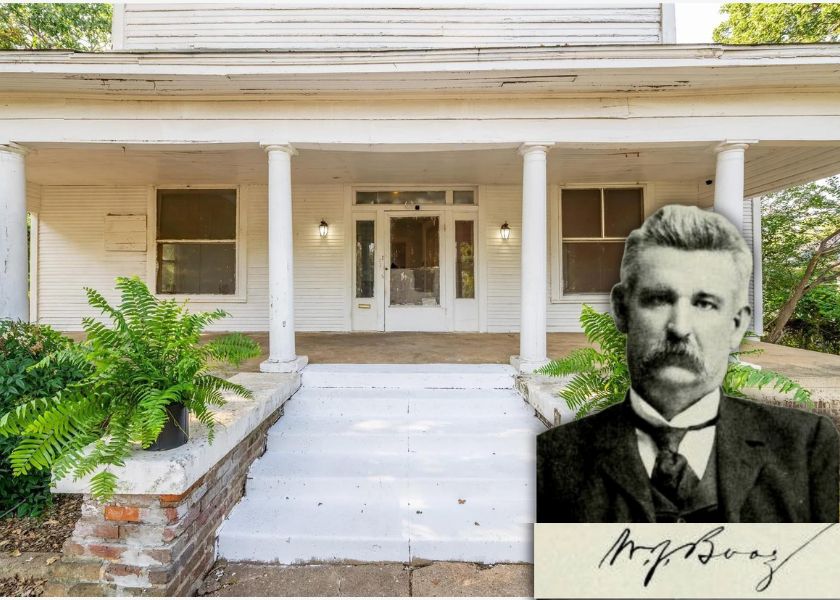
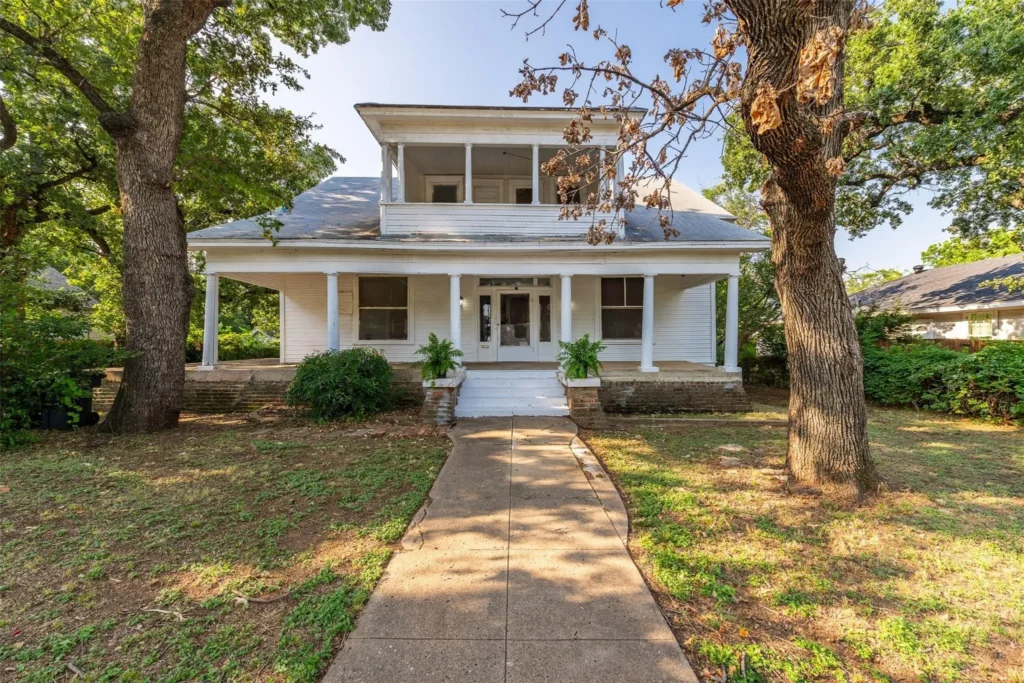
Some stories aren’t linear, dutifully following a single storyline, but are instead a complex tapestry woven of many threads. So it is with the home at 2608 Carter Avenue nearly crumbling under the weight of its history. Built around 1913 (though its precise age is not certain), it was the last home of the nearly forgotten Fort Worth pioneer, Civil War veteran, entrepreneur, and philanthropist William Jesse Boaz.
From the Fort Worth Star-Telegram, December 14, 1916:
“W. J. Boaz, Pioneer Here, Dies; Estate Worth $1,000,000. William Jesse Boaz, early settler and said to have been the largest individual property owner in Fort Worth, died at his residence in Sycamore Heights some time Wednesday night.“
Part 1: Early Adventures and Youthful Exploits
W. J. Boaz’s story is filled with remarkable episodes that exceed the exploits and adventures of a Horatio Alger novel.
Born in 1840 to a family of prosperous farmers in Hickman County, Kentucky, Boaz was responsible for settling the family’s property after his family left Kentucky for Texas. The 19-year-old lad made his way to Tarrant County in 1860, carrying himself and $1,800 in gold ($238,000 at today’s gold price) 700 miles by horseback, to the new family home.
A few years later in Texas:
“In 1862 he enlisted in Colonel George H. Sweet’s regiment as a private, Fifteenth Texas Cavalry. The regiment subsequently became a part of General Deshler’s brigade, and Boaz served in General Hindman’s Division of the Trans-Mississippi department. After several battles of minor importance, the entire command was captured at Arkansas Post, January 1, 1863. The 8,000 prisoners were shipped by transfer boats to Alton, Illinois, thence by rail to Camp Douglas, Chicago, arriving at the latter place in January 1863.”
— from A History of Texas Together With a Biographical History of Tarrant and Parker Counties
But Boaz escaped. Climbing a prison wall, he walked 15 miles to the railroad station and boarded a train bound south. It wouldn’t be his only capture. Boaz was released from a second captivity as part of a prisoner exchange. Surviving imprisonment, fevers, and wounds requiring hospitalizations, Boaz at last returned to his Tarrant County home shortly before the war’s end in 1865.
Part 2: A Varied and Illustrious Career or How I Rose from Humble Clerk to Fort Worth Founding Father
Certainly W.J. Boaz benefitted from, for the times, a rather advantaged upbringing but early bold adventures turned out to be harbingers of an exceptional daring and imagination that would propel Boaz to capitalize on the myriad opportunities in nascent Fort Worth.
Again, from A History of Texas, Together With a Biographical History of Tarrant and Parker Counties:
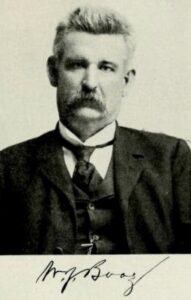
“In 1867 he was employed as a clerk at Birdville, Texas, for five months. Then he engaged in trading in horses and cattle; next, in company with his brother, R. Boaz, conducted a mercantile business at this place until 1870; and in the latter year formed a partnership with J. F. Ellis at Fort Worth, Texas, the firm having a capital of $2000. After four years of successful mercantile business, in 1874, he bought the interest of M. B. Loyd in the California and Texas Bank at this point, remaining with that institution for three years.
“The bank was afterward merged into the City National Bank, in which Mr. Boaz holds a large stock. In June 1877, the firm of Boaz & Ellis, real-estate and loan brokers, was formed, and they conducted a prosperous business until 1881. In that year Mr. Boaz organized the Traders’ National Bank, was its president seven years, and is yet a prominent stockholder.”
The building and loan company founded by Boaz facilitated homeownership for scores of ordinary working people. Boaz is credited with being among the early founders who brought the railroads to Fort Worth, an economic turning point that would dramatically shape the future of the city.
Part 3: Decline, Decay and Rejuvenation
Boaz’s stellar rise and stature in the community might have tempted him like other men of means to construct one of the massive heaps that were springing up on Quality Hill, just west of the city center.
Boaz chose instead (was he downsizing?) to pass his final years in a rather simple abode at the northeast edge of town. Looking at the façade, and considering the era in which it was built, I imagine that the columns and front door were all disposed in a symmetrical arrangement and that the present incongruities are the result of later accretions.
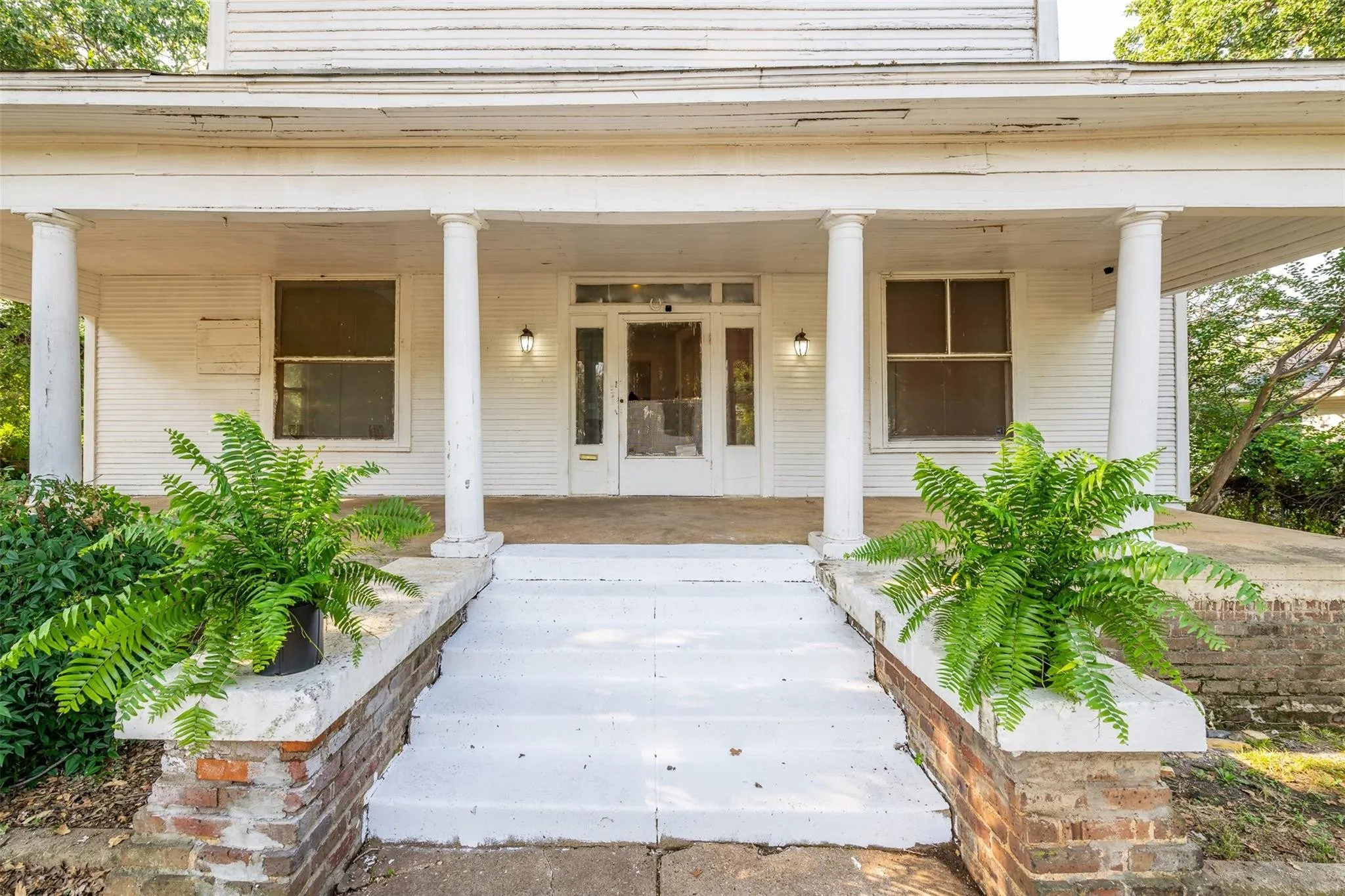
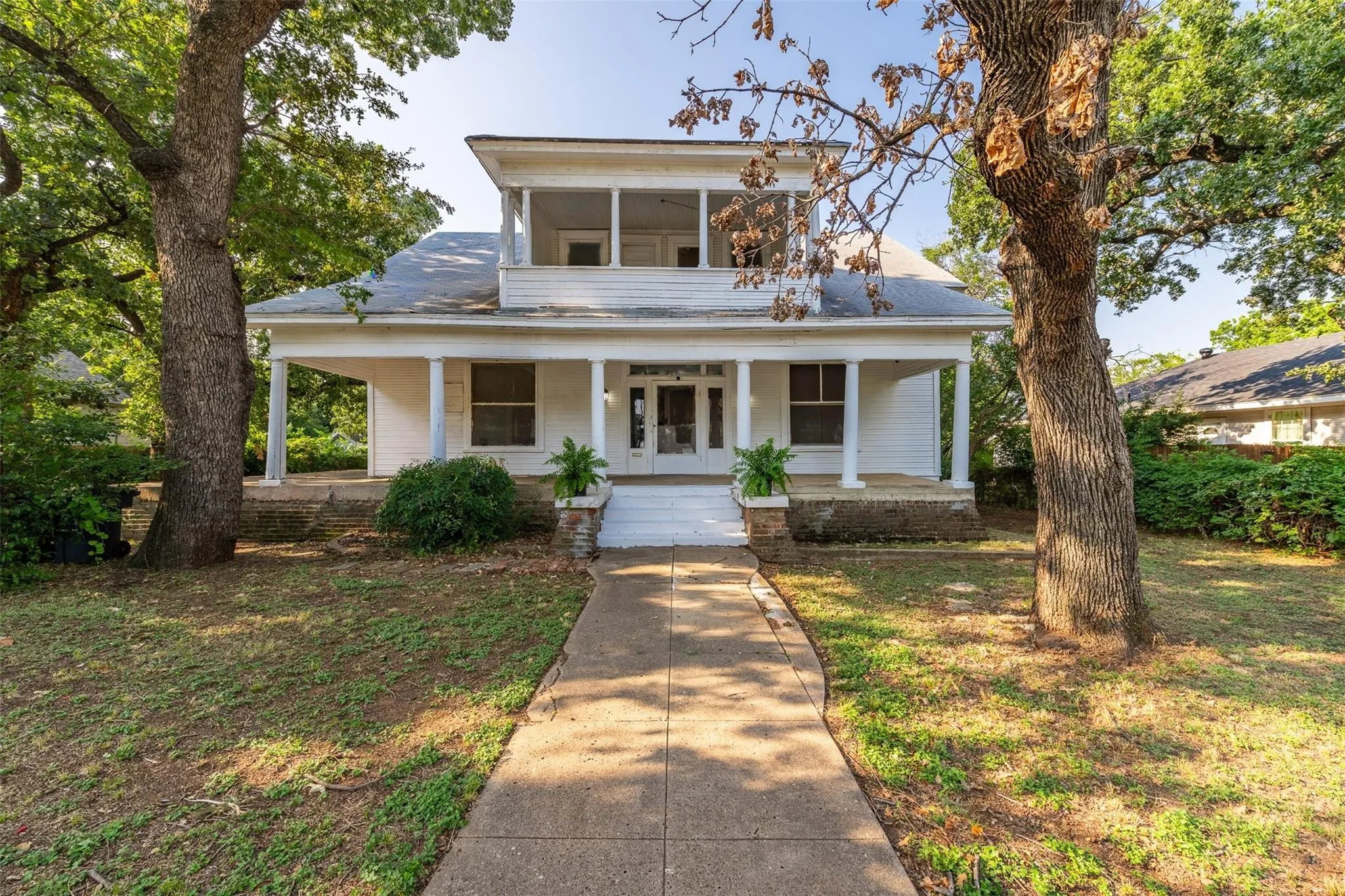
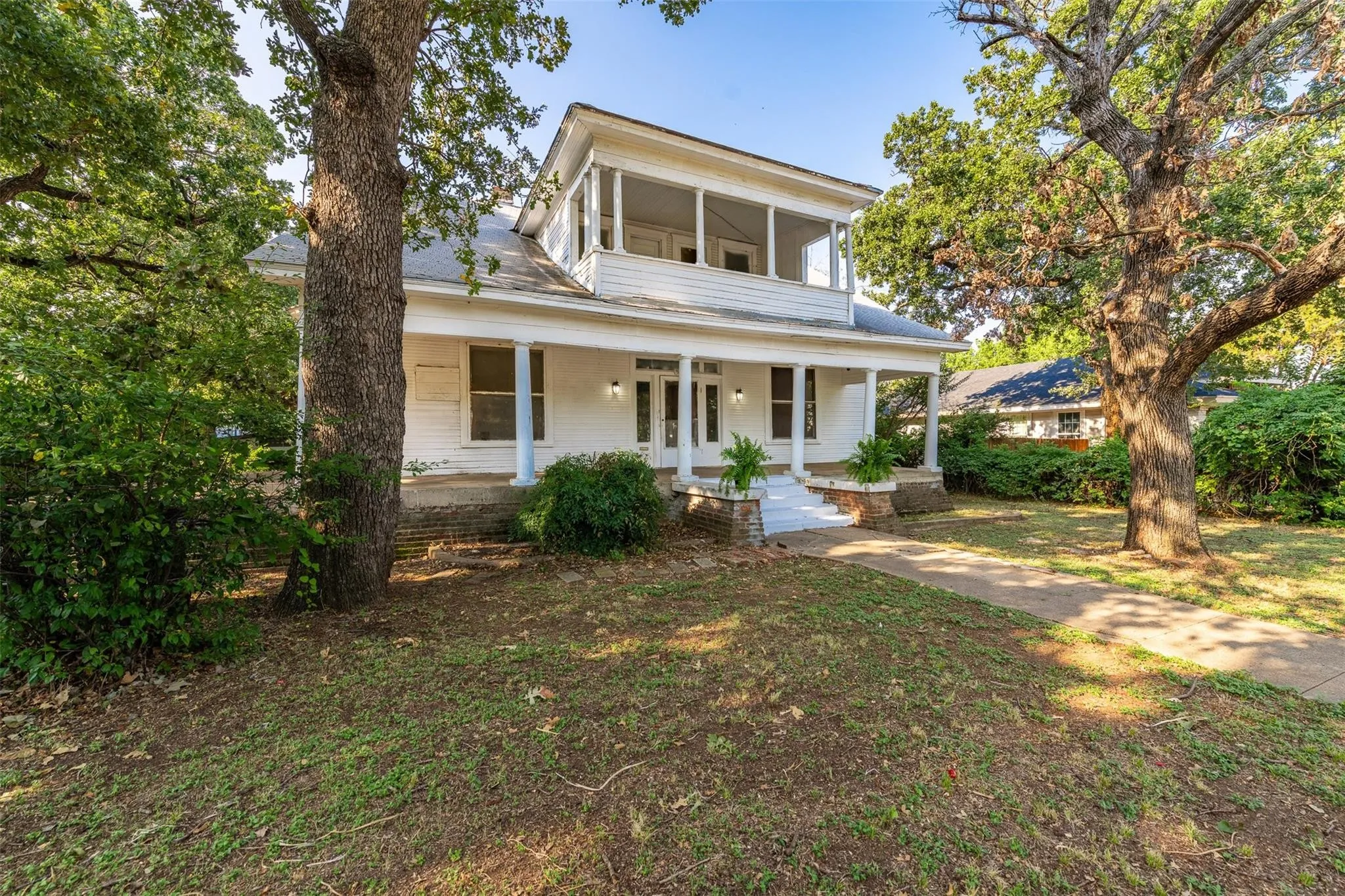
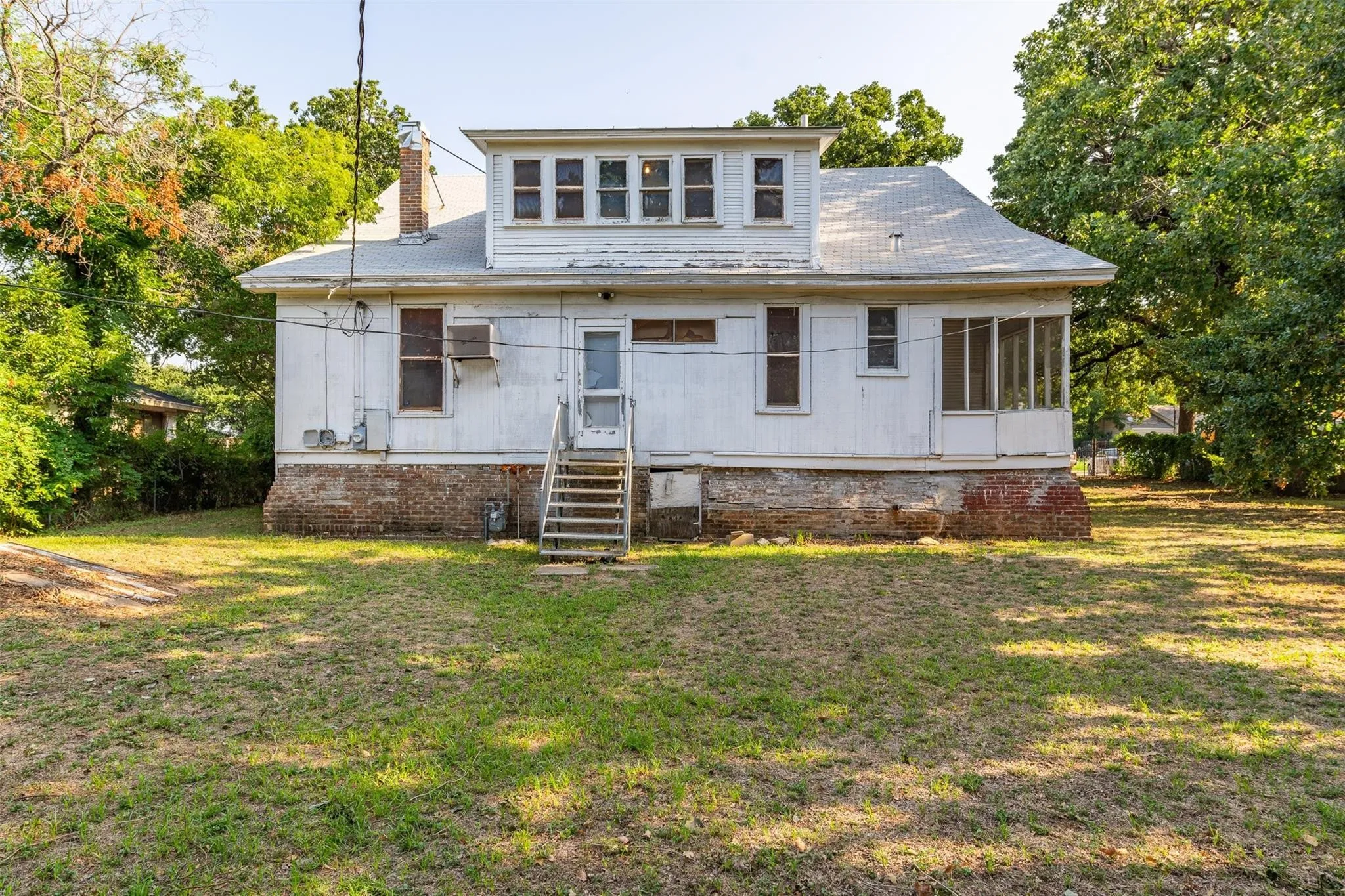
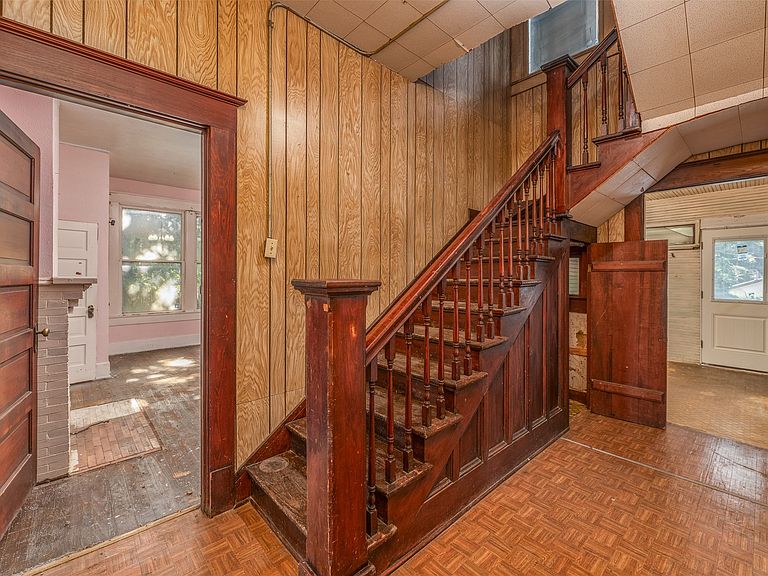
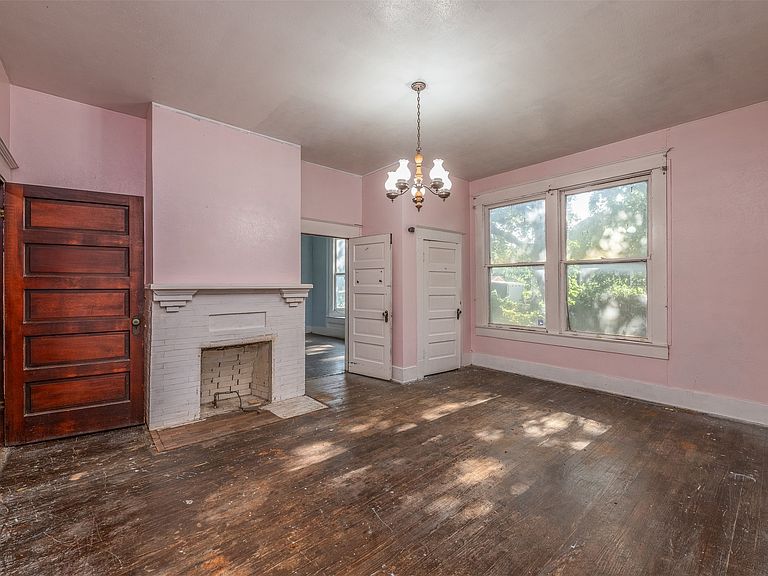
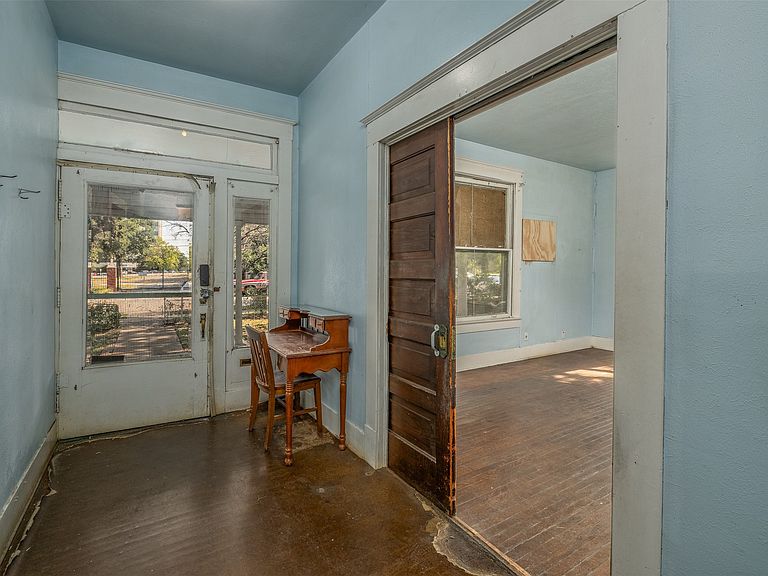
As yet, I haven’t commented on the sad state of this property. As all can clearly see from the photography, prospective buyers face a daunting undertaking. Broken glass, linoleum tiled floors, dodgy electric, and slap-dash solutions mask and mar the residence’s once prosperous past. It lacks an HVAC system.
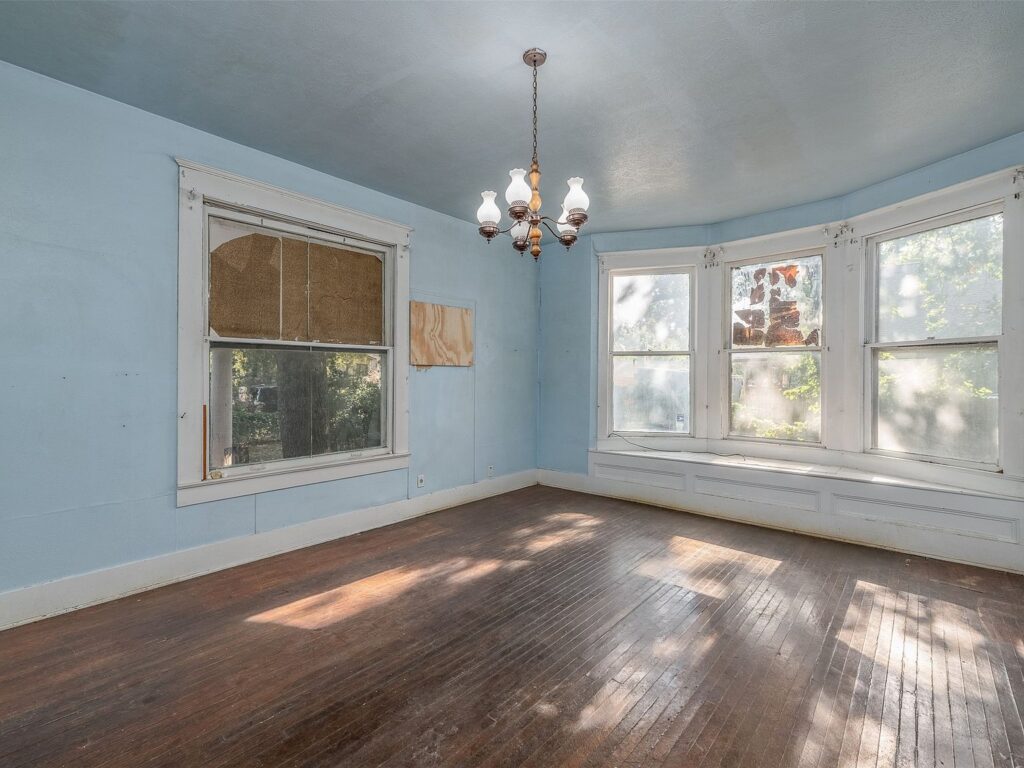
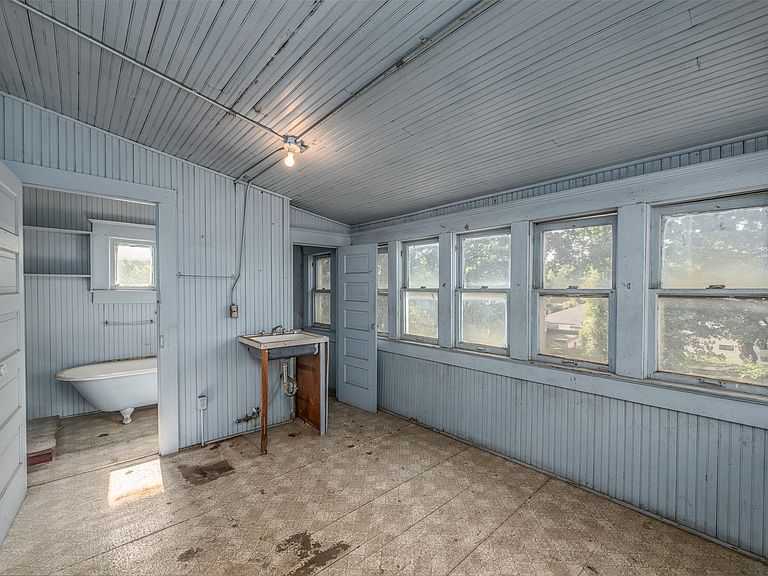
The pathos of the poetically decayed state of the property brings to mind the last scene of Orson Welles’ realization of Booth Tarkington’s elegiac novel, “The Magnificent Ambersons.”
The narrator describes the metamorphosis and decline of the once elegant fictional enclave of Amberson Addition-a fate shared by all too many an American, inner-city residential neighborhood.
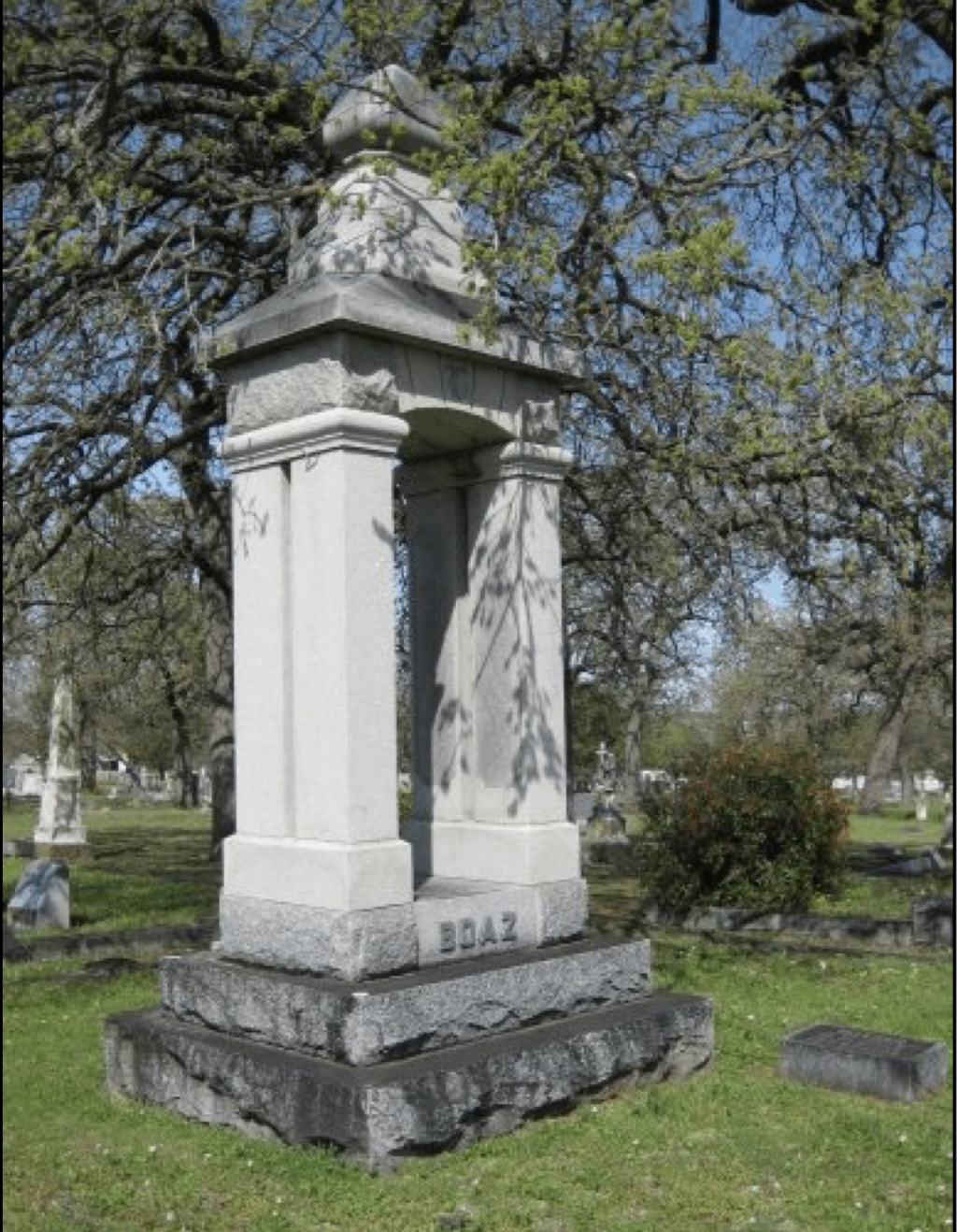
But what Tarkington in 1918 and Welles in 1942 couldn’t foresee, was that some of these forgotten and abandoned historical zones would survive to be rediscovered and adopted by a new generation. The house that W. J. Boaz built is located in Sycamore Heights, a part of the robust West Meadowbrook Neighborhood Association.
The area is replete with beautiful historic homes — several appearing on these pages — majestic old oaks, and a growing cadre of proud young homeowners who have embraced the area and rejuvenated the historic housing stock. Listing agent Wendy Kimball is herself a proud West Meadowbrook resident and has made the neighborhood an area of expertise. Certainly, 2608 Carter Avenue is a project, but at $79 per square foot, it will no doubt prove a tempting target for restoration.
Wendy Kimball of Compass RE has listed 2608 Carter Avenue for $225,000 and it’s currently pending.







Fascinating story about a man history seems to have forgotten. He sounds like he was equal part sentrepreneur and scoundrel. I hope they can save the house and it’s legacy.