
Tiny Homes, Cottage Courts, And Multiplexes, Oh My! ForwardDallas Debate Rages On
Share News:

A casual observer at Monday’s City Plan Commission meeting might think the panel’s compromise — an agreement of sorts to discourage developers from building multiplexes in the midst of single-family neighborhoods — would be met with cheers from the crowd so adamantly opposed to previous iterations of the ForwardDallas comprehensive land use plan.
They’d be wrong.
Those who were already skeptical of the land use plan questioned whether the compromise would be undone when the plan goes before the Dallas City Council in the fall.
They also have some heartburn about definitions of things like multiplexes and tiny homes. And don’t get them started on cottage courts.
District 14 resident Rosanne Messineo Mills told the Plan Commission at a Monday public hearing that she was strongly opposed to “including and shoehorning the undefined cottage court and the undefined tiny house into the single-family attached definition.”
While a majority of commissioners agreed definitions are needed, they want to pursue diverse housing options in areas where they make sense.
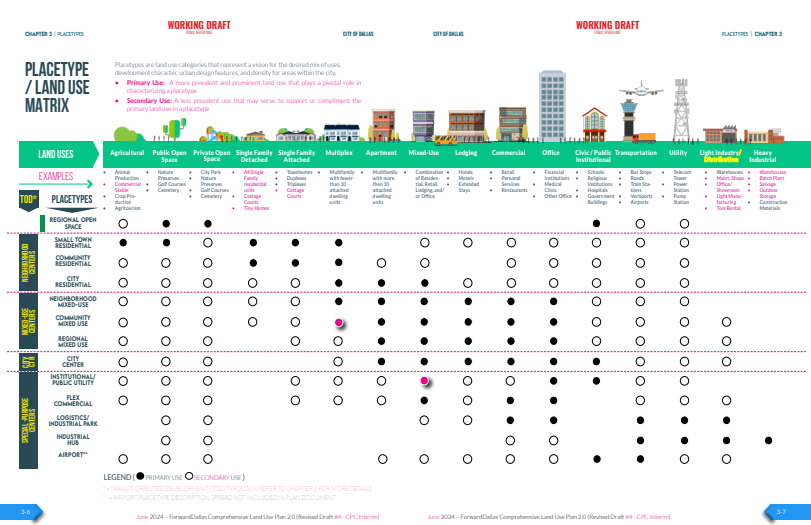
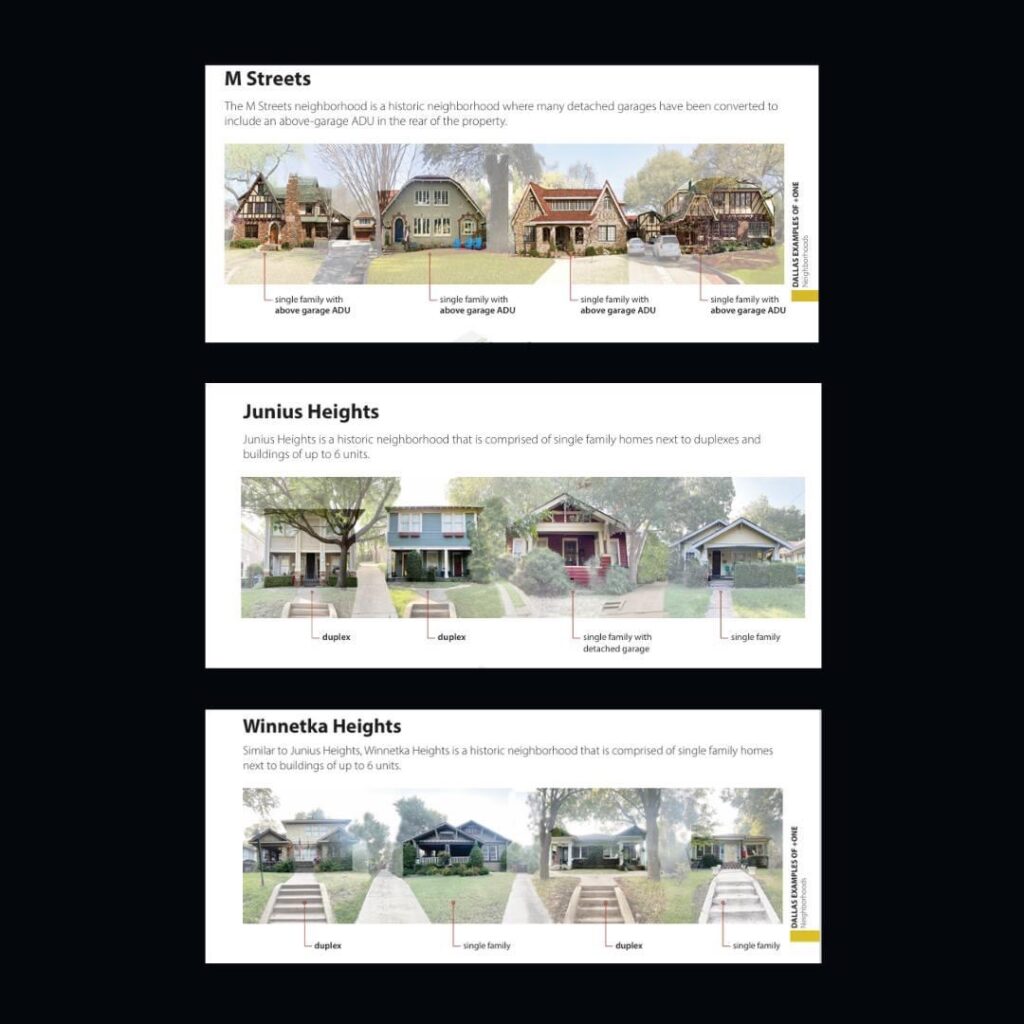
Read the latest version of ForwardDallas here. Note that a few major changes were made this week, including the recommended change of multiplexes from a primary to secondary use in the “Community Residential” and “Small Town Residential” placetypes. The definition of multiplex was changed to eight or fewer attached dwelling units.
The City Plan Commission met again Thursday morning and agreed to submit questions in writing by June 28. A motion is on the table to recommend the document, but amendments are still being accepted, and a vote has not been taken.
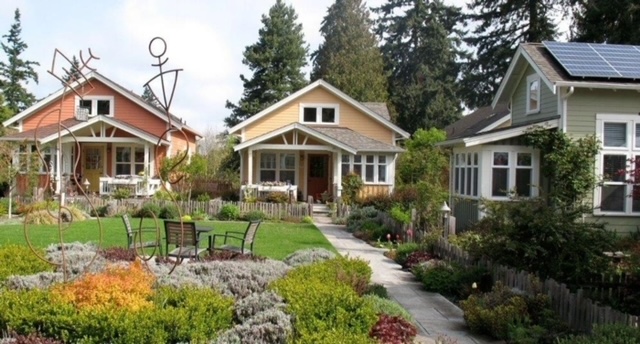
Cottage Courts And Tiny Homes
Plan Commissioner Tom Forsyth said he’s concerned about the potential proliferation of tiny homes and cottage courts in established single-family neighborhoods.
On Monday, Forsyth made several proposals to address this concern, a few of which either failed or were withdrawn due to a lack of support.
“Obviously any motions that I make are like seeds thrown on concrete,” he said. “It’s clear that this commission has, on one hand, said we’re moving [multiplexes] to a secondary land use, but on the other hand, we’re putting all these secondary land uses into the primary land use categories. You’re basically making it so that the folks that were here this morning are not going to be able to support this plan when it goes to the City Council.”
Residents in single-family neighborhoods “just simply want the protection that the single-family home — one lot, one home —- is the primary land use,” Forsyth added.
District 7 Commissioner Tabitha Wheeler-Reagan pushed back on portions of Forsyth’s motions and said the people who show up to speak at a 9 a.m. weekday meeting do not represent all of Dallas.
“People are moving toward tinier homes,” she said. “Tiny homes and cottages, I believe, should still be able to be in a single-family home community. If we’re talking about density in areas where we can put a tiny home community … Some people don’t want to live in a one-bedroom apartment but they do want to live in a tiny home.”
Commissioner Melissa Kingston also balked at making tiny homes and cottage courts a secondary use.
“It’s frankly a way to provide housing for people to age in place, for people to remain in their communities when they can no longer continue to manage the larger homes they once stayed in,” she said. “We’re seeing a trend where people are not selling their larger homes because they don’t have another place to move into. We’re not providing a lot of the smaller senior housing as another option. They’re continuing to stay in their larger homes and they’re continuing to keep that housing stock off the market for other people who might want to have it.”
Commissioners Darrell Herbert, Joanna Hampton, and Brent Rubin also wanted to keep cottage courts in single-family neighborhoods. Hampton said residents want predictability, and it’s important to define things like cottage courts in the ForwardDallas glossary.
Commissioner Lorie Blair suggested that when tiny homes were introduced into the conversation, the intent was for accessory dwelling units.
“First of all, it needs to be defined,” she said.
Density and Gentrification
Adding density doesn’t “solve” affordability, commissioners agreed, but it can create more affordable housing options.
Commissioner Deborah Carpenter said the tension around ForwardDallas comes from adding density and preventing gentrification.
“We’re getting displacement in low-to-moderate-income areas,” she said. “Any new construction that goes on in a low-to-moderate-income area resets the land values. Adding density to that does it more and more … If this document doesn’t point out the necessity of stringent design standards as a precursor to any sort of entitlement to add density, then we’re just throwing a match into dry grass as far as displacement goes.”
Commissioner Christian Chernock said Dallas is trying to do more with less.
“We’re trying to find ways to use land more efficiently,” he said. “We should be trying to promote and find ways to put more housing on less land in an appropriate, scaled way.”
Missing Middle Housing
CPC Vice Chair Brent Rubin said some areas of town already have “missing middle housing” that is compatible with single-family neighborhoods.
“Much of this is duplexes built in the 1960s and earlier and multiplexes built in the 1950s and before,” Rubin said. “There are substantial benefits to missing middle housing like this. It presents additional housing options in a market where many single-family homes have simply become unattainable. It provides opportunities for key members of our community like teachers and first responders to become part of our most vibrant neighborhoods. It’s also important to our sustainability goals.”
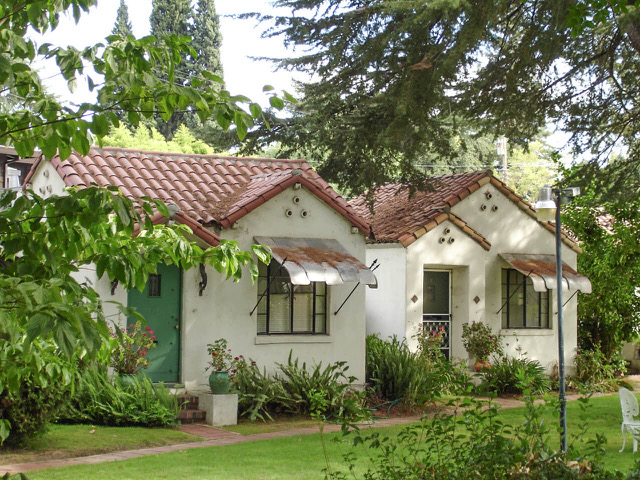
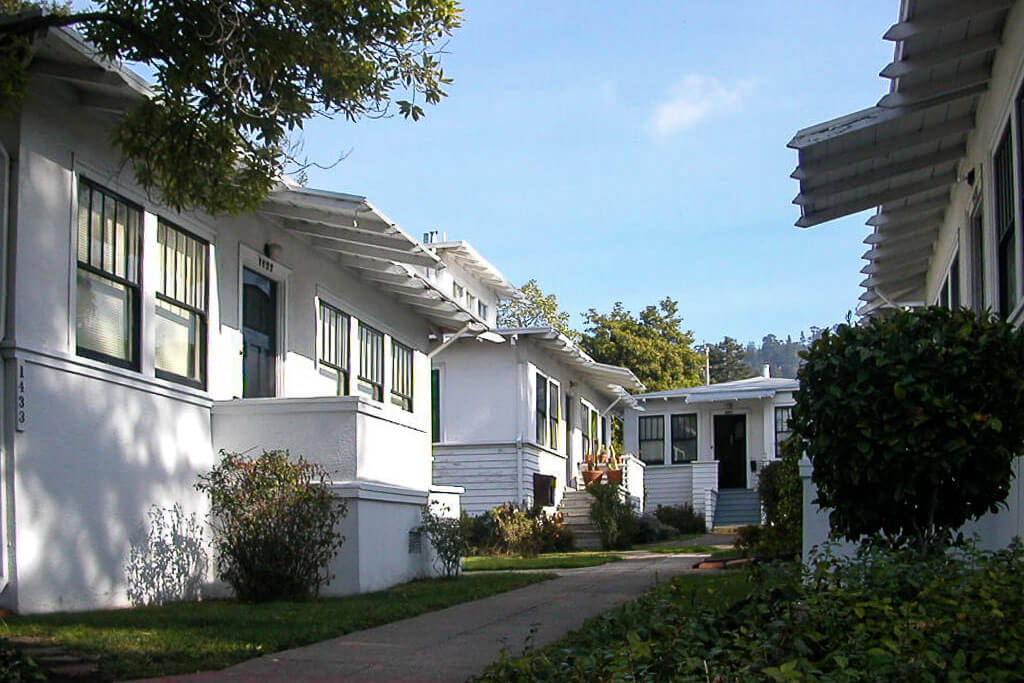
What absolutely must be addressed, commissioners emphasized, are strict design standards to ensure newly constructed multiplexes are compatible with surrounding development.
Wheeler-Reagan said density, affordability, and different housing types are necessary.
“My only fear in the southern sector is, because we’re so vulnerable to developers who do not come into the community and ask what the community wants … the housing type might be density but it might look like garbage and it might be overpriced,” she said.
Kingston said she represents multiple competing interests that have been at odds with each other throughout this process.
“The single-family homeowners want no change, and cities that don’t change don’t thrive,” she said. “The housing advocates want no rules and I don’t think that’s a fair response to the people who have invested over the course of decades. I think this strikes a healthy balance between the two primary competing interests. I also think it’s reflective of what’s on the ground in so many neighborhoods.”
What’s Next For ForwardDallas
While some disagree with aspects of the plan, no one can say the City Plan Commission hasn’t been thorough.
The update of the plan — referred to as ForwardDallas 2.0 — is on its fourth iteration. The document update started with the Comprehensive Land Use Plan Committee and more than 200 meetings and public events on the topic have been held. During Monday’s eight-hour discussion, commissioners had technical debates on how the document would affect things like Planned Development Districts and Transit-Oriented Development. Commissioners said they have received thousands of emails about the plan.
“Though there are a lot of loud voices who oppose it, there are so many voices who support it,” Kingston said. “I have received easily as much support for this plan as opposition.”




Another great article explaining the situation. Thank you.