
City Hall Roundup: Three Housing Initiatives Are Included in Dallas’ 2025 Federal Legislative Priorities
Share News:

Pending some discussion with Dallas City Council members and stakeholders, local officials are poised to lobby the U.S. Congress to add blight remediation to the Low Income Housing Tax Credit program, improve the Point-in-Time homeless count procedures, and add funding to federal grant programs.
Director of Government Affairs Carrie Rogers was prepared to discuss the 2025 legislative priorities with the Dallas City Council on June 5, but the briefing was postponed due to a lengthy discussion about charter amendments that lasted several hours and ended with a lack of quorum.
We’ve got Rogers’ presentation and will be following the process when it goes before the City Council for a briefing. Officials say they expect to review the state and federal legislative agendas at the same time, either on June 26 or after the summer recess.
Housing Priorities in 2025 Legislative Agenda
Overarching themes for the 2025 legislative agenda include the following goals:
- Maintain local control and preserve tools to respond to the specific needs of the Dallas community; harmonize responsibilities and resources.
- Promote a business-friendly environment to attract economic development and talent.
- Pursue funding for public safety, critical infrastructure, and natural resources.
- Support vulnerable populations and oppose any legislation that would erode existing protections.
Housing Initiatives
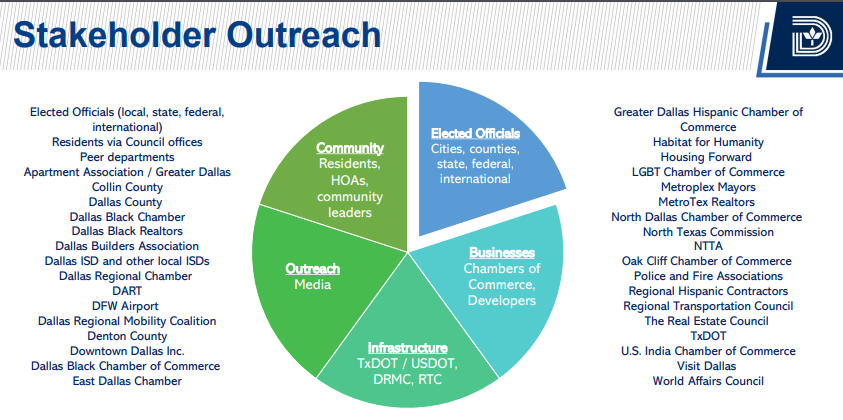
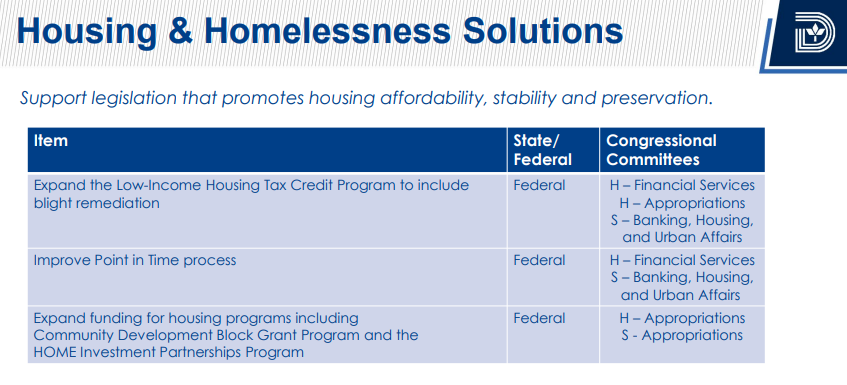
When it comes to housing, the initiatives are specific. While still pending council approval, stakeholder outreach, and public input, staff is proposing to expand the Low-Income Housing Tax Credit Program to include blight remediation.
The LIHTC program is the largest affordable rental housing program in Texas, with more than 260,000 families living in over 2,500 tax-credited properties across the state, according to the Inclusive Communities Project. The properties are owned by private investors who receive tax reductions to provide housing for low-income families.
In addition to expanding LIHTC criteria, Dallas’ federal legislation also aims to improve the Point-in-Time Count, a census of homelessness on which federal grant dollars are based. City leaders have for years criticized the inaccuracy of the count and said they could provide more services for the homeless if the numbers were correct.
The third initiative in the Housing category is an effort to expand funding for housing programs including the Community Development Block Grant and HOME Investment Partnerships Program.