
World Cup Delivered $26M Lift to D-FW Short-Term Rental Market
Share News:


Now that the World Cup is behind us, we’re starting to get a sense of the economic impact. And on the short-term rental front, D-FW saw a significant increase in activity, with the Metroplex ranking second nationally for demand growth and third for revenue growth.
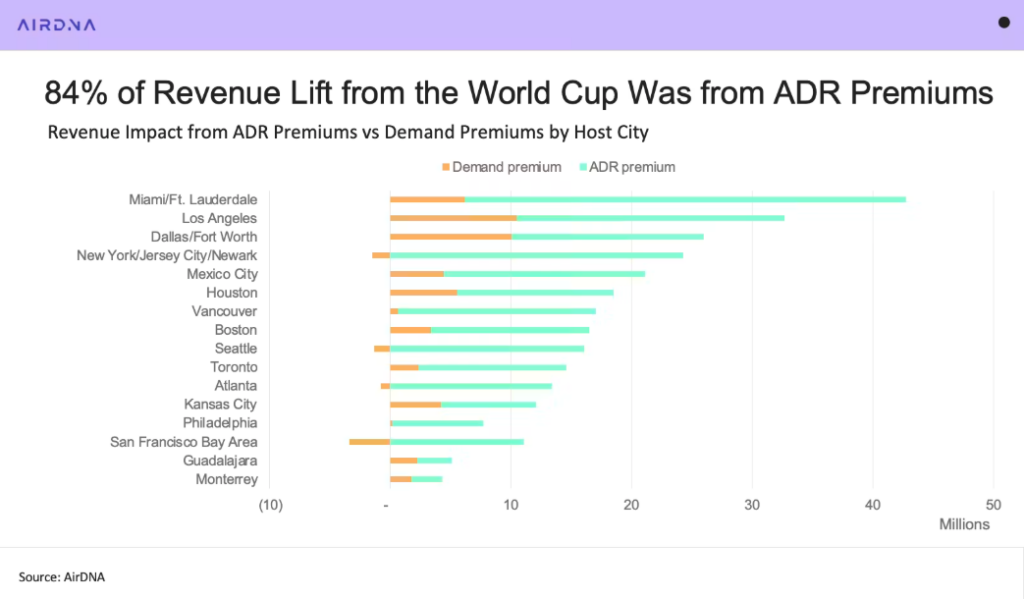
Spending on STRs reached $93.3 million in D-FW between June 10 and July 19, $26 million more than during the same period last year for a 39% increase. Only Los Angeles ($32.7 million) and Miami/Fort Lauderdale ($42.7 million) saw greater revenue lifts, according to the data platform AirDNA, which tracks STR listings on Airbnb, VRBO, and Booking.com.
A tournament-high nine matches were played at Dallas Stadium (AT&T Stadium) in Arlington, including five group-stage contests, two Round of 32 matches, a Round of 16 matchup, and a semifinal that saw Spain defeat France 2-0.
“D-FW performance was really strong,” Linda Rollins, a senior research analyst for AirDNA, told CandysDirt.com.
She said around $10 million of the Metroplex’s $26 million revenue spike came from additional nights booked while the remainder stemmed from hosts charging higher prices during the tournament window.
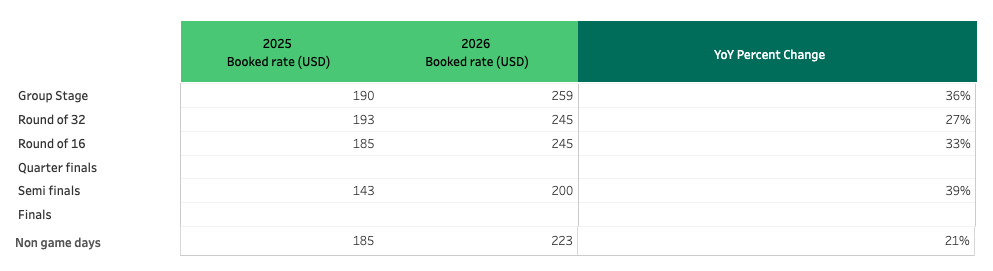
Fort Worth submarket hosts, which included those in Arlington proper, were able to charge premiums averaging 36% during the group stage, 27% during the Round of 32, and 33% during the Round of 16. The biggest jump came during the semifinals, when average booked rates rose 39% year-over-year. Non-game days saw rates increase 21%.
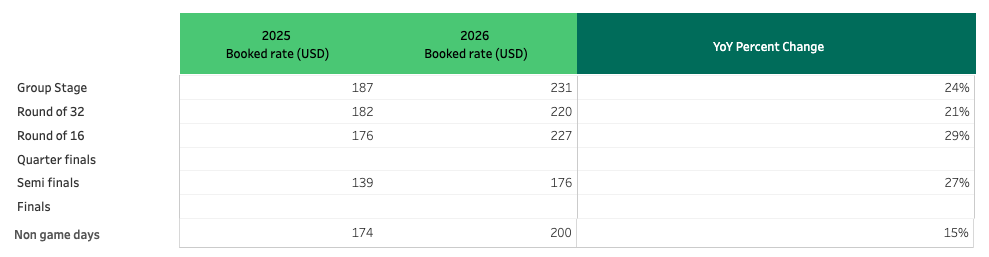
The Dallas submarket saw a similar pricing bump, though not quite as pronounced as Fort Worth. AirDNA data shows booked nightly rates increased 24% during the group stage, 21% during the Round of 32, 29% during the Round of 16, and 27% during the semifinals. Non-game day rates came in 15% higher.
In the lead up to the World Cup, local officials across the Metroplex were getting worried that economic impact expectations were going to fall short. FIFA even started canceling blocks of reserved hotel rooms. Some STR operators we spoke to in the Dallas market were also starting to sweat, with an anticipated flood of bookings never quite materializing for individual operators.
Officials and industry analysts are still working to measure the actual spend that took place, but on the STR front, there appears to be a simple supply-demand explanation. Unlike traditional hospitality, which can’t just throw up a hotel to try to capture increased traffic for a single month, most anyone can open up their home to paying visitors (unless their city has an active STR ban).
Last November, the Dallas Short-Term Rental Alliance hosted classes for would-be STR operators on how to go about listing their home on a platform like Airbnb.
“Available listings in Dallas increased about 25% year-over-year, which is pretty significant,” Rollins said. “The demand was definitely there, and the rate growth was definitely there. It’s just because there was some supply growth as well, not everybody got to see this huge surge in occupancy that they might have hoped for.”
Demand in D-FW rose by 19% on game days and game day eves and 8% on other days in the tournament window. As expected, international travelers made up a good chunk of that. Using guest-origin data derived from Airbnb reviews, AirDNA estimated international visitors accounted for roughly 24% of local demand during the tournament. During the same period last year, international guests represented only about 7% of demand. Argentinian and Japanese guests, in particular, saw elevated bookings in the Metroplex.
As far as big standouts go, the Argentina v. Jordan matchup in the Group Stage on June 27 saw blockbuster occupancy that night, clocking an 81% rate. The night before the June 14 game between Japan and the Netherlands yielded a similar occupancy rate.
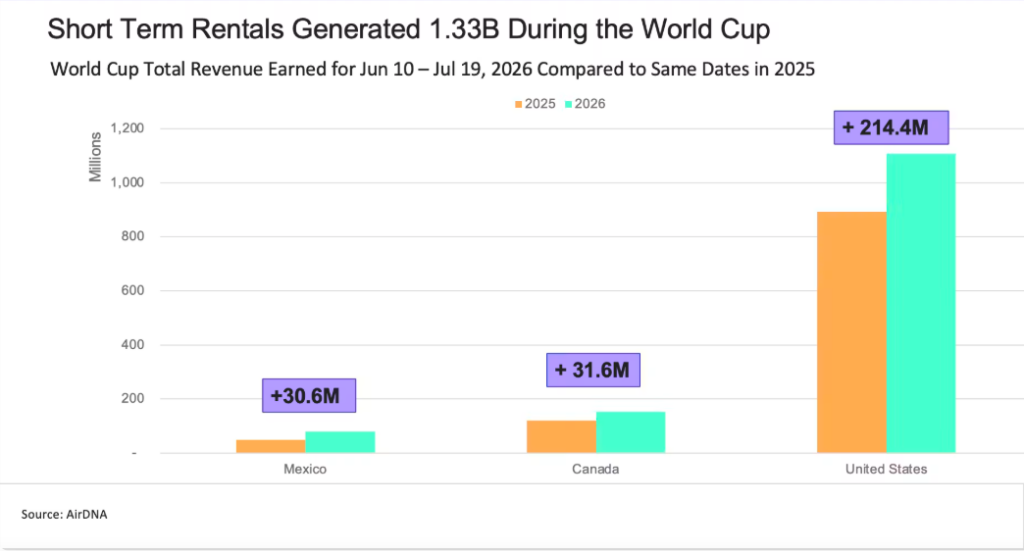
Nationally, STRs in the United States generated an additional $214.4 million in revenue compared to the same period last year. Canada saw an additional $31.6 million, and Mexico clocked $30.6 million, according to AirDNA data.