
Dallas Budget Crunch Brings Furloughs, Fresh Debate at City Hall
Share News:

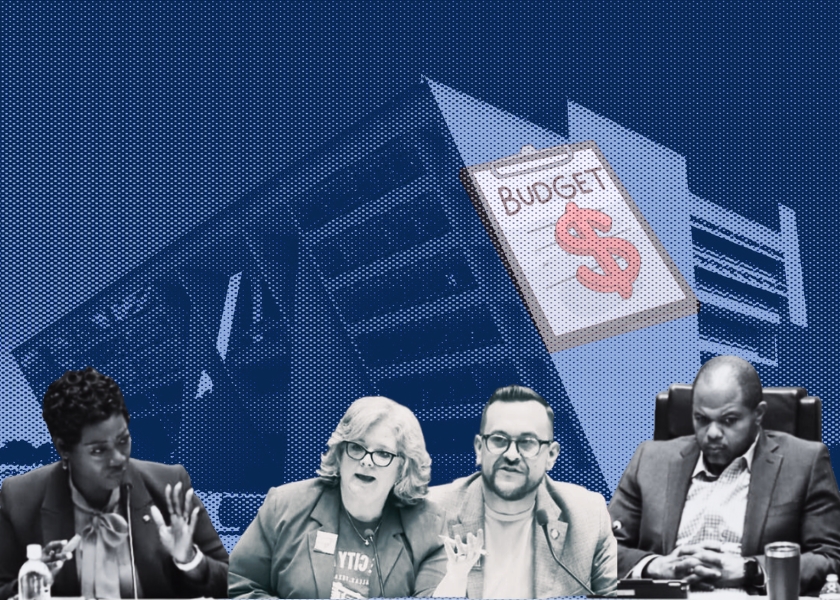
Non-uniform city workers in Dallas are about to get some unexpected time off, and it’s ruffling some feathers on the city council. Dallas employees will soon begin taking unpaid furlough days as City Manager Kimberly Tolbert moves to offset the year’s roughly $30 million budget shortfall.
Under the plan announced last week, General Fund employees will take three unpaid furlough days on July 10, September 4, and September 28. The days will be recorded as leave without pay, and employees will not be permitted to substitute vacation, sick leave, or compensatory time.
General Fund and Internal Service Fund staff with positions of assistant director or above will also have to take two additional floating furlough days before September 16.
“Furloughs are not our preferred solution; however, they enable us to reduce expenses, protect jobs and employee health benefits, and continue delivering services to our residents,” Tolbert said in a press release on Tuesday. “These steps are necessary to navigate the current financial challenges and to position the City responsibly for the upcoming FY27 and FY28 biennial budget.”
The move follows the implementation of other emergency spending measures back in April, when Tolbert deployed selective non-uniform hiring freezes, the suspension of non-essential travel and purchases, and non-uniform overtime restrictions.
Mayor Eric Johnson said the furloughs reflect the city’s weaker-than-expected revenue situation and underscore the need for broader spending reforms. He renewed his call for significant spending cuts, arguing the city “cannot afford to maintain the status quo.”
“Dallas deserves a city government that delivers core services effectively, efficiently, and affordably,” the mayor said in a statement. “The City cannot do everything, and we must prioritize spending that has the most meaningful impact. Our partners in government and the private and not-for-profit sectors must also bear more of the burden that currently falls on Dallas taxpayers alone.”
News of the furloughs was not well received by some council members, who claimed they were taken off guard by the announcement despite being familiar with the city’s financial predicament.
Council Member Adam Bazaldua (District 7) criticized Tolbert for deciding on furloughs without consulting the city council. Out of town on vacation himself, he argued discussions should’ve happened despite the summer break.
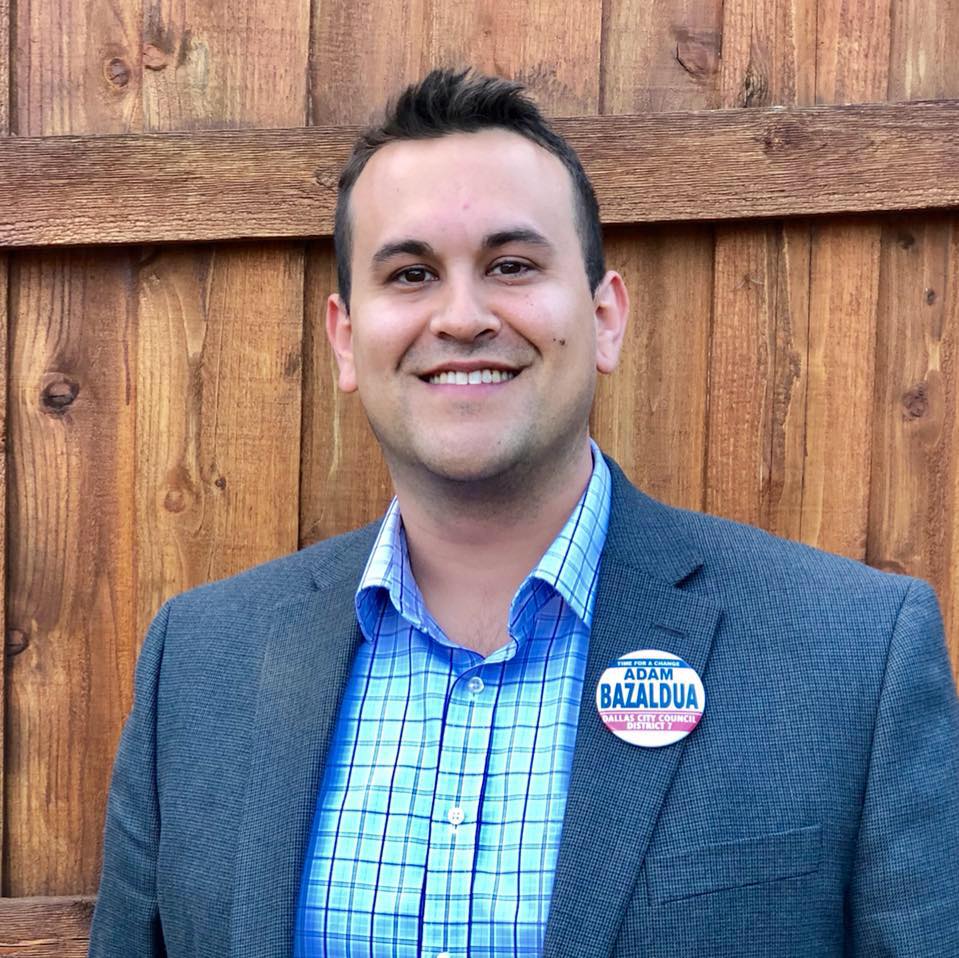
“I’m grateful that this approach keeps employee benefits active with minimal impact to resident services, but it’s incredibly disappointing to find out this information via correspondence intended for the media, instead of a one-to-one conversations, so that council feedback could be factored into this decision,” he said in a statement. “Oftentimes, council conversations are the only way the resident’s perspective gets factored into executive decisions — this is not a detail we should gloss over.”
Council Member Cara Mendelsohn (District 12) similarly said she was blindsided by the furlough announcement, claiming there had been no mention of furloughs in any recent city memos or the city council’s June 17 budget workshop presentation for FY 2026-2027.
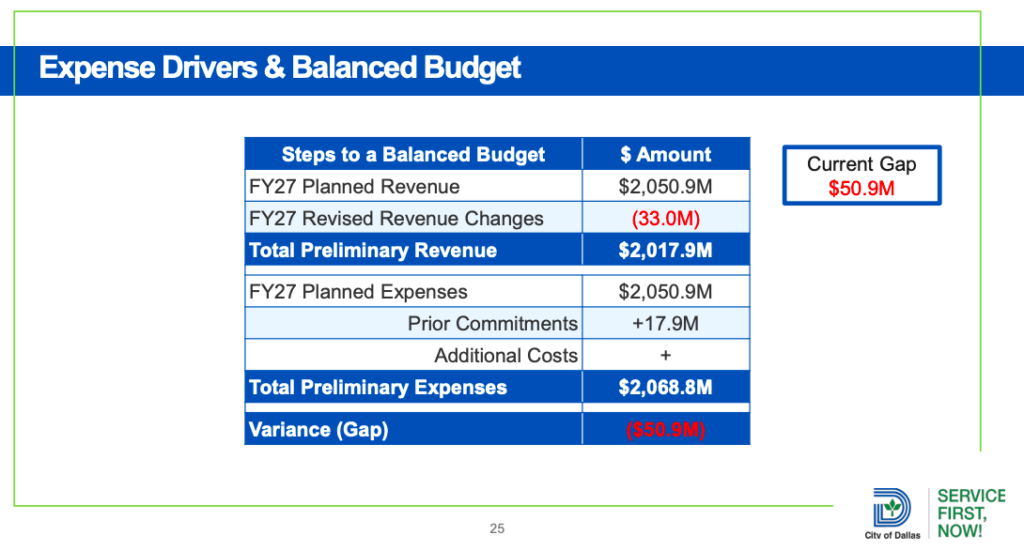
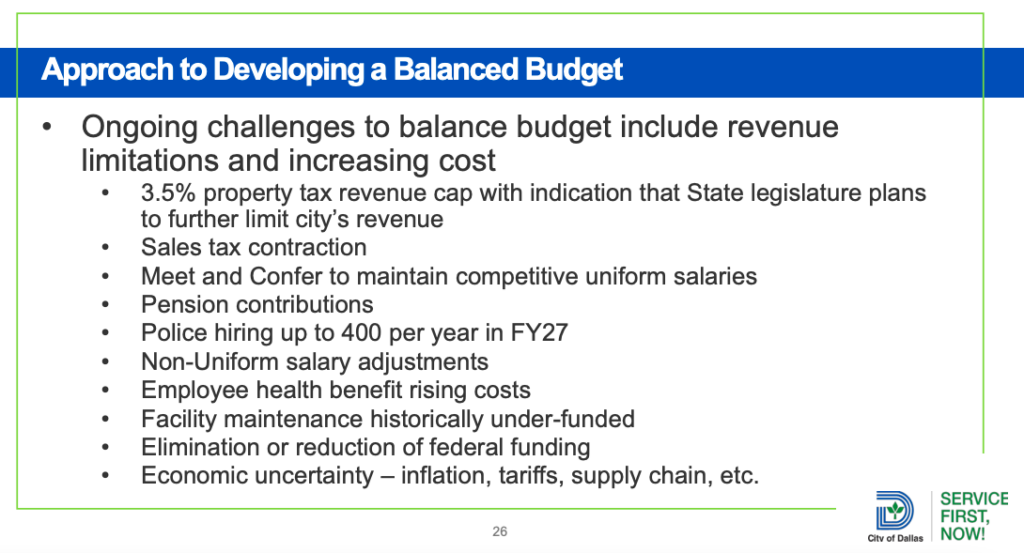
The planned furloughs were implemented to deal with a gap that has emerged between revenue and spending this fiscal year (FY 2025-2026). Sales tax collections have so far been unreliable, and unexpected spikes in city worker health claims and public safety overtime have thrown a wrench in the works. Meanwhile, officials need to grapple with a projected $50.9 million shortfall for FY 2026-2027.
While the June 17 presentation was published online, the budget meeting itself did not occur because the city council couldn’t make a quorum. The missed workshop became noticed after reports surfaced that some council members and staff attended the England vs. Croatia match at AT&T Stadium while the meeting was supposed to be underway.
Mendelsohn suggested the city should embrace mass layoffs to sort out its fiscal situation.
“Instead of looking at short-term solutions like a furlough, I’d like to see departments that have grown tremendously over the last several years, like HR, data analytics, city attorney’s office, mayor and city council office, return to the staffing levels of 2017,” she said in a statement to WFAA. “Additionally we should be look at scaling back the number of boards and commissions, reduce the civilian pension COLA and require a full return to office for all employees.”
For her part, Council Member Gay Donnell Willis (District 13) told the outlet she would like to see officials focus on how to grow the city’s tax base.
“I’m a little tired of the cut mentality,” she said, per WFAA.
While the number of employees the furloughs will affect is in the thousands, police officers, firefighters, paramedics, and 911 personnel are exempt, as are employees in enterprise-funded departments such as Dallas Water Utilities, Aviation, Convention & Event Services, and Sanitation. Some Fleet Services and Information Technology Services employees will also be exempt based on operational needs.
Tolbert didn’t preclude further measures to address the current fiscal year’s budget gap.
As for FY 2026-2027, the next update to expect is on the property tax front. Appraisal districts will provide their certified values after protests to the city on July 25. The next budget meeting won’t happen until August 11, though, when Tolbert will present council members with a recommended budget. Town hall meetings will follow.
The city council will vote to adopt a property tax rate and final budget on September 16.