
Dallas City Hall Lands on Texas’ Most Endangered Places List
Share News:

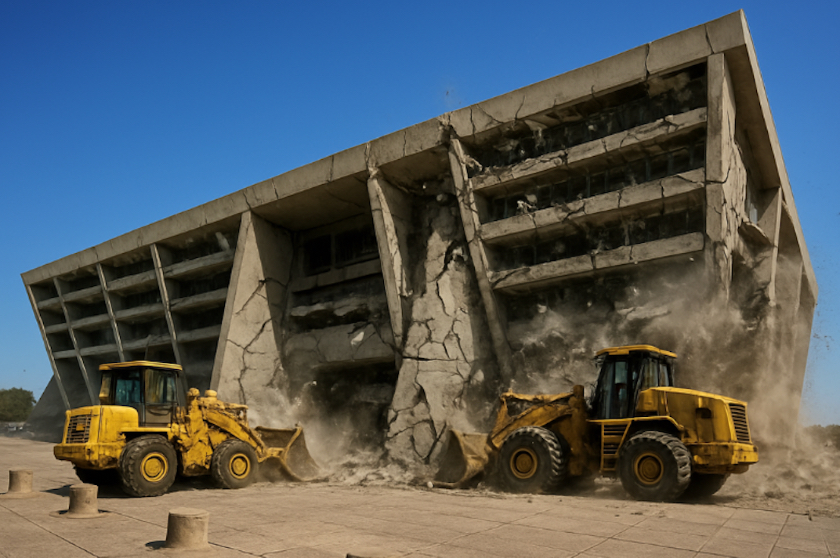
Dallas City Hall has landed on Preservation Texas’ 2026 list of Texas’ Most Endangered Places, adding statewide attention to the ongoing fight over the iconic downtown building’s fate.
The nonprofit, which advocates for the preservation of historic and cultural landmarks across the state, announced Tuesday that the civic building designed by renowned architect I.M. Pei was among six sites selected for this year’s endangered list. Preservation Texas said the designation is intended to raise awareness and mobilize support for threatened historic places.
“Brutalist-style buildings of this era are especially threatened, and each demolition further erases a chapter of Texas’ architectural and civic legacy,” said Evan Thompson, executive director of Preservation Texas, according to a press release. “Despite deferred maintenance, the structure remains seemingly sound and capable of continued use.”
Everyone appears to be on the same page as far as the structural integrity of 1500 Marilla St., though significant disagreement remains over how much it might cost to rehabilitate the building. And some of those advocating for a relocation of City Hall operations argue the site needs to be redeveloped to jumpstart revitalization in downtown’s southern sector.
Adding to the stakes is the question of where the Dallas Mavericks will build their new arena. It’s all but confirmed that the franchise would prefer 1500 Marilla St. and its surrounding acreage if it’s going to stay within the city limits, though the former Valley View Center in North Dallas was previously floated as being on the shortlist.
Dallas City Council voted to explore City Hall relocation options while also requesting a more detailed analysis of repair costs and long-term building needs. Next Wednesday, the city will present 10-year phased repair estimates as a potential alternative to the $1 billion accelerated repair program presented by staff earlier this year.
Completed in 1978, Dallas City Hall is widely considered one of the nation’s more recognizable examples of Brutalist civic architecture. The structure’s sloped façade and expansive public plaza were designed to be part of a broader effort to redefine Dallas’ identity in the years following the assassination of President John F. Kennedy. Preservation Texas highlighted the site’s role in hosting public meetings, demonstrations, and community events over the last nearly five decades.
Dallas City Hall joins five other locations on the 2026 endangered list, including Houston’s Garden Oaks Theatre, Austin’s Barton Springs Bridge, and the Old English Field Terminal in Amarillo.