
City Hall Roundup: Comerica Tower, Code Crackdown, Park Cuts
Share News:

The grills are heating up, inboxes are getting ignored, and somewhere inside Dallas City Hall, there’s probably a memo floating around that’s going to stir up all kinds of feelings come Tuesday.
Until then, enjoy your Memorial Day weekend! But if you’ve got a second, catch up on some of the headlines making waves in the Big D.
Fifth Third Bank Joins AT&T in Leaving Downtown
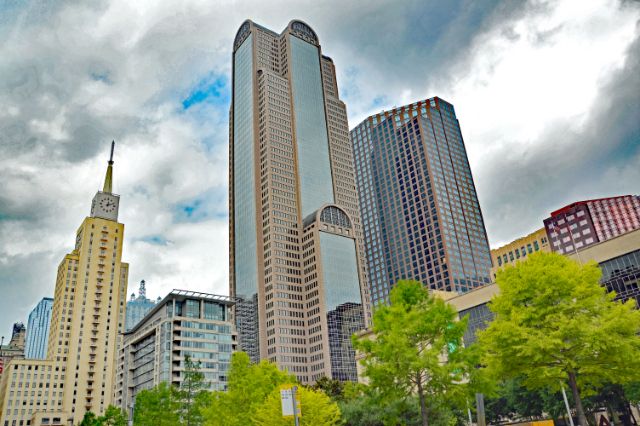
Downtown Dallas clocked another high-profile corporate departure this past week, with Fifth Third Bank announcing its plans to leave Comerica Tower and set up regional operations in Preston Center.
The Ohio-based bank confirmed on Tuesday that it plans to vacate the 60-story Comerica Bank Tower within 90 days and eventually move regional operations to a new building at 8300 Douglas Ave. A move-in date is expected in 2028.
The move follows Fifth Third’s nearly $11 billion acquisition of Comerica earlier this year, a merger that created the nation’s ninth-largest bank by assets. The bank said it will occupy approximately 63,000 square feet in the new Preston Center office development — significantly less than the 200,000 it had at Comerica Bank Tower.
Another big-ticket departure like this adds to growing concern about downtown Dallas’ office market after other major corporate moves, including AT&T’s planned relocation to Plano. Downtown vacancy has hovered near 30%, prompting increasing discussion among civic and real estate leaders about converting older office towers into residential or mixed-use projects.
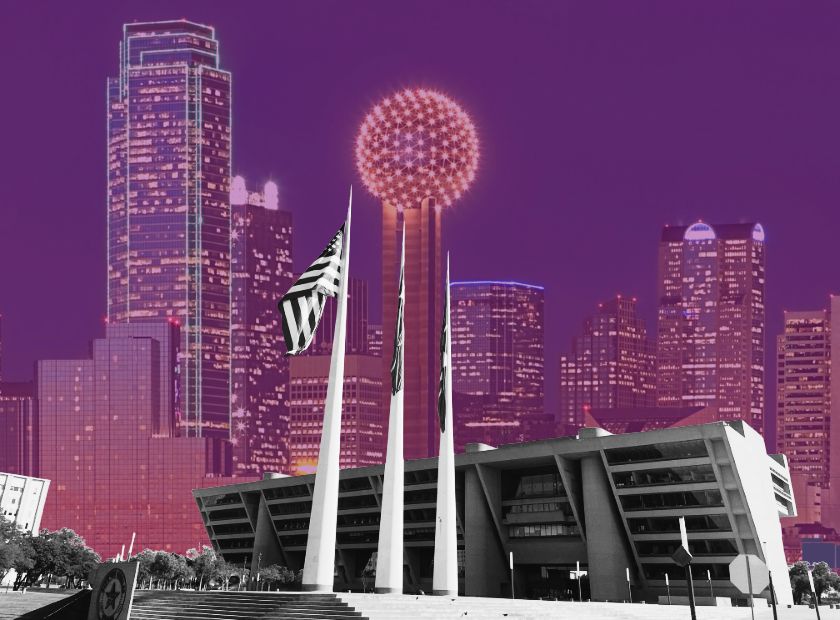
The news also comes as debates around the future of City Hall are increasingly framed around the trajectory of the central business district and whether it’s in need of some serious revitalization. Whether that be a new entertainment district or more conversions of cubicles into condos, the city center seems to be at an inflection point. Meanwhile, flight-to-quality continues to animate the office sector.
Committee Recommends New Code Compliance Ordinances Targeting ‘Outdoor Displays’ and Unlawful ‘Event Venues’
The Quality of Life, Arts & Culture Committee recommended beefing up code compliance on Monday with two proposed ordinances aimed at checking problematic properties.
One would expand the city’s definition of a “special event” requiring permitting to include temporary outdoor displays or exhibitions that create traffic conditions requiring emergency traffic regulation. Special events are defined as “a temporary outdoor gathering, with an expected total attendance greater than 100,” that involve an additional code trigger like restricting access to public property or installation of a temporary stage. If approved, outdoor displays will be added as a trigger, making the special event organizer financially responsible for related public safety resources and subject to a $500 fine if the event is unpermitted.
The proposal follows months of wrangling over how to deal with alleged nuisance properties — namely the Preston Hollow home on DeLoache Avenue that has become well known for its elaborate holiday light displays. Supporters of the measure argue it’s meant to shift the costs associated with traffic management and crowd-control situations tied to large gatherings away from taxpayers and onto the people putting on the special event.
Critics say the ordinance could run afoul of First Amendment protections and invite lawsuits from free speech advocates and religious communities.
Another proposed ordinance the full city council will have to consider would create a new land-use category — “event venue” — to better regulate commercial gathering spaces and “help Code Compliance officers cite properties that are not intended or permitted for holding frequent gatherings.”
The new designation would apply to facilities rented for receptions, parties, banquets, fundraisers, and similar private gatherings. Event venues would be prohibited from operating in residential zoned districts, required to meet parking and loading standards, and restricted from charging door-entry fees in most cases. Noise limits and outdoor-space restrictions would also apply to venues located near residential or mixed-use properties.
The ordinance would also expand Dallas’ Habitual Nuisance Property program to include illegal land use and operating without a certificate of occupancy, giving the city additional enforcement tools against problematic properties.
Dallas Park Board Grapples With Scale of Potential Cuts
Park officials are in a real bind this summer amid a push by the city to reduce Dallas Park & Recreation’s budget by 15%.
Briefing the department’s board, staff outlined potentially eliminating 20 vacant positions at DPR, closing four of the city’s smaller community recreation centers, reducing operation hours at other facilities, scaling back after-school programs and summer camps, privatizing city-owned golf courses and the skating rink, and mowing parks less frequently. Officials said they were also considering outsourcing some security functions to private contractors, citing the high costs of Dallas Police Department overtime.
“I don’t have a lot of efficiencies that I can find anymore,” said DPR Director John Jenkins. “I’ve got to stress that to the public, and I’ve got to stress that to the board, cause I’ve been reducing staff levels, I’ve been eliminating vacant positions over the last three years. … I don’t want anyone to have the false assumption that I’m able to find you $15 million, $14 million in cuts without service-level cuts.”
Unreliable (and shrinking) sales tax revenues and much greater commitments to public safety spending have put staff in a tough spot this budget season, with City Manager Kimberly Tolbert calling for some across-the-board shared sacrifice — excluding police. For DPR, that comes down to around $13.1 million.
Rudy Karimi, DPR board member for District 14, said the dollar figure doesn’t capture the reality of what the public is being asked to bear.

“Reducing aquatic centers from six days a week to four days a week, that’s a 33% reduction in access to those facilities… DISD programming, if we go to Tuesdays and Thursdays — and we’re currently [Monday through Friday], that is a 60% reduction in programming… Bachman indoor pool, a reduction from 55 hours to 40 hours a week is a 27% reduction in those hours… Closing four facilities, that is not a partial reduction, this is a 100% elimination of services at those locations,” Karimi said.
The four recreation centers being floated for closure include Arcadia, Umphress, Teen Tech, and Marcus Annex Senior Center. Park board members expressed concern that reductions to neighborhood recreation services could have ripple effects beyond the department itself, particularly in communities that rely on rec centers and youth programs as affordable gathering spaces and childcare alternatives.
Staff emphasized that the recommendations are still preliminary and part of a broader budget discussion that will continue through the summer before the city council adopts a final spending plan later this year. Parks officials said they are attempting to preserve core services while restructuring operations to deal with the city’s fiscal challenges. Part of that means seeking additional revenue sources. One of the ideas being discussed now is allowing for billboards to be installed at some of the city’s bigger parks.





I don’t expect y’all to be constitutional law scholars, but citing some hack like Mr. LeVeck regarding the constitutionality of a time, place and manner regulation is like citing Dr. Nick from the simpsons for medical knowledge.