Realtors Who Hold Public Office Share Insights at MetroTex Forum
Share News:

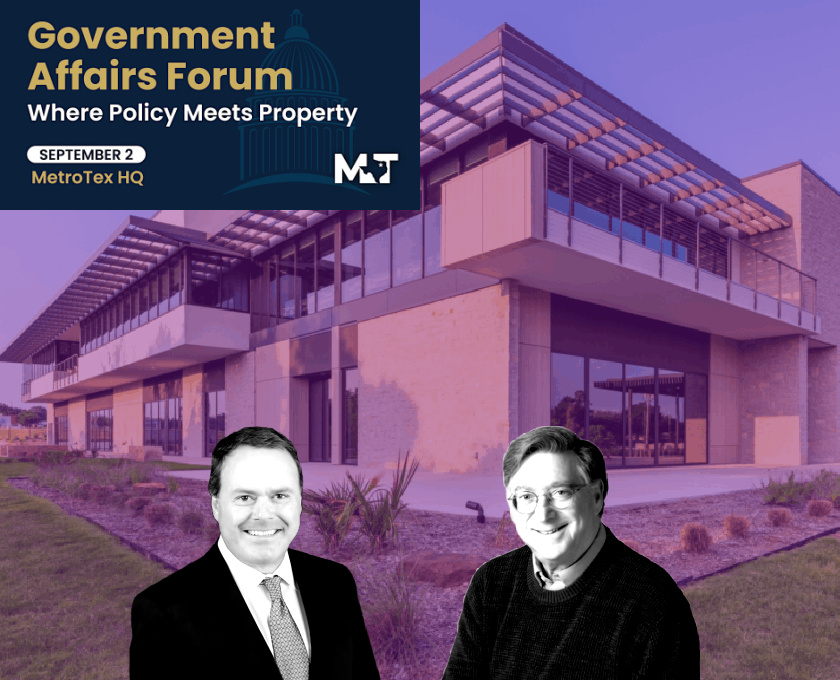
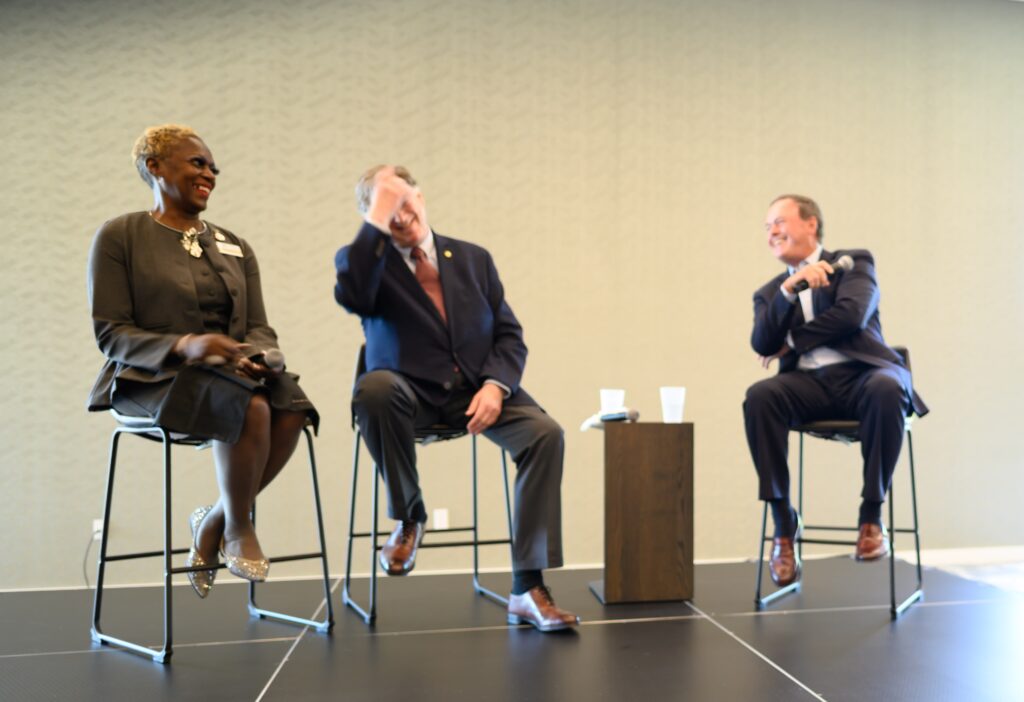
Two contentious local races this spring were shaped by development projects. As luck would have it, the winners in both races were commercial real estate professionals. The pair addressed a crowd of Realtors at the MetroTex Government Affairs Forum on Tuesday, sharing their insights on D-FW market dynamics.

McKinney Mayor Bill Cox was elected to his post after a runoff race that was framed in part by the city’s controversial expansion of the local airport to accommodate commercial travel. Cox is the principal at Carey Cox | A Real Estate Company, a CRE firm based in Collin County.

Also present at Tuesday’s event was Bill Roth, a member of the Dallas City Council. An owner of a CRE company himself, Roth came to local prominence during the zoning fight over Pepper Square in North Dallas.
SB 840 Still Looms Large
The conversation was pretty wide ranging but grounded in the theme of policy and property. One big topic was the recent enactment of Senate Bill 840, which gives developers the right to build multifamily or heavily residential mixed-use on land already zoned for commercial use.
Panelists and attendees acknowledged that SB 840 could encourage adaptive reuse of vacant or underperforming shopping centers and office buildings, potentially easing pressure in a tight housing market. However, the loss of local control over such projects has raised concerns.
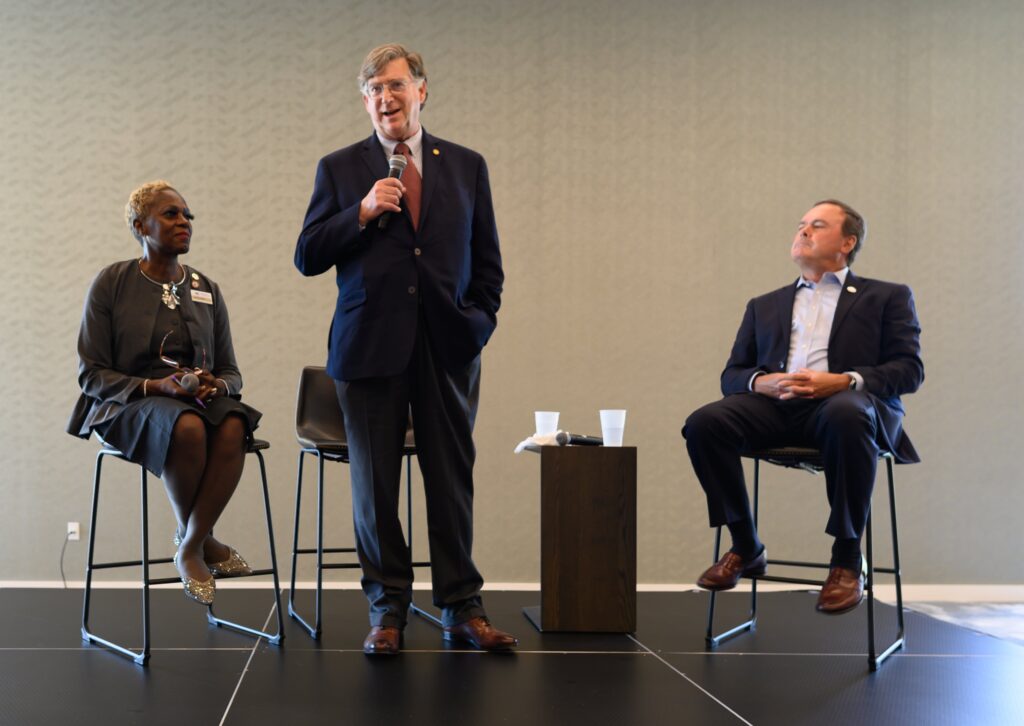
“The state has taken away the right of a city to make decisions on that kind of land use, and that doesn’t seem right to me,” Roth said. “We’re the city, we’re representing the people of the city. Why is the state telling us what we can do with our zoning and our land use without our input?”
Cox was more measured in his assessment, saying that officials were working on a map to identify which lots could be put into play by SB 840.
“It’s too early. If someone says it’s a wonderful thing, they don’t know that. If someone says it’s bad, they don’t know that,” he said. “Now, Dallas, totally different. Their situation is not what McKinney’s is or Collin County’s.”
Cox acknowledged that changes in state law have empowered property owners at the expense of local government.
Some attendees raised concerns that rather than leading to more affordable housing through adaptive reuse, SB 840 could accelerate gentrification by allowing developers to tear down existing structures and replace them with high-end residential projects because it does not require units to be affordable.
Are There Actually Affordability Solutions?
On the subject of affordability, there was acknowledgement of the constellation of forces facing families who want to enter the housing market.
“It’s a combination of land costs, construction costs, and something called interest rates,” said Cox. “Some of us in the room were around when rates were 18-21%, and then we also got to see 2, 3, 3.5, 4% interest rates. Those days aren’t coming back.”
Freddie Mac currently has the 30-year mortgage at 6.56%.
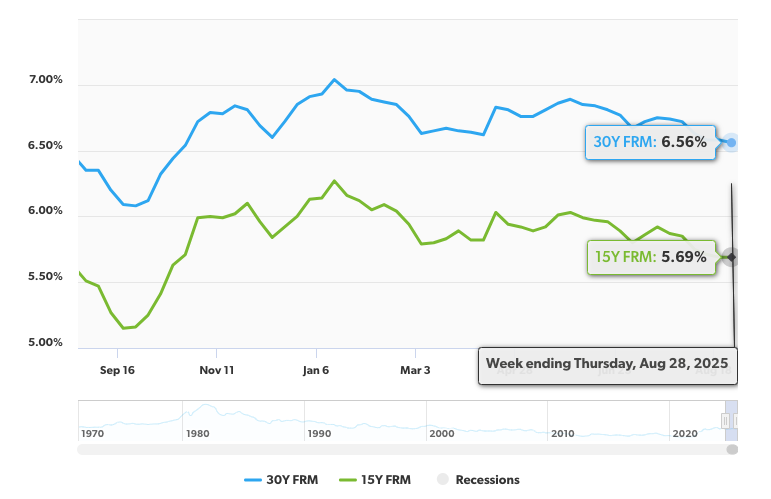
One attendee raised the issue of swelling home valuations, pointing out that even if interest rates did creep down a couple points, many Americans will remain priced out of the market.
“When it comes to affordable homeownership, I just want people to start being realistic,” she said. “Lower rates are not going to help the average family that’s still making the same money they were making 10-plus years ago.”
Cox and Roth said that multiple strategies could be taken to mitigate the situation, from tax credit programs and housing finance bonds to encouraging builders to target lower-priced land. Southern Dallas was highlighted as an area with significant potential with regard to the latter, but developers purportedly cite friction in the City of Dallas approval process as a reason they avoid the area.
“We’ve got the ability to encourage homeownership and home development in parts of the city that could make it less costly,” Roth said.
Getting Involved
The forum wound down with a call to action for real estate professionals to get involved in local politics. Earlier in the event, Roth analogized the City of Dallas to a $5.2 billion company, likening residents to the owners, the city council to a board of directors, and the city manager as CEO.
While Cox and Roth noted that public office (especially running for it) can be a tough and costly endeavor and isn’t for everyone, they pointed to other opportunities for public service.
“I have the ability to appoint people to commissions and boards in the city, and Bill does too,” Roth said. “We also have the influence to be able to populate internal staffing structures with volunteers, and we’re in that process now of taking applications for people who want to serve.”
Cox added: “There are people in this room that were boots on the ground in our campaign, especially during the runoff and the early voting, boots on the ground, not just writing checks, but boots on the ground. So it does work. Get involved.”