Dallas Single-Family Rents Keep Falling as Rental Market Softens
Share News:

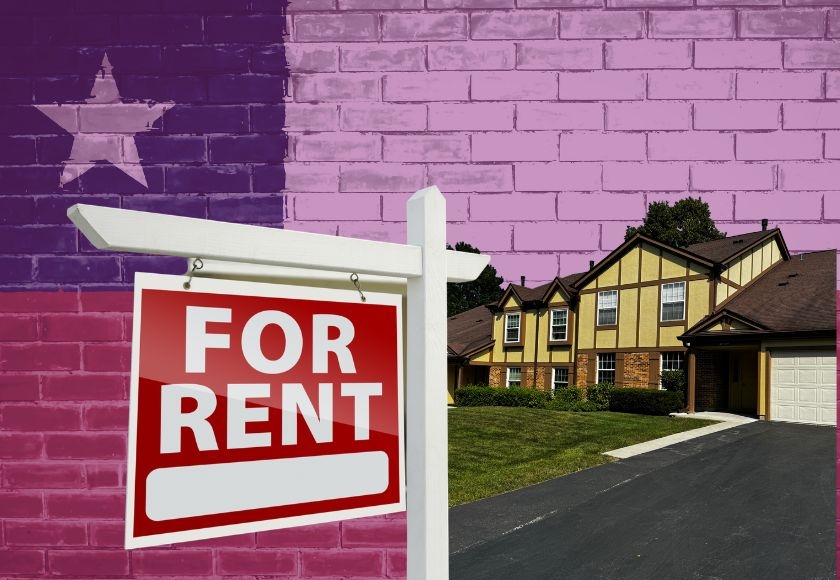
Dallas renters looking for a house instead of an apartment are continuing to gain some leverage over landlords, with asking rents falling for a third consecutive year.
The median asking rent for a three-bedroom single-family home in Dallas fell 2.2% year-over-year to $2,200 during the first half of 2026, according to a new report by Rentometer. More strikingly, Dallas rents are now nearly 12% below where they stood in 2023, no doubt a welcome correction to renters who prefer or need the space the multifamily market doesn’t typically offer.
Other parts of D-FW aren’t cooling near as much. Median asking rents in Plano dipped 0.1% to $2,498 and are essentially unchanged from 2023. Arlington rents fell 0.5% to $2,150, returning to 2024 levels, while Fort Worth slipped 0.1% to $2,072 and is now just slightly below 2024 levels.
It’s quite the turnaround for Dallas. As previously reported by CandysDirt.com, Dallas posted the largest decline among major Texas cities in 2025, when the median asking rent fell 4.4% to $2,295. The latest numbers suggest that wasn’t a one-off correction. Go back a few more years and the contrast is stark. In late 2021, single-family rents in the Dallas-Plano-Irving area jumped 14.8% year-over-year, outpacing an 11.5% national increase.
At the time, analysts warned that record rent growth was steadily eroding affordability, but developers took notice. North Texas welcomed an estimated 5,000 new single-family rental homes in 2022 alone, accounting for roughly 9% of residential construction in the region. Higher mortgage rates and home prices were pushing would-be buyers toward rentals, creating an opening for developers to offer suburban houses with yards and garages without the mortgage.
That pipeline hasn’t disappeared. Dallas ranked No. 2 nationally last year for build-to-rent units in development, and projects continue popping up around the Metroplex. Hines, for example, recently completed the 129-home Meadowlark at Wildflower Ranch in Justin.
All that construction is now competing for tenants alongside traditional rental houses, apartments offering concessions, and homes placed on the rental market by owners who have been reluctant or unable to sell.
“These ‘accidental landlords’ have added to the supply of available single-family rentals, particularly in softer housing markets, providing renters with more options and contributing to the subdued rent growth observed in many regions,” Rentometer’s analysis reads.
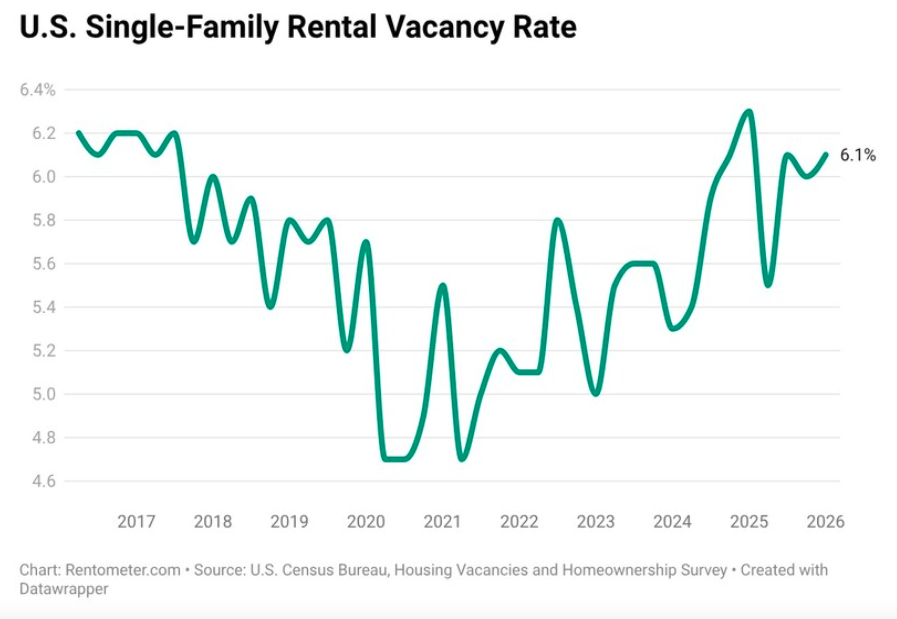
Overall national rental vacancy reached 7.3% during the first quarter of this year, its highest level since 2017, while single-family rental vacancies remained elevated compared with the unusually tight conditions of 2021 through 2023. Nearly 40% of rental listings tracked by Zillow were also offering some form of concession this spring.
Nationwide, the median asking rent for a three-bedroom single-family home declined 1.6% year-over-year to $2,100 during the first half of 2026, reversing a 1.7% increase during the same period last year. Rentometer analyzed advertised rents in 1,099 cities, nearly half of which recorded declines. Among cities with more than 250,000 residents, 67% saw rents fall.
The rental market could be headed for another shakeup in the coming years. The recently enacted 21st Century ROAD to Housing Act places new restrictions on large institutional investors buying existing single-family homes, an issue with particular relevance in Texas. Dallas-Fort Worth ranked among the country’s most investor-active housing markets last year, with investors accounting for 15.6% of home purchases, according to Realtor.com.
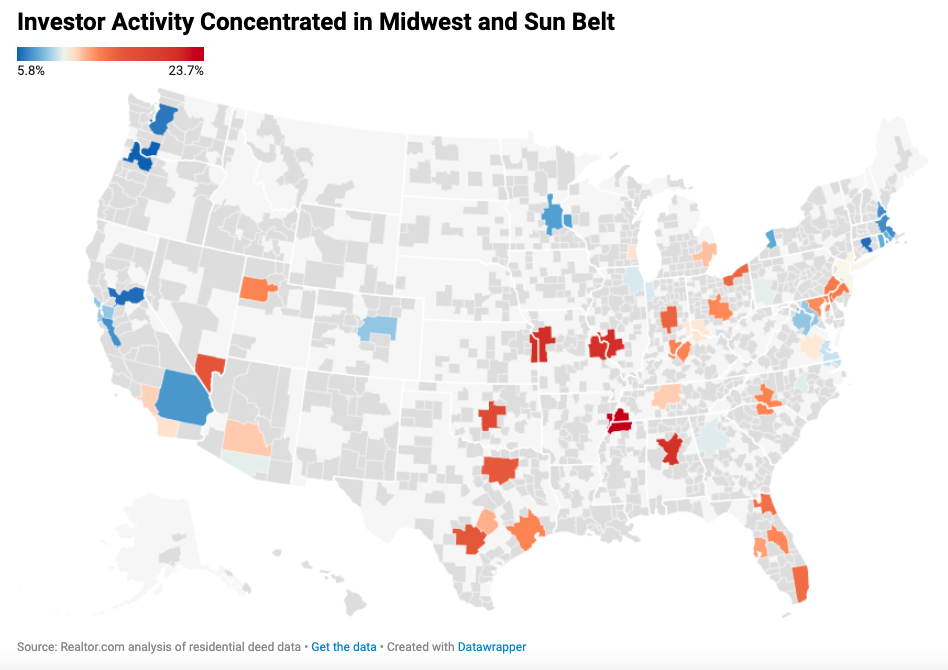
Restricting institutional purchases of existing housing stock could eventually reduce one source of competition for individual homebuyers, but preserving build-to-rent development means companies can still add brand-new rental houses to the market. It’ll take a while to sort out the actual implications for rents.
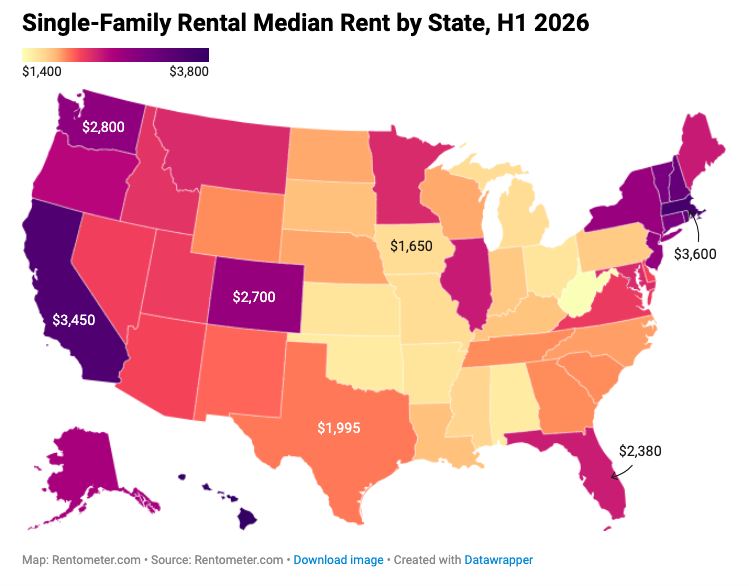
For now, Texas’ single-family rental markets are hardly moving in lockstep. Austin’s median asking rent declined another 0.9% to $2,378 during the first half of the year, marking its fourth consecutive annual decline and putting rents 8.3% below their level four years ago. Houston edged up 1% to $2,000, San Antonio rose 0.3% to $1,730, and El Paso climbed 1.2% to $1,695. Dallas, though, remains firmly on the softer side of the divide.