
Rooted Oak Cliff Neighbors Push for Safer Streets From Speeding Cars
Share News:

Oak Cliff is known for its variety of restaurants, kitschy Bishop Arts District, great street murals, and public art. While diversity is the hallmark of Oak Cliff, what remains consistent is its fiercely engaged residents who are willing to take action to protect one another and improve their neighborhood streets. Now, residents of one multigenerational West Oak Cliff community are organizing to make the streets around Martin Weiss Park safer for pedestrians.
The Rooted Oak Cliff Neighborhood Association was formed in October 2024 after neighbors asked one another if there was interest in creating a neighborhood association. If you’re wondering how the neighborhood chose the name Rooted Oak Cliff, it’s a good story.
“Every time we asked people how long they lived here, they said their roots were here,” association president Andrew Finney said. “This is a multi-generational neighborhood. It’s not uncommon to have a family with four generations living here.”
“Rooted Oak Cliff is not one of those neighborhoods that’s had a lot of turnover,” he continued.
The association co-organized a July Fourth celebration in 2025 that drew more than 200 residents. That’s a heck of a turnout for a first-time event for any neighborhood. Now, the group is turning its attention to a problem with long-term implications: dangerous streets surrounding the neighborhood park.
Rooted Oak Cliff Works Toward Safer Streets
Located in District 1 of West Oak Cliff, neighbors recently met with representatives of the Better Block Foundation, a nonprofit organization that helps communities “reshape and reactivate built environments to promote the growth of healthy and vibrant neighborhoods.” Through its Better Intersections initiative, the organization will test ways to slow traffic and improve pedestrian safety to make safer streets.
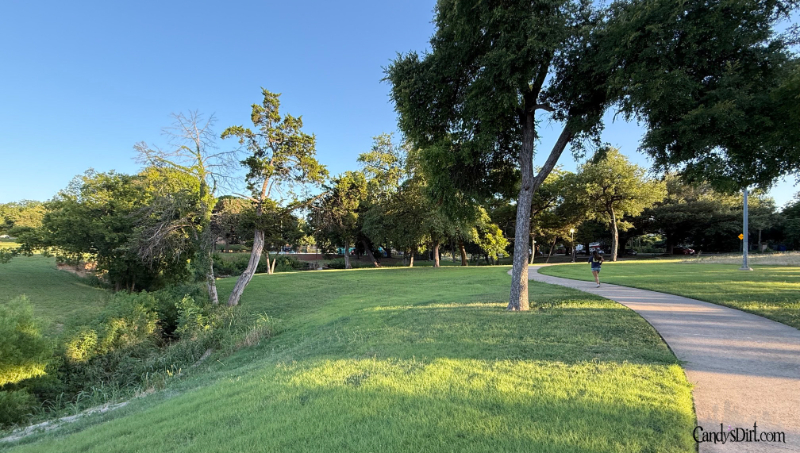
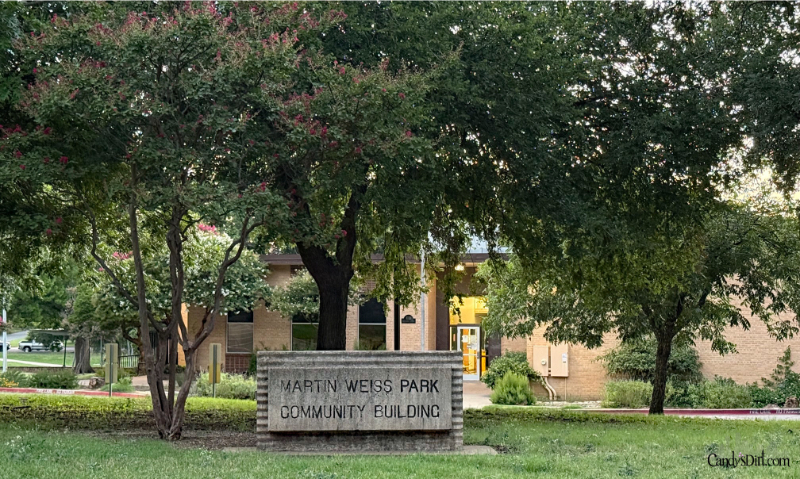
You see, the heart of the Rooted Oak Cliff is Martin Weiss Park on Clarendon Drive. The park has something for every age group: courts for basketball, tennis, and volleyball, a playground, a soccer area, a ballfield, a community pool, and plenty of picnic areas. Around the park is a great walking/jogging path. Famous Tejana star Selena even filmed part of a music video on the pedestrian bridge located inside the park.
Regardless of the time of day, residents are either at the park or walking to or from the park.
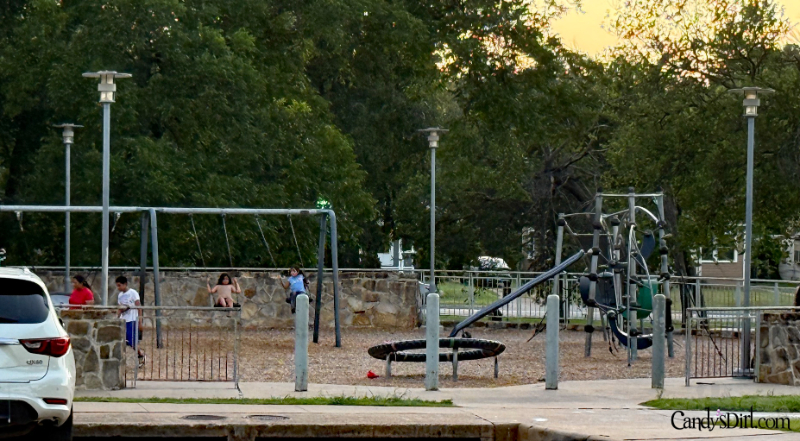
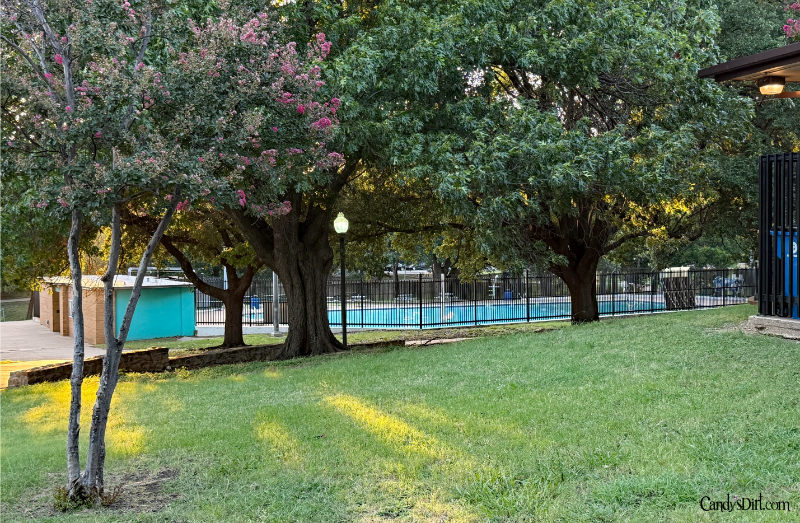
The only issue with Martin Weiss Park is that the roads around the park are some of the most dangerous, Finney said.
“This is not just a traffic problem. This is about protecting pedestrians,” he said.
Drivers speed down Coombs Creek Drive toward Clarendon Drive where the road ends at a T-intersection.
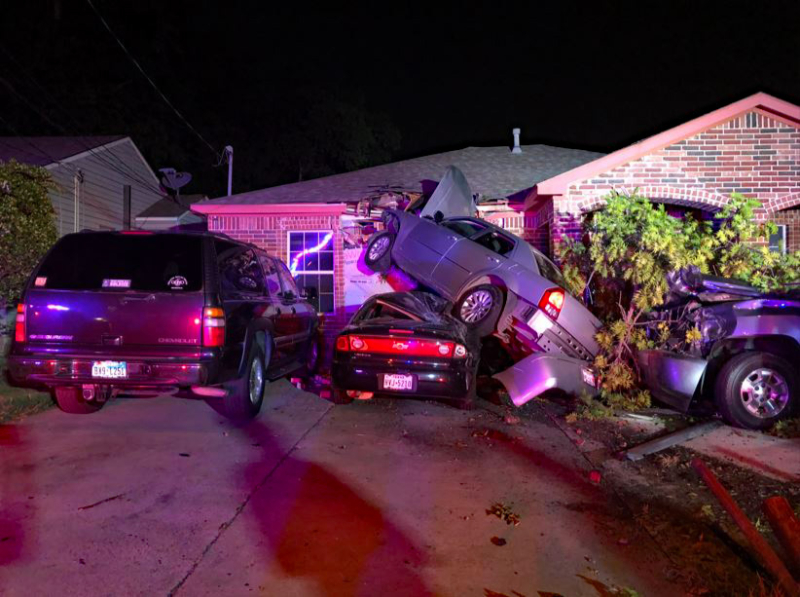
“It’s a speeding corridor next to the park,” Finney said. “There have been dozens of collisions, one with a flipped vehicle. The finish line is a family’s house.”
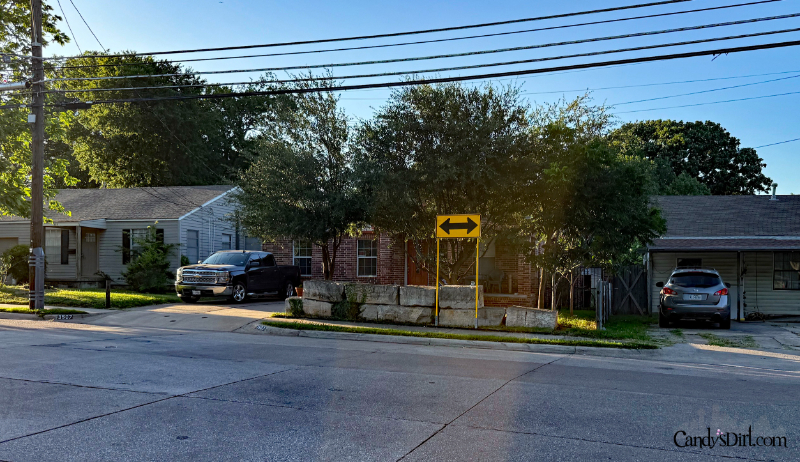
That is not an exaggeration. Mary Ann Hernandez and her husband reared their five children in their home where they have lived for 41 years. Their home is located at the top of that T-intersection. In that time, four vehicles have crashed into the kitchen, laundry room, and the front of their living room.
“I love my house,” Hernandez said.
That love has come at a financial and emotional cost. Hernandez said uninsured drivers that have crashed into her home have led home insurance companies to raise their premiums to extraordinary amounts or simply cancel their policy.
“There’s been a lot of trauma to our children,” she said.
Over the years, Hernandez has asked the city to slow traffic — not just to prevent cars from crashing into her home, but to make the walk to the park safer for everyone. So far, she said, the city’s only response has been a two-way traffic sign.
She hopes the Better Block project will finally give the city the concrete data it needs to consider real change.
Better, Safer Intersections Are the Goal
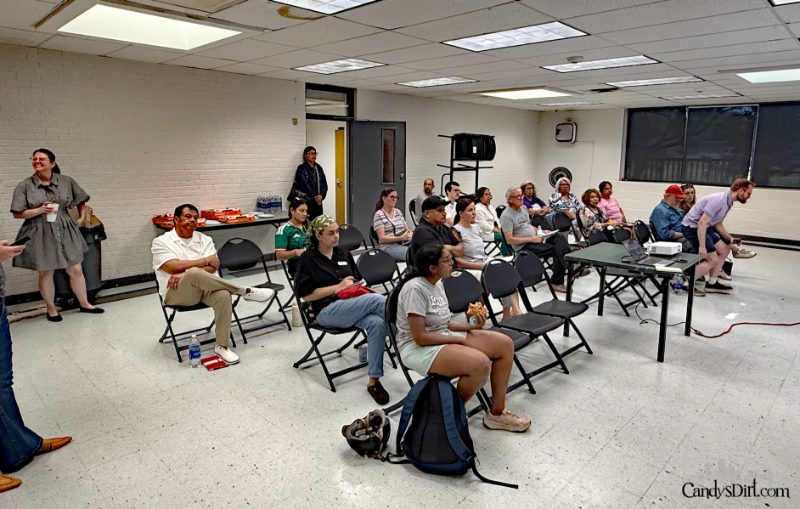
The neighborhood association has been working with the office of District 1 Council Member Chad West to improve the traffic safety around the park. The first step toward solving this problem is bringing in the Better Block Foundation.
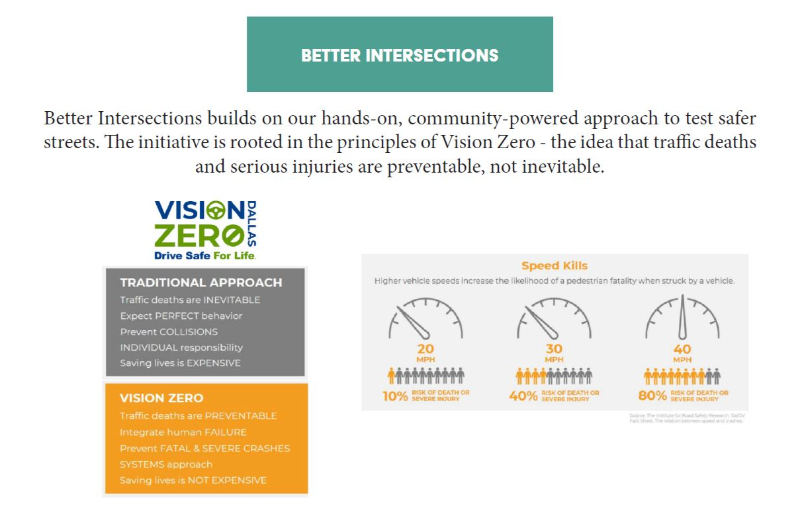
“Better Intersections builds on our hands-on, community-powered approach to test safer streets. The initiative is rooted in the principles of Vision Zero — the idea that traffic deaths and serious injuries are preventable, not inevitable,” said Meredith Jones, project manager with Better Block Foundation.
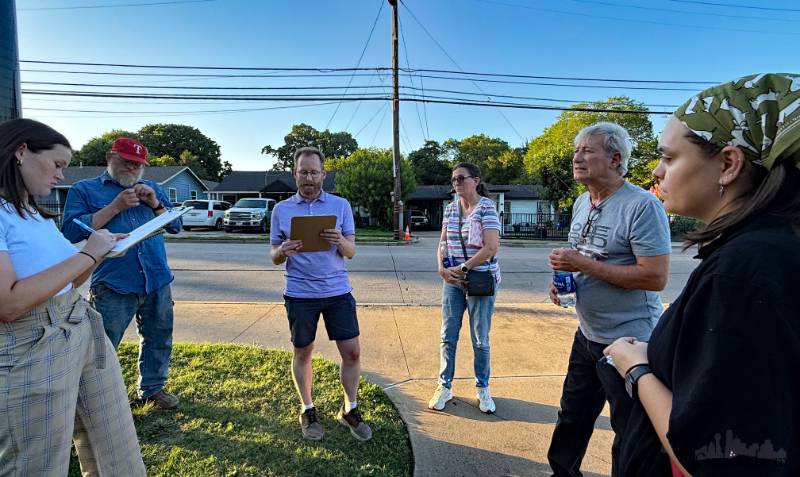
As part of the informational meeting, Better Block took residents on a walking audit and gathered their feedback on missing sidewalks, non-ADA compliant curb cuts, utility poles in the middle of sidewalks that force pedestrians into the street and so on. Jones said her team will start developing interventions and work with traffic engineers and the city transportation department to see what options will work for this area.
The goal is that by mid-to-late August her team will have a quick-build demonstration using lower cost, adjustable materials such as paint, bollards, signage, planters, and curb extensions. Their solutions will be put to the test August through November, by again, listening to the feedback of Rooted Oak Cliff neighbors who use the streets on a daily basis.
By December, the findings will be presented to West’s office and the City of Dallas Transportation department. The findings will help decide what future permanent infrastructure investments and safety improvements will work for Rooted Oak Cliff. In other words, the concerns of the neighborhood are finally being heard and action is taking place.
That’s how the residents that make up Rooted Oak Cliff ensure they will continue to live and thrive for generations to come.

Yea they won’t do anything just like the way they won’t do anything on Jefferson blvd they run this street like a drag strip all day long have called 311 to do a speed check and they have come out and they have gotten a few speeders that day and never come out again scared that one day someone will drive right into my dinning room living room or something worse I have children who play outside
Yup just like at the intersection of Edgefield Avenue and Burlington Blvd. They have set speed traps and they even put down the speed bumps, but unfortunately that still doesn’t stop them. The stops signs are a joke as well as they don’t respect them.
I live on S Llewellyn Ave in a 62+ community brand new place 20 cars broken into or stolen. We have two streets that are for racing, two mustangs intentionally wait until they get to the apartments to rave up there motors all through the night no respect for the elderly music load, guns going off. Fourth of July they got on the side of the apartments by the school and shoot off those cannon sounding fireworks and sparks all over our cars late at night. At the two stop signs a child will be hit or a wreck is going to happen they have no respect for the elderly or children walking if you are outside they will pull up and rage up their motors and laugh
It is refreshing to read about other neighborhoods in Dallas as opposed to the same regurgitated superlatives about Preston Hollow or the Park Cities. It’s past tired. I hope Rooted Oak Cliff gets the relief they need.