Fort Worth’s Most Endangered Properties List Highlights 4 At-Risk Sites
Share News:

Historic Fort Worth, a nonprofit dedicated to preserving Fort Worth’s historic places, announced earlier this week its 2026 Most Endangered Places List, with four sites making this year’s list.
Released each May during National Preservation Month, Historic Fort Worth’s list spotlights buildings, neighborhoods and cultural sites at risk of disappearing. The hope is that public notice of properties facing threats from neglect, redevelopment or funding deficiencies will encourage the community to recognize their value while the properties still can be rescued.

For a historic preservation non-profit, preserving these sites helps protect the city’s story for future generations. Rescuing aging properties is an important pursuit, according to preservation advocates.
“One of the things our historic structure creates is a sense of place to tell the story of Fort Worth,” said Martin Dahl. “We want to preserve those places so that we remain connected to our roots and the history of the city.”
Dahl, a Fort Worth native, is a Historic Fort Worth board member who served on the list’s selection committee. His interest in historic buildings led him to purchase his home in the historic Fairmount-Southside Historic District in 2005. Since then, he has volunteered for various historic preservation projects, including sitting on Historic Fort Worth’s board for eight years, building his interest in preserving Fort Worth’s notable properties.
Building Awareness
Historic Fort Worth leaders hope the list builds awareness for sites to remain part of Tarrant County’s cultural heritage and strengthens support for property owners pursuing preservation solutions.
“You do see out there are sites that need some help and need some attention,” Dahl said. “Hopefully we stir up some interest that something that needs to be bought or sold and taken on as a project for restoration or rehabilitation.”
He points to Fort Worth’s Farrington Field as an example of positive progress. Built in 1939, the sports stadium has served as the home field for both Fort Worth schools’ and Texas Wesleyan University’s football games. Now, its classification as endangered on previous lists has leaders trying to find solutions to upgrading the stadium, he said.
“We want the decision makers aware that there are a lot of people who are interested in historic preservation,” said Dahl.
2026 List
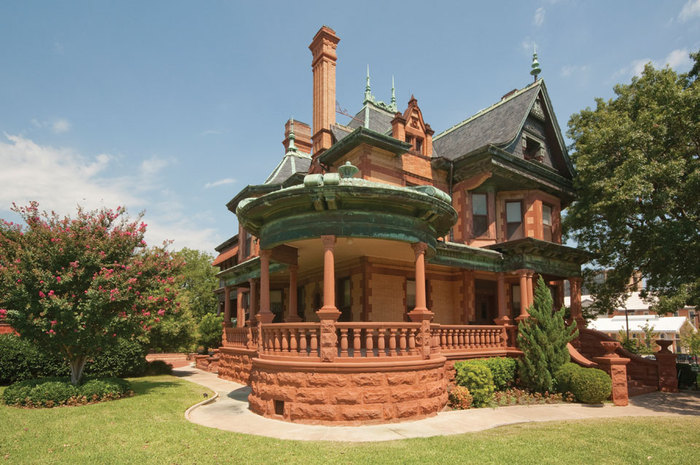
The 2026 list was announced this week at Historic Fort Worth’s headquarters, the Queen Anne-style Ball-Eddleman-McFarland House, which was built in 1899. Following are the four sites named to this year’s list.
Mary Elizabeth Apartments
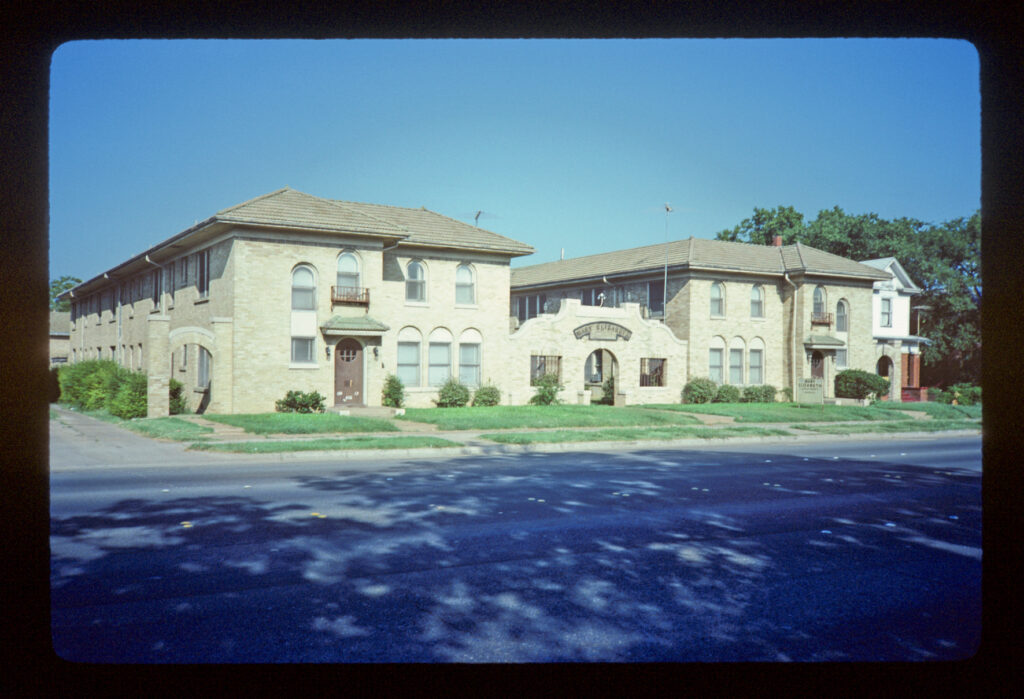
The Mary Elizabeth Apartments, built in 1929 at 2008 Hemphill St., are located within the nationally recognized Fairmount-Southside Historic District. The complex features two mirror‑image yellow‑brick buildings, a common plan found in South Fort Worth in the 1920s. Once noted in the 1986 Southside Historic Resource Survey as excellently maintained, the property has since deteriorated into an uninhabitable state.
Swift Employee Staircase and Victorian-Era Wall
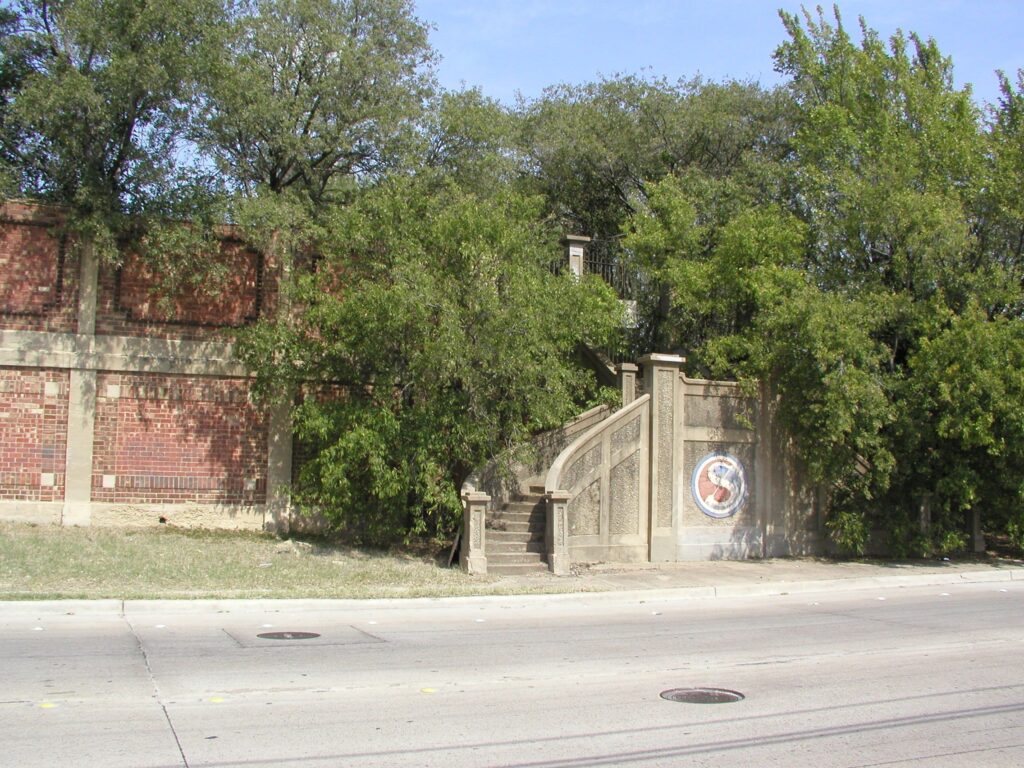
Within a decade of the 1902 opening of the Swift and Armour meatpacking plants, Fort Worth’s population tripled. Built north of downtown Fort Worth through the efforts of Louville Veranus Niles of the Fort Worth Stockyards Co., Swift grew into a 235‑acre operation with 3,000 employees with their own baseball team, bowling league, choral club and newspaper. The Victorian‑era brick wall and the employee staircase at 600 E. Exchange Ave. once marked the company’s boundaries and served as its main entrance. Today, only the administration building, the staircase and fragments of the original walls remain, and all appear increasingly threatened through neglect.
Fort Worth Community Arts Center
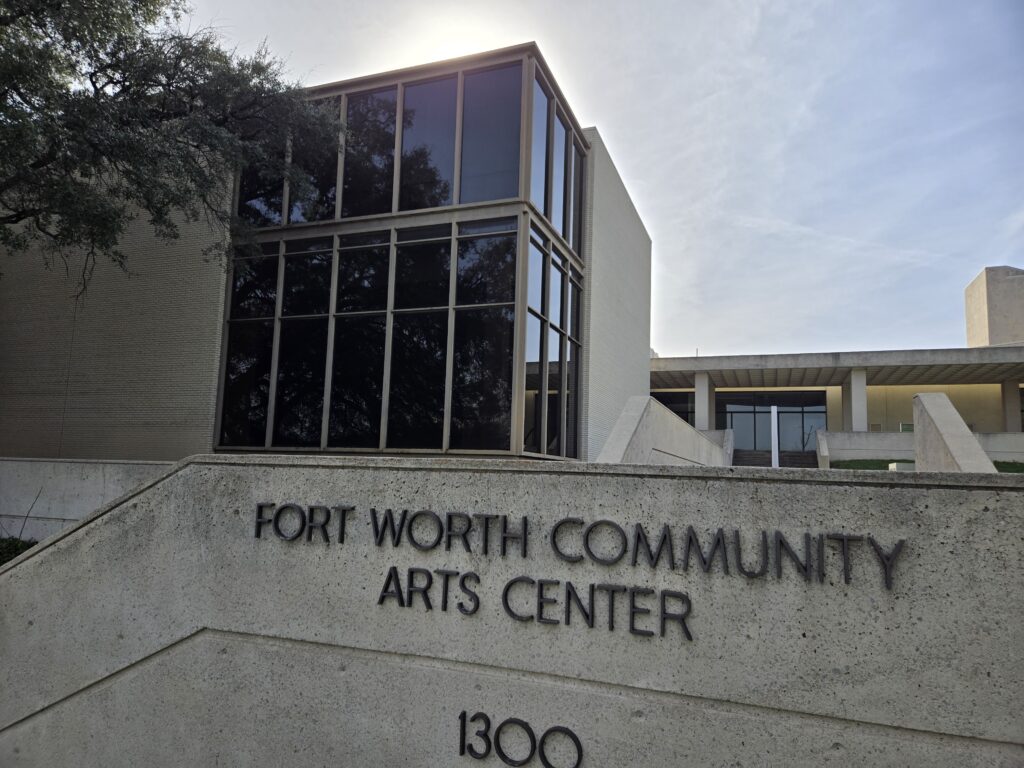
The Fort Worth Community Arts Center was built in 1954 after fundraising that included a party attended by actress Joan Crawford. Additions were made in 1966 and 1974 to the property sitting at 1300 Gendy St., owned by the city of Fort Worth. The structure that has housed the Fort Worth Art Association and The William Edrington Scott Theater, has appeared on Historic Fort Worth’s endangered list in 2012, 2013, 2023 and 2024. The complex later housed the Modern Art Museum and served as a hub for other arts organizations, also. Now deferred maintenance, the area’s paid parking and an unsuccessful public‑private partnership forced tenants out, leaving the building shuttered.
T&P Warehouse
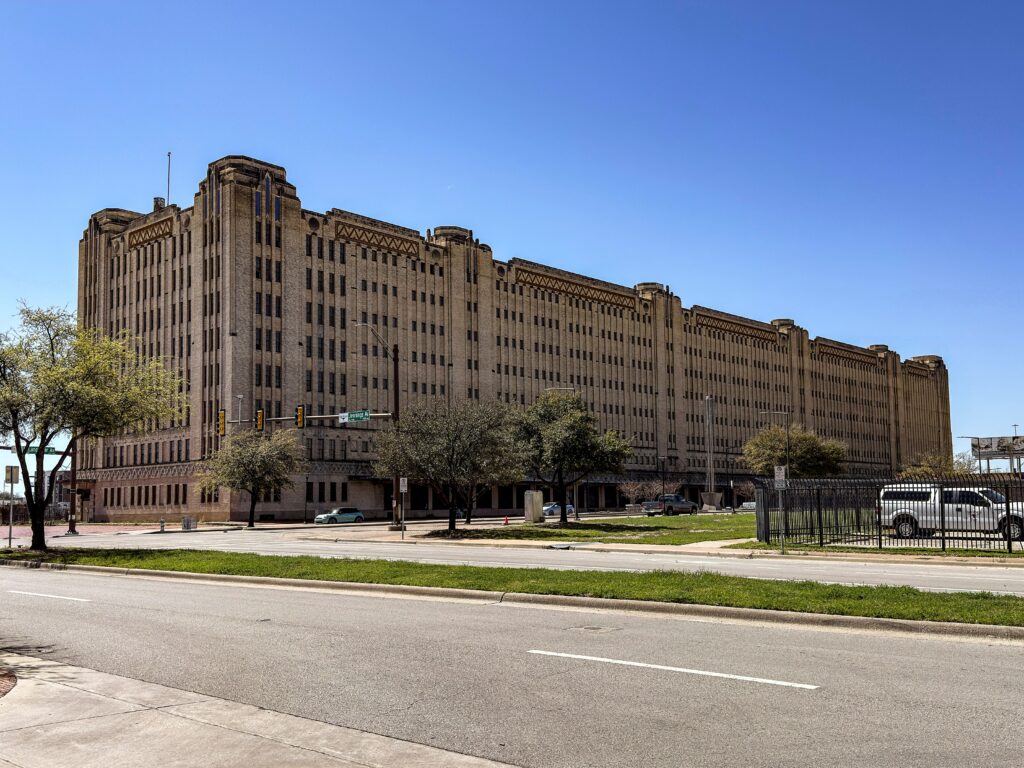
The T&P Warehouse, an eight‑story, 100‑by‑600‑foot structure built in 1931, has appeared on Historic Fort Worth’s endangered list seven times and on Preservation Texas’ 2008 list. The historic structure was designed by Wyatt C. Hedrick’s firm with Herman Paul Koeppe as lead and built by P. O’Brien Montgomery. The warehouse at 401 W. Lancaster Ave. and the adjacent T&P Terminal stand as landmark examples of Zig‑Zag Moderne architecture. Despite local, state and national historic designations that make it eligible for tax credits, the building has seen no redevelopment progress under the same ownership since 1998. The city nearly condemned it in 2017, prompting emergency stabilization. In 2023, an engineering study found $2 million in repairs could save the building. Today, the vacant warehouse remains an important connection to Fort Worth’s railroad history, but its continued disuse leaves it vulnerable to vandalism, fires and further deterioration.