
Thoughts About Real Estate as a Safe Haven: War Is Hell
Share News:


By Jonathan Miller
Special Contributor
Takeaways
- Real estate as a “safe deposit box”: After the GFC, wealthy foreign investors increasingly viewed U.S. real estate as a secure place to store their assets and escape political instability, prioritizing capital preservation over high returns.
- Safe haven misconception: Unlike gold or government bonds, real estate is illiquid, can drop in value during downturns, and often moves in sync with financial markets. Its perceived safety stems more from psychological factors (tangibility and infrequent sales) than from true low-risk performance.
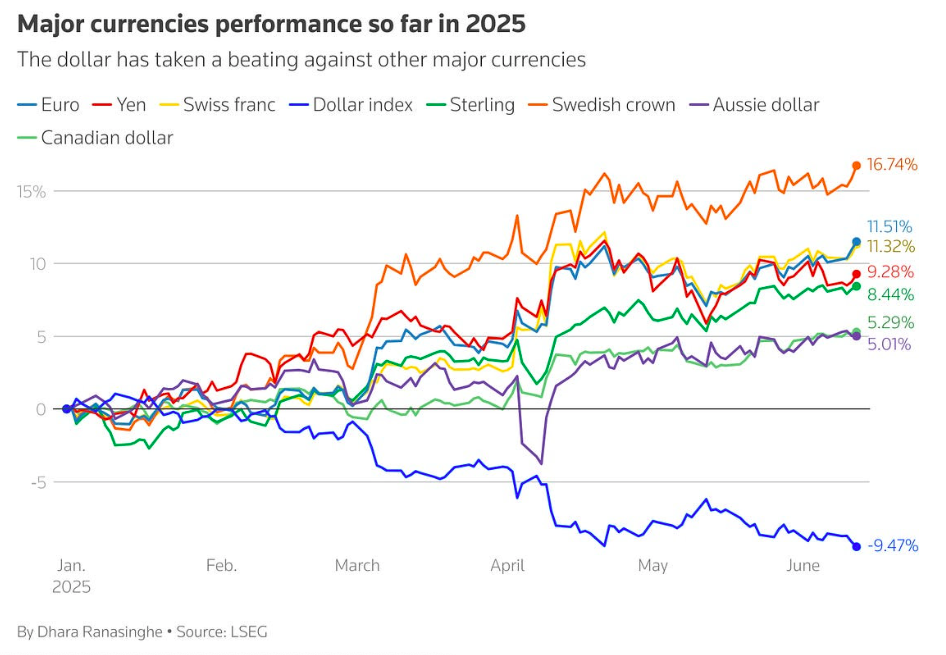
- Foreign demand trends: A weaker U.S. dollar (down ~10%) has made luxury properties in NYC, Miami, and LA more affordable for international buyers, but stricter immigration policies and geopolitical tensions have curbed overall demand—leaving only ultra-wealthy cash buyers largely unaffected.
Thinking About Real Estate as a Bank Safety Deposit Box
There’s a lot here to consider for a Friday afternoon and the first day of spring, but hey, you’ve got all weekend, and the test isn’t until Monday.
Investors are always searching for assets that don’t move in the same direction as the economy or the stock market. A risk asset is one that tends to rise when the economy is strong. Stocks are the classic example. People buy them when they’re feeling confident about growth. In contrast, safe haven assets are those that hold their value or pay back reliably even when times are tough, like government bonds or gold (Admittedly, I know just enough about these things to be dangerous).
During the housing boom that followed the Great Financial Crisis (GFC), I started saying that foreign investors, skewing toward the high end, saw real estate as a bank safety deposit box where one places their valuables and hardly ever visits. Here’s a such a quote I used back in 2014 and 2023. Foreign investors were focused on capital preservation and escaping political risk at home, but less so on their rate of return.
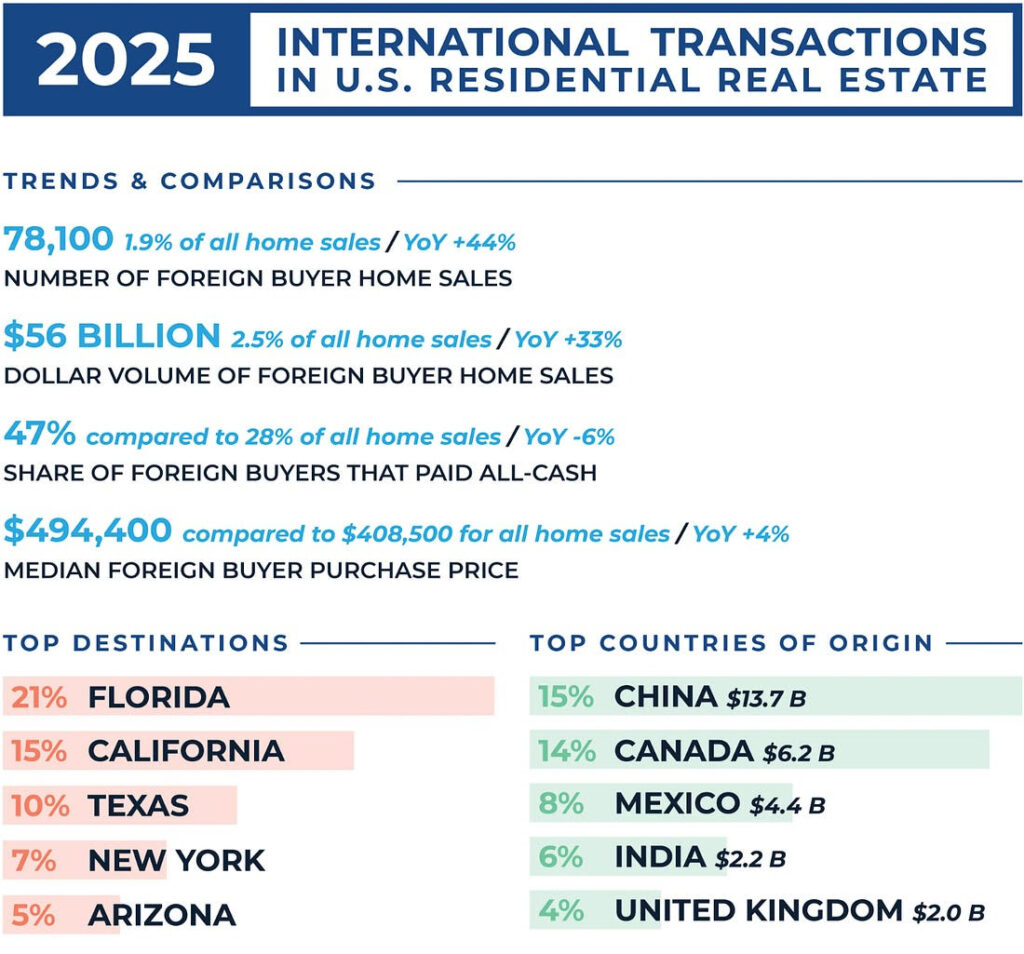
NAR’s Annual International Real Estate Report
Every March, NAR publishes its International Transactions in U.S. Residential Real Estate report that covers April 2024 – March 2025. It’s expensive at $400, but I’m probably not the targeted demo and tend to rely on their highlights. It’s basically a survey from their members, and I would guess the market share of international buyers is undercounted. In Manhattan, which is not a fair comparison, I would guess the market share fluctuates between 15% and 50% of residential purchases, depending on global conditions.
Canada Drops Behind China as Number One Buyer
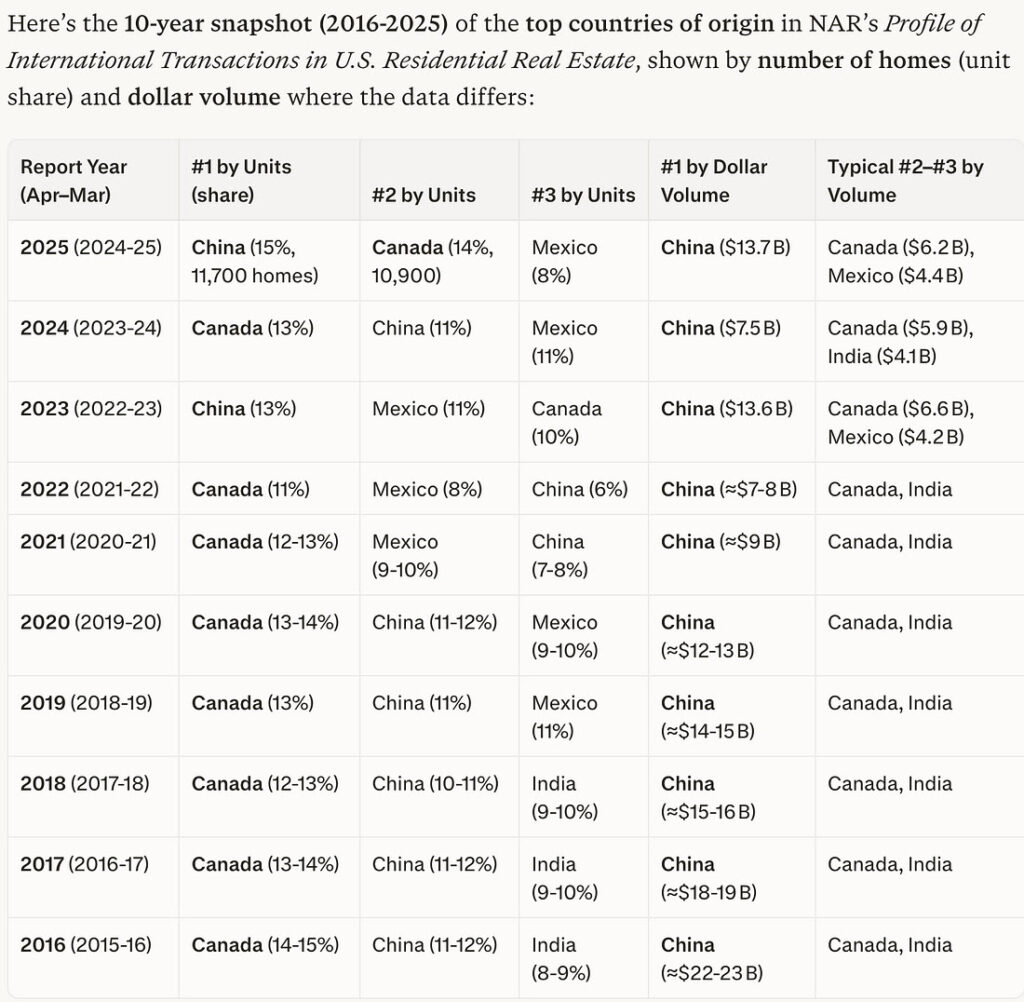
China has overtaken Canada in two of the past three years as the leading country of origin after Canada’s 7-year winning streak. I can see the 2025 rationale because of the trade war but I was surprised by China’s leading performance in 2023.
Real Estate as a Safe Haven Needs an Asterisk
The Iran War II is hitting my stock portfolio hard right now. I’ll bet many investors are searching for safe havens right now.
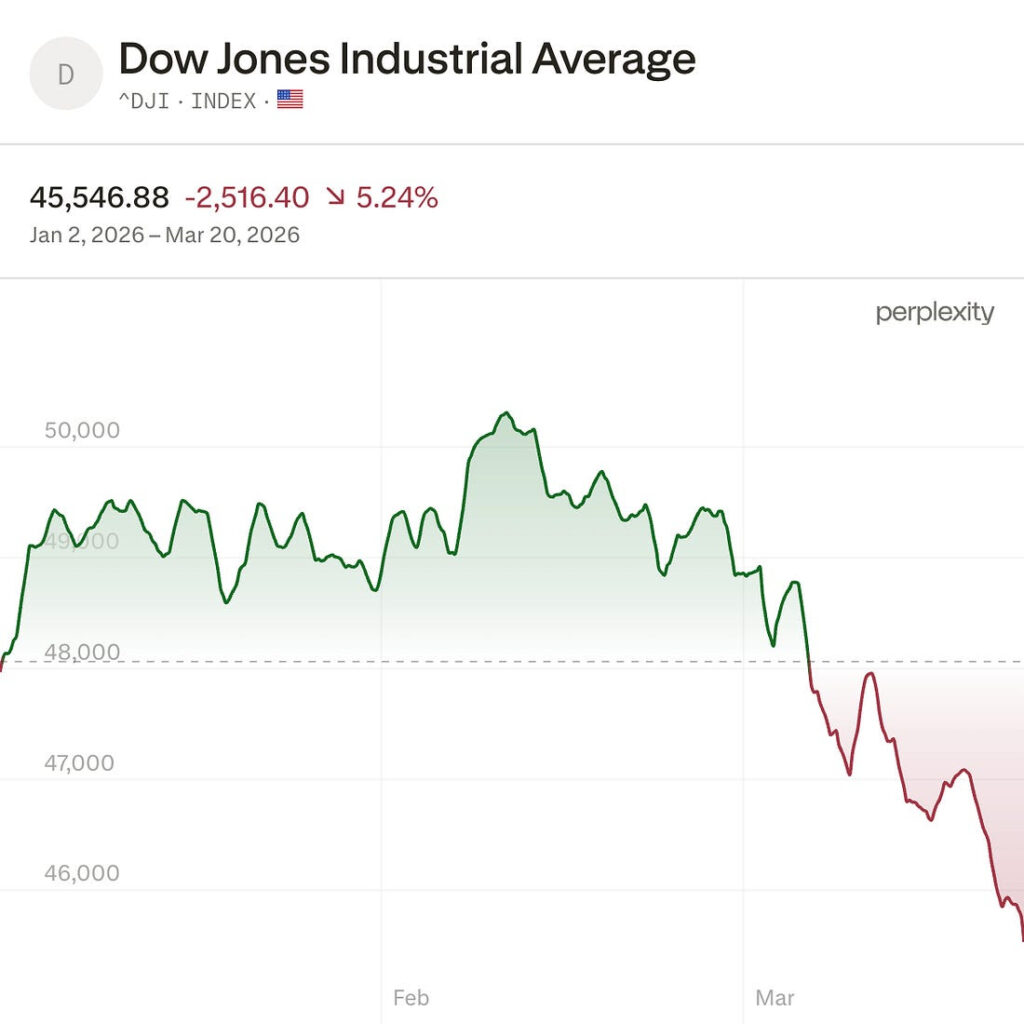
Unlike an asset like gold, real estate doesn’t quite make the cut as a safe haven. It tends to move more in sync with the financial markets during crises. I’ve read that gold’s safe‑haven behavior tends to be temporary — as a panic‑mode hedge (a 3–6‑months, not a set‑and‑forget safe haven. Real estate is a slow lumbering asset class; its prices can drop hard (but tend to be sticky on the downside), and it is generally not very liquid.
Real estate’s reputation for safety is probably more of a psychological illusion rather than a mathematical fact. Investors mistake its tangible quality (you can touch and see it) and its infrequent sales for stable prices. Consumers tend to anchor their perceptions of value to the most recent high sales in the neighborhood or building, while ignoring current conditions. This “always goes up” mentality, reinforced by decades of long-term gains, masks the reality that real estate is illiquid and tends to correlate with stocks during extreme economic events, which is kind of, sort of, the opposite of a safe haven.
Yet this conclusion doesn’t make real estate useless as a possible safe haven, because it has great utility: it can generate income and benefit from inflation. And to state the obvious, people always need a place to live.
Does a Weaker US Dollar Attract More Foreign Demand?
A softer dollar directly boosts foreign purchasing power, making U.S. properties, especially in gateway markets like Miami, New York, and Los Angeles, more affordable for buyers using euros, pounds, yen, etc. This is why super-luxury properties tend to be in these three locations. There has been a surge of international capital into U.S. luxury residential real estate as the dollar declined by about 10% over the past year, providing a discount for those buyers.
A 10% softer dollar does make U.S. properties more affordable for foreign buyers, but the fear of being denied entry, delayed visas, or future deportations has caused many to wait on the sidelines or redirect capital to other markets such as Canada, Spain, or Dubai.
With the prolific bombing of Iran by the US and Israel and Iran’s counter-offensive of bombing most of the Arab states, Dubai seems like less of a safe haven these days. In fact, an unexpected result of this unplanned, non-strategic war may be to shift global investors’ focus back to viewing the US as a safe haven, despite its current immigration policies.
Immigration Policy As Barrier To Foreign Buyers
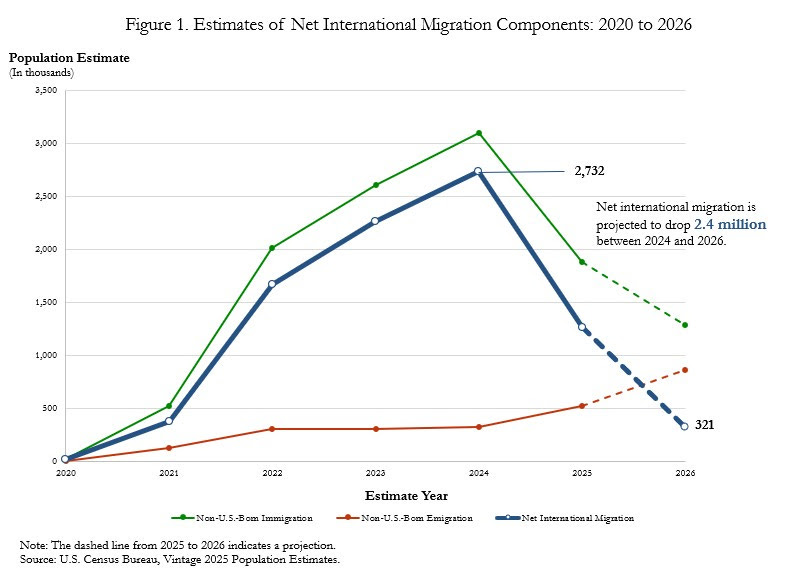
The administration’s brutish immigration policy has created a behavioral barrier that outweighs the mechanical advantage of a weaker dollar for many foreign buyers. The result is a net reduction in cross‑border U.S. real‑estate demand in 2025‑2026, especially in markets that previously depended on Latin‑American, Chinese, and European investors. Only the ultra‑high‑net‑worth segment remains relatively unaffected.
What Makes US Real Estate Enticing to Foreign Buyers
The following chart reflects the discount from the Manhattan average sales price that European consumers enjoy.
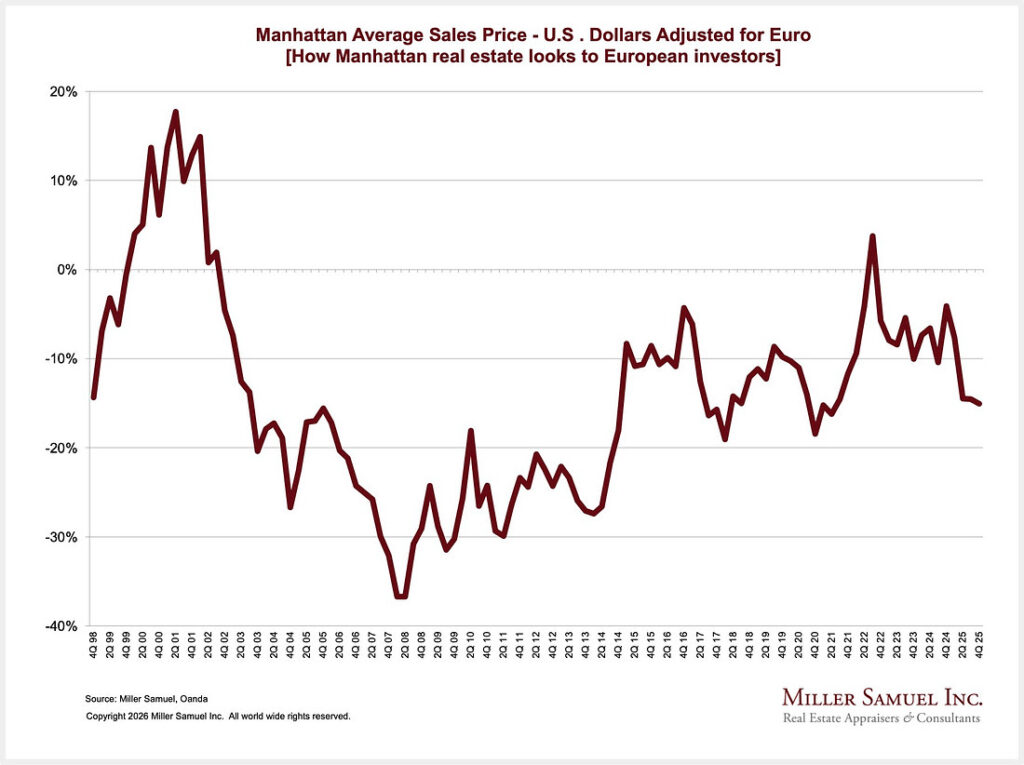
Despite Trump’s immigration crackdown and threats to the EB‑5 program, foreign buyers still target U.S. real estate because it possesses many large markets with strong property rights, inflation‑protected cash flow, and a roughly 10% weaker dollar that boosts purchasing power. Many buyers are pure cash buyers who are not seeking a visa, such as for luxury condos and vacation homes. not impacted by the administration’s immigration policies.
U.S. properties are viewed as a geopolitical hedge against instability in their home countries.
Final Thoughts
Foreign investors see U.S. real estate as safe mainly because it feels stable and there is a clear layer of laws on property ownership, but not because it’s risk‑free. Tougher immigration rules now matter more than currency changes in shaping who buys. Ironically, global unrest, promulgated by the illegal bombing of Iran (bypassing Congressional authority alone to declare war by Constitution) has made the U.S. look relatively safer again, likely pushing wealthy buyers toward luxury homes in cities like New York, Miami, and Los Angeles while the rest of the market slows as mortgage rates rise.
The Actual Final Thought – Can’t give enough credit to the king of one-liners (dad jokes).
Jonathan Miller is a housing analyst and professor at Columbia University. He is a syndicated columnist of “Housing Notes.”