
Housing Bill Faces Resistance Over Limits on Institutional Investors
Share News:

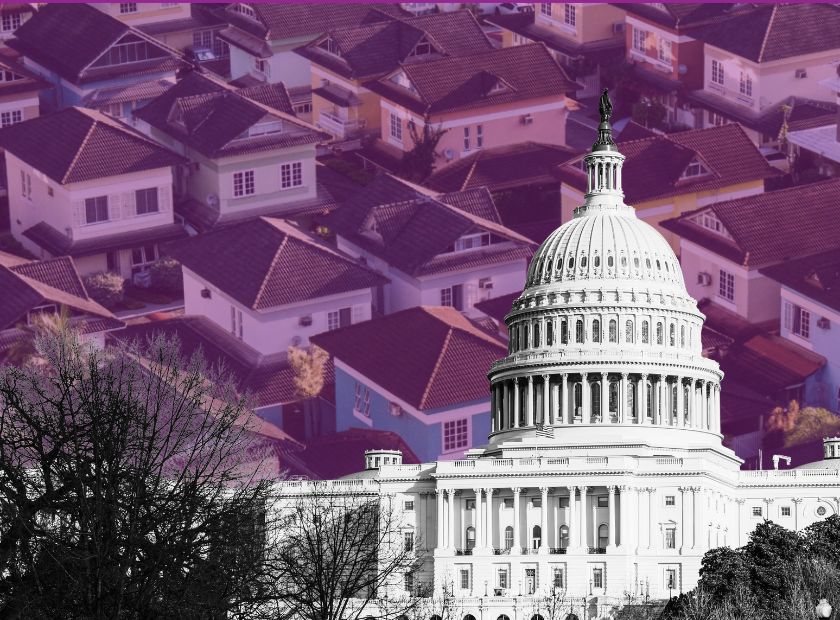
A sweeping federal housing bill that could boost housing supply and provide relief on the affordability front is facing some resistance in the House of Representatives as prospective homebuyers continue to grapple with elevated home prices and mortgage rates.
Last week, the Senate overwhelmingly passed the 21st Century ROAD to Housing Act with bipartisan support. Combining provisions from the House-passed Housing for the 21st Century Act with additional measures, the bill aims to ease housing shortages and improve affordability by curbing large investor activity, speeding up construction, and expanding financing options.
If enacted, it would mark the first piece of substantive housing legislation in decades.
The bill would limit big institutional investors from owning more than 350 single-family homes unless they are actively adding new housing stock, reduce development delays by streamlining environmental reviews, broaden federal support eligibility for manufactured housing, and direct the Federal Housing Administration to raise loan limits for multifamily properties, among other measures.
A handful of measures, however, is irking some House Republicans. For one, they oppose a provision requiring large institutional investors to sell build-to-rent single-family homes within seven years.
“The government has to protect people against harm. You’re not harming people by renting them a house,” said Rep. Richard McCormick (R-GA), according to The Hill. “I think that’s a ridiculous overreach of the government … the more we get ourselves into people and how they run their businesses, the worse it goes. We’ve proven that ad nauseam.”
Institutional investors buying up single-family homes to maintain as rental properties has raised a number of eyebrows in North Texas and elsewhere across the country, with critics arguing that individual buyers are getting the short end of the stick. More rental properties mean fewer houses on the market, and limited housing stock has led to high listing prices, locking out more cash-strapped buyers.
Another provision in the bill causing upset is one that would prohibit the Federal Reserve from issuing a central bank digital currency (CBDC) through 2030. Instead, the more than 20 skeptical House Republicans want a permanent ban, arguing that a CBDC could potentially leave Americans vulnerable to unprecedented government surveillance of and control over personal transactions.
Unlike decentralized cryptocurrencies, a CBDC is government-controlled and has the same legal status as cash. In theory, it would make payments faster and more efficient, expand access to financial services, and modernize the monetary system while maintaining the stability of traditional currency.
Republican House leadership is prepared to sink the bill unless the Senate addresses their caucus’s concerns, NOTUS reported. For his part, President Donald Trump has signaled support for the bill as passed by the Senate.
The sweeping legislation also faces another potential hurdle: the president’s determination to enact the SAVE Act. Trump previously said he won’t sign any more bills until Congress passes the controversial measure, which would significantly limit mail-in voting, mandate that states verify voter rolls using federal databases, and require individuals to provide documentary proof of citizenship — such as a passport or birth certificate — when registering to vote in federal elections.
Last year, Mayor Eric Johnson testified before the Senate Committee on Banking, Housing, and Urban Affairs, urging lawmakers to take a “build baby build” approach to the housing crisis. He argued that the most effective way to improve affordability would be to boost supply by cutting regulatory barriers rather than expanding government subsidies.







“We the People” – Fellow Americans must see ways in which to build housing for all Americans. We need affordable housing like we always have had. None and no more just for the few. We need housing for all.