SCOTUS Tariff Ruling Doesn’t Offer Much Relief for Builders, Homebuyers
Share News:

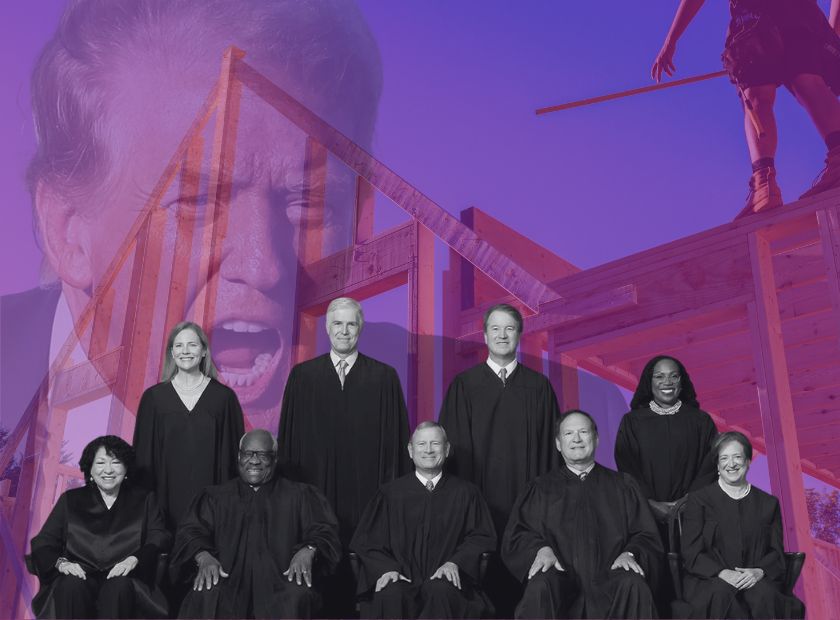
In a significant blow to President Donald Trump’s trade policy, the Supreme Court ruled 6-3 on Friday that the International Emergency Economic Powers Act does not give the president the authority to impose tariffs. So, what does this mean for the housing market?
As previously reported by CandysDirt.com, increases in the cost of new construction and renovations were expected following new targeted duties on building materials like imported steel and lumber as well as across-the-board “reciprocal” tariffs. While postponed, additional tariffs on goods like upholstered furniture, cabinets, and vanities are poised to add to the cost.
Now, not every tariff implemented by Trump during his second administration was deployed using the presumed authority of the IEEPA — but a lot of them were, namely those announced on “Liberation Day” last April.
Unfortunately for builders, the Supreme Court’s recent decision isn’t going to give them the kind of relief they have been looking for. Tariffs on steel, aluminum, and lumber were imposed via Section 232 of the Trade Expansion Act of 1962, as were the pending duties on upholstered furniture, cabinets, and vanities.
Blunting the high court’s ruling, Trump quickly issued an executive order implementing a 10% tariff on all imports (with some exemptions), citing Section 122 of the Trade Act of 1974. The order will be in effect for 150 days starting on February 24. Congress will have to sign off on it for it to continue after that period. On Saturday, though, he said he wanted to up it to 15%.
A 15% global tariff, while still not ideal for importers, is an improvement over the varying reciprocal and punitive tariffs the president placed on countries all over the world, many of which were over 15%.
Exceptions to the new tariff include pharmaceuticals, certain electronics, certain critical minerals used in energy production, beef, tomatoes, and fertilizers that cannot be produced in the United States, among other goods. Not mentioned are key imports related to construction.

“While the Supreme Court’s ruling reins in presidential authority to impose tariffs under IEEPA, President Trump still has wide latitude in setting tariff policy,” said Bill Owens, chair of the National Association of Homebuilders, in a statement. “With the nation facing a housing affordability crisis, NAHB urges the president to exempt building materials as part of his tariff strategy because they raise construction costs, impede supply chains and result in market and business uncertainty that make it difficult for builders to price their homes.”
Housing affordability remains a problem for many in the United States amid high home prices and elevated mortgage rates. While those with the ability to buy are finding deals because of increased inventory, a lot of pending sales have been falling through as the market shifts to favor buyers.
Still, we might see housing market activity tick up some this year as a result of last weekend’s Supreme Court ruling. The thing is, it’s not just higher building costs putting pressure on home prices. The tariffs (and the way Trump was wielding them) added economic uncertainty to the lives of many homebuyers, leading to delayed purchases.
“[Tariffs] embed inflationary forces in the economy and make the Fed’s job much more difficult, which is one of the reasons there is only one forecasted Fed rate cut for 2026,” wrote Jonathan Miller, author of the Housing Notes newsletter. “However, the removal of the substantial tariff ‘tax’ on Americans should help bring more homebuyers into the market this spring by removing one layer of uncertainty.”