
DFW Ranks Best in Texas for Livability — But That’s Apparently a Low Bar
Share News:


Livability can mean different things to different people, but you’ll often find a lot of the same markers in those housing and lifestyle rankings floating around out there. While we tend to give a good amount of coverage when North Texas cities come in hot, it’s also important to take stock when the Metroplex gets left in the shade. A pair of recent rankings, for instance, should give the Dallas area pause, and Texans writ large should be concerned.
In a RentCafe report ranking the most livable metro areas in the United States, Dallas came in at No. 24 overall. Now, that’s not horrible, but it’s not great either. That being said, D-FW did manage to best the other Texas metros on the list by a mile. Houston ranked No. 127, Austin came in at No. 130, and San Antonio earned the No. 147 spot.
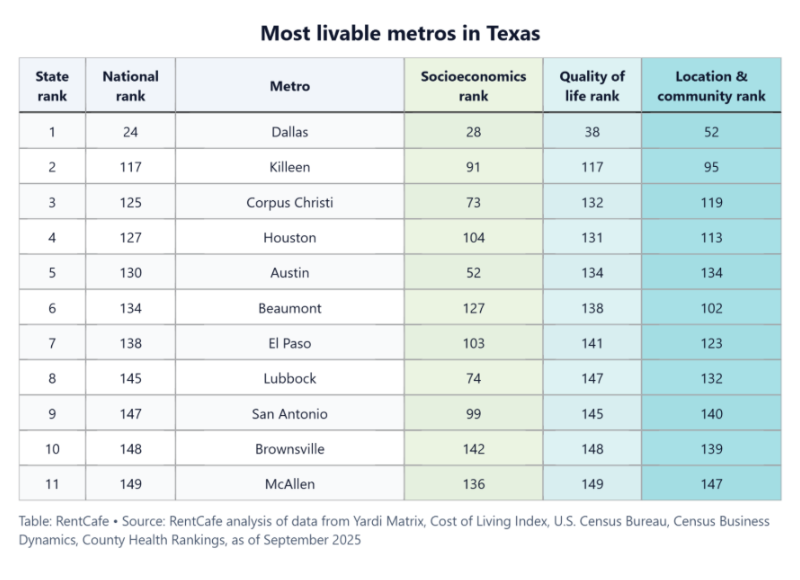
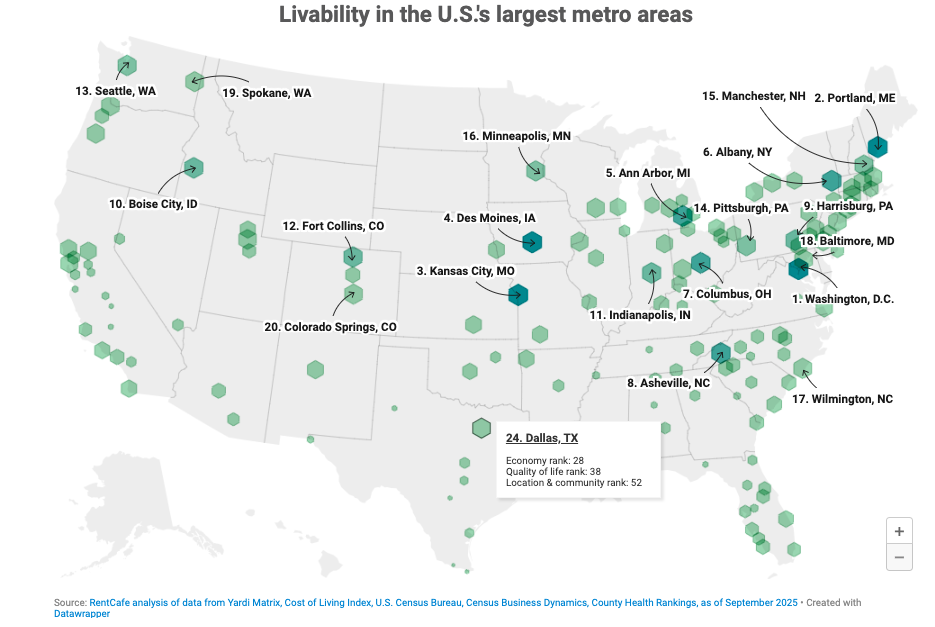
Now, this ranking was conceived through a renter’s perspective, but renters and homeowners obviously pretty much want and appreciate the same things. Cost of living, unemployment rate, number of healthcare providers in the area, recreation opportunities, and average commutes, among other weighted metrics, were considered by RentCafe in devising its ranking.
When it comes to the Dallas metro area, cost of living was clocked at 2% below the national average, and its income growth rate over five years was 6%, outpacing Austin (3%) and San Antonio (4%), according to data provided by RentCafe.
The Metroplex also logged seemingly satisfactory metrics in some of the quality of life subcategories. D-FW scored 8.6 out of 10 on the “healthy food index,” which turned out to be one of the best scores in the South. Those who care about their health are in good company. Roughly 93% of residents live near places for physical activity, and almost 90% of people under 65 have health insurance. It’s also the seventh-most educated population among the metros analyzed by RentCafe, with almost 82% of adult residents holding at least a bachelor’s degree.
Still, everyone knows the Dallas area has its drawbacks, not least of which can be the commute many of us face. More than 45% of residents drive more than half an hour to work, putting D-FW near the bottom of the national ranking for commute times.
All in all, not bad, D-FW. Not great, but not bad. When it comes to the whole Lone Star State, though, there are some poor indicators. A recent WalletHub study ranked Texas No. 34 out of 50 for best state in which to raise a family.
Except for the “family fun” category (in which it placed No. 2), Texas came in the bottom 15 for every other main metric — including affordability, which kind of runs in sharp contrast to narratives about the Lone Star State’s attractive economic environment.
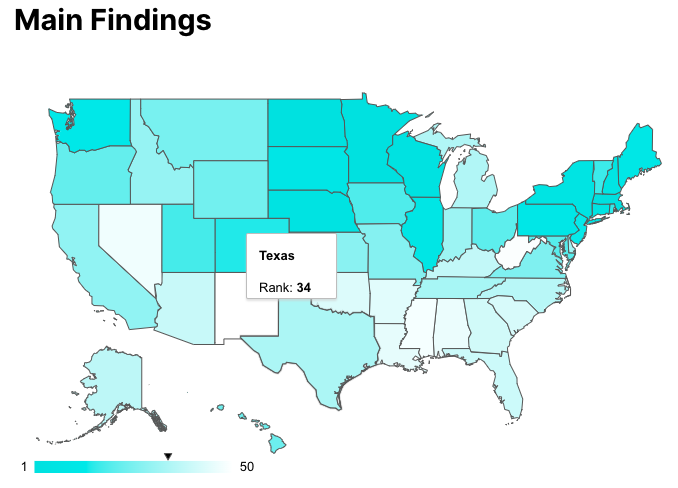
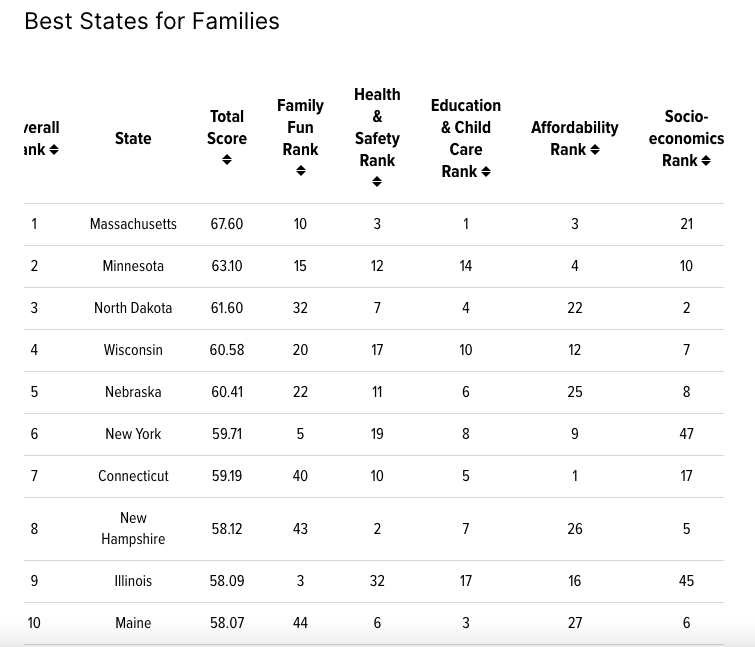

WalletHub provided CandysDirt.com with a breakdown of the subcategories underlying the state’s poor scores, and it doesn’t look good. For instance, Texas ranked dead last for health and safety due to its share of uninsured children (No. 50), air pollution (No. 45), water quality (No. 46), number of children’s hospitals per underage residents (No. 38), property crimes per capita (No. 42), and violent crimes per capita (No. 34).
On the affordability front, the Lone Star State ranked No. 46. That placement came from subcategories like median credit score (No. 47), median mortgage debt (No. 37), share of children whose family had problems paying medical debt (No. 50), access and participation in employer-based retirement plans (No. 47), share of families living in poverty (No. 42), and foreclosure rate (No. 43).
Those are some tough livability metrics to grapple with, but if the RentCafe study is any indication, it’s not necessarily the D-FW’s fault, for what that’s worth.







I wonder if the ranking change once ICE invasions in Minnesota and Illinois are factored in.