
Property Tax Relief Is Popular, Paying for It Could Be Tough
Share News:

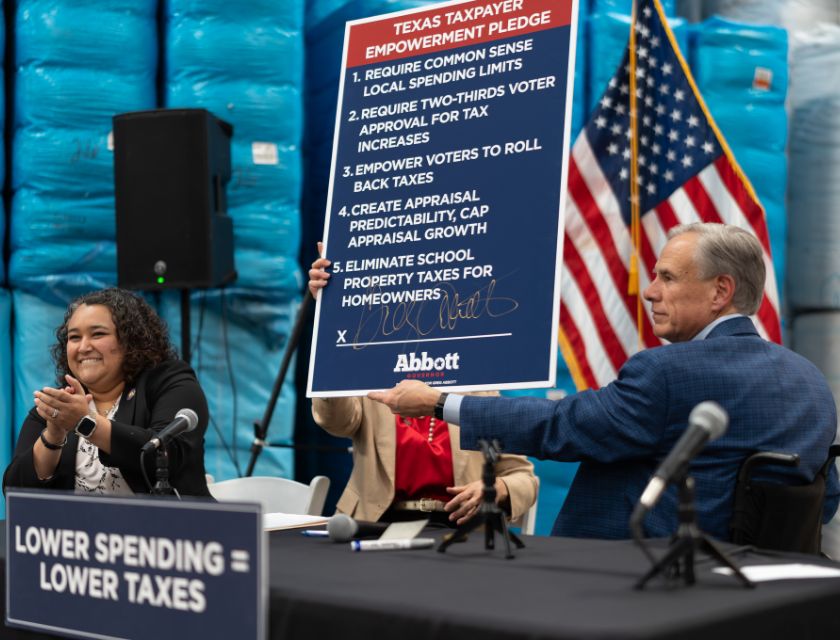
Property tax collections are coming front and center in Texas this holiday season as state officials make calls to drastically reduce them even further, spurring concerns about the practical consequences.
The feeling that property taxes are too high is a very common one in the Lone Star State. It’s literally one of those 80/20 issues, despite more than a third of Texans being renters who don’t get property tax bills (they feel it in rent, though). No wonder the issue is cropping back up as we head into a new election year.
Last month, Gov. Greg Abbott announced he was running for a fourth term in office. Part of his re-election bid is a five-part property tax platform calling for a limit on local government spending increases (population growth rate plus inflation or 3.5%, whichever is lower), two-thirds voter approval for all local property tax increases, local property tax rollback elections if 15% of registered voters sign a petition for one, limit property appraisals to once every five years and cap increases at 3%, and eliminate local school district property taxes on homeowners via constitutional amendment.

In many ways, this would be quite the straitjacketing of local taxing authorities through the empowerment of voters. Realistically, how often would we see property tax hikes under this plan? I’m not going to crunch the numbers now, but bond elections could offer a glimpse of that — except you’d have to only count bonds that received at least two-thirds support.
The governor has claimed the state is bringing in enough revenue through sales tax, fees, energy taxes, and excise taxes to backfill the funding that the public school system would lose from the abolition of ISD property taxes. But in addition to schools, local property taxes are also responsible for funding a number of other services.
“Property taxes generate $81 billion a year. Schools. Police. Fire. Roads. You can’t delete $81 billion. You have to replace it,” wrote local multifamily developer Barrett Linburg in a social media post that garnered quite a bit of engagement.
Linburg went on to argue that sales tax would be the primary mechanism that would have to be used to pick up the slack since voters approved amendments to the Texas Constitution prohibiting the adoption of an income tax or wealth tax.
“To replace property tax revenue, we’d need a state sales tax above 20%. A $40,000 truck costs $8,000 in tax at the dealership. Every shirt. Every appliance. Every taco. Plus 20%,” he wrote.
Linburg told CandysDirt.com the post was meant to elicit discussion about the subject.

“I shared the math behind the property tax exemptions or property tax removal, and then I just watched what people said. And what I learned is that — no surprise — people don’t like paying property taxes. But it’s very true that there is no viable solution to getting rid of them. Now, can you reduce the mill rate and reduce government spending? Sure, but that’s not the same as eliminating them. Can you eliminate them on homesteads? Sure, but that’s a pretty regressive policy because then you’re just giving a tax cut only to the people who have enough money to buy a home.”
While Abbott’s plan doesn’t call for the outright elimination of all property taxes, the notion has been a popular one among libertarians and many conservatives for years. Swelling home valuations and the widespread acknowledgment that Texas is in the middle of an affordability crisis when it comes to housing may very well improve the policy position’s prospects in the long run.
More recently, Lt. Gov. Dan Patrick came out with a property tax relief plan of his own. Under what he’s calling “Operation Double Nickel,” the age to qualify for the senior homestead exemption for school district property taxes would be lowered from 65 to 55 years old. The plan would also increase the general homestead exemption by $40,000, bringing it up to $180,000.
Patrick made a similar case to Linburg, pointing out that it would take a sales tax of 14-15% just to eliminate ISD property taxes. That alone would make Texas the state with the highest sales tax rate in the country. The sales tax would need to be at 25-26% to pay for the complete elimination of property taxes, the lieutenant governor said.
The Dallas Morning News editorial board weighed in on Patrick’s plan on Sunday, calling it “marginally better” than the governor’s and arguing it “pits young against old” by giving benefits to a cohort (55-64 year olds) who are ostensibly in a better earning position than younger folks burdened by college debt and daycare expenses.
Generational disparity in home ownership has grown like never before. Home prices have locked out many younger would-be buyers, so much so that Generation Z is “black pilled” (as the kids say) on the prospect of owning a home. Meanwhile, seniors are increasingly committed to staying in their existing homes, resulting in less turnover of housing stock. DMN’s editorial board suggested Patrick’s plan would only worsen this dynamic.
“Even if homeowners are ready to relinquish the responsibilities of homeownership and move into an apartment or assisted living facility, it may not make financial sense. And neighbors living side by side in identical houses could receive wildly different tax bills only because of their age and how long they’ve owned their homes. That feels remarkably unfair.”
No doubt there are many seniors of limited means who are struggling to stay in their homes because of rising property values and their corresponding taxes. The flip side is that many in their 20s and 30s don’t feel like they even have a shot at what used to be a cornerstone of the American dream.
For a cynical take on this dynamic and its implications, check out this commentary by Breaking Points host (and Texas native) Saagar Enjeti:
Generational conflict and practical figures aside, Linburg thinks Texas has more or less been on the right track with its approach to property tax relief: tax rate compression. During energy boom times, the state uses the revenue surplus to increase school funding. In turn, districts lower their tax rates. And, of course, state officials help out with raising the homestead exemption.
“Mill rates will likely keep drifting down over time, even as values rise,” wrote Linburg in his viral post. “You don’t need a fake promise of ‘elimination’ to win. You need a strong economy and steady compression. Next time a politician promises to ‘end’ property taxes, check the math. They aren’t offering a free lunch. They’re offering a different bill.”